

There's a lot of good survival advice on the internet — but there's a lot of bad advice, too. In the worst cases, something you read on the internet or saw on TV might get you killed.
We collected twenty-five of the most common and most dangerous survival myths that are circulating around. In each case, we'll briefly explain why the myth is dangerous and offer a better, more evidence-based alternative.
Cold Weather Survival Myths
#1: Drink alcohol to stay warm in the cold
This myth likely stems from the fact that drinking booze when you're cold makes you feel warmer — but feeling warm and actually being warm are different things. Alcohol dilates blood vessels and opens your pores, which means you lose body heat faster than you otherwise would. Stick with warm, non-alcoholic beverages in freezing temperatures.
#2: Hypothermia victims should sleep and/or refrain from eating
This myth's origin is unclear, but its consequences are crystal clear. If your core temperature drops to 95° Fahrenheit or below, you could be in serious trouble. Above all else, you should not go to sleep. Your body needs energy — including heat — to come back online, so to speak. If you fall asleep while your core temperature is dangerously low, your breathing and heart rate may slow dramatically and you may never wake up.
As for food, you should eat small bites of warm or room-temperature food at frequent intervals to recover from hypothermia. The energy will help your core temperature recover more quickly. You don't want to eat too much at a time or else your digestive system will claim most of that energy for itself, negating the benefits.
#3: Hypothermia can be treated with a hot bath or a dip in the hot tub
Never, ever do this. Putting a very cold person in hot water carries a high risk of temperature shock that can stop their heart and quickly prove fatal. Warm the patient slowly with ambient heat sources, heavy clothing, and/or blankets.
#4: Emergency blankets don't really work
It's easy to see why this myth is prevalent because those thin, crinkly, aluminum space blankets don't seem like they preserve much body heat — but they do. Wrap one around yourself, close all the gaps as best you can, and wait a bit. You'll find that they're about as warm as a decent sleeping bag. Given how cheap, small, and light emergency blankets are, you should always have a few in all of your emergency preparedness kits.
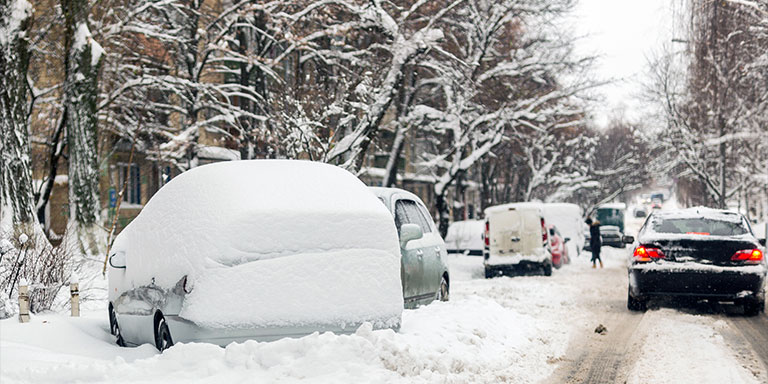
#5: If your car dies in a snowstorm, don't run the engine to stay warm
This myth is dangerous largely because it has an important grain of truth to it. It is true that heavy snow can block your car's exhaust pipe, which can in turn cause deadly carbon monoxide to fill the cabin — but sitting in an unheated car for a long time in a snowstorm can also prove fatal.
Instead, run the engine long enough to bring the cabin up to a comfortable temperature, then shut the engine off and leave it off until it starts to get cold again. Repeat as necessary, and every few cycles, exit the car just long enough to verify that the exhaust is unobstructed. If snow is starting to pile up around the tailpipe, clear it away in a 3-foot radius. Repeat until the storm clears or help arrives.
Food and Water Myths

#6: Flying birds always go toward water
If you think about this myth for a minute, it's obvious that it can't be true — it's literally impossible for birds (or any animal) to always be moving toward water. Birds and other wildlife sometimes move toward water, and in some cases, following them can lead you to much-needed hydration. Just don't think that this is anything close to a foolproof strategy.
#7: If you're severely dehydrated and all else fails, you can drink urine or blood
Bear Grylls is wrong. There is no situation in which drinking urine will solve more problems than it creates. In the long run, you'll be even more dehydrated than you otherwise would have been, and you run the risk of contracting diseases or majorly upsetting your stomach. Plus, it's gross. In all of these respects, blood is no better. No matter how dehydrated you are, you're better off spending whatever energy you have looking for water.
#8: If you see animals eating it, you can eat it
Human and animal digestive systems are very different. There are many, many foods that animals can eat safely only because they've evolved the ability to do so over thousands of years. Never eat anything in the wild that you wouldn't normally eat unless you know what it is and know with some confidence that it's safe to eat. A pocket foraging guide is very helpful for identifying edible flora in your area.
#9: Most wild mushrooms are safe to eat
Again, this is false more often than it's true. There are tens of thousands of species of mushrooms, and only a fraction of them are edible. The inedible ones might only taste bad or provide no nutritional value — or they might make you violently sick — or they might kill you. We have the same advice to offer here that we did in the previous section: Only eat it if your need is great and you're pretty sure that you know what it is.
#10: In the desert, you can drink water from any cactus
Once again, this is true only in a small number of situations. There are thousands of cactus species, and only some varieties of one specific type — the barrel cactus — can provide relatively clean and safe drinking water. The water inside other kinds of cacti can make you sick, and if you vomit or get diarrhea, you'll be even more dehydrated than before.
#11: Suck on a rock if you're dehydrated
This myth has no basis in fact — it's just an old wives' tale. Sucking on a small rock will cause you to generate more saliva (that much is true), and supposedly, swallowing that saliva will then offer minor hydration. But if you think about it, this makes no sense. Your body is a closed system; the amount of water in your body at any given time can only decrease, and the only way to replenish it is by taking in fluids from an outside source. At best, sucking on a rock won't help, and at worst, you could chip a tooth, cut your mouth or swallow it and choke.
#12: Eat snow or ice if you can't find water
You can melt snow or ice, then filter, boil, and drink the resulting water, but you should never skip any of those steps. If you're in a place cold enough for there to be snow on the ground, then body heat is one of your most precious resources. When you eat something frozen, your digestive system expends a tremendous amount of energy warming that substance — energy you can't spare. Eating snow or ice can quickly cause hypothermia. Besides, it's not clean and could make you sick.
#13: If you're lost in the wilderness, ration your water
Put simply, you should never ration your water. Drink at least half a gallon per day, but bear in mind that this is a general guideline; the exact amount of water you'll need will vary based on your size, weight, age, and other factors. One of the dangerous things about dehydration is that by the time you start to feel dehydrated, you've already been dehydrated for a while. In the wilderness, minor to moderate dehydration can quickly worsen, often before you fully realize what's happening.
Also bear in mind that keeping your body adequately hydrated is sort of like keeping your house cool in the summer: Running the AC all the time is generally more efficient in the long run than turning it off for long periods because, once the house gets hot, cooling it back down requires a large amount of energy over a prolonged period. Your body uses water in a somewhat similar fashion, so always drink as much as you need.
Wilderness Survival Myths

#14: Cut a snake bite and suck out the venom
At best, it won't work — snake venom is already absorbed into the surrounding tissues within a few seconds of the bite. At worst, you could dramatically increase the risk of passing infections or diseases between the rescuer and the bite victim. The better course of action is to get the victim to a hospital as quickly as possible. If you can safely take a picture of the snake, do so — this will help medical personnel figure out what kind of antivenom to use.
#15: Moss always grows on the north sides of trees
Moss sometimes grows on the north sides of trees. Many factors affect where and how moss can grow, including sun exposure, moisture, and the type of moss. The sun is a much better indicator of direction.
#16: It's safe to build a fire in a cave or under a low overhang
The smoke produced by a fire needs somewhere to go. In a small, enclosed space, some of it's going to go into your lungs. Fatal suffocation is possible if you build a fire in a small space, especially if you fall asleep with the fire still burning. Always build your fire in a place where the smoke has a clear exit path.
#17: All firewood is created equal
Different woods burn differently, and some are much harder to ignite than others. These differences are especially pronounced if you're trying to start a fire with primitive tools such as a bow drill. Broadly speaking, softwood is easier to ignite than hardwood, although hardwoods tend to burn longer and hotter once they get going. To start your fire, use dead softwood and small, dry twigs, then add bigger logs once you've got it started.
#18: Play dead if you're attacked by a bear
This is another piece of advice that is useful in certain situations but has become overly generalized. The first and best defense if you spot a bear is to immediately leave the area, but don't run — just walk away and try to appear non-threatening. If the bear attacks anyway, you'll be left with two options. Some bears will become confused and leave if you play dead, but others will continue to attack. Remember the rhyme: "If it's brown, lie down; if it's black, fight back." In any case, if playing dead doesn't work, fight back with whatever weapons you have (hopefully you brought bear spray or a very big gun).
#19: Fight off a shark by punching it in the nose
Shark attacks are extraordinarily rare, but should you find yourself in this deeply unfortunate situation, punching the shark in the nose won't get you very far. For one thing, the nose isn't a vital area — it's just cartilage. And have you ever tried to punch or kick underwater? You can't get much power. If a shark bites you, scratch and poke — hard — at its eyes and gills. This way, you stand a chance of causing enough pain to convince the shark that this meal isn't worth the trouble.
#20: In a rip current, always swim parallel to the shore
This only works if the current is perfectly perpendicular to the shore. What you actually want to do is swim perpendicular to the direction of the current, which will probably be at an angle. Swim slowly, don't panic, and conserve your stamina. With a little luck, the current will gradually push you toward the shore, but it might take a long time. Never try to fight the current — you'll lose.
#21: Lean-tos are ideal shelter
A lean-to is a quick and easy shelter to build, but it's rarely ideal. A lean-to provides little protection against wind, rain, and cold, although it might be fine if you're in a temperate, comfortable climate. For better ideas, check out our guide to building basic shelter.
#22: In a forest fire, you can survive by hiding in a cave or under an overhang until the fire passes
Fire consumes oxygen, and big fires consume a lot of oxygen. Many people have sheltered in caves or under overhangs in the hope of waiting for a forest fire to pass, but what usually happens in such cases is that the fire consumes all of the oxygen in the area, leaving none to breathe. There are better options to try, in this order:
- If possible, leave the area before the fire reaches you and hide in an area with nothing flammable nearby. This sounds obvious, but it's not always feasible; fire can move with amazing speed.
- If you're in a grassland or desert environment, if the fire is still some distance away, and if you have no obvious escape route, consider burning out a safe zone only if all of these conditions are met. Start your own fire and wait for it to burn out a large area, then shelter in that area. By the time the main fire reaches you, there will (hopefully) be nothing left to burn, and it will pass around you.
- If all else fails and there is no other escape, run through the fire as quickly as you can, toward an area that isn't burning. You're going to get burned, but if the fire isn't enormous, you might survive.
#23: If there's a tornado coming, hide under a bridge
This myth was popularized largely by a viral video from the mid-2000s that shows a father and daughter taking shelter under a bridge as a tornado passes by. Miraculously, both survived, causing people to start spreading the idea that bridges make good tornado shelters. The reality is that most bridges make very poor tornado shelters; the bridge that the father and daughter used had some unusual design features that made it more resistant to high winds. Essentially, they got lucky. Underground areas make the best tornado shelters, but if you can't get to one, try your best to get out of the tornado's path.
#24: If you get stabbed or impaled by something, pull it out right away
This is the exact opposite of what you should do. Do not remove the object. Instead, stabilize it by wrapping heavy bandages or clothing around it and get medical treatment immediately. Avoid moving or bending the injured area if at all possible. If you pull out a knife or impaled object, you will bleed out faster and you risk further damage to vital organs or blood vessels. Leaving the object in place gives blood a chance to clot around it, which might keep you alive long enough to get to a doctor.
#25: If someone nearly drowns and you manage to resuscitate them, no further medical care is needed
Movies often show drowning victims receiving CPR and coughing up some water, after which they're fine. In reality, people who have inhaled water need immediate medical care. Dry drowning and secondary drowning are both dangerous conditions that can be fatal hours after the patient seems to have recovered, and both can strike with little warning. Even if they say they feel fine after being resuscitated, insist that they get to the hospital right away.
As they say, knowledge is power. It may be cliche, but it's true. Should you ever find yourself in a life-threatening situation, knowing the difference between fact and myth could be the difference between life and death. We hope this article has made you more confident in your emergency survival skills.