

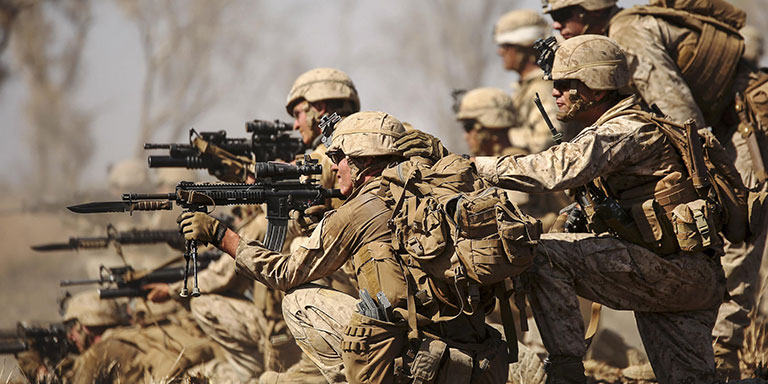
The U.S. military fire support system is essential to the safety and effectiveness of ground forces. Frequently, small arms and infantry tactics are insufficient to counter an enemy threat. In such cases, friendly planes, ships and artillery batteries can provide long-range fire to eliminate or suppress the enemy.
In this introductory guide, we'll outline the structure and purpose of the fire support system and review the basic process of calling for fire support. This guide is not necessarily guaranteed to be completely accurate; policies and procedures change often and may vary from one military unit to another. Always check with your command for the most up-to-date information about the particular fire support systems in your region.
Roles of the U.S. Military Fire Support System
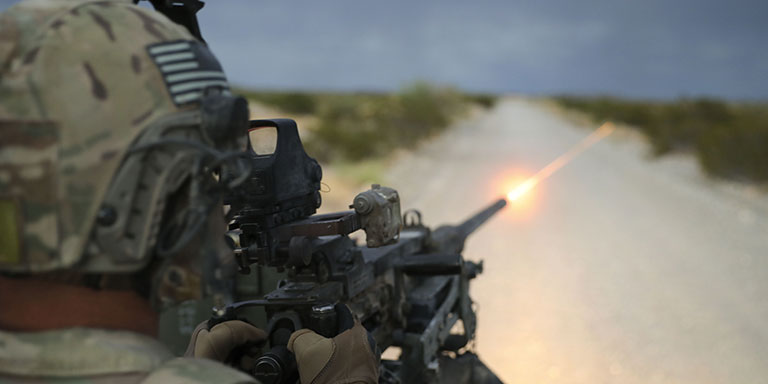
The fire support system has four main purposes:
To support friendly ground forces engaged with enemy forces
To support the overall battle plan by providing strategic fire on targets that ground forces cannot safely or effectively engage
To coordinate and synchronize fire provided by separate supporting units (air, sea and land-based weapon systems)
To sustain and improve the functionality of fire support weapon systems by providing ongoing maintenance, troubleshooting, upgrades, ancillary and logistical support and staffing
As these summaries indicate, the fire support system is much more complex, delicate and expansive than it may seem. In any given region, it requires hundreds (if not thousands) of highly-trained personnel, from engineers and mathematicians to pilots and cooks — everyone else needs to eat, after all.
As a military servicemember who may one day need to call on the fire support system in combat, you can do so more effectively if you understand its basic functions and account for its complexity. In some cases, it can take several hours of preparation, maneuvering and calculation before local fire support assets (i.e., weapon systems) are ready to fire. If everyone in your unit has a general understanding of the overall battle plan, and if your commanders are working closely and proactively with commanders of other nearby units and with those of the fire support system, you'll be much more likely to get effective fire support when you need it most.
Types of Fire Support
There are three broad categories of fire support assets: ground, air, and sea. Each has distinct tactical strengths and limitations. If more than one of these types of fire support are available in your area, you'll have more options, but you must also take extra care to ask for the right kind of support at the right time. The overall complexity of the local fire support system increases significantly when different kinds of assets must coordinate with one another.
Ground Support
Current U.S. field artillery weapon systems include 60mm, 80mm and 120mm mortars, 105mm and 155mm howitzers, the M142 HIMARS (High Mobility Artillery Rocket System), and the M270A1 MLRS (Multiple Launch Rocket System). Each has a distinct purpose.
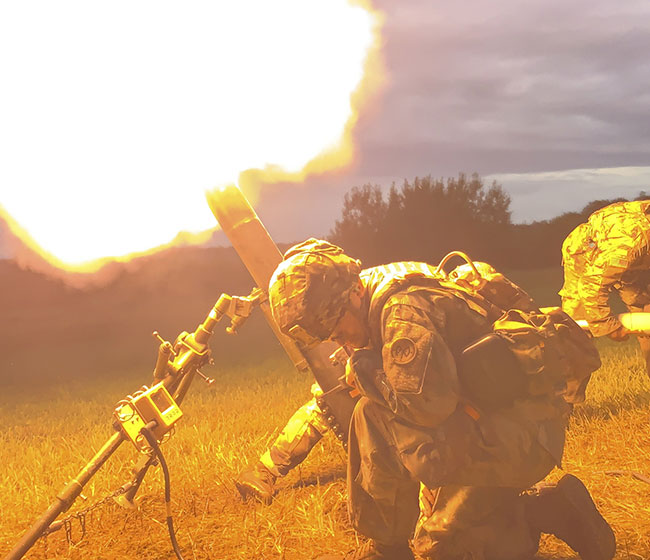
Mortars
Mortars are heavy, usually smooth-bore cannons that fire explosive shells over distances ranging from 200 to 5,000 meters. Because mortar shells are fired high into the air and eventually fall directly onto their targets, they are useful for bypassing high walls or mountains and for engaging targets that are otherwise difficult for horizontally-fired weapon systems to reach. Most mortar systems are fairly easy to move and can be fired by one or two operators.
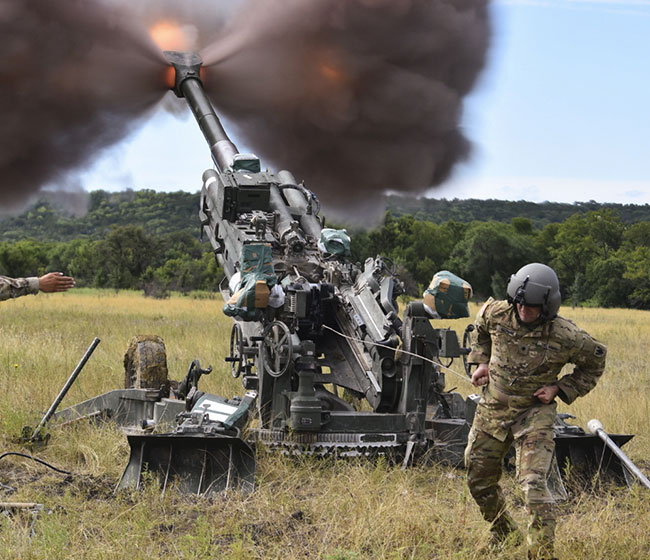
Howitzers
Howitzers are essentially huge mortar cannons. Typically crewed by six to eight operators, these massive cannons weigh thousands of pounds and, compared to mortar systems, can fire much more destructive shells over much greater distances — up to 25 miles, in some cases. Of course, they also take far longer to reposition.
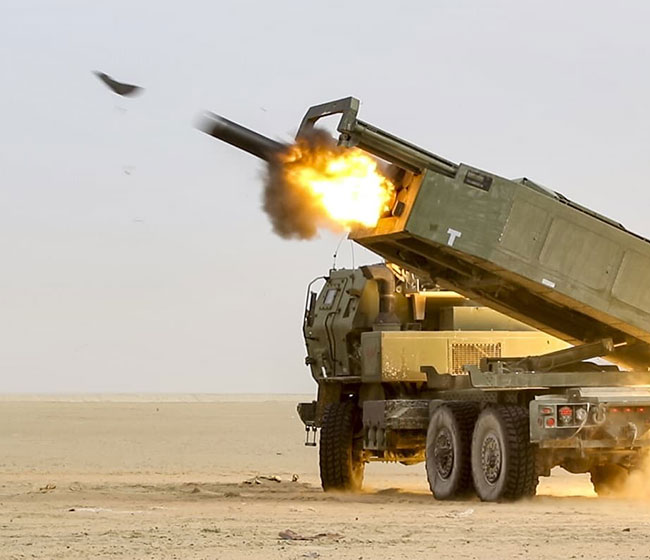
High Mobility Artillery Rocket System
The M142 HIMARS system is a highly mobile, vehicle-mounted rocket system capable of firing six 227mm explosive rockets at ranges up to 300 miles. It can also be loaded into a C130 cargo plane for even faster redeployment.
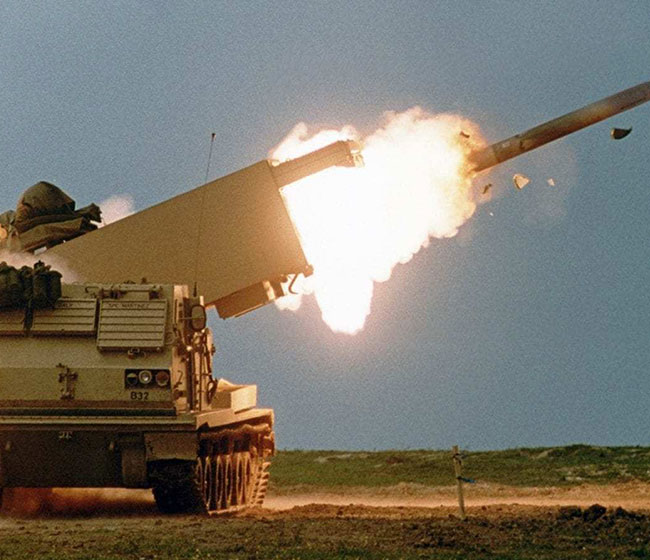
Multiple Launch Rocket System
The M270A1 MLRS is a shorter-range relative of the M142 HIMARS, capable of firing a dozen rockets from 20 to 100+ miles. It's not as fast as the M142, but it has tank treads instead of tires, making it a superior choice for maneuvering across difficult terrain.
Naval Support
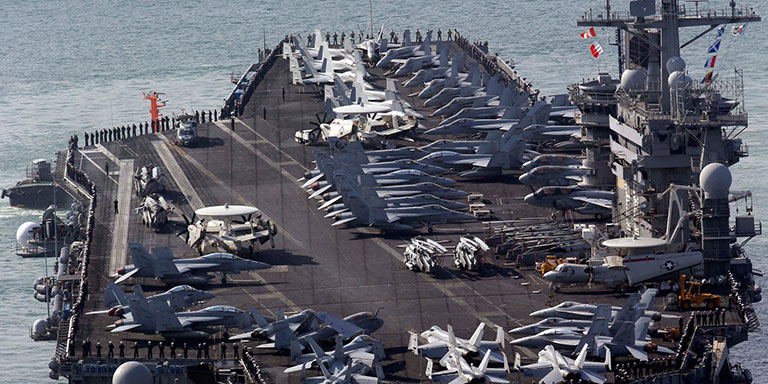
The U.S. Navy and Marine Corps work closely together to provide naval fire support for land-based operations. Today, naval fire support is the least commonly requested, due primarily to two factors: the relatively low availability of ship-mounted artillery and the inherent geographical limitations (ships can only provide fire support to locations relatively close to shore).
The largest ship-mounted fire support cannons still in use are 127mm cannons, the newest models of which have a maximum range of about 23 miles. To sustain fully automatic fire over an extended period of time, these guns require a crew of six.
Other, more modern and more broadly useful naval fire support systems include aircraft carriers and land-attack missile (LAM) systems. Aircraft carriers, of course, can launch bombers, fighter planes, and other aircraft to more directly support ground troops. LAM missiles include the massively destructive BGM-109 Tomahawk, which has a maximum range of 810 miles, and the Naval Strike Missile (NSM), which can travel up to 345 miles.
Air Support
Much like the Navy and Marine Corps jointly manage many of the U.S. military's naval fire support systems, the Army and the Air Force manage different aspects of the air support system. For the most part, the Army deploys helicopters, whereas the Air Force deploys planes. This is because, in most cases, helicopters are so closely engaged with the chaos of ground combat that Army personnel are much better equipped to man them and to make relevant tactical decisions on short notice.
Because support aircraft must constantly respond to changing battlefield conditions, and because there are so many types of aircraft and weapon systems, the air support system is more complex than its sea and ground-based counterparts. Rather than cover dozens of specific weapon systems, we'll introduce their basic categories.
Planes
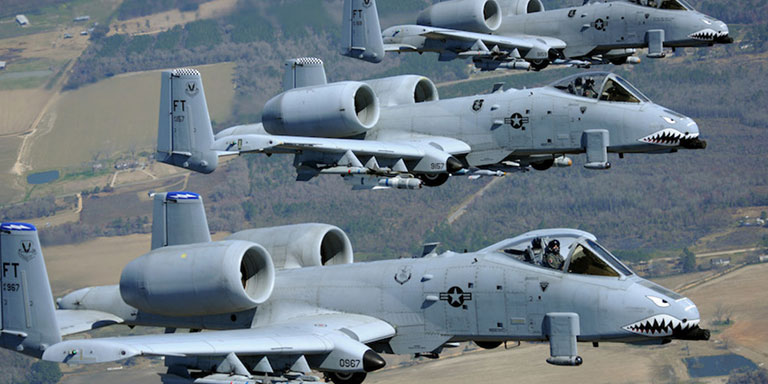
Fixed and rotary-wing aircraft can strafe enemy targets with missiles, bombs, and/or guns. Missiles are "smart" weapons, meaning they can be programmed with sophisticated algorithms to track targets precisely, even from miles away. For this reason, missiles are generally preferable to bombs if there are friendly forces in the immediate area.
Bombs are "dumb" weapons that explode on impact and must be dropped from the underside of the delivery aircraft. Targeting calculations are largely manual, although they can be computer-assisted in some respects. Bombs pose a greater risk to nearby friendly forces than missiles do.
Guns such as the 30mm gatling gun are commonly mounted in fixed positions on the front of aircraft such as the A-10 Warthog and A-10 Thunderbolt II. Although devastating to infantry and light vehicles, guns are less effective against tanks, buildings, and bunkers.
Because airplanes are less maneuverable than helicopters, they are less ideal for sustained fire. After making a single pass at the target, they must turn around and come back to fire again, which can take several minutes in some cases.
Helicopters
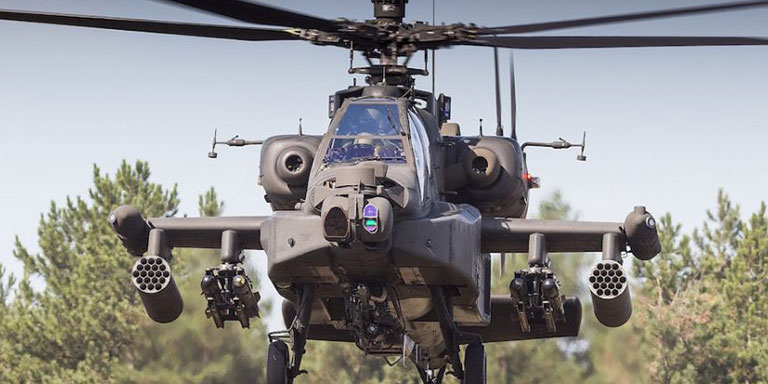
Like airplanes, attack helicopters can be equipped with a variety of different weapon systems. The most common include 30mm gatling guns, 70mm air-to-ground rockets, and Hellfire anti-tank missiles. Many attack helicopters are outfitted with air-to-air missiles as well, although usually only when there is a particular reason to expect enemy aircraft.
Because helicopters can hover and maneuver more precisely than planes, they are better suited to providing sustained fire in close, chaotic ground engagements. However, the fact that helicopters can remain in the same area for long periods also makes them much more susceptible to enemy fire. Helicopter pilots and ground forces must coordinate closely and constantly in order to minimize risk to the helicopter crew.
Delivery of Fire Support
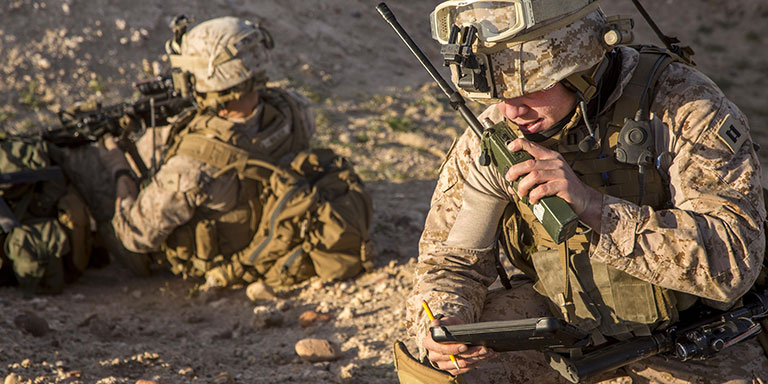
Army MOS 13F (field spotters) and their Navy/Marine/Air Force equivalents are primarily responsible for coordinating and calling for fire support. These specialists identify targets, collect and report topographical information, perform basic range calculations, direct artillery unit movement, deliver damage reports and work closely with commanders to coordinate fire in a manner that is safe for friendly ground forces.
The basic process of calling for fire support is fairly simple, although many precise and complex calculations happen at each stage. The Forward Observer (usually a 13F) identifies the target and communicates with the Fire Direction Center, which processes the relevant targeting and topographical data and relays firing data to the appropriate artillery unit. Once firing is completed, the Forward Observer assesses the point of impact and damage to the target, makes any necessary adjustments, and continues to request fire until the target is destroyed or until support is no longer needed.
If you aren't directly responsible for making fire support requests, you shouldn't do so unless the need is dire and there is no 13F or comparable specialist available. If you're likely to end up in a combat zone, your command should ensure that you receive basic training on how to call for fire support, should you ever need to.
Fire support is an invaluable asset for any ground-based unit engaged in combat. The system has many moving parts, though, and it can be slow to respond in the heat of battle. Hopefully, you have a better understanding of how it works and will be better able to integrate it into your tactical decisions.