

There are countless firearm attachments out there, many of which attach to the barrel of your rifle, shotgun or pistol. Whether you're a policeman, soldier, hunter or casual shooter, there's probably a barrel attachment well-suited to your needs.
In this guide, we'll review the most common and popular barrel attachments, including their advantages and drawbacks. This is an introductory guide, so we can only offer basic information, but it should be a good starting point for further research. If you're interested in a more general look at weapon attachments, be sure to read our beginner's guide to firearm attachments.
Pistol and Rifle Barrel Attachments
Most rifle barrel attachments have very similar pistol equivalents, and vice versa. Note that a barrel "attachment" is a device that can be temporarily or semi-permanently installed on an existing barrel; we'll cover replacement barrels a bit later.
Suppressors
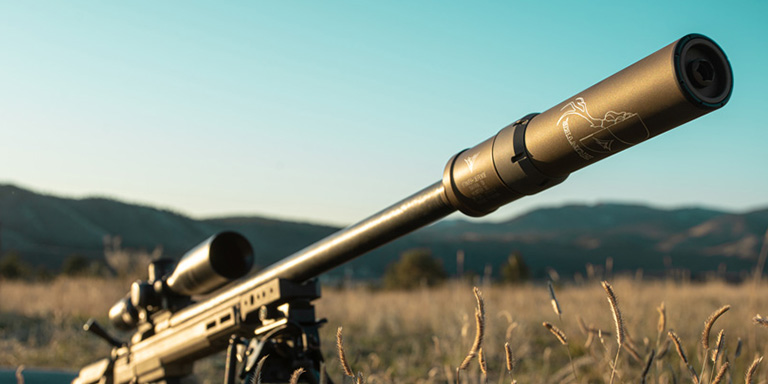
Suppressors are among the most popular and widely useful barrel attachments. Often incorrectly called "silencers," suppressors use various designs to capture and redirect sound waves, making gunshots somewhat quieter. In movies, suppressors make gunshots whisper-quiet, but in real life, that level of noise reduction is attainable only with subsonic ammunition in small calibers.
On average, suppressors make gunshots quieter by about 20 decibels, meaning they're still very loud. However, in combination with proper hearing protection, they further reduce the risk of hearing damage. Suppressors can also reduce the echo produced by gunshots, making it harder for others to locate the shooter by sound alone.
Suppressors require a threaded barrel for installation (one that has threads machined into its exterior surface). Some other barrel attachments require threaded barrels as well. If you want to use any of these attachments, expect to spend a few hundred dollars on a threaded barrel. Be sure also to pick up a thread protector — a small cap that screws onto the threads to protect them from dirt and damage when no attachment is installed.
Suppressors are legal in most states but subject to additional ATF paperwork and fees. Take extra care to know and follow the law if you intend to buy a suppressor.
Flash Hiders
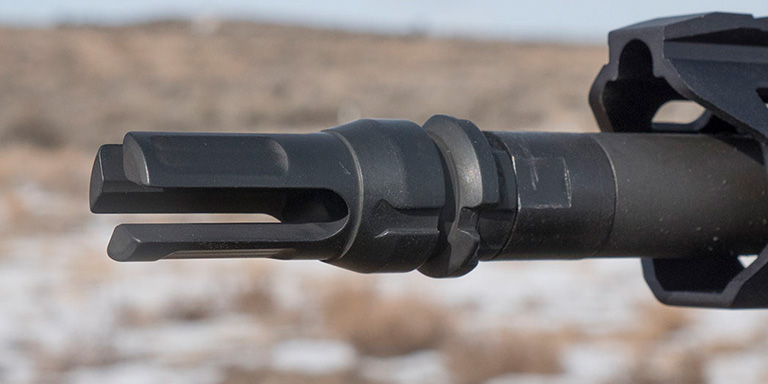
Whereas suppressors reduce sound, flash hiders reduce or eliminate the bright flash of light that emanates from the barrel when a gun is fired. They do so by redirecting the expanding gasses through several smaller channels. This effectively turns one big explosion into several smaller ones, lowering the temperature of each small gas cloud such that they're no longer visible to the naked eye. Flash hiders exist for pistols, but they're more commonly seen on rifles.
Muzzle Brakes
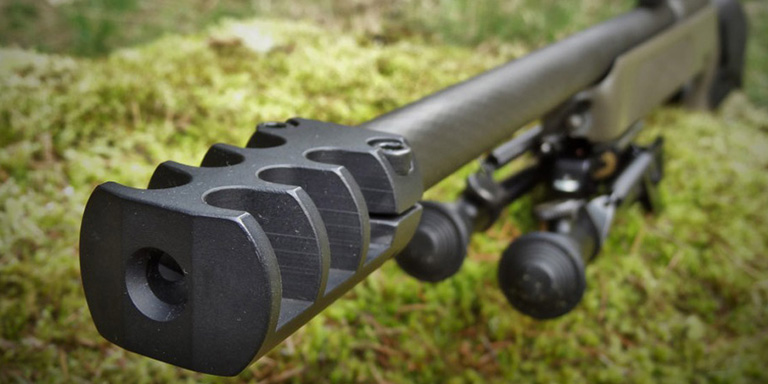
As the name implies, muzzle brakes slow bullets down as they exit the barrel, reducing felt recoil. They can also reduce muzzle rise in some cases. Like flash hiders, muzzle brakes redirect expanding gasses at the end of the barrel.
Because they work in similar ways, muzzle brakes and flash hiders are often integrated into two-in-one units. Muzzle brakes do have downsides, though. The redirected gasses can actually make gunshots even louder than normal (for the shooter), and well-made brakes are costly.
Compensators
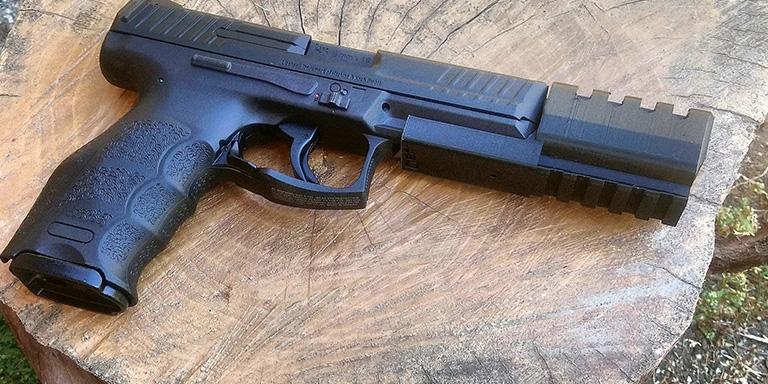
Some people use the terms "muzzle brake" and "compensator" interchangeably, but they are different things. They serve similar purposes, though, so this confusion is understandable. Whereas muzzle brakes are designed primarily to reduce felt recoil and may reduce muzzle rise, compensators are designed primarily for the latter purpose. Redirecting gasses upward, in particular, helps counteract muzzle rise. This makes it easier to reacquire your target more quickly, improving the speed and accuracy of follow-up shots. Compensators are especially helpful when used with high-caliber firearms.
Muzzle Shrouds
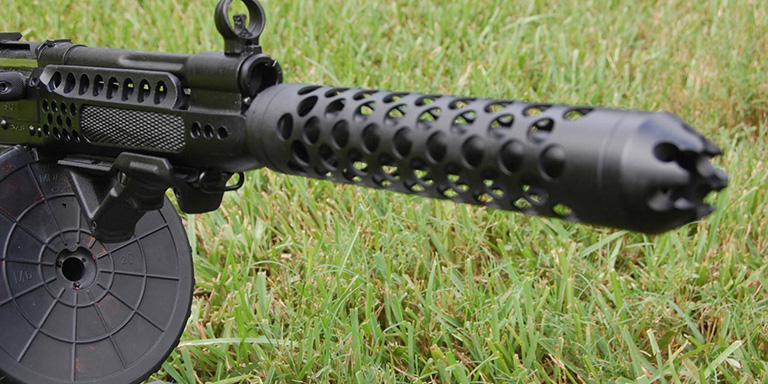
A muzzle shroud is similar in purpose to a suppressor, but it works differently. Whereas suppressors dampen sound, muzzle shrouds simply redirect it away from the shooter, usually via a cone-shaped attachment that forces the sound waves outward in the same direction as the bullet. Muzzle shrouds are useful when you want additional hearing protection but don't necessarily want or need the other features of a suppressor. Also unlike suppressors, muzzle shrouds typically don't require additional ATF paperwork and fees.
Blank Adapters
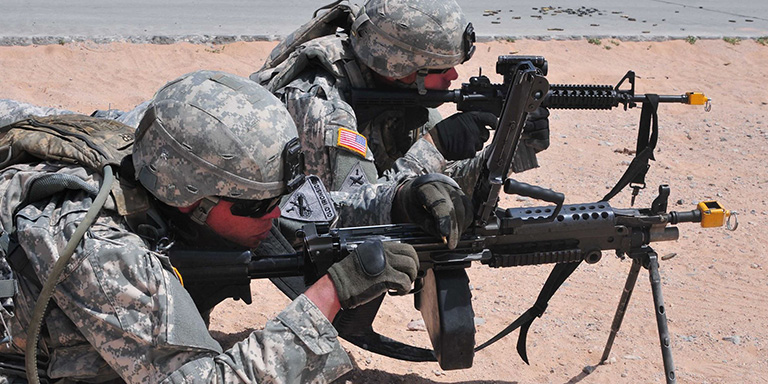
You probably already know that blanks are "fake" rounds used for training and special effects. What some people don't know is that blanks can still cause injury or death, even though there's no actual bullet; the hot gasses and small pieces of metal ejected from the barrel are dangerous at close range.
Some rifles require the use of blank adapters in order to fire blank ammunition safely. These adapters clamp or screw onto the end of the barrel to redirect the propellant gasses and to intercept the small metal fragments. If you intend to use blanks, make sure you understand how to do so properly with your specific firearm, and always treat blanks with the same caution and respect you would use with live ammunition.
Hybrid Attachments
Some barrel attachments, especially those made for rifles, can be two-in-one units. The most common combinations include:
Muzzle brake/flash hider
Suppressor/flash hider
Muzzle brake/compensator
Compensator/flash hider
Unsurprisingly, these hybrid models can be fairly expensive, but because you can only install one barrel attachment at a time, they might be the best option if you have multiple needs in the field.
Pistol and Rifle Replacement Barrels
In some cases, a given need is best served by replacing the barrel of your pistol or rifle entirely. Replacement barrels can be used instead of or, in some cases, in addition to barrel attachments.
Ported Barrels
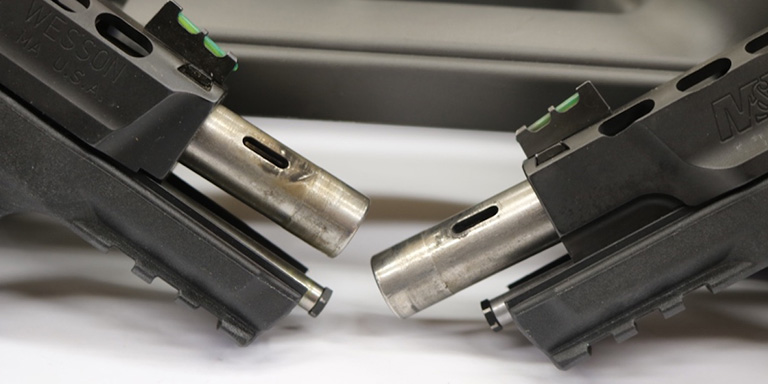
Essentially, a ported barrel is an integrated compensator. Ported barrels are slightly longer than their factory standard counterparts, and the exposed portion has holes or elongated channels cut into it, usually on the top. When the bullet exits the barrel, some of the hot gasses are vented upward through the holes, partly counteracting muzzle rise and reducing felt recoil. This makes follow-up shots faster and more accurate.
Ported barrels do have downsides, however. When used in the dark, muzzle flash may be increased, potentially blinding you momentarily. In self-defense situations, blindness is obviously not a good thing. Ported barrels can also redirect sound waves back toward you, increasing the risk of hearing damage. Bullet velocity is reduced, which is usually more of a problem for rifles than for handguns. Finally, if you're firing from an awkward position or compressed stance, hot gasses escaping through the vents could burn your hands or face.
Ported barrels are certainly useful, but be sure to weigh their drawbacks carefully before installing one.
Extended Barrels
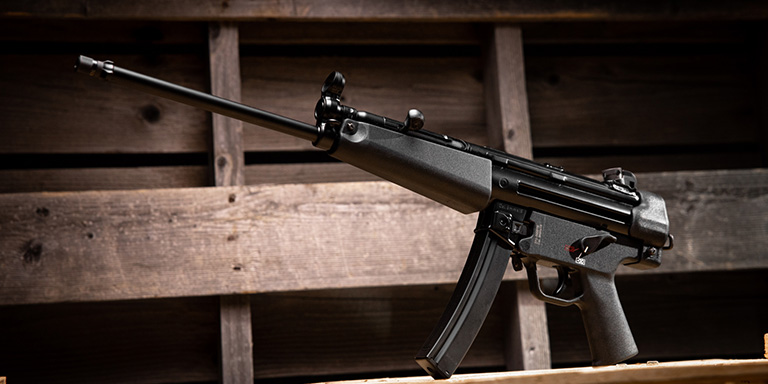
The shorter a firearm's barrel, the less accurate it is, all other factors being equal. Conversely, a longer barrel increases accuracy. Extended barrels are used mostly for this purpose, so they're more common on rifles than on pistols. These barrels can also slightly increase muzzle velocity or reduce muzzle rise, in some cases.
Composite Barrels
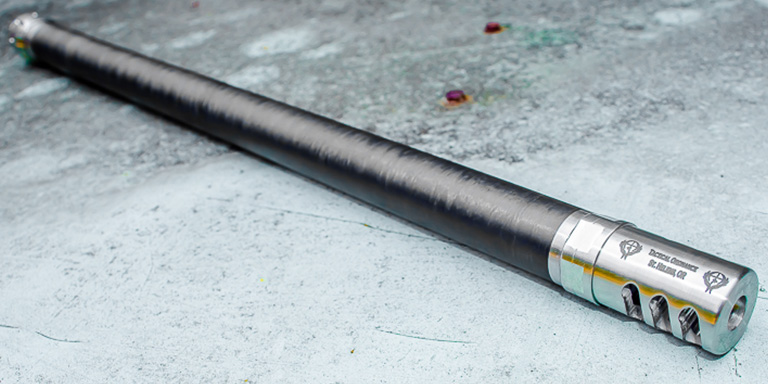
Whereas standard pistol and rifle barrels are usually made of steel, composite barrels are made of carbon fiber. Properly designed and manufactured, such barrels can weigh less than half as much as a comparable steel barrel. They also offer superior heat dissipation, allowing the barrel to cool off quickly. This enhanced cooling also improves accuracy and the overall lifespan of the barrel. If composite barrels have a major drawback, it's the price tag; they can cost as much as an entire rifle.
Shotgun Barrel Attachments
Shotguns are more situational weapons than pistols and rifles, so it makes sense that there are fewer barrel attachments available. Still, depending on your needs, one or more of these attachments could be a worthwhile investment.
Chokes
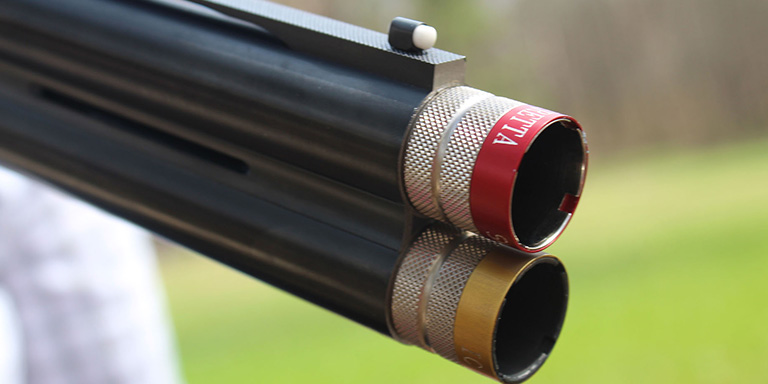
A choke is a device that attaches to the end of a shotgun barrel to narrow it, thereby reducing the spread of the shot. Depending on your needs, this is either a good thing or a bad thing. Chokes are most often used for hunting because increased accuracy at longer ranges improves your chances of making a clean kill. For the same reason, you generally wouldn't use a choke for home defense because, in the confined spaces of your house or apartment, more spread is a good thing (up to a point).
Many modern shotguns are manufactured to be compatible with choke tube systems, which allow shooters to install, swap and uninstall chokes quickly and easily. However, if you want to install a choke on a shotgun not designed to accommodate one, it gets more difficult and more dangerous. In that case, get help from a qualified gunsmith.
Gauge Adapters
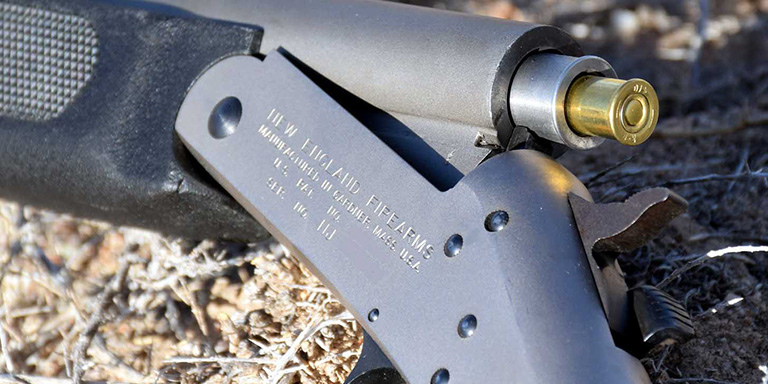
Also called chamber reducers or barrel inserts, a shotgun gauge adapter effectively converts a larger-gauge shotgun into a smaller one. Like a choke, this is a one-way street; you can't make a small-gauge shotgun bigger. Gauge adapters can be a good option for shooters on a budget who want to expand their options without buying several new shotguns.
However, installing a gauge adapter improperly can be very dangerous. Only certain combinations are safe. Consult the manufacturer and a qualified gunsmith before installing a gauge adapter.
Flash Hiders, Muzzle Brakes and Suppressors
Even though these attachments serve different purposes, we've grouped them together because, for shotguns, they're all of questionable usefulness. Shotguns have much lower internal barrel pressures than pistols and rifles, meaning that there isn't much escaping gas to mitigate in the first place. Experts generally agree that muzzle brakes for shotguns provide, at most, about a 15 percent reduction in felt recoil. Flash hiders are arguably useless because shotguns are close-range weapons; reducing muzzle flash doesn't help the shooter stay hidden.
The same is true of suppressors. Shotgun suppressors are long, heavy and expensive, and even top-of-the-line models don't provide much noise reduction. Under no (or perhaps very few) circumstances is a shotgun a stealth weapon.
Shotgun Replacement Barrels
In a few limited cases, an attachment won't cut it, and you'll need a new barrel for your shotgun.
Breaching Barrels
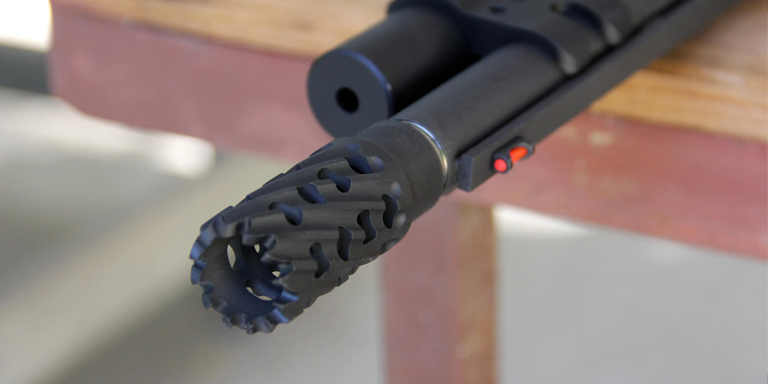
Perhaps the most situational of all shotgun accessories, breaching barrels are used almost exclusively by law enforcement (but they are legal for civilians to own). Police use door breaching shotguns, as the name implies, to blow the hinges or locks off doors. This must be done properly and with great care; if done improperly, shot or debris can injure or even kill friendly forces.
A door breaching barrel has sharp teeth on the end which allow it to "bite" into wood, giving the user more stability and reducing the risk of potentially catastrophic slips.
Rifled Barrels
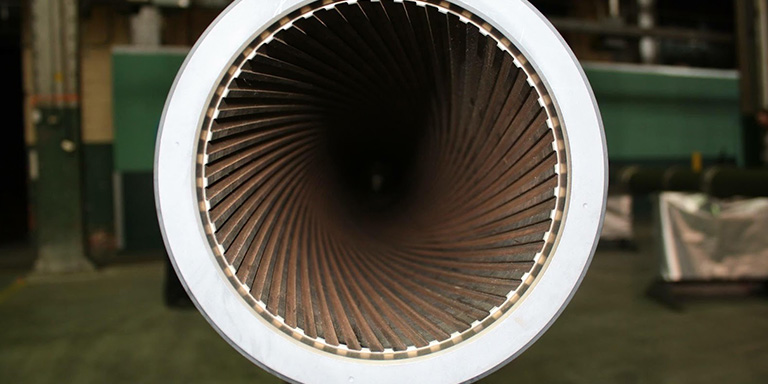
Most shotguns have smoothbore (i.e. not rifled) barrels. The purpose of rifling is to cause bullets to rotate and thus fly faster and straighter, but shotguns fire shot, not bullets.
Unless, of course, you're using slugs. Slugs are structurally similar to bullets, so they can benefit from being fired out of a rifled barrel. Most (but not all) slugs can be fired from smoothbore shotgun barrels, but they may damage the barrel with regular use over time. Never fire shot from a rifled barrel.
As we've seen throughout this guide, barrel attachments and replacement barrels can greatly increase your options on the battlefield, while hunting or when defending your home. However, modifying the barrel of your gun can be dangerous, and safety is a prime concern. Never hesitate to get help from an expert gunsmith if you don't know exactly what you're doing.