

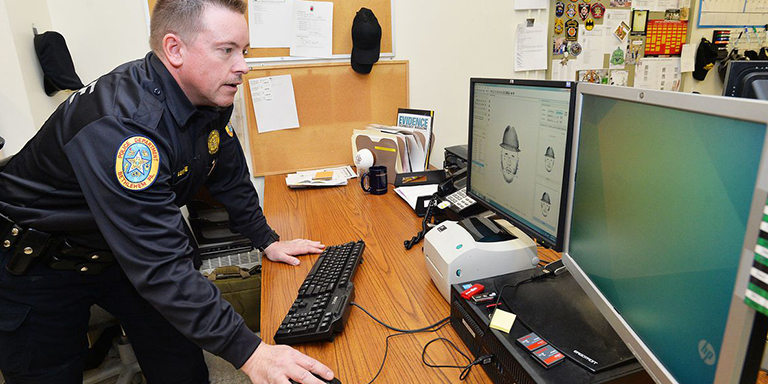
The term "police sketch" typically conjures the image of a witness looking over the shoulder of an artist who's drawing the details of a perpetrator's face as the witness describes them. The victim might give instructions, like, "His eyes were wider apart," or "He had bushier eyebrows."
While this is an important aspect of what police sketch artists do, as we will see, this notion oversimplifies the process. The field of forensic artistry is much more complex than mere pencil and paper. It employs a number of cutting-edge techniques and technologies to help law enforcement apprehend criminals.
Sketch Artist or Composite Artist?
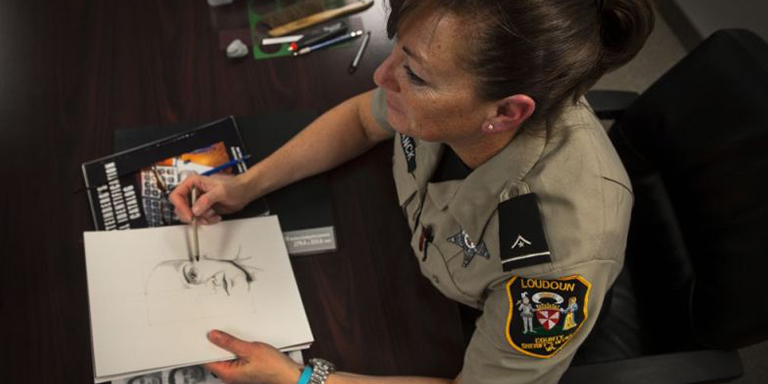
The term "sketch artist" does not do these law enforcement professionals justice. One may observe a sketch artist in a courtroom that doesn't allow cameras. They will sit and quickly sketch the faces of witnesses and attorneys as a trial progresses and provide chalked images shown on the nightly news. While a sketch artist can reduce what they see to a visual image, a forensic artist must extract the image from a witness's mind and memory and accurately recreate it.
Very few police officers will ever meet or work with a forensic artist. While large metropolitan departments may have one on staff, a good police forensic artist is a rare and highly sought-after professional. Police artists are generally called upon for only the most notorious crimes, such as child abductions, multiple murders, serial rapists or acts of terrorism.
A composite forensic artist is a person who law enforcement experts have professionally trained in their field of study. They are usually sworn officers whose body of work grows as they progress through their careers. Many are judged on the success rate of their artistry to identify perpetrators accurately.
This is, however, a very small group, usually employed by either large city departments, state police departments or the FBI. In addition, some artists freelance between departments. Finally, others volunteer their services in the specialized fields of reconstruction and age modification of missing children.
Drawing a Face from a Memory
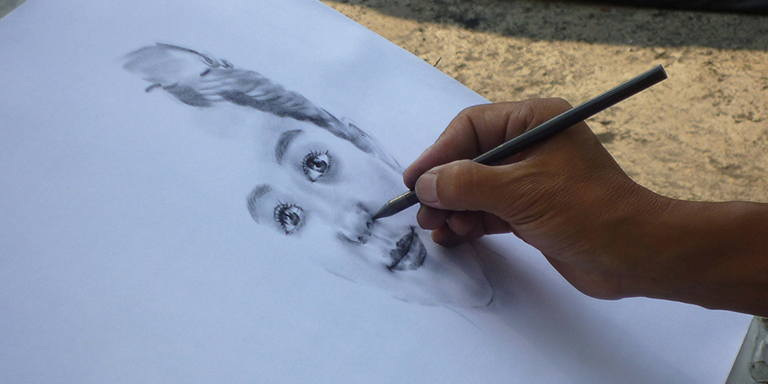
Composite artistic imagery is the most well-known of the three disciplines of forensic art. It is the process of an artist interviewing a victim or witness and gathering information that will lead to a composite sketch of a suspect. Part of a forensic artist's job is to effectively deal with a victim or witness who has been traumatized by the crime they endured. Their interview must draw out a person's memories through a combination of interview skills and empathy to extract as much detail as possible.
The artist may ask the victim to recall anything they perceived, felt, heard or even smelled. For example, remembering a distinct smell might mentally place the victim back at the scene (if even for a moment) and identify additional information of a repressed memory.
In some cases, the artist may conduct a cognitive interview. The cognitive interview method facilitates recalling an event from a witness's memory. This result is achieved by recreating the event in question. The scene is reconstructed piece by piece in the person's mind so they begin to relive the incident and can provide greater detail.
This information, combined with the artist's knowledge of anatomy, is sketched with constant input from the victim or witness. The artist must be careful not to use their artistic ability to over-draw the sketch by filling in too much detail. Instead, the rendering should rely on the victim's or witness's recollections. A composite without added detail may make it easier to identify likely suspects.
Once completed, the witness or victim will be required to sign and date the original composite on the back. This is considered to be their pictorial statement. After copies are made, the original is secured into evidence. The witness's signature is on the back so their identity is protected, but they can still quickly identify their pictorial statement in court.
Sometimes a composite artist is used to fill in the blanks. One example would be that of a video surveillance camera at a bank that only recorded part of a bank robber's face at an angle. A composite artist can take the video image and draw a composite of the robber's face based on the available facial characteristics.
Some veteran detectives are reluctant to publicize witness composite renderings. Eyewitnesses are sometimes considered unreliable, and the fear is that the perpetrator may eventually be apprehended based on other evidence and have no resemblance to the sketch. Some experts also believe that an inaccurate drawing might cause officers to overlook a suspect who does not resemble the composite.
Adding a Face to a Mystery
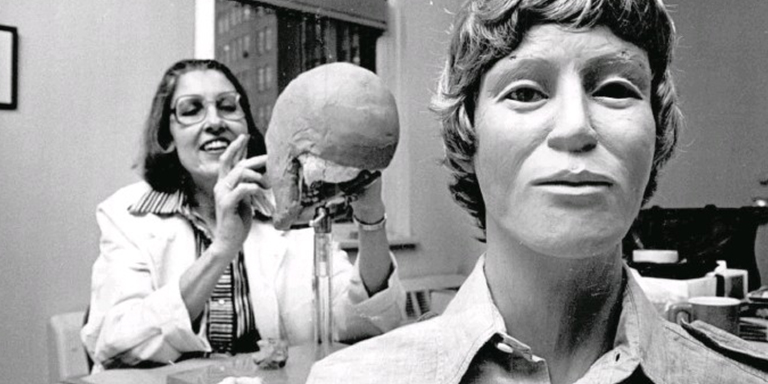
The second forensic art discipline, post-mortem facial reconstruction is one of the most challenging to do well. Many homicides are not discovered until long after they have occurred. Police locate human remains that can no longer be identified — often only skeletal remains.
According to the late renowned facial reconstruction artist Betty Gatliff, "In solving a homicide, you first have to know who the victim is before you can know who the perpetrator is." In 1967, a young Native American man was murdered while hitchhiking. Unfortunately, authorities could not identify his remains — that is, until Betty Gatliff stepped in. She analyzed the remains, was able to accurately produce a facial reconstruction, and the victim was positively identified. This was the beginning of 3D modeling.
Generally working only with a skull, the facial reconstruction begins with affixing plastic dowels of the proper depth to various points on the skull based on human anatomy. Next, specific bone structures and measurements give clues to the deceased's age, sex, body type and ethnicity. The face is then reconstructed using these clues as a guide. The entire composite face is then covered in clay, using the plastic dowels as depth guides. The clay is then sculptured to resemble what the victim may have looked like. The final step is to add glass eyes and a wig. Photographs are taken of the reconstructed face, and they are then compared to known missing persons. Once photographed, the materials are removed, and the deceased's skull is returned for proper interment.
Betty Gatliff developed a method of determining tissue depth at specific points on the face, giving faces to those otherwise unidentifiable. Unfortunately, her work was tremendously difficult to get right because it was based on assumptions and limited information. While many of her reconstructions were never identified, Betty had a seventy percent identification rate in giving names to the unknown, according to a Washington Post feature story.
In 1978, Gatliff was called upon by the United States House Committee on Assassinations to create life-size models of President Kennedy's head for use in trajectory tests. She was also the technical advisor for the television series Quincy M.E., which depicted a medical examiner solving crimes using forensic science. During her career, Betty reconstructed the faces of approximately three hundred unidentified persons. She also taught classes at the FBI academy in Quantico. Her work was instrumental in advancing the field of forensic art.
Aging a Face
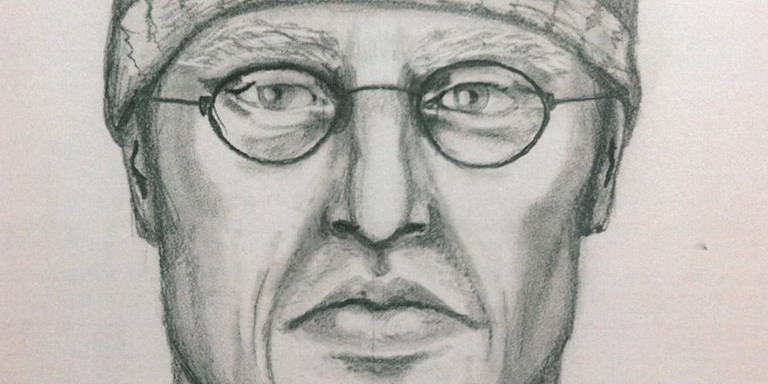
The third forensic art discipline includes modifying known images to show the progression of age. This process enhances or alters a missing person's image to show how they might look during the natural aging process.
A five-year-old child who has been missing for three years would be a prime candidate for this type of forensic art. The artist would alter an existing photograph to show how the child might appear at, for example, age eight. The changes are based on photographs depicting the five-year-old's bone structure and facial features. The artist may also use the characteristics of siblings and parents to influence the age progression. This can be done either by sketch or computer program. While it is rare, kidnapped children have been located years later and reunited with their parents with the help of age-modified imagery.
Not all missing persons are children. A second use for the forensic art of age progression includes tracking wanted persons who have evaded capture for significant periods of time. Whitey Bulger, a murderous organized crime figure, was on the FBI's Ten Most Wanted Fugitives List for twelve years and was a fugitive for more than sixteen years.
Along with other methods, the FBI used age progression artistry to publicize how Bulger might have appeared years after becoming a fugitive. The notorious gangster's age-adjusted images were featured on the show America's Most Wanted sixteen times. The last time was in October 2010, just months before he was located and arrested. Authorities credited the arrest of Bulger in 2011 as a direct result of the extensive TV media campaign. He was identified as living in Santa Monica, California, and finally arrested at age 81.
Forensic Composite Programs and Kits
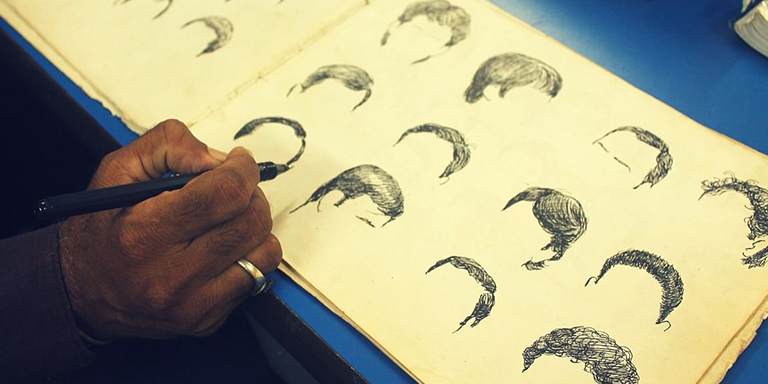
A forensic artist is not usually available except for rare, high-profile cases. However, that doesn't mean that a police investigator can't help to develop a composite image. Before computers, police departments used a system of transparent plastic overlays. The first overlay would usually be the shape of the person's face — round, oval or elongated. Then, other overlays would be added to give a specific type of mouth or nose. With each overlay, another feature was added to help create a face. Then, looking through a stack of transparent plastic sheets, the finished product would hopefully bear some resemblance to the person the victim or witness described.
Once computer programs entered the picture, a basic image could be manipulated, providing a more comprehensive group of facial features from which to select. By today's standards, these early programs were still clumsy, but they were an improvement over the transparent plastic overlays. Today, police identity kits consist of complex computer programs. Detectives can attend a computer course to master the program's operation, and many departments lease advanced software programs.
Art vs. Technology
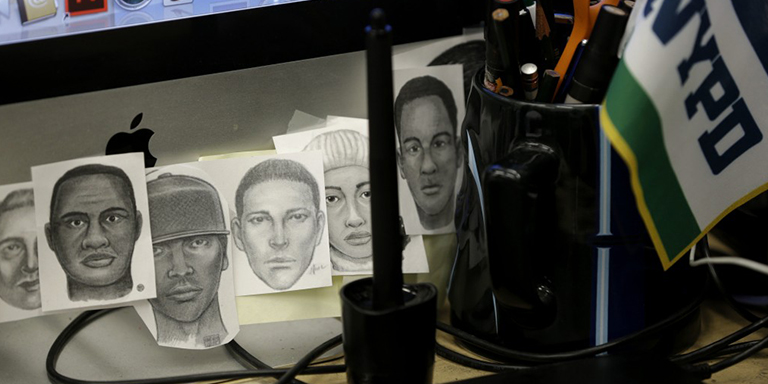
Forensic artists will always have a place in police investigations. However, technology is starting to rival their skills. As computer programs become more complex, aging a photograph might become as simple as programming the number of years the investigator wants to add to a person's age. With the use of facial recognition technology and artificial intelligence, more emphasis may be placed on an investigator's ability to ask the right questions and enter the correct data.
Much of the three disciplines of forensic art are a mixture of art and science. All three will very likely find themselves using a computer screen as opposed to a sketch pad or clay in the near future.
Forensic artists have provided crucial evidence in many otherwise unsolved crimes, giving faces and sometimes names to otherwise unknown victims of crime. Their work is specialized and complex, yet they have provided hope to the parents of missing children and helped deliver justice to those who evade capture. Whether using a sketch pad, modeling clay or a computer, they are true artists, and their work represents the finest in police investigative tools.