

With the goal of facilitating government procurement between federal, state & local agencies and commercial businesses, the General Services Administration, or GSA, has a lot of important responsibilities. One of the administration's primary duties is using its negotiating leverage to ensure the best possible prices on commercial goods and services for the agencies it serves. As a result, government organizations buying through GSA enjoy huge discounts on millions of products.
As with any government agency, however, using GSA's services can be a little overwhelming. Between hundreds of pages of regulations, restrictions on certain products and understanding government contracts (just to name a few), government buyers may not know where to begin. This comprehensive guide to buying through GSA will help to minimize the confusion and streamline the bureaucracy for an easy, straightforward purchasing experience.
Contact our Strategic Accounts Team to learn about GSA discounts on TacticalGear.com products.
What is GSA?

The General Services Administration was established in 1949 to consolidate the responsibilities of five other agencies in the name of efficiency and cost saving. It consists of two main branches: the Public Buildings Service (PBS), which handles and leases a number of federal buildings, and the Federal Acquisition Service (FAS), which works to provide deep commercial discounts to government employees. FAS oversees billions of dollars in federal agency procurement every year.
Who Can Buy Through GSA?

As mentioned, GSA serves federal, state and local government agencies alike. The quickest way to find out if your agency is eligible to purchase through GSA is by taking a look at GSA's eligibility determination page on their website. You can also contact [email protected] via email or call GSA customer service at 1-800-488-3111 for further assistance.
What Can I Buy Through GSA?

The General Services Administration works with a diverse number of private businesses to ensure its vast selection of goods and services for government buyers. The list of available products includes (but is not limited to):
Telecommunication services
Airfare
Charge cards
Shipping services
Information technology acquisition and consulting services
Vehicle and fleet services
Clothing, footwear and equipment through commercial providers like TacticalGear.com
While the number of products GSA provides is immense, the products themselves are not without limitation. Items on GSA' s site must be TAA compliant — that is, they must fall under the rules and regulations set forth in the Trade Agreements Act of 1979.
The Trade Agreements Act governs trade between the United States and other countries around the world. It was created to establish and maintain an open, global trading system, to expand opportunities for United States commerce in international trade and to improve international trade rules (while also enforcing those rules). TAA compliant products (generally speaking) are those that are made in the USA or made in a TAA designated country who the U.S. chose to include in the agreement. Many countries are absent from that list, most notably China, India, Indonesia, Malaysia, Pakistan and Russia.
Discounts on GSA Products
How does GSA ensure they can offer government agencies the best prices available? For one, they utilize the powerful negotiating leverage of the federal government: private businesses selling their products through GSA must provide GSA buyers a lower price than they would any non-GSA customer or consumer.
GSA also keeps prices competitive between its own network of private vendors through two primary methods: continuously open solicitations and evergreen contracting. The administration developed these methods through research & development and consultations with top U.S. business people.
Continuously Open Solicitations
In establishing the practice of continuously open solicitations, GSA ensures that new businesses may approach the administration to sell their products at any time. As long as a business fulfills mandatory requirements to sell through GSA, that business can become a GSA vendor. Continuously open solicitations facilitate competition, which provides further options for government buyers and keeps prices low.
Evergreen Contracting
Once a company agrees to sell their products through GSA, they are committed for the (relatively) long term. GSA vendors have a five-year base contract period and may opt into three five-year extension periods. This practice helps ensure that buyers enjoy a wide selection from many companies on a consistent basis.
What are GSA Schedules?
At the heart of every transaction between a government buyer and a commercial business is a contract, also known as a Schedule. Schedules are legally binding agreements between businesses and the General Services Administration to determine fixed prices for every product or service that business wants to sell through GSA. Also known as Federal Supply Schedules (FSS) or, more commonly, Multiple Award Schedules (MAS), Schedules make it both efficient and easy to connect government buyers to businesses within their respective industry.
How Are Schedule Prices Determined?
Determining Schedule prices is part of the long, diligent process of a business becoming a GSA seller. The private business negotiates the prices of its products with a GSA contracting officer, or CO. COs negotiate products' prices based on a number of factors, including:
Comparing prices offered by the business to the government with prices offered by the business to commercial (non-government) customers
Considering the prices of similar products offered by the vendor's competitors
Considering past price listings on similar products
Looking at current prices from other sources
Acting on behalf of the government and government buyers, the contracting officer considers these factors to determine potential price points for any product or service a business wants to sell through GSA. The final pricing of all goods and services is set by the contracting officer.
How Does a Vendor Like TacticalGear.com Win a Schedule?
Despite GSA's continuously open solicitations, the administration doesn't let just any company become a vendor. A business that wants to sell through GSA must have been operating for at least two years by the time they contact GSA about a contract. The business must also provide financial statements to the administration to ensure that the company is sound and keeps up with best practices. Among other things, vendors being considered by GSA for a Schedule contract are rated on:
Reliability
Quality
Product costs
Business relations
Order accuracy
The professionalism of their personnel
The timeliness of their deliveries
Their support and responsiveness to their customers
GSA even requires a ratings report on the company from at least six past customers, preferably from government buyers who have worked with the company before. These standards exist so GSA can ensure that the buyers they serve are purchasing from the best, most reputable vendors available.
How Do I Buy Through GSA?
There are many ways to buy goods and services through the General Services Administration based on the needs of your agency and the size and complexity of your ordering requirements. The most common and easiest to navigate, though, is GSA Advantage.
GSA Advantage
To keep up with the rise of ecommerce, the General Services Administration developed GSA Advantage, an online ordering system which provides government buyers access to thousands of commercial contractors and millions of products and services. While anyone can view GSA Advantage online, purchases are strictly limited to individuals buying on behalf of a government agency.
If your agency is eligible, you'll be able to use GSA Advantage to make purchases through the Schedule contractors program. To register your agency, visit the GSA Advantage website and look for the "REGISTER" tab in the top right. The site will ask if you're buying on behalf of a federal agency, or a state or local agency. Select the appropriate option and complete the registration process (if you're using a .gov or .mil email address, your registration is likely to be approved automatically without the need for a review). If you need assistance completing your registration, you can contact [email protected] via email or call 1-877-472-3777.
GSA Advantage is much like any other online store with one important difference: each product on the portal is attributed to multiple contractors who sell that product. These contractors (private businesses) compete with each other to offer the best price on each product. The government buyer can then compare prices from each contractor and pick the one who offers the best price. Regarding payment, buyers have three options:
A governmentwide commercial purchase card (GSA SmartPay)
A GSA Activity Address Code (AAC)
A Department of Defense Activity Address Code (DoDAAC)
The buyer's payment method will depend on the agency for whom the purchase is being made. To learn more about purchasing TacticalGear.com's products through GSA Advantage, contact our Strategic Accounts team or visit TacticalGear.com's product page on GSA Advantage.
eBuy
A component of GSA Advantage, eBuy is GSA's online Request for Quotation (RFQ) tool, allowing buyers to submit requests for quotes on any GSA product. eBuy is typically reserved for complex, high-dollar orders and ongoing contracts between buyers and suppliers. It's designed to simplify the acquisition process in order to eliminate confusion and save buyers time and money. You can visit GSA's eBuy page in order to get started.
Direct Purchase
While GSA Advantage and eBuy are simple, easy tools for buying through GSA, they aren't necessarily a requirement — if you know of an authorized GSA vendor, you can buy directly through them to streamline the process even further. As long as you let them know you're a GSA buyer, you'll receive the pre-negotiated discount pricing. You will, however, want to follow some basic steps to ensure your purchasing activity falls within the Federal Acquisition Regulation.
Contact our Strategic Accounts Team to learn about GSA discounts on TacticalGear.com products.
Federal Acquisition Regulation
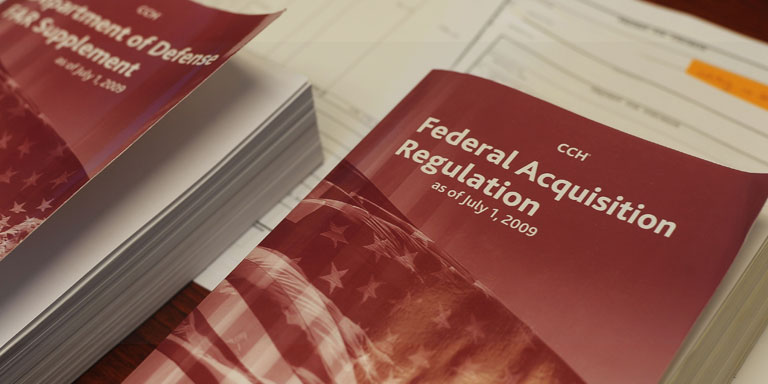
The General Services Administration is, first and foremost, a government agency. As a result, buyers, sellers and Schedule contracts are subject to a dense set of laws and regulations. The Federal Acquisition Regulation, or FAR, is the body of legislation that sets rules for the creation of GSA contracts and governs how buyers and sellers use GSA. While the regulations are quite exhaustive, FAR Subpart 8.4 focuses on the information and policies that guide the buying process, so it is highly advantageous for buyers to familiarize themselves with it. It's broken down into six parts, each with its own specific focus.
FAR Subpart 8.4
8.401: Definitions
The definitions section simply lays out the terminology used throughout the rest of FAR Subpart 8.4. It defines five different terms with which to be familiar.
Ordering Activity
- The Ordering Activity is the individual authorized to buy on behalf of an agency.Multiple Award Schedule (MAS)
- A Multiple Award Schedule for a product or service means that GSA offers that product or service from two or more suppliers at different and competing price points.Requiring Agency
- This is simply the agency in need of supplies or services (the agency for which you, the buyer, work).Schedules e-Library
- This is the online source for GSA Federal Supply Schedule contract information. This resource can be found here.Special Item Number (SIN)
- A SIN is a group of similar products or services which are intended to serve the same general purpose or function.
8.402: General
As this section's title suggests, it provides a general overview of the players and processes involved in GSA. 8.402 describes what the GSA Schedule Program is, what GSA can do to facilitate and change the Schedule Program, what sellers must do to participate in the Schedule Program, what GSA Advantage is and how it's set up, what e-Buy is, who contracting officers are and what contracting officers do.
8.403: Applicability
This short section of FAR Subpart 8.4 simply establishes that GSA has the right to issue special ordering procedures in very specific circumstances. These procedures are unlikely to affect most buyers.
8.404: Use of Federal Supply Schedules
This section of Subpart 8.4 revolves heavily around pricing. In summary, it dictates that GSA has, through research and negotiation, already set fixed prices for goods and services. While GSA prices are generally as fair and reasonable as a buyer can expect, 8.404 indicates that buyers may still request price reductions for goods and services at their discretion (though this doesn't necessarily happen that often).
8.404 (specifically point H) also contains important information regarding the purchase of hourly services through laborers, IT workers and others. The rules around hourly price rates are myriad and specific, so if you expect they will apply to you, be sure to read up on section H of FAR 8.404.
8.405: Ordering Procedures for Federal Supply Schedules
Section 8.405 is a very large, thorough section of FAR Subpart 8.4 that is broken down into seven distinct parts: 8.405-1 through 8.405-7. Their entire contents are a bit too lengthy to summarize completely, but here is a short description of what each section contains.
- 8.405-1: Rules and procedures used when ordering supplies and services that don't require a statement of work
- 8.405-2: Rules and procedures used when ordering supplies and services that do require a statement of work
- 8.405-3: Blanket purchasing agreements (BPAs) (used to fill repetitive needs for supplies or services)
- 8.405-4: Requesting price reductions before placing an order, establishing a BPA or upon a BPA's annual review
- 8.405-5: Rules and procedures for small businesses
- 8.405-6: Rules to establish and ensure competition in buying and selling (and exceptions to those rules)
- 8.405-7: Rules regarding payment
Though this section has a lot of information, not all of it may necessarily apply to your buying needs. It's a good idea to identify which subsections of 8.405 pertain to you and review them thoroughly.
8.406: Ordering Activity Responsibilities
This section contains the rules that apply both to buyers (known here as "ordering activities") and sellers when working with each other. Like 8.405, 8.406 is broken down into seven parts. Here's what each part covers.
8.406-1: How buyers place orders and what information they must supply to a seller
8.406-2: How buyers must inspect goods upon delivery
8.406-3: How sellers must correct any mistakes in the delivery of supplies or services (and what buyers should do if a seller fails to correct those mistakes)
8.406-4: Canceling orders, and procedures for handling extra costs that may arise
8.406-5: Order cancellations for the government's convenience
8.406-6: How disputes (and appeals of disputes) are handled
8.406-7: How buyers must complete performance evaluations of sellers
8.406 provides information on the kinds of actions and activities you're most likely to undertake often as a buyer, as well as specific responsibilities that fall to you before, during and after the ordering process. If you're unsure about anything when buying through GSA, refer to section 8.406 — it likely has your answer.
Buying GSA Products through TacticalGear.com
Now that you understand what GSA is and the specifics of its rules and regulations, you're ready to buy! TacticalGear.com boasts a wide selection of TAA compliant, discounted products through GSA. You can find these products on TacticalGear.com's GSA Advantage page. If you have any additional questions or concerns regarding prices, products or GSA in general, please feel welcome to contact the TacticalGear.com Strategic Accounts team who specializes in providing first-rate procurement for government agencies.