

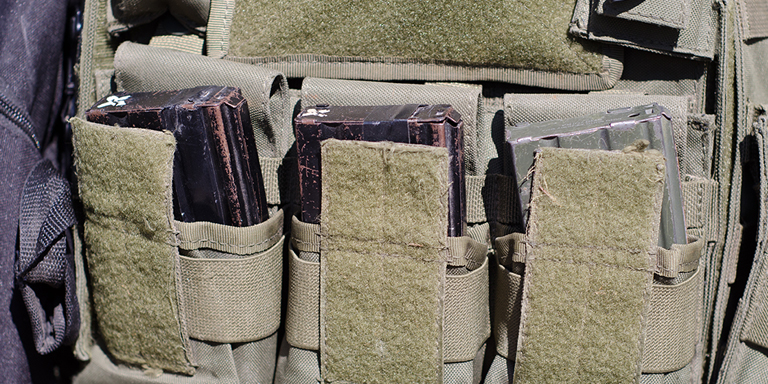
Buying your first handgun or holster requires careful research, and magazine pouches are no different. You may think that you can just buy whichever magazine pouch looks about right for your needs, but there’s more to it than that, and you may be dissatisfied with your purchase if you don’t do some planning first.
In this guide, we’ll help you ask some targeting questions to figure out which kinds of magazine pouches will best suit your needs. We’ll cover essential considerations common to most shooters, the pros and cons of different materials, and ways to narrow down your choices based on what kind of shooting you’re doing.
Prioritizing Your Basic Needs
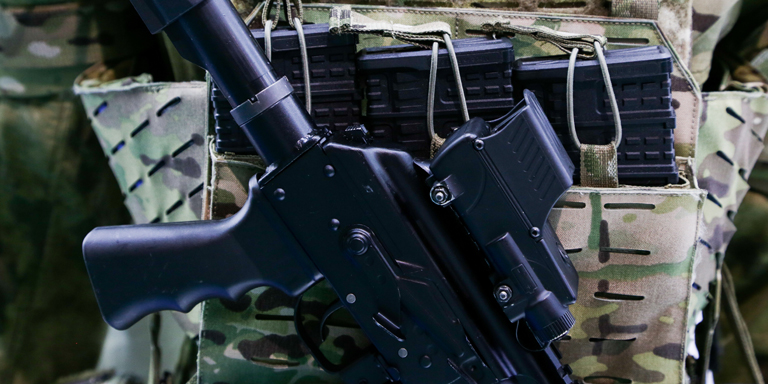
Most of the factors you’ll need to consider when choosing magazine pouches fall under one of three broad categories.
Retention
Or, how well do the magazines stay put? You may think that more and tighter retention is better, but that’s not always the case. Many factors affect magazine retention, including the material (hard plastics generally offer a tighter fit), open vs. closed design, and orientation.
Ease of Access
Here, too, you might think that you always want your magazines to be easily accessible, but again, there are other factors and tradeoffs to consider. For example, ease of access generally has an inverse relationship to both concealability and retention, so you’ll need to think carefully about which of these things are most important to you.
Speed of Access
Ease of access and speed of access are closely related but not exactly the same thing. For example, an open-top, hard plastic insert could be quick to access (because it’s open) but somewhat difficult to access (because the plastic holds the magazine tightly in place and you’ll need a good, strong pull to get the magazine free). Some shooters measure speed of access numerically, in seconds, usually defined as the time it takes to acquire a new magazine and fully reload your weapon, starting from a normal shooting position. Of course, this varies by shooter and by skill level, and some shooters will find certain magazine pouches faster than others.
Essential Considerations
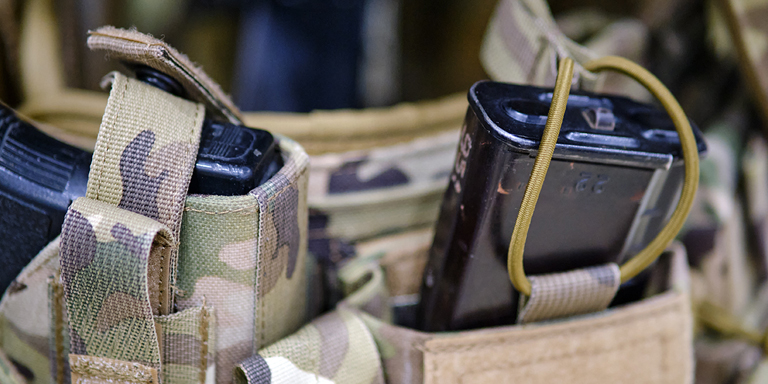
No matter what specific role you want your next set of mag pouches to fill, you’ll want to give careful thought to all of these factors.
Single, Double, or Triple Pouches?
Do you need one, two, or three spare magazines? Possibly even more? Obviously, more magazines take up more space and weight on your belt or in your bag. Double and triple mag pouches can be aligned laterally (next to one another) or stacked on top of one another. Each design has significantly different impacts on retention, ease of access, and speed of access.
Carry Location
Most shooters carry their spare mags in one of four places:
Inside the waistband (good retention and concealability, reduced ease and speed of access)
Outside the waistband (reduced retention and concealability, improved ease and speed of access)
On a vest (good ease and speed of access, usually no concealability, retention varies)
In a bag (maximum concealability, retention varies, worst ease and speed of access)
Open vs. Closed Design
As the name implies, open-top mag pouches don’t fully enclose the magazine. It partially protrudes, maximizing ease and speed of access at the cost of reduced retention (all else being roughly equal). Closed pouches can feature flaps, snaps, or buckles, in increasing order of retention.
Retention Systems
A retention system can be almost anything, but seven designs are especially common. Open-top mag pouches usually feature one of these options:
Kydex inserts, which are molded to the exact shape of your specific magazine for maximum retention (but you’ll need a firm, strong pull to get it out).
Side panels under spring tension, which automatically expand to the right width when you insert the magazine. These offer a good balance of retention and speed. They may be your best choice if you carry different guns at different times and you don’t want to constantly swap out your mag pouches.
Hard plastic panels with screws, which are like molded inserts but adjustable to fit different kinds of magazines. These offer tight retention, but not as tight as inserts.
Elastic bands that can (theoretically) accommodate any magazine. We generally don’t recommend these; although they’re inexpensive, the elastic wears out quickly.
Closed mag pouches can have:
Flaps or Velcro covers, which prioritize speed over retention.
Button snaps, which balance speed and retention. Beware, though — the snaps wear out and need to be replaced over time.
Buckles, which maximize retention in exchange for relatively slow access.
Universal or Molded Fit?
As is the case with holsters, you should make sure you know the tradeoffs before you purchase universal mag pouches. There’s a good chance that such pouches won’t offer very good retention for your particular magazines, so keep that risk in mind. They are less expensive, though, especially if you’re looking to use the same set of pouches with several different guns.
MOLLE Compatibility
MOLLE (modular, lightweight, load-carrying equipment) is one of several popular gear customization platforms; TekLok and ELS (Equipment Locking System) are two others. If you’re looking at magazine pouches designed for a specific platform, make sure they’re compatible with the belt, vest, or bag you plan to use.
Comfort
This may seem like a minor consideration, and it might be, if you’re not planning to wear your mag pouches for extended periods. If you’re on duty for eight hours at a time or longer, though, comfort becomes much more important. Be sure to also consider ergonomics and movement impedance. Can you easily reach your mag pouches in various odd positions? Can you run, jump, climb, and crawl without them getting in the way?
Water Retention
Magazines and bullets can take a quick dip in water with no ill effects, but prolonged exposure is a different story. Some magazine pouches are effectively watertight, which may or may not be intentional. If you’re likely to get water or mud in your mag pouches, make sure it’ll be able to drain out.
Noise Level
Think about situations in which you’re likely to use your spare magazines — particularly life-or-death situations. Will you be able to do so quietly, if necessary? Some magazine pouches are more or less impossible to access silently.
Re-Indexing
"Re-indexing" your magazine refers to the process of orienting and replacing magazines in their pouches without having to look at them — for instance, when you perform a tactical reload. As a rule of thumb, certain types of pouches make it more difficult to re-index your magazines:
Closed-top designs
Those with tighter retention or good concealability
Inside-the-waistband designs
Kydex inserts
Material Choices
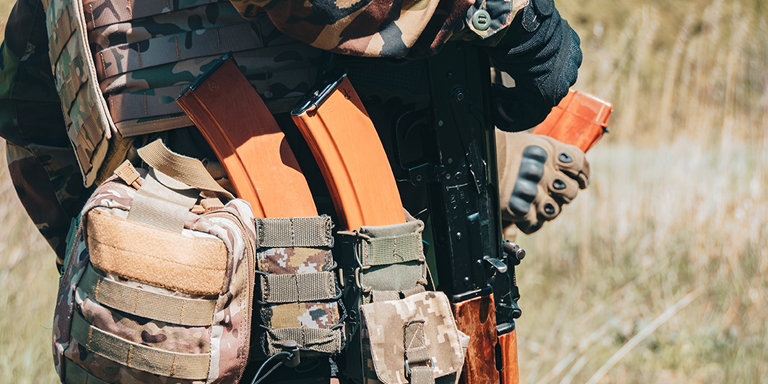
Most magazine pouches are made of either nylon, Kydex, or leather. Each offers distinct pros and cons:
Nylon is a good all-around material choice that is neither excellent nor poor in any respect. It’s reasonably tough and rigid, and it tends to be used in closed-top designs with or without plastic inserts. It’s not particularly resistant to dirt and water, though, and it’s hard to clean.
For ultimate retention and durability, you probably want Kydex. Most Kydex pouches are open-top designs, but depending on where and how you wear them, they may get pretty uncomfortable. Re-indexing tends to be loud. You can also get Kydex inserts for nylon pouches.
Leather is often best for everyday concealed carry or on-duty carry — situations wherein you’re not very likely to get wet or dirty. It is relatively easy to clean, though, as long as it doesn’t stay wet for long periods. Leather usually beats nylon and Kydex for comfort and concealability, but retention may suffer, and it can be expensive.
Purpose-Based Recommendations
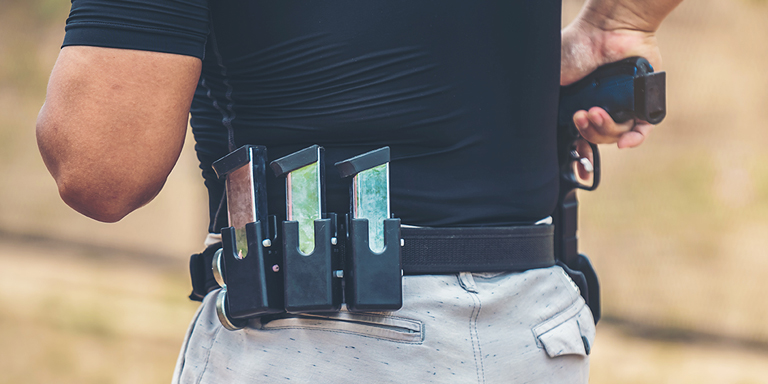
To close out this guide, we’d like to offer some guidance on choosing magazine pouches based on your needs. These suggestions may not lead to perfect matches in every case, but they should be good starting points.
EDC (Everyday Carry)
Most of us who carry every day aren’t anticipating prolonged gunfights (most self-defense shootings are resolved within five seconds), so we don’t usually need more than one or maybe two spare mags. Comfort, speed, and decent retention are generally the biggest priorities, so we lean toward open-top, leather pouches in single or double configurations. Generally, your preference for open or concealed carry will dictate whether you want to carry IWB, OWB, or in a bag.
Car Guns
If you keep a dedicated gun in your vehicle, retention is a top concern — you definitely don’t want a loaded gun flying around the car if you slam on the brakes or get rear-ended. The same goes for your spare magazines. We recommend custom-molded Kydex pouches, mounted securely with screws — perhaps under the steering column or on the side of the center console. Generally, open-top designs are best for slightly quicker access; Kydex pouches are already fairly slow.
Sport Shooting
We can’t offer much in the way of specific advice here because the exact sport you practice will dictate many (if not all) of the characteristics your mag pouches need to have. However, it seems safe to assume that you’ll probably want to invest a little more cash in high-quality, durable pouches that will be able to withstand many years of use.
Bug-Out/Combat Gear
If you’re setting up your gear to be ready for all-out combat (hopefully that never becomes necessary), then you probably want to carry a lot of ammunition, so triple pouches may be in order — some can even hold multiple magazines in each individual compartment. Retention, speed, and re-indexing are all important, so we generally suggest closed-top, nylon pouches with Kydex inserts and buckles. These retain your magazines securely, and you can leave the covers open if needed. If you’re using a MOLLE, ELS, or TekLok system, double-check to be sure that your chosen mag pouches are compatible.
Choosing the perfect mag pouches for your needs isn’t difficult, but it does require a bit of research and careful consideration. Hopefully, this guide has pointed you in the right direction.