

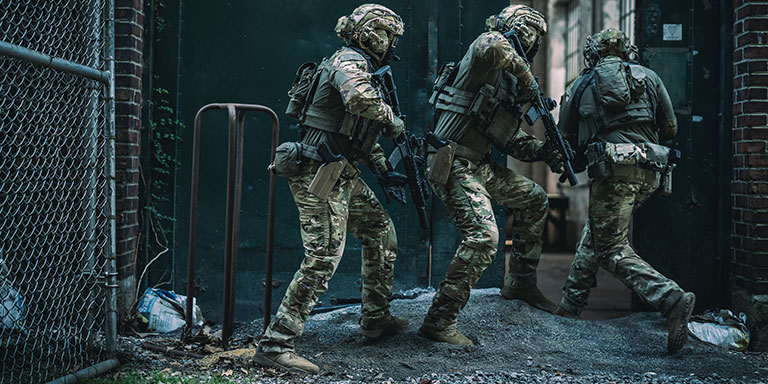
Police, firefighters and EMS workers usually wear some form of tactical pants as part of their duty uniforms, and for good reasons. Tactical pants are designed with maximum durability, utility and comfort in mind, making them perfect for public servants who often work long shifts in tough conditions.
If you haven't yet perused our general guide to choosing tactical pants, be sure to check it out. It pairs well with this guide, which is more specialized. Here, we'll make some more targeted suggestions for choosing tactical pants based on your profession.
Tactical Pants: Most Important Features
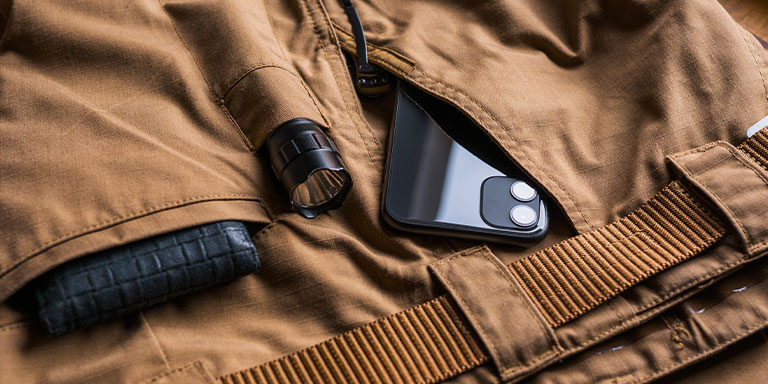
Whether you're a law enforcement officer, a firefighter or a paramedic, certain considerations will always be important when it comes to choosing tactical pants. We'll briefly review those factors here. Our main guide covers them in more detail.
Durability
Any half-decent pair of tactical pants should hold up well against damage, dirt and spills. Material choice makes a big difference here. The most common materials you'll find are:
- Nylon is exceptionally durable and resistant to abrasion, but it may be heavier and less comfortable than other fabrics.
- Cotton tends to be the most breathable and the most comfortable, but pure cotton blends aren't super durable, and they absorb a lot of water.
- Polyester is light and breathable, making it ideal for hot, dry climates. In terms of durability, it's somewhere between cotton and nylon.
- Poly-cotton ripstop is a cotton/polyester blend that offers the best of both worlds, making it a popular fabric choice for tactical pants. Nylon is more resistant to damage.
- Elastane is a Spandex-like material sometimes blended with other fabrics to make tactical pants that are more flexible.
No matter which fabric you choose, ensure that your tactical pants have double or triple stitching, especially in the crotch, knees and seat. Also check the pockets and belt loops. These tend to be weak points, especially on cheaper pants.
Comfort
Comfort largely comes down to personal preference, so we can only give broad, general suggestions on this point. The longer your shift, the more likely it is that you'll find cotton or poly-cotton pants more comfortable. However, if you work in a place with high humidity, lots of rainfall or other regular exposure to water, beware of cotton's tendency to retain water and cause skin irritation when wet.
Comfort also tends to have an inverse relationship to durability, so you may have to prioritize one over the other.
Fit and Mobility
Different tactical pants manufacturers use different terms to describe fit, but the three most common styles are slim, relaxed and classic (a happy medium between the other two). Most policemen, firefighters and EMS workers do a lot of moving, bending and lifting, which makes a relaxed fit the best choice in most cases. Pants with extra room are less likely to rip and will allow maximum mobility.
Some police officers prefer a classic fit, especially those who find themselves doing a lot of running or climbing while on duty. Such officers may find slim-fit pants too restrictive, whereas relaxed-fit pants can be too baggy.
Insulation and Waterproofing
Certain (usually more expensive) tactical pants come with insulated layers, waterproof layers or both. Although these features can be beneficial in certain situations, they also have major drawbacks, so it’s best to avoid them unless you know that the pros will outweigh the cons in your case. Insulated pants can easily get too warm, and they’re heavy. Waterproof and water-resistant pants generally fit more snugly and may inhibit mobility (because the fabric is less flexible).
Tactical Pants for Police Officers
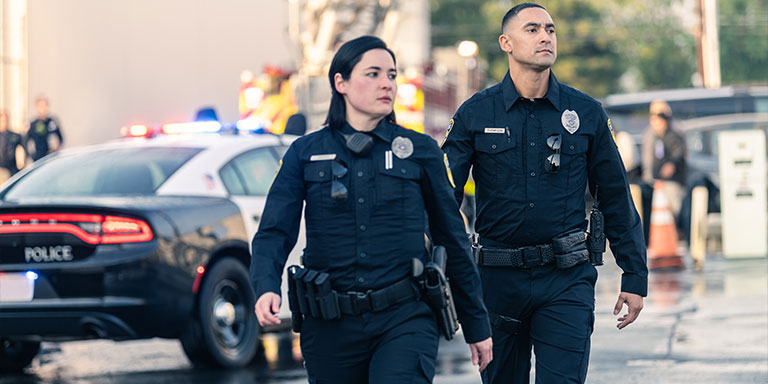
Officers who wear a duty uniform most of the time will almost certainly prefer an overt style of tactical pants whereas detectives and plainclothes officers will likely opt for a covert style. Our Our main article on this topic goes over the different styles of tactical pants in more detail. In most cases, nylon or poly-cotton fabrics will be your best bet for maximum durability.
Depending on how physically active your day-to-day job is, you’ll probably prefer either a relaxed or classic fit. If you wear a fully loaded duty belt, look for tactical pants with strong, double- or triple-stitched belt loops that can handle the weight. Slash pockets are great for quick access to frequently used items like your notebook and phone, and plainclothes officers may appreciate the convenience and discretion of low-profile magazine pockets.
Lastly, if you’re shopping for pants to wear with your duty uniform, consider whether knee pads might be helpful. Some tactical pants have knee pads permanently sewn in, and others have pockets for removable knee pads (we generally recommend the latter for easy cleaning and maintenance). Officers who do a lot of running, bending, climbing or lifting will also appreciate extra reinforcement in the seat, crotch and knees
Tactical Pants for Firefighters
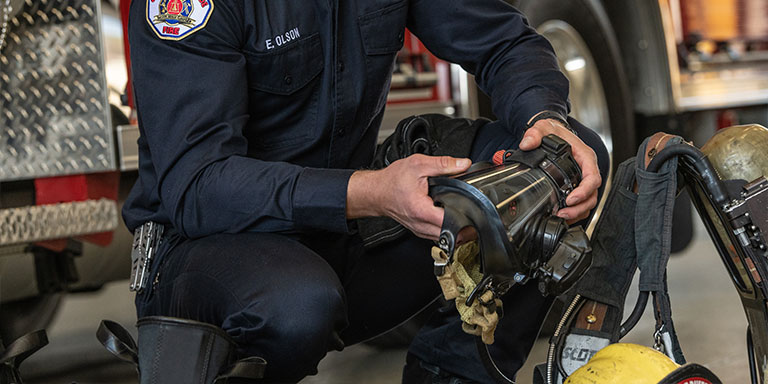
Overt-style pants are ideal for most firefighters. Polyester is cool, breathable and moisture-wicking, making it a popular choice. Elastane blends are also popular because most firefighters do a lot of bending and lifting. A slim-fit style makes it easier to put on your turnouts quickly (it can be quite a bit harder to pull on a second pair of pants when the first pair is too baggy).
You’ll almost certainly want sewn-in knee pads or inserts for removable knee pads (again, we recommend the latter for easier washing and maintenance). Firefighters carry a lot of different types of gear, so slash pockets, knife pockets and cargo pockets will all come in handy. Whereas most police officers carry their radios on their duty belts or vests, firefighters may want to look for tactical pants that have belt loops or clips designed specifically for your handheld radio.
And of course, extra-strong stitching and reinforcement in the seat, crotch and knees is always helpful. You don’t want to rip your pants while lifting a patient or fighting a fire.
Tactical Pants for EMTs and Paramedics
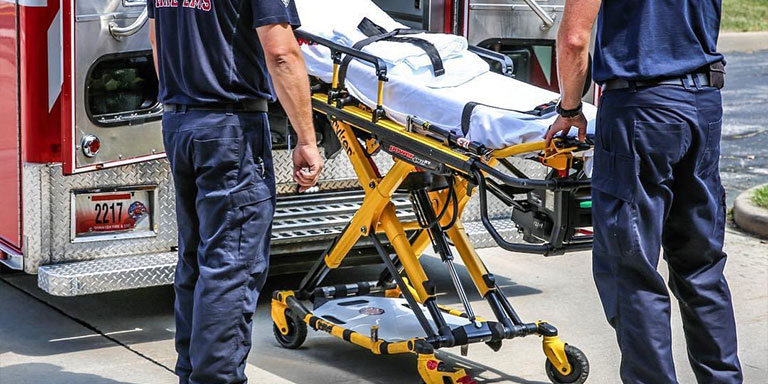
For the most part, firefighters and EMS workers choose similar kinds of tactical pants because they have broadly similar needs, but there are some differences to consider. Firefighters generally don’t prefer cotton pants because cotton scores poorly in both water resistance and abrasion resistance, but EMS workers who work in hot, dry climates may prefer the comfort and breathability of cotton. Polyester, poly-cotton, and elastane blends make good choices, too.
Whether you prefer a slim fit or relaxed fit will depend partly on your department’s policies regarding fire and MVC (motor vehicle collision) calls. Some departments issue turnouts for such calls and require you to wear them, just like fire departments do. If yours does, a slim fit style of tactical pants will make those calls easier, quicker and a little less uncomfortable. Conversely, if you respond to all calls in your standard uniform, the added comfort and mobility offered by relaxed-fit pants may be more appealing.
Once again, we recommend inserts for removable knee pads because EMS workers do a lot of kneeling. Like firefighters, EMS workers carry many items both large and small, so an assortment of slash, knife, and cargo pockets will help you be ready for any situation. Like firefighters, EMTs and paramedics should consider helpful features like radio clips and heavy-duty reinforcement in the seat, crotch and knees.
Final Thoughts and Tips
To close out this guide, we’d like to offer a few parting suggestions that may be helpful no matter which sector of public service you work in.
- Even within the same field, different departments have different needs, priorities and policies. Rarely (if ever) can there be such a thing as a guide or suggestion that works for every person in every department. If your department has unusual policies, or if you work in an especially challenging or unique environment, think carefully about things you encounter that your peers in other departments may not have to worry about. Use this information to modify the list of things you look for in your next pair of tactical pants.
- Weather and climate are factors which are often overlooked. For example, police officers, firefighters and EMS workers who live and work in places like Arizona or New Mexico regularly encounter summer temperatures rarely seen in other parts of the country. Sometimes, it can be so hot that pants made from heavy fabrics like nylon are simply intolerable. In such cases, a polyester or poly-cotton blend may be the better choice, even though you’ll sacrifice some durability.
- Before you buy your next pair of tactical pants, consider whether you want to commit to doing your own maintenance. Even the most well-made pants will require deep cleaning and re-stitching at some point, and these things take time. Are you willing to learn the fine art of sewing? If not, consider shopping for pants with generous warranty terms, or be sure to factor tailors’ fees into your budget. (Or go the opposite direction and buy cheaper pants that you can afford to replace more often.)
- Don’t buy multiple pairs of the same pants at the same time, especially if the brand or style is new to you. Pants are sometimes difficult to return, and some can’t be returned at all. You may end up wasting hundreds of dollars if that style ultimately doesn’t work for you. Instead, buy a single pair and try it out for a while. If you love it, then buy a few more.
- Check whether your department offers a uniform allowance. Not all do. If yours does, you may be required to choose from a list of certain vendors or brands, which will affect your available options.
As any seasoned police officer, firefighter or EMS worker can tell you, the pants you choose to wear on duty matter far more than you might think. There are many factors and features to consider, and the right pair of pants makes all the difference. We hope that you now feel ready to buy your next pair with confidence.