

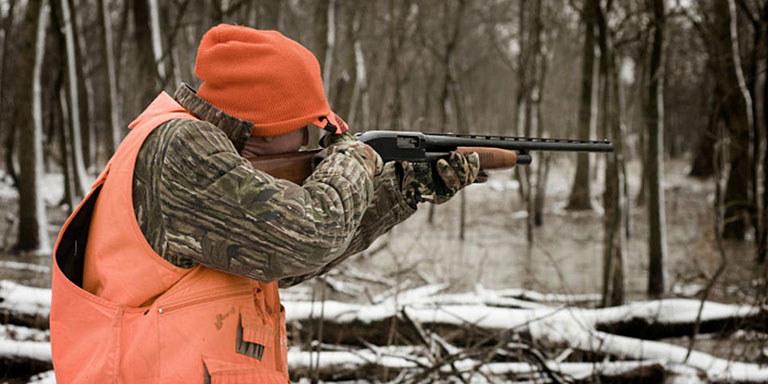
Roughly 1,000 people are injured in hunting accidents in the U.S. and Canada every year, and about 75 of them die. The overwhelming majority of these accidents are entirely preventable. As long as you consistently follow some basic safety practices, hunting is a safe and enriching pastime. In this guide, we'll review essential safety habits both for new and experienced hunters alike.
Gun Safety 101
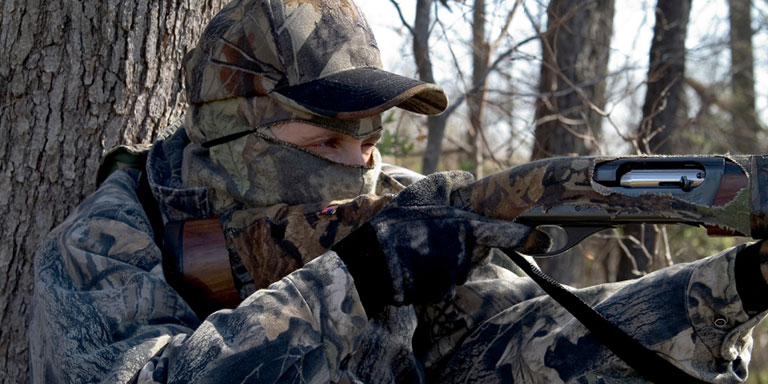
Any activity involving firearms starts with the four universal rules of gun safety:
- Treat every gun as if it's loaded
- Never point a gun at anything you don't intend to destroy
- Keep your finger off the trigger until you're ready to fire
- Know who and what is beyond your target
Nearly all firearm accidents are caused by someone violating one or more of these rules, so be sure to commit them to memory and follow them consistently.
Additional Safety Considerations for Hunters
A gun range is a controlled environment where multiple people are keeping a close eye on the shooters at all times. The wilderness, though, is anything but a controlled environment. It's up to each individual hunter to be safe at all times, and if even one hunter slips up or gets lazy, everyone within a mile (or farther) is potentially in danger. There are some additional safety practices that hunters need to keep in mind — practices that may not be necessary at the range (or at least not to the same extent).
Never Shoot at a Sound or a Movement
Positive target identification is just as important for hunters as it is for military and law enforcement personnel. Make sure you can clearly and fully see your target and its surroundings before you pull the trigger. This is especially critical in areas where another person could be concealed by foliage or terrain. It's amazing how often another person, partially concealed, can look just like a deer.
Keep the Chamber Empty Until Acquiring a Target
Many, many hunting accidents could have been avoided if the weapon in question had simply been unable to fire. Keep your weapon in condition green (no round in the chamber, no magazine loaded) whenever possible. If you're tracking a specific target and you're worried that the sound of loading a magazine might scare it off, it's okay to carry your weapon in condition amber (magazine loaded, no round in the chamber). Keep the safety on and the chamber empty until you're ready to line up a shot and fire.
Carry Your Weapon Two-Handed when Possible
Rock climbers and swift water rescuers follow a simple rule: three points of contact at all times. The more closely you're touching or holding something, the more control you have. Keep a firm, two-handed grip on your weapon at all times, and if you can't, holster or sling it.
Beware of “Hunter's High”
Hunting is, first and foremost, about patience. A quick kill or chase is often prefaced by hours or even days of quiet boredom. When you score a clean hit (or a near miss), it's easy to get excited, and when you get excited, it's easy for sound judgment to go out the window. Keep your emotions in check and never forget or disregard these other safety practices.
Preparation and Research
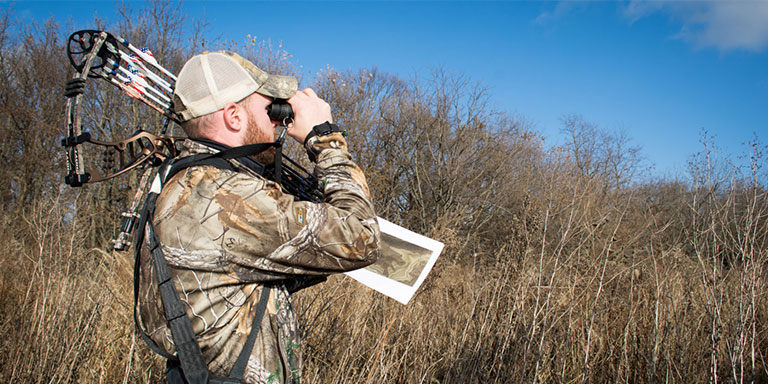
As the adage goes, an ounce of prevention is worth a pound of cure. Your next hunting trip will be safer and more enjoyable if you put in the time to prepare ahead of time. You'll also be more likely to bag the game you're after.
Know Your Local Hunting Regulations
In every state, the Game and Fish Department (GFD) and/or the Forestry Service create and enforce hunting regulations. Violating them could lead to fines or the revocation of your hunting license. Even worse, you could hurt or kill another person.
First and foremost, you'll need to make sure your hunting license is current and unrestricted. In most places, you can buy a hunting license online or at certain civilian retail stores; you'll just need to pay a small fee and, if you've never had a hunting license before, you'll need to show proof that you've completed a hunter safety course or firearm safety course.
It's important to note that a hunting license alone doesn't make it legal for you to go hunting; it's mostly a prerequisite for tags. Hunting tags are essentially permits that allow you to hunt particular kinds of game. Tags are very specific, and you'll need to comply with all of their restrictions in order to hunt legally. They specify:
- What you can hunt (e.g. female deer or bucks)
- How many you can kill (usually just one animal per tag)
- Where you can hunt (specified on a map provided by the local hunting authority)
- When you can hunt (usually a range of dates spanning several weeks)
- What weapons you can hunt with
- In general, bow hunting tags are easier to get, but bow hunting is not easy, so be sure to log lots of practice hours at the range and, if possible, find an experienced bow hunter willing to mentor you.
The “where” and “when” restrictions described above are especially relevant to safety. These restrictions help the authorities keep tabs on how many hunters are in the same area at the same time; fewer hunters means a lower potential for accidents. If you don't have a strong preference for one area over another, consider requesting a less popular spot as a way of helping to control risk.
If you want to hunt a specific kind of game, research the local seasons and apply for tags as far in advance as possible. A limited number of tags is issued each season. They may be issued on a first-come, first-served basis, or they may be drawn from a lottery. You can request specific hunting areas, but there's no guarantee your request will be granted. List second and third choices on your application in case your first choice isn't available. In any case, you're more likely to get what you want if you apply early and submit error-free paperwork.
In addition to specific tag requirements, there are general hunting laws you'll need to obey, and these laws vary by region. For example, in most places, there are strict limits on ammunition capacity, and if necessary, you must modify your firearm to comply. Call your local GFD if you still have questions after browsing their website.
Practice Makes Perfect
Marksmanship is only one small part of hunting, but it's an important one. Visit the range regularly to practice with your preferred weapon, and shoot at targets resembling the game you intend to hunt. Ethically, it's important to ensure a clean kill, so make sure you can hit the target's vital zones consistently from different distances and angles. Being comfortable and competent with your weapon is also one of the best ways to ensure you won't pose a safety risk to yourself or others.
Most other aspects of hunting — stalking, tracking, field dressing, etc. — are difficult to practice at home, and the best way to learn them is to go hunting, ideally with an experienced teacher. Still, reading articles or watching videos on these topics can help you build a basic foundation of knowledge. Your local GFD may offer workshops and classes to help you practice these skills before you venture out on your own.
Dress for Success
You've probably seen hunters wearing full camouflage and others in high-vis safety vests. It's hard to find outfits that are more different from one another, so which is appropriate?
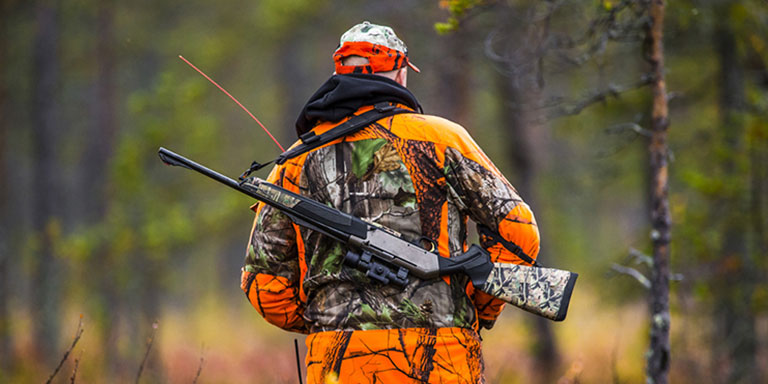
It depends on where you are, what you're hunting and how. If you're in a popular area where other hunters, campers or outdoorsmen are likely to be around, you'll want to be highly visible (but never assume that others are; remember positive target identification). Even if you decide to hunt in a more secluded place, you might still want to wear high-vis clothing if it's densely wooded, or if there are other reasons it might be difficult for other people to see you clearly. Camouflage or muted colors that blend in with the surrounding landscape are fine if you're highly confident that nobody else is around or if you're in a wide-open area with good visibility in all directions.
Maintain a Safe Zone of Fire
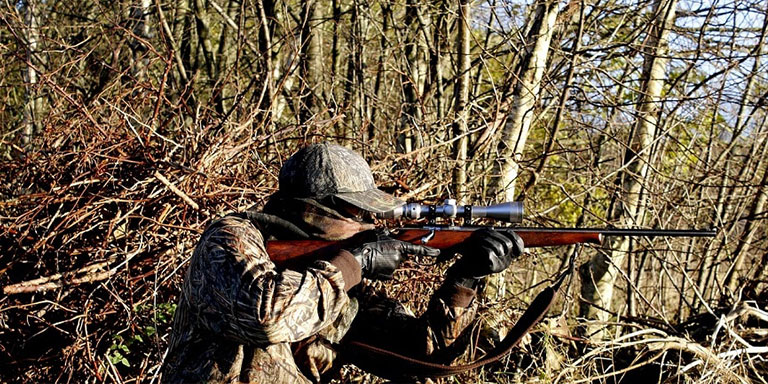
If you're hunting with others, safety becomes even more important (and slightly more complicated). Keep these additional best practices in mind:
- Make sure you know where every member of your party is before you fire.
- If you're hunting birds, walk in a straight line, shoulder to shoulder with your fellow hunters, no more than three apart. The hunter in the middle of the line should fire only at birds that fly straight away; the hunters on either side should fire only at birds that fly in that direction. The same goes for rabbits and other small game.
- If your quarry flies or runs behind you, all hunters should hold their fire and wait for a better target. There's simply too much risk of flagging one another if you try to swing 180 degrees on a target.
- When one or more members of your group are in a stand or blind, notify one another every time someone changes position. Any change in position changes the safe zone of fire.
- Shoot at moving game only when you're sure you can make an effective shot and only when the target is in your zone of fire. Be extremely careful not to aim at another person.
- Two or more people should never shoot at the same target at the same time.
- If two or more hunters are standing in front of one another, only the hunter closest to the target — the person who doesn't have another person in front of them — may shoot at it.
- Fire only if there is a solid backstop behind your target. Never shoot at a “skylined” animal (one that is atop a hill or positioned such that there is empty space behind it). You should always know roughly where your bullet is going to stop, and you should be able to see everything between you and that point.
Common Causes of Hunting Accidents
Most hunting accidents stem from one of two root causes: improper weapon handling or lapses in judgment. As long as you recognize and consciously work to avoid all of the following common mistakes, your odds of being involved in a hunting accident will be extremely low.
| Error | Prevention/Correction |
| Improper loading, unloading or handling of guns | Always follow the four fundamental rules of gun safety. |
| Negligent discharge due to trips, falls or dropped guns | Carry your weapon unloaded until you're ready to take a shot. Carry your weapon with two hands or sling it if you can't. |
| Firing guns in or around vehicles | Fire only from a proper prone, kneeling or standing firing position; never fire in the direction of a vehicle. |
| Improper crossing of obstacles | Carry your weapon unloaded until you're ready to take a shot. Sling or holster your weapon if you need to climb or run. Ensure that the barrel never points at another person. |
| Victim unexpectedly enters field of fire | Always follow “safe zone of fire” rules described above. |
| Victim mistaken for game | Never fire unless you have a clear and complete visual of your target and all of its surroundings. |
| Horseplay | It's fine to wrestle and mess around with your buddies; just make sure all guns are unloaded and stored elsewhere first. |
| Use of drugs or alcohol | Never do either in the presence of firearms! |
Because hunting involves firearms, it is, to some extent, an inherently dangerous activity. There's no such thing as perfect safety, but hunting can be about as safe as anything gets as long as you consistently take the precautions we've outlined in this guide and insist that your companions do the same.