

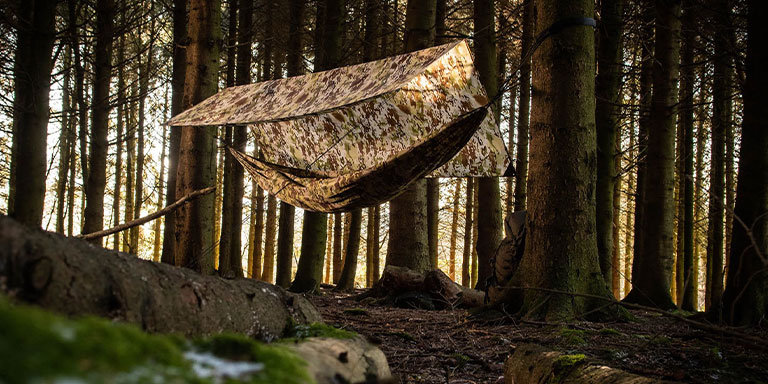
Most people associate camping with tents, but hammock camping is rapidly growing in popularity. It's comfortable, affordable and offers great views of starry skies and scenic vistas. Hammocks are an especially appealing option for long trips when sleeping on cots or the ground can get more uncomfortable over time.
In this guide, we'll go over the pros and cons of hammock camping and offer some tips on how to choose the right hammock, suspension system, accessories and the ideal hammock camping site.
Pros and Cons of Hammock Camping
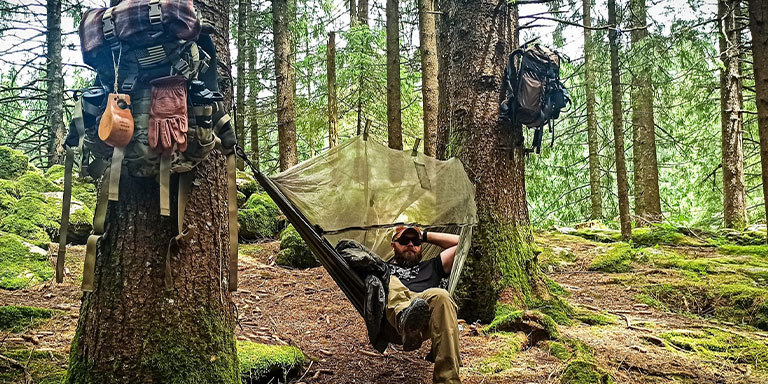
Hammock camping is a great way to experience the outdoors, but like anything, it does have its drawbacks.
-
Pros
- Lightweight and space-efficient: Hammocks don't weigh much, even with accessories (unless you choose to buy a standalone metal frame). They're also small and compact when folded properly, making them a great choice for backpackers who do a lot of walking.
- Affordable: High-quality hammocks under $100 aren't hard to find, and you might spend another $100 on accessories. Compare this cost to mid-range or high-quality tents, which start at $200 for just the tent itself.
- Cool: In warmer climates, hammocks excel at providing a comfortable night's rest. A process called convective heat loss occurs when air passes underneath the hammock's surface. The ability to expose bare skin to this phenomenon extends the temperatures you might be comfortable sleeping in by up to 10 degrees.
- Comfortable (for some): For many people, this is the most important factor in choosing between a hammock and a tent. People who prefer softer mattresses tend to find hammocks more comfortable, whereas those who need more back or neck support may not like them. Lying diagonally in the hammock will result in a flatter and less “banana shape” feeling.
-
Cons
- Little storage space: Many tent campers buy tents bigger than what they really need so they have extra room to store their stuff. Hammocks, sadly, have little space for anything other than you.
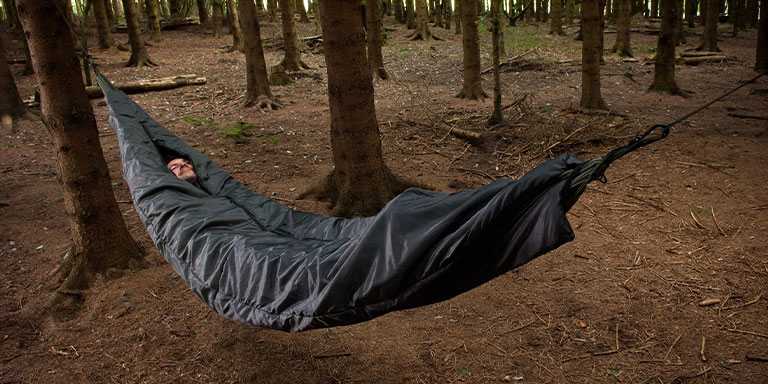
- Chilly: Hammocks have little ability to retain heat, making them a potentially poor choice for cold climates. The process of convective heat loss described above exasperates the problem. This can be mitigated with extra blankets or with underquilts specially designed to be both warm and space-efficient. Laying a closed-cell foam pad inside the hammock is another cost-effective option for bottom insulation.
- Site selection can be tricky: Unless you're lugging around a heavy standalone frame, finding a good place to mount your hammock might take a while, especially if you're camping in an area with sparse foliage.
- Better for solo campers: If you like to go camping with a friend, partner or dog, a hammock may not be ideal. Most hammocks can't comfortably accommodate two people, or one person and a large dog (small dogs might be okay, however).
Buying the Right Hammock
Not all camping hammocks are created equal. Before you start shopping, learn what to look for and how to evaluate the available options.
Size and Weight Capacity
Hammocks are broadly sized as either singles or doubles. Most people choose a double, not because they plan to share with another person, but because they want enough room to be comfortable and well-supported. Single hammocks are quite small, and even average-sized people often find them too confining.
Another reason to choose a double is so that you can lie in it at an angle of approximately thirty degrees, which offers much better back and neck support. Lying “front to back” in a hammock puts a lot of strain on your spine and can cause pain. For most people, length isn't a problem; just be sure to get a hammock at least two feet longer than you are tall.
Finally, make sure to choose a hammock with a weight capacity at least twenty pounds greater than the maximum amount of weight you expect to put in it.
Material
Most camping hammocks are made of either nylon or polyester, and each has its pros and cons. Both are strong and durable, but nylon is more so. Nylon is a little more water-resistant, whereas polyester dries faster. Polyester is softer, so some people find it more comfortable to sleep on. The price difference between polyester and nylon hammocks is minimal.
Based on our research, a slight majority of hammock campers seem to prefer polyester, but both materials can make great hammocks.
How to Choose a Hammock Suspension System
To attach your hammock to trees you'll need a suspension system, which usually consists of special straps and carabiners. Some hammocks come with a suspension system, but some don't, so be sure to check whether you need to buy one separately. Make sure the straps are at least three-fourths of an inch wide; thinner straps may damage the trees. Some campgrounds or parks may mandate straps as wide as two inches.
There are three main types of suspension systems:
- Daisy chain straps are the simplest and require no knot-tying, but they may cost a little more. (Great for beginners)
- Tree straps require tying one or two knots and are typically the least expensive option. (Good for beginner and intermediate hammock campers)
- Single-line suspension systems use a few straps and a single, long piece of rope to support your hammock and all of its accessories. This setup requires advanced knowledge of knots and a solid understanding of basic principles of engineering and physics, but it is the lightest and most space-efficient configuration. (Recommended for experts for whom every ounce of weight matters)
Hammock Accessories
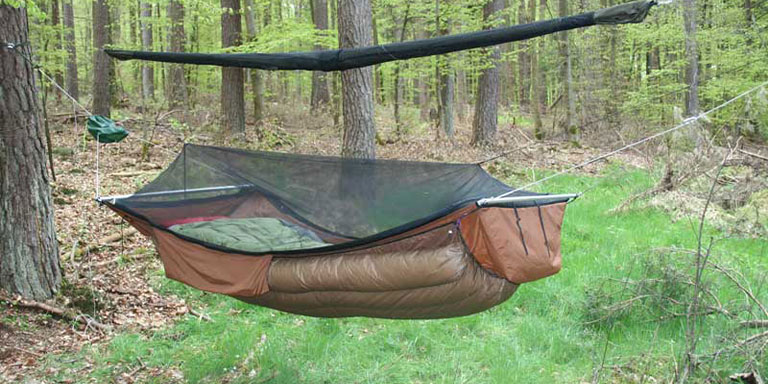
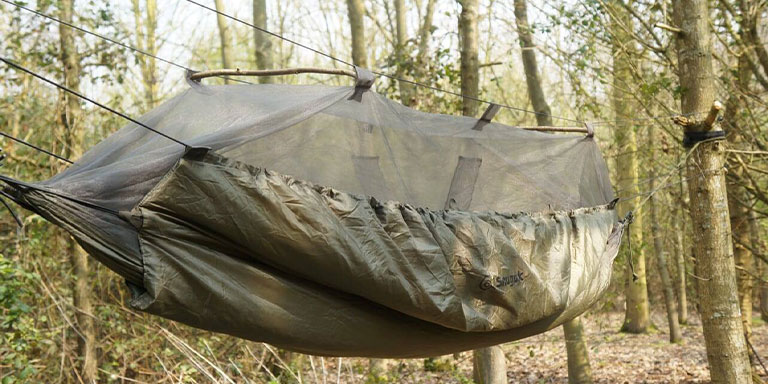
The most popular hammock accessories are rainflys, bug nets and underquilts. Many hammock accessories require a ridge line, a piece of rope or cord tied between the trees above your hammock. Other items can be attached to or draped over it.
- A rainfly is a simple tarp draped over the ridge line and staked to the ground or otherwise tautly secured. As the name suggests, it should protect you from rain (at least mostly).
- A bug net stops insects from eating you alive while you sleep. Make sure the bug net you buy both completely encompasses the hammock and has no-see-um netting to keep out especially small pests (most bug nets have both features, but cheaper models may not).
- Underquilts help mitigate one drawback of hammocks: minimal heat retention. When paired with a toasty, high-quality sleeping bag, underquilts can make hammock camping viable even in below-freezing climates.
There are many other less popular accessories: everything from cup holders to waterproof tree straps that can stop rain from indirectly soaking your hammock. Choose those at your discretion.
How to Choose the Perfect Hammock Site
The first thing you'll need to do is check with the owner or manager of the land where you intend to camp to make sure hammock camping is allowed. Different campgrounds may have slightly different rules for hammock campers to follow, especially regarding the type or width of your tree straps. Some national parks, unfortunately, don't allow hammocks at all.
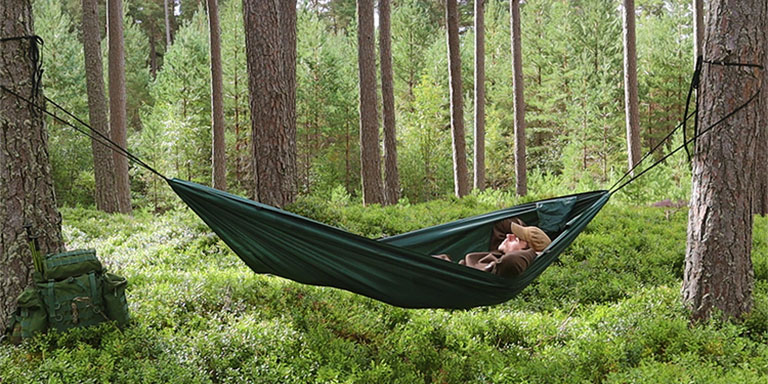
Look for a site with mostly flat ground and healthy, strong trees at least six inches in diameter and about twelve to fifteen feet apart. Check the branches of all trees near the prospective hammock site to ensure there are no large, rotten or dying branches that could fall on you; these are called “widowmakers” for good reason. Make sure the heights of the trees and the terrain between them permit the bottom of the hammock to be about 18″ off the ground. Clear the ground of rocks and other debris that could seriously hurt you if you fall out of your hammock in the middle of the night (it's rare, but not unheard of).
Final Tips
Buying a new camping hammock set is exciting, but before you head out into the wilderness to try it out, we recommend doing a little more homework first.
Practice Your Knots
If you master a handful of knots that are especially useful for setting up a hammock campsite, you'll be able to do so with maximum speed and confidence. If you nail down these seven knots, you'll be ready for most situations:
- Half hitch
- Round turn two half hitch
- Taut line hitch
- Square knot
- Bowline
- Figure 8
- Hammock knot
Practice Setup and Teardowns
Spend some time setting up, modifying and taking down your hammock campsite at or near your home. Every hammock and suspension system is slightly different, and there are dozens of variations, so for now, carefully follow the instructions and diagrams that came with your particular set. Once you understand how all the pieces fit together, you can start customizing your setup if you'd like.
Break In Your New Gear at Home
Once you're comfortable setting up and taking down your hammock quickly, plan a backyard campout. Hammocks have a break-in period, and many new hammock campers find it difficult to get restful sleep the first few nights. Not only does the hammock itself need some time to “settle,” but you also need a little time to get used to the ergonomics of sleeping in one. If you have trouble sleeping in the middle of nowhere, you're pretty much out of luck, but if you're close to home, you can always pack it up, get some quality sleep in your own bed and try the hammock again later.
It's not hard to see why hammock camping is virtually exploding in popularity. Almost any outdoor activity can get expensive quickly, so a hammock's price tag is attractive to many, as are its simplicity and “hakuna matata” vibe. If tents or car camping don't seem like the perfect fit for your next outing, give a hammock a try.