

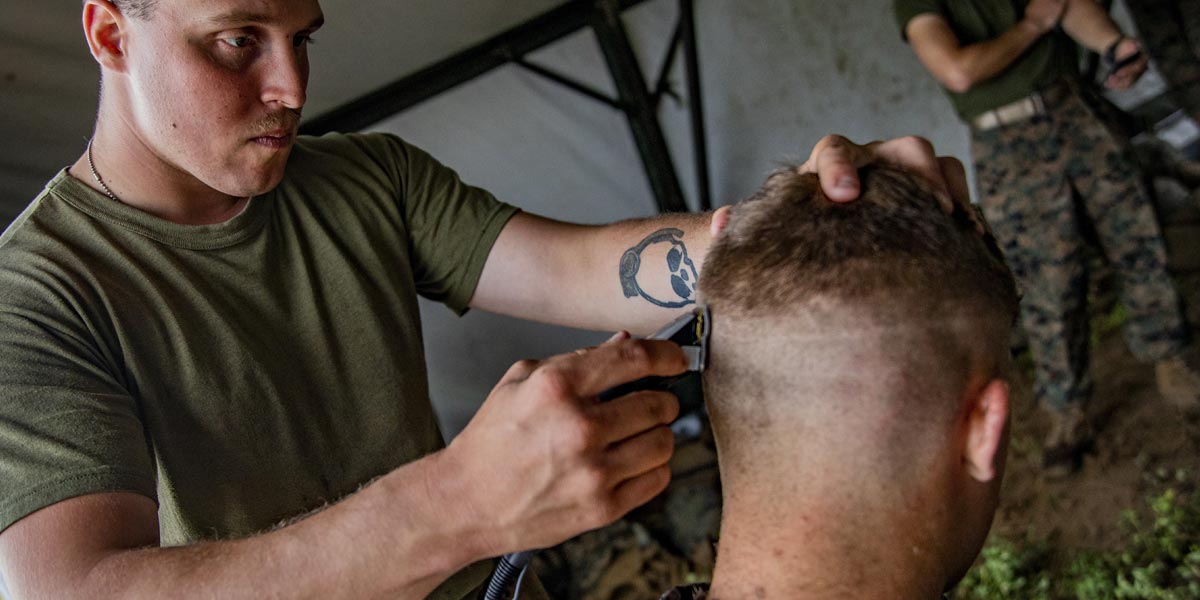
The bad news is that hygiene and dress code violations are one of the most common disciplinary infractions in the military. The good news is that they're easy to avoid with a little bit of research and preparation.
This guide will be more of a 'listicle' than our usual formats, designed for better organization and easier reading. We'll list day-to-day policies and standards by branch, maintaining the same format throughout. For clarity or brevity, material may be quoted directly from relevant military documents, with or without attribution.
Finally, please note that this guide is not exhaustive. It is intended only to cover the most basic and important aspects of military grooming standards.
Army (Policy Document AR 670-1)
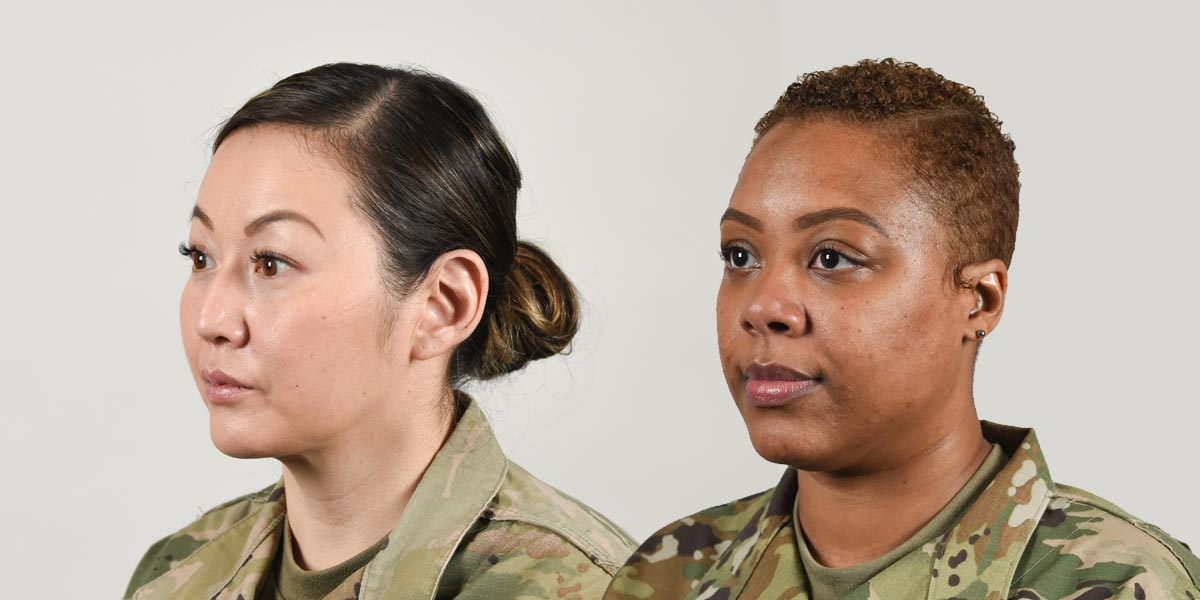
Of the six military branches, the Army has the most detailed grooming, uniform, and hygiene standards. However, only the regulations for dress uniforms are enforced to the smallest detail. Rules for duty and combat uniforms are more relaxed — as long as they're clean and worn correctly, you should be fine.
General Hygiene Standards
- Soldiers are expected to shower at least once per day (field conditions permitting) and to always be as clean and well-groomed as is practicable.
- Males may not wear cosmetics (makeup or perfume) of any kind.
- Females may wear cosmetics so long as they are "applied modestly and conservatively" and that they "complement both the soldier's complexion and the uniform."
- Soap, lotion, deodorant and similar substances must be unscented.
- Fingernails must be neatly trimmed, clean and extend no farther than 1/4" past the fingertip (females) or 1/8" (males).
Uniform Appearance and Fit
- Uniforms must be clean, well-fitted and worn correctly at all times (field conditions permitting).
- The Army regulations pertaining to uniform wear are numerous, detailed and highly situational; see AR 670-1 for more information.
Haircut and Hairstyle Regulations
- Hair-related regulations have loosened in recent years; the current version of AR 670-1 states that "many hairstyles are acceptable as long as they are neat and conservative."
- "Extreme, eccentric and faddish" hairstyles are not allowed.
- Hair dye is allowed but only in natural colors.
- Male haircuts must be "neatly groomed" and the hair may not be so long as to touch the ears, eyebrows, or collar. A "generally neat, orderly, and tapered" appearance is expected.
- Males must shave daily and may not have any facial hair except for mustaches, which must be "neatly trimmed, tapered, and tidy."
- The regulations on female hairstyles are too numerous and specific to cover in detail here; see AR 670-1 for more information. In general, female hairstyles "may not be eccentric or faddish and will present a conservative, professional appearance."
Jewelry and Eyewear
- Soldiers may wear religious apparel, articles or jewelry with the uniform, to include the physical fitness uniform. Requests for other religious accommodations related to the wear and appearance of the uniform, personal appearance and personal grooming practices must be submitted to command for prior approval.
- Soldiers may wear one wristwatch, one bracelet and up to two rings unless prohibited by command for health or safety reasons. All such jewelry must be "conservative;" full details can be found in AR 670-1.
- Only females may wear earrings and only with dress (Class A or B) uniforms. Earrings must be "conservative."
Tattoos and Other Body Modifications
- Tattoos and brands are permitted as long as they do not "advocate a philosophy that degrades or demeans" people or otherwise conflict with general military standards of professionalism and decorum. Tattoos and brands are not permitted anywhere above the neckline of the Army-issue T-shirt or below the wrist; exceptions are granted for one tattoo on one finger, provided that tattoo serves as a wedding band.
- Body modifications such as intentional scarring and "intentional and unnatural disfigurement" are prohibited.
AR 670-1: Army Regulation 670–1
Marines (Policy Document MCO 1020.34H)
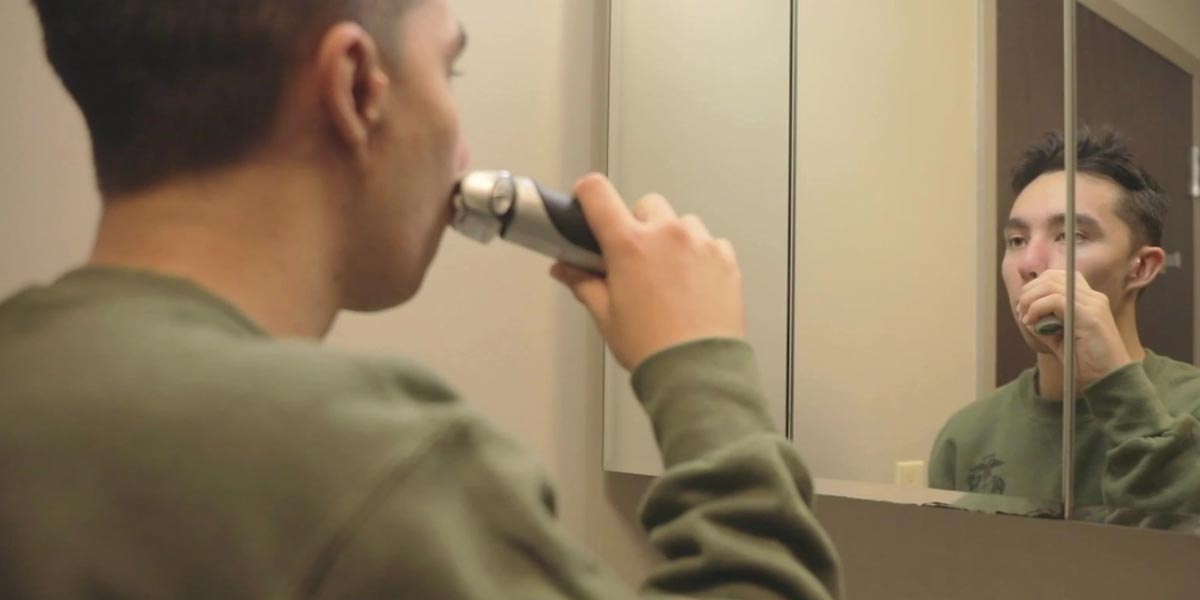
Whereas the Army uniform and grooming policies are highly specific, the Marines take a broader approach. Some topics are addressed in great detail — tattoos in particular. Others, such as the wear of the daily uniform, are described in more general terms. In practice, the best way to ensure that you're wearing your uniform correctly is to carefully observe your commanding officers and NCOs; do as they do and you should be fine.
General Hygiene Standards
- MCO 1020.34H is not specific with regard to general hygiene standards; the overarching principle is that Marines must "present a clean and well-groomed appearance at all times."
- Perfumes, soaps, and body lotions must be unscented. Male Marines may not wear perfume or cologne.
- For both males and females, fingernails must be clean and neatly trimmed. Fingernails cannot extend past the fingertip.
Uniform Appearance and Fit
- The Marine Corps, like all branches, has an overarching principle that applies to all uniform regulations: "Marines will present the best possible image at all times and continue to set the example in military presence."
- The Marine Corps official uniform changes seasonally and is based on Daylight Savings Time changes. Marines may not wear summer uniforms in winter or vice versa.
- MCO 1020.34H is more specific regarding the care and storage of uniforms than it is about the wear of the uniform; it specifies only that uniforms must be "appropriately sized, well-fitted, and kept in good repair."
Haircut and Hairstyle Regulations
- Marine Corps uniform standards of grooming do not allow "eccentric or faddish styles of hair, facial hair, make-up/nail polish, jewelry, or eyeglasses."
- Men's hair must be worn in a "neat, closely trimmed, and uniform style" and may not exceed 3 inches in length. Sideburns must not pass the middle of the ear and must not be styled or flared in any way.
- Regulations governing approved hair lengths and styles for females are far too detailed to cover here; please see MCO 1020.34H for more information. The general principle is that a woman's hair must be consistent with a "neat and professional military image." Additionally, "hair will be styled so as not to interfere with the proper wear of all uniform headgear."
Jewelry and Eyewear
- Whereas the Marine Corps tattoo policy is highly detailed and restrictive, the jewelry policy is comparatively relaxed. Watches and necklaces are allowed so long as they are "inconspicuous" and "conservative."
- Female Marines may wear one earring per ear in a "traditional" style.
- Male Marines may not wear earrings.
- Marines may wear one "inconspicuous" ring per hand but not on the thumbs; a wedding set counts as one ring.
- Marines who require corrective lenses are not required to wear military-issue eyeglasses, but all glasses must be "conservative in appearance."
- Contact lenses may change the color of the iris to another natural color but may not alter the appearance of the eye in any other way.
- Religious jewelry that may otherwise violate the jewelry policy is allowed so long as it is not visible while in uniform (e.g., tucked under the shirt or worn beneath long sleeves).
Tattoos and Other Body Modifications
- MCO 1020.34H states: "Tattoos located anywhere on the body that are prejudicial to good order and discipline, or are of a nature to bring discredit upon the naval service, are prohibited."
- Marine Corps regulations on tattoos are far more specific and prohibitive than Army regulations. We can't go into much detail here; please refer to MCO 1020.34H for more information.
MCO 1020.34H: Marine Corps Uniform Regulations
Air Force (Policy Document DAFI 36-2903)
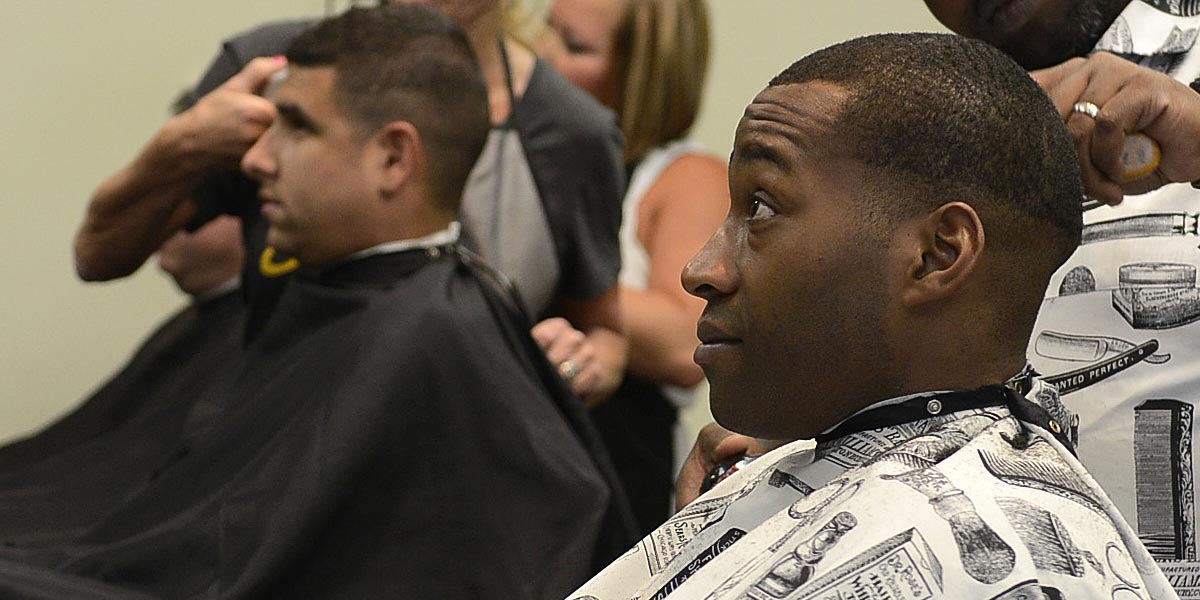
As of August 2024, the Air Force issues and updates dress and appearance policies for its own personnel as well as Space Force Guardians. At some point in the future, the Space Force will likely become a more distinct entity. For now, there are separate dress and appearance policy documents for the two branches; the Air Force document is DAFI 36-2903.
General Hygiene Standards
- Fingernails (for males and females) must not extend more than 1/4" past the fingertip. Nails must be clean and neatly trimmed. Males may not wear any form of nail polish, but females may wear nail polish that is a uniform and conservative color that does not distract from the uniform.
- Airmen must shower daily if conditions permit. If conditions do not permit daily showers, Airmen must be as clean and well-groomed as is feasible.
Uniform Appearance and Fit
- DAFI 36-2903 states: "The Air Force philosophy is that the uniform will be plain, distinctive, and standardized. This standardization includes a minimum and maximum number of authorized badges, insignia, and devices. Dress and personal appearance standards that are not listed as authorized in the publication are unauthorized."
- Specific regulations governing the care and wear of both the dress and duty (OCP) uniform are numerous and highly specific; see DAFI 36-2903 for more information.
Haircut and Hairstyle Regulations
- Men's hair must have a "tapered appearance on both sides and the back of the head, both with and without headgear so that when viewed from any angle the member's hair conforms to the shape of the head." Hair must not exceed 2 ½" at its longest point.
- Males may wear mustaches that do not extend below the lowermost point of the upper lip. Males must be otherwise clean-shaven.
- Females may wear their hair in any of the approved styles listed and pictured in DAFI 36-2903. Hair ties, clips, and other accessories must be black or dark brown. Ponytails and other approved braids must not extend below the lower sleeve inseam of the uniform T-shirt or jacket.
Jewelry and Eyewear
- One could argue that the Air Force has the most liberal policies when it comes to body piercings; they are generally permitted as long as they are not visible (including visible through the Air Force uniform).
- Male Airmen may not wear earrings on duty or in uniform but may wear earrings no larger than 16-gauge when off duty. Females may wear one pair of "simple and tasteful" earrings on duty provided the widest part of the earring is no larger than 6mm in diameter. No part of the earring may extend below the lowermost point of the earlobe.
Tattoos and Other Body Modifications
- Tattoos, brands, or other forms of permanent text or imagery are not permitted anywhere on the head. They are allowed elsewhere on the body with some additional restrictions. No tattoo or brand may be "grossly offensive to modesty, decency, or propriety" or "shock the moral sense." Neck and hand tattoos are the most highly regulated; see DAFI 36-2903 for more information.
DAFI 36-2903: Dress and Personal Appearance of Department of the Air Force Personnel
Navy (Policy Document NAVPERS 15665J)
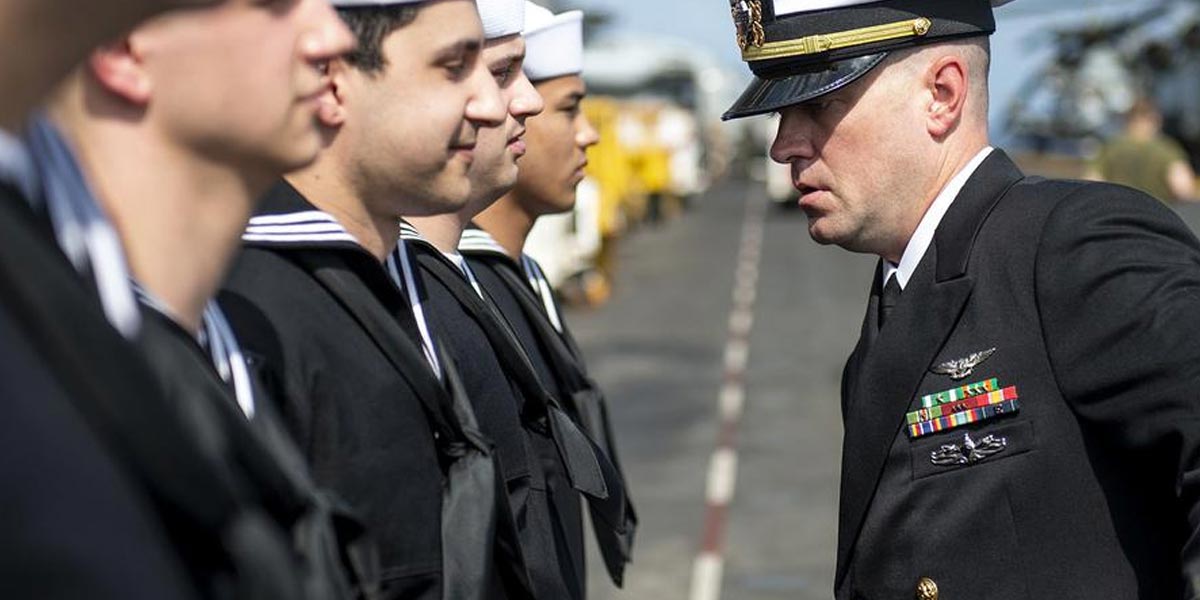
Every other branch offers their uniform and appearance policy documents in PDF format, but the Navy's NAVPERS 15665J is found exclusively in webpage format at Navy.mil. Other than the Space Force, the Navy has the shortest and least specific uniform and appearance policy document. Compared to the other branches, greater authority is given to Navy commanders to set regional and local uniform policies. Lastly, note that Sailors assigned to Marine Corps units who wear Marine Corps uniforms are to abide by Marine Corps policies.
General Hygiene Standards
- As is the case in every other branch, the general guiding principle regarding grooming and hygiene is pretty straightforward. "Because it is impossible to provide examples of every acceptable or unacceptable hairstyle or ‘conservative' grooming and personal appearance, the good judgment of leaders at all levels is key to enforcement of navy grooming policy. Therefore, hair/grooming/personal appearance while in uniform shall present a neat, professional military appearance."
- Sailors must shower and shave daily if possible. If normal daily grooming is not possible, Sailors must be as clean and well-groomed as is practicable.
- For men, fingernails must not extend past the fingertip. Women's fingernails may extend up to 1/4" past the fingertip.
Uniform Appearance and Fit
- NAVPERS 15665J does not list specific policies or requirements regarding uniform wear or placement of insignia. Rather, these policies are issued at the regional or local level. Consult your immediate chain of command if you're not sure where to find the relevant policy documents.
Haircut and Hairstyle Regulations
- Males must keep their hair "neat, clean and well groomed (combed or brushed). Hairstyles and haircuts will present a balanced professional military appearance."
- Males hair must be no longer than 4" at its longest point, must not extend below the eyebrows and must not protrude excessively when headgear is worn. Hair must be neatly tapered and even on all sides.
- Males must be clean-shaven except for mustaches, which must be "neatly and closely trimmed" and must not extend below the lowermost point of the upper lip.
- Whereas the other branches list specific, approved hairstyles for women, the Navy instead lists specific hairstyles that are prohibited and allows female Sailors to wear their hair in any other way, provided it falls within the general guideline of a "balanced and professional military appearance" and conforms to specifications regarding length and color. See NAVPERS 15665J for more information.
Jewelry and Eyewear
- According to NAVPERS 15665J, "Conservative jewelry is authorized for all personnel while in uniform."
- Sailors may wear up to one ring on each hand, plus a wedding ring or set. All rings must be "conservative" and not "distract from… professional military appearance."
- Males may not wear earrings on duty. Females may wear earrings that are no wider than 6mm in diameter and made of "silver, yellow or white gold, white pearl or colorless diamond" or any synthetic approximation of these materials.
- Males and females may have body or facial piercings but may not wear them while in uniform or on duty. Such piercings are permitted only if the hole does not allow light to pass through when the jewelry is not worn.
- Sailors may wear one necklace, one bracelet, and one wristwatch. All must be "conservative" and necklaces must be tucked under the shirt.
Tattoos and Other Body Modifications
- The Navy uses four criteria to define allowed tattoos and brands. These are: content, location, size, and cosmetic nature.
- Tattoos are prohibited on the basis of content if they are "prejudicial to good order, discipline, and morale or are of a nature to bring discredit upon the naval service."
- Tattoos are prohibited on the basis of location if they are anywhere on the head or front half of the neck. Torso tattoos are prohibited if they are visible through the uniform.
- Size prohibitions on tattoos are applicable only to neck tattoos, which may not exceed one inch in diameter.
- Tattoos which may otherwise be prohibited are allowed if they are done for medical cosmetic purposes on the advice and under the supervision of qualified medical personnel.
NAVPERS 15665J: United States Navy Uniform Regulations
Coast Guard (Policy Document M1020.6K)
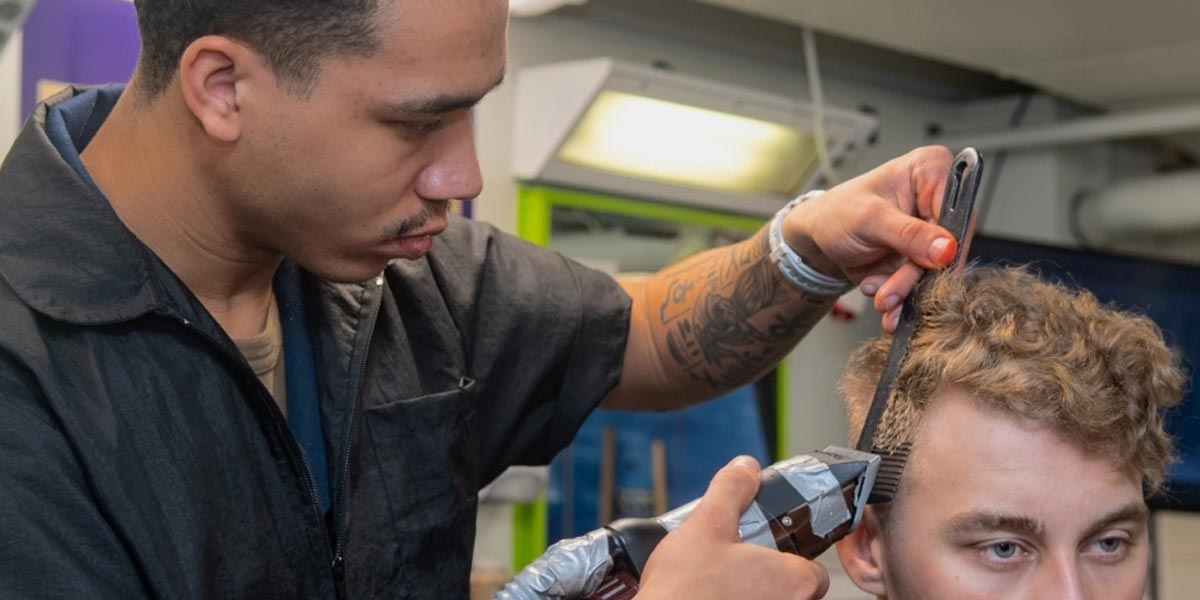
Whereas the Navy directs commanders to set uniform and grooming policies at the regional level, which results in small variations in the Navy uniform in different places, the Coast Guard sets standard policies for all personnel in all locations and allows regional commanders to adjust those policies as needed. In general, Coast Guard uniform and appearance policies are more numerous but less specific than those of the other branches.
General Hygiene Standards
- Only females may wear cosmetics (makeup), and only to create a "natural look" that is in "good taste." Bright and unnatural colors are prohibited. Males may not wear makeup unless prescribed by a doctor for medical necessity.
- Fingernails must be trimmed to within 1/4" of the fingertip. For females, "natural and uniform" colors of nail polish are permitted, as are French nails with white tips only.
- Regarding hygiene, M1020.6K specifies only that Guardsmen must "ensure high standards of personal hygiene and appearance." It's safe to assume that, like the other branches, the Coast Guard expects personnel to shower daily and to otherwise be as clean and well-groomed as duty conditions allow.
Uniform Appearance and Fit
- Uniforms must always be "neat, clean, pressed as applicable, proper fit, in good condition, zipped, snapped, and buttoned unless otherwise authorized."
- Because Guardsmen spend much (if not most) of their time on or near the ocean, special care should be taken to maintain and polish brass buttons and other metallic uniform components, which may degrade or rust more quickly in the presence of salt water.
- For all Guardsmen in all locations, the standard uniform is the Tropical Blue (TB) or Service Dress Blue (SDB) uniform. Details on the wear and care of every Coast Guard uniform can be found in section 3.B of document M1020.6K.
Haircut and Hairstyle Regulations
- Women's hair may not fall below the eyebrows, the bottom edge of the collar, or the inner brim of headgear when worn. Buns may not be more than 4" deep.
- Men's hair "above the ears and around the neck will be tapered from the lower natural hairline upwards at least .75 inches and outward not greater than .75 inches to blend with hairstyle on top of the head." Hair on the back of the neck may not touch the collar.
- Mustaches, if worn, must be neatly groomed and can't extend below the top of the upper lip or past the corners of the mouth. Depending on the Guardsman's role and duty location, he may be required to be completely clean-shaven.
Jewelry and Eyewear
- Coast Guardsmen are authorized to wear one "conservative" watch or fitness tracker, one concealed necklace, and one ring per hand (wedding sets count as one ring). Bracelets are not allowed except for medical alerts and POW/MIA/KIA bracelets.
- Female Guardsmen may wear one earring per ear that is centered on the lobe and no wider than 6mm in diameter.
- Male Guardsmen may wear earrings only when off duty, not in uniform, and not on a military installation.
- For both males and females, ear piercings may not be so large as to allow light to show through when the earrings are not worn.
- The Coast Guard has the most specific restrictions on personal cell phones, which may not be used, worn, or carried while on duty unless "required… for military duties" or for a "legitimate urgent need."
Tattoos and Other Body Modifications
- In all relevant Coast Guard documentation, the word "tattoo" also includes "brand." Intentional scarring of the body other than branding is not authorized.
- One tattoo per hand is authorized, but it must be no larger than 1" in diameter and placed between the wrist and the first knuckle of the fingers. Palm tattoos are not authorized.
- Neck and chest tattoos are authorized as long as they are not visible when the crew neck T-shirt is worn.
- Tattoos are not permitted anywhere on the head or on the neck if any part of the tattoo extends past a vertical line running down from the most anterior point of the orifice of the ear.
- No "extreme" or "shocking" body modification is permitted. Examples include but are not limited to splitting the tongue and filing the teeth.
Space Force
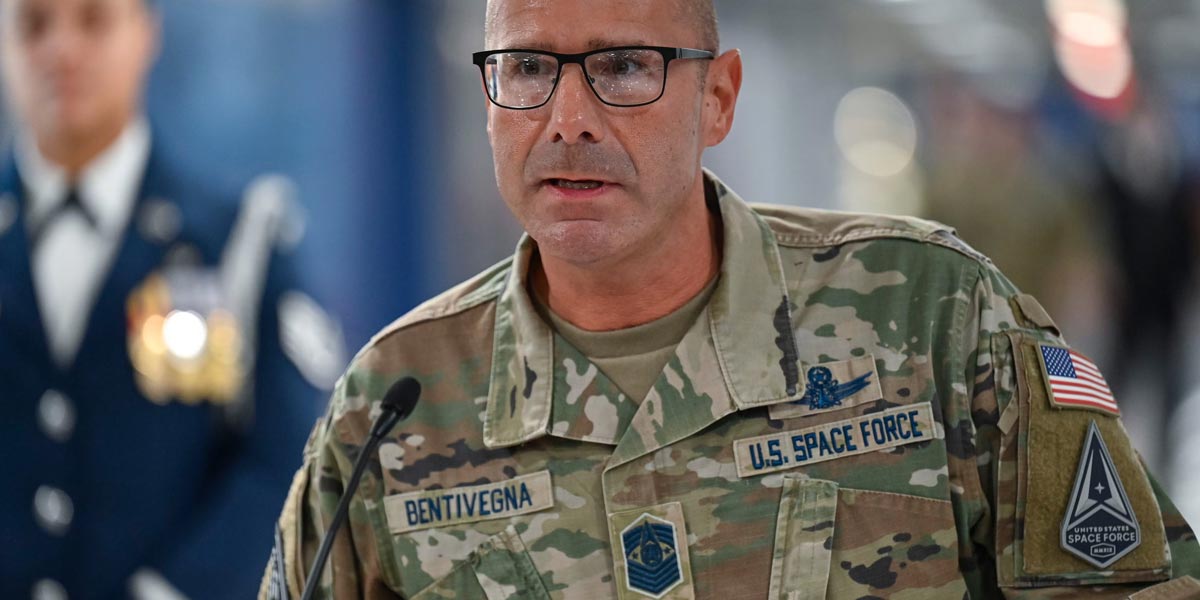
The U.S. Space Force was established in 2019 and is still brand new, especially in light of the fact that large, bureaucratic organizations like the military grow and evolve very slowly. For now, many aspects of the Space Force are regulated and managed by the Air Force. The Space Force does have its own uniform and appearance policy document — SPFGM2023-36-01 — but it's pretty bare bones compared to the other branches' equivalent documents. (It's just 19 pages; the next-shortest military uniform and appearance document is AR 670-1 at 76 pages, and the longest is MCO 1020.34H at a whopping 263 pages.)
In its current form, SPFGM2023-36-01 is intended to be used as a supplement and addition to the Air Force uniform and appearance policy document, DAFI 36-2903. Space Force Guardians are to adhere to the policies outlined in SPFGM2023-36-01 and to refer to DAFI 36-2903 for any policies not found in the former. In the event of a conflict between SPFGM2023-36-01 and DAFI 36-2903, the Space Force policy document takes precedence.
If you've newly joined the military, it may be tempting to think that you don't need to read your branch's entire uniform and appearance policy, which could be hundreds of pages long. However, it's worth setting aside a few hours to do so. You don't need to memorize all of it, but a solid understanding of the specific ways in which you're expected to present yourself on a day-to-day basis will save you a lot of trouble in the long run.
SPFGM2023-36-01: United States Space Force Dress and Appearance Standards
DAFI 36-2903: Dress and Personal Appearance of Department of the Air Force Personnel