

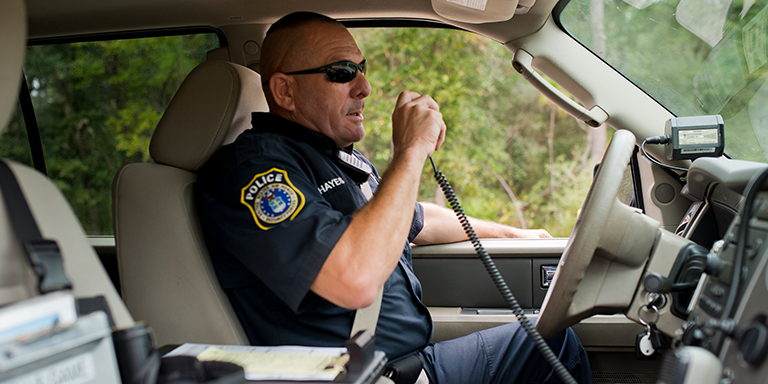
A patrol officer will answer more alarm calls than any other call category in suburban and inner-city departments. Rural areas with fewer businesses and generally lower crime rates, on the other hand, may not have as many alarm calls. Either way, different alarm calls require different response tactics based on the type of alarm call received.
Residential and commercial burglary alarms are the most common. Other common alarms include holdup alarms, panic alarms and fire alarms. Fortunately, most alarm calls turn out to be false, either set off in error or by an equipment malfunction. However, responding officers must not let their guard down and respond to every alarm as if it were a genuine emergency.
Daytime Residential Alarms
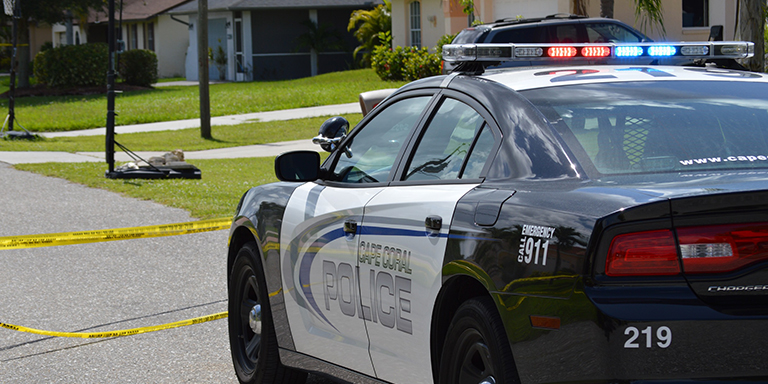
People have many valuables in their homes and need a way of protecting them when they leave the house. An alarm system is a common, reasonable tool to prevent, deter or even stop an intruder in their tracks, protecting valuable property.
Many residential alarm systems have signage warning would-be burglars of an alarm system. The signs are the first level of security and may convince a burglar to select another home. Historically, residential alarms were hard-wired with magnetic switches attached to every window and door. While these systems worked, they often caused false alarms; something as simple as a window rattling in the wind could trigger the system. Some residential alarms were only attached to a loud siren, and it was incumbent upon the homeowner's neighbors to call the police. Modern systems have evolved to report the alarm either directly to the police department or to an alarm company central station which notifies the police.
Some residential alarms are silent, notifying the police without alerting the intruder. A police officer's response to a silent residential alarm is typically as quiet as possible, with no police sirens, screeching tires or slamming doors. Most officers stop several houses away from the residence and approach cautiously on foot. At least a two-officer response is always best. Upon arriving at the scene, officers first scan the exterior of the house for any visible signs of entry, such as an open window or door.
Responding officers should consider summoning additional units to assist in the entry. Two officers can establish a perimeter by standing at opposite structure corners. Using this tactic, they can each cover two sides of the building. It's not unusual for a burglar to enter through a back window, only to exit through the front door carrying the residents' valuables.
Silent alarms give police the best chance of catching a burglar. In the case of an alarm with a loud siren, the burglar will usually grab whatever they see and quickly exit the premises. Many smash-and-grab burglars walk around a house before entering, looking in the windows for valuables. If they spot a wallet, computer or any other expensive items, they simply smash a window, grab the item and escape quickly. Those seeking money to feed a drug habit often use the smash-and-grab tactic.
If the alarm is silent, officers should enter and clear rooms with extreme caution, as the intruder is more likely still to be in the house upon their arrival. In the case of a loud siren, officers should still use caution, but the likelihood of a criminal remaining on the scene is less likely.
Nighttime Residential Alarms
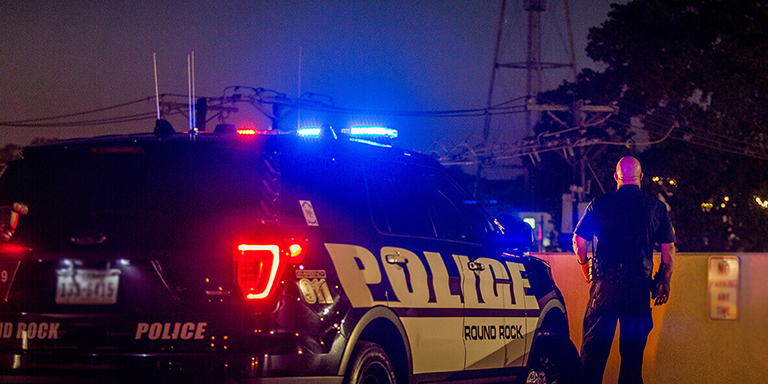
In addition to protecting their property when they are away, citizens also want to sleep without fear of a nighttime burglar entering their home. A residential alarm call in the middle of the night is a true emergency. The intruder has entered an occupied dwelling, and the potential for violence against the occupants is a severe concern.
Nighttime alarms should be a priority call for an immediate officer response. Upon arrival, police should quickly check the exterior of the house for a point of entry. They should attempt access without delay, at least banging loudly on the door and announcing their presence. Nighttime alarm responses are more about protecting the occupants than their property. Telecommunications operators should attempt to call the occupants and notify them when the police arrive. If officers enter through an open door or window, they should loudly announce that they are police for their own safety.
Alarms can and do fail, causing false alarms. This is why it's essential to make contact with homeowners by telephone. In addition, many alarm companies have a safe word system in place where the occupant must give the correct word to verify that they set off the alarm in error.
Bank Holdup Alarms
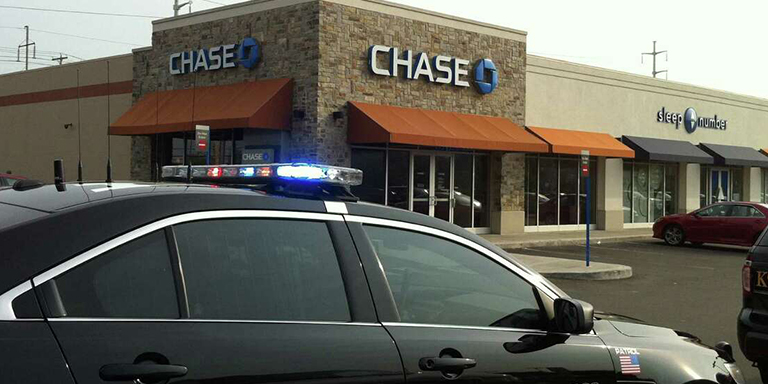
Many bank holdup alarms have several buttons that must be pushed together to set off the alarm. The majority of bank alarms also end up being false alarms, but officers must respond to each and every bank alarm as if the bank were actually being robbed. Bank holdup alarms are silent, and require a particular response by approaching officers. Many police departments and banks will have a system set up in advance in case of a holdup alarm.
Every department must have a bank robbery response plan. In almost every case, the initial responding officers will not immediately rush into the bank. The department may telephone the bank and ask for a pre-established codeword. Also, a bank employee may be required to meet with an officer at a predetermined spot, usually a location a short distance away from the bank. Bank employees do this to establish whether or not a robbery is actually in progress.
If the code is not given correctly and no one exits the bank to meet with law enforcement, police will assume that a robbery may be in progress. At this point, departments will begin employing specific tactics, including surveillance, establishing a clear perimeter and identifying occupied vehicles near the bank. Each department should have a bank robbery response plan that officers must review thoroughly and follow carefully.
Commercial Panic Alarms
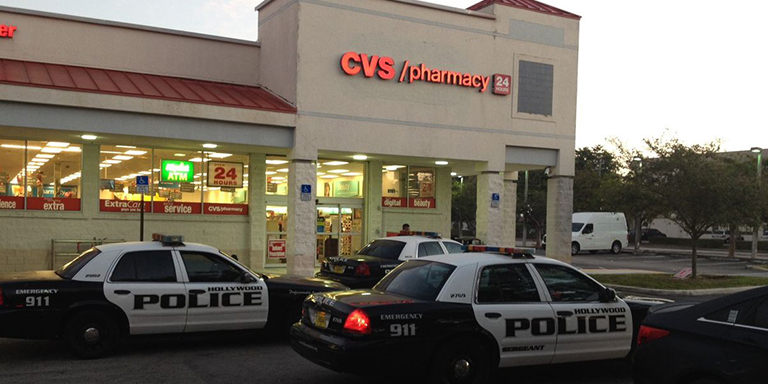
Almost every business where money is accepted for goods or services will be a target for holdups. Corner convenience stores, for example, make an easy target. Many of these stores have weak points that make them good targets for burglars: they generally have only one or two employees working, they stay open into the late evening hours and they are cash businesses.
Alarm systems at these types of business are silent and usually report to a central alarm station. Some systems integrate security cameras and alarms so the company can see, in real time, what is going on in the store. This information is extremely valuable to officers — in most cases, police have to show up to the premises, and the more information they have, the better.
Panic buttons are often activated because of a violent altercation between customers, a robbery or even an incidence of shoplifting. It is challenging when employees are not properly trained in the use of these alarm buttons. For example, one store manager purposely depressed the panic alarm once because they “wanted to test the police response time.” They were surprised to receive a subsequent court summons for falsely triggering the alarm. Most officers respond directly to the scene, and they take triggered alarms very seriously.
The Problem with Alarms
Officers understand and accept that residential and business alarms are sometimes triggered by mistake, or that the alarm requires repair. However, responding to false alarms can become a problem: they use up time and valuable police resources. Many jurisdictions have passed alarm ordinances that track each incidence of a false alarm. Most give a homeowner or business owner several false alarms for free. If, however, the same alarm falsely activates more than the allowed number of times, the premises owner is charged a fee. The fees usually increase if the false alarms continue.
In the case of a damaged alarm, the company that installed it usually can quickly find the problem and stop the alarm from malfunctioning. If alarms are set off by human error, employees must be trained on their proper use so false alarms are not triggered. A fee of twenty-five or fifty dollars per false alarm is not uncommon. The fee is mainly used to motivate the owner to have the alarm repaired or ensure employees are adequately trained.
Some departments offer advice on standard alarm issues that can occur in public buildings or schools. One of the biggest offenders is the passive infrared motion detector alarm. These are common in school classrooms and hallways. The combination of heat and movement sets off the alarm. When a forced hot-air system comes on and blows papers on bulletin boards enough to create movement, the combination of heat and movement can trigger a false alarm. Most alarm problems are easily corrected once those in charge are educated on the system's operation and triggers.
Fire Alarms

This may seem out of place — after all, fire departments respond to fires. But when a fire is called in, police units are usually the first to arrive. Countless police officers have entered burning buildings and assisted citizens in escaping. Sometimes the fire extinguisher in the back of most patrol units is enough to extinguish a minor fire before it fully engulfs a structure.
Old-school police officers were taught to drop their hats at the doorway where they entered a burning structure. They did this so arriving firefighters could know where to locate and assist them. While this tactic existed before police radios were used, the practice is still used by some officers today.
Burglar alarms, holdup alarms, panic alarms and even fire alarms all serve the purpose of summoning help. Alarms are the most frequent call an officer answers, and they're set off in error more often than not. But officers must respond to every call with the assumption that someone needs immediate help. Answering the call for help is part of the long-standing tradition of a police officer's sworn duty to risk their lives to protect the life and property of others, and alarm responses are no exception.