

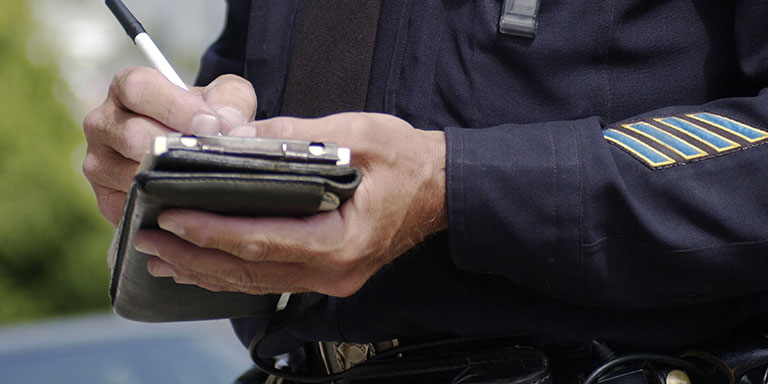
A police officer's investigation is only as good as their report. An officer's report is the official written document explaining the incident to which they responded. A strong case documented in an excellent investigative report helps make a prosecuting attorney confident enough to take a case to trial. A strong, well-documented case may also cause defense attorneys to avoid trial altogether and consider urging their defendant to take a plea bargain.
For these reasons, it's important for police officers to know how to write an effective report with a clear, concise outline and impeccable grammar. If you need help improving your report writing skills or need a few pointers on grammar, you've come to the right place.
What's in a Good Report?
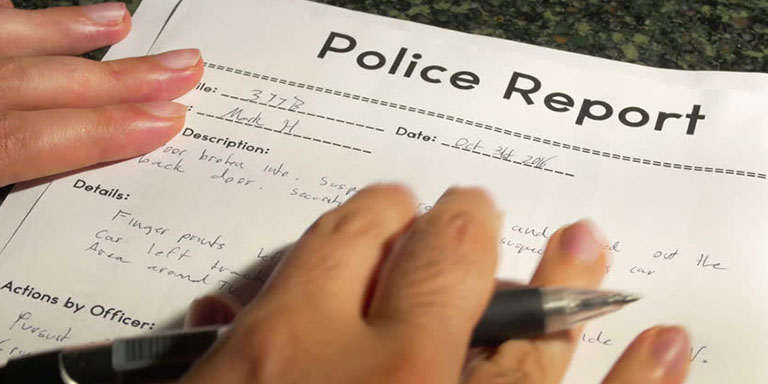
A good report is a clearly written document that contains all the facts of the case and is clean of typographical or other errors. More importantly, it tells a story from beginning to end in plain English. A reader of such a report can almost hear the officer explaining the case to their supervisor in the officer's own words.
The Basics
Police officers are taught in the academy that an excellent investigative report contains the who, what, when, where, and why (and sometimes the how) of an incident. An officer who leaves crucial elements out of their report may spend significant time being cross-examined on the witness stand, so it's important that their report is thorough and accurate.
Who?
The most important "who" in an incident report is the person who is the subject of the report itself. This is usually either an accused or a potential suspect. However, if you receive information from witnesses or other sources, they must also be clearly identified. For example, consider the following dissimilar report examples describing the same incident:
I spoke to the accused's employer and verified that they were not at work on the date of the crime.
On January 9th, 2022, I spoke to the accused's supervisor, John W. Smith of XYZ corporation, and he verified that the accused wasn't at work on January 5th, 2022.
The first sentence lacks critical details. The second sentence, on the other hand, clearly identifies the person interviewed, their relationship with the accused, the company for which the accused works, the interview date and the date on which the accused was absent from work. If a person is sufficiently important enough to be mentioned in the report, their information (e.g. their name, email, cell phone number, etc.) should be clearly documented.
What?
The "what" of a report is what event or incident happened to cause the officer to initiate their investigation. It may explain the arrest of an accused individual or identify if a crime was committed. This aspect will be the largest portion of the officer's report, as it documents what the officer observed, learned, and heard, as well as their steps in completing their investigation. The officer should write their report in chronological order. For example, was the officer dispatched to the scene, or did they come upon it independently? This is usually a good starting point for the report.
The "what" of a report may be limited to the officer's actions and observations at the scene, or it may be the continued documentation of many months of a detailed investigation. Many secondary investigators may type their own reports as the overall investigation unfolds. These subsequent reports may include daily documentation of their actions as the investigation progresses.
When and Where?
The "when and where" are essential in ensuring that the times and locations of the incident are accurate. For example, incorrectly transposing two numbers in the crime scene's address may allow a defense attorney to question the accuracy of the officers' entire report. It's important to be meticulous to avoid an instance where a defense attorney may ask, "Officer, how many other inaccuracies are in your report if you can't even get the house number right?" As we will learn, this error should have been handled earlier in the officer's direct testimony.
The "when and where" is also essential in locating and collecting evidence. The investigation report will be the first in a series of reports that establish an unbroken chain of custody and control of the physical evidence of a crime.
Why?
This aspect of a report can be tricky, as the "why" (or the motive for committing a crime) may be more of a theory than cold, hard facts. That's why it's essential to lay out the fact-based circumstances discovered during the investigation that may support a particular motive without leaping to an upclear conclusion.
One example of laying out the facts without assuming a motive may go like this: during a murder investigation, the officer learns that the accused had recently doubled the victim's life insurance policy. That fact can stand alone in the officer's report and does not require the report (or the officer writing it) to connect the dots. Skillfully connecting the dots will be the prosecutor's job.
How?
The "how" is relatively straightforward: if you know how something happened, explain it. Remember, though, that it's essential not to give any opinions on how something may have occurred. If the officer's opinion is needed later, lawyers will request it in court. Reports state facts that may lead to conclusions, but opinions and educated guesses are out of bounds.
In some cases, a prosecutor will qualify a police witness as an expert in a particular field based on their years of investigative experience. In this case, the officer will be asked for their "expert opinion."
The Four C's in an Excellent Report:
In addition to the who, what, when, where, why and how of report writing, it's important to remember the four C's, as they'll also lend themselves to an excellently written report.
Clear: Be specific, and never use vague or ambiguous terms. Think of clarity as the judicious use of common language by way of simple terms.
Concise: Reports should be brief, but they should also contain all the facts necessary to understand the investigation without further explanation. Use direct quotes only when needed. Avoid overly wordy sentences, police jargon or obscure or technical terms.
Complete: Include all the pertinent facts, but exclude any irrelevant information.
Correct: All information included in the report should be accurate and free of grammatical errors or any personal bias.
Grammar
An experienced investigator should have already mastered basic punctuation and grammar. The easiest avoidable errors are missing periods, missing or misused commas, improper use of quotation marks and proper capitalization. More in-depth grammatical concepts like person & voice, tense and homonyms & homophones might need a bit more attention.
Person and Voice
Police reports should be written in the first person. If you chased after a suspect, write: "I ran after the suspect," not the passive voice: "The suspect was pursued on foot."
On that note, officers should write police reports in an active voice, not a passive voice.
Active voice: I took Joe Doe to the county jail.
Passive voice: Joe Doe was taken to the county jail by this officer.
In the passive voice, the verb is typically "being done" to the subject. In this case, John Doe (the subject) "was taken." In the active voice, a subject (I, or the officer) does something (took) to something else (John Doe). Remember: "I will always use active voice," not "Active voice will always be used by me."
Tense
Regarding tense, police reports should be written in the past tense. After all, the report includes things that have already happened. Be careful not to mix past and present tenses, as it can make a report more difficult to understand.
Homonyms and Homophones
Officers should be aware of homonyms, or words that are spelled the same but have different meanings. For example, "address" can mean "to speak to someone" or "a set of numbers, street names or coordinates that identify a specific location." Homonyms are usually cleared up by the context in which they are used. If an officer writes, "I went to the address 1234 Main Street," it's clear they're referring to a location rather than the act of speaking to someone.
Homophones, on the other hand, can be more problematic. These are words that are spelled differently and have different meanings but sound the same. The most prevalent example officers struggle with is the difference between "there," "their" and "they're."
The word "there" is used to describe a location: "It's over there!"
The word "their" indicates ownership: "They enjoyed their dinner."
The contraction "they're" is a combination of the words "they are": "They're the best in their field."
Confusing these and other homophones may seem not to be a big deal, but getting them right can go a long way toward establishing an officer's credibility and excellent written communication skills.
Spellcheck
A word of caution about using computer spell checkers or grammar checkers: they do not always find all of a report's errors. For example, a word that is misspelled but makes a different, correctly spelled word will not be caught (think "dessert" vs. "desert"). Never delegate critical proofreading or grammar checking to any computer program. Read your reports thoroughly and scrutinize them before finalizing and submitting them.
Officer Credibility
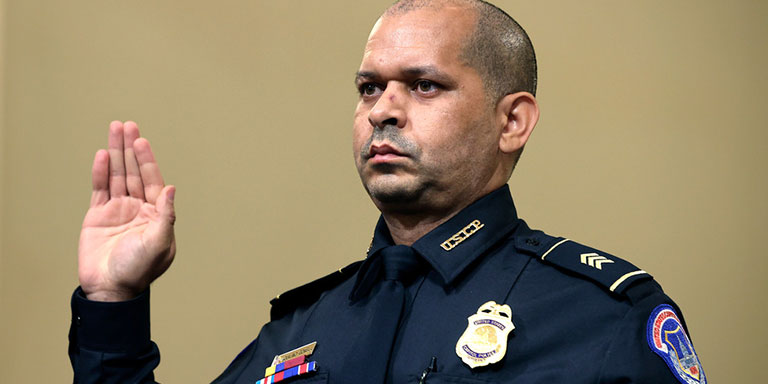
Over the past decade, police officers' testimony has come under increased scrutiny by jurors and the public. Common tactics by defense attorneys are to find inconsistencies in the officer's report or testimony and challenge their honesty, competence or impartiality. Therefore, an officer's investigation report must be accurate and presented as an impartial statement of the facts.
Do not exclude information that doesn't help to prove the case (or even information that is detrimental to the case). Police officers are supposed to be finders of facts, and not all facts are positive to the case. Including facts that are important but that don't necessarily help the case can help demonstrate an officer's impartiality and add credibility to their testimony.
Less than five percent of all cases go to trial, so most officers' reports will not be dissected in a courtroom. However, officers should write every report to the same high standard. In some cases, the defense counsel's review of an excellent investigation report may persuade them not to go to trial.
Repairing the Damage
After receiving notice of an upcoming trial, an officer should review their report. During that review, they may find errors. These errors could be typographical, spelling-related or even content errors. Regardless of the type, it's always best to meet with the prosecuting attorney before trial and bring any errors to their attention. Defense attorneys carefully scrutinize every bit of an officer's reports for errors and inconsistencies. These errors may be used to build reasonable doubt in the mind of the jury.
During an officer's direct examination on the witness stand, the prosecuting attorney should address any typos or other errors in the report and allow the officer to fully explain them. This usually defuses the problem before the errors can be used in cross-examination to damage the officer's credibility.
Writing the Best Possible Report
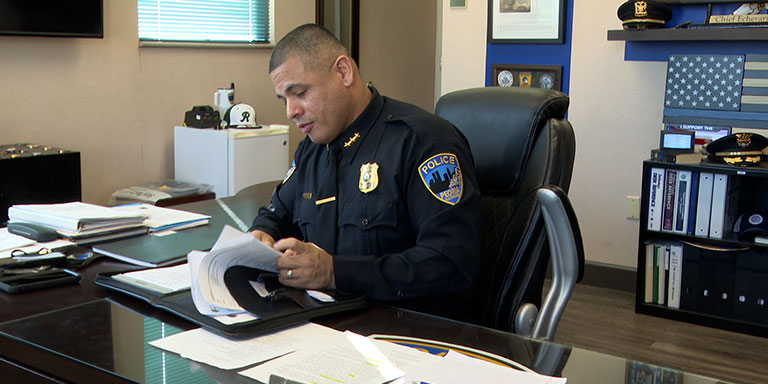
It is critical to write the report while the facts of the case are still fresh in the officer's memory. However, if the officer's been on duty at a homicide scene for nineteen straight hours, they may want to get some sleep before tackling a detailed report. It's important to use your best judgment and choose the best time to write on a case-by-case basis. It's also a good idea to think the case through and know what will go in the report before starting to type.
Most importantly, critically review the finished written report before submitting it. If possible, print out the report and get out a red pen. Don't be afraid to cross things out, add things and move paragraphs around. Sure, your sergeant will review your report, but if mistakes slip past them, you, not your sergeant, will be the one who has to explain them on the witness stand.
Officers should constantly be working to refine their report writing abilities. Writing excellent reports on simple theft or criminal mischief cases can help to hone these skills for more detailed assignments in the future. Just as officers practice interview skills in small, everyday cases and interactions, the same goes for report writing.
Most colleges offer report writing classes. Local police academies offer them too as continuing educational courses for experienced and veteran officers. Additionally, there are hundreds of websites and books dedicated to teaching the proper use of grammar. Today's officers must be masters of both verbal communication and effective communication in written reports. Career advancement depends in part on each officer's development of critical report writing skills.