

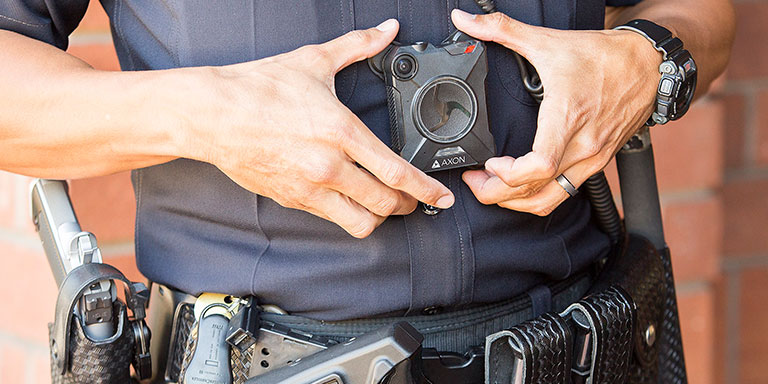
Adopted more and more by police departments across the country, body cameras provide peace of mind for officers and civilians alike. When an incident occurs, body cam footage doesn't lie, and the resulting audio and video can help to set the record straight. Since they're becoming more commonplace, we'll run through how police body cameras evolved, how they work, what kind of training they entail and departmental policies relating to body cams.
How Body-Worn Cameras Evolved
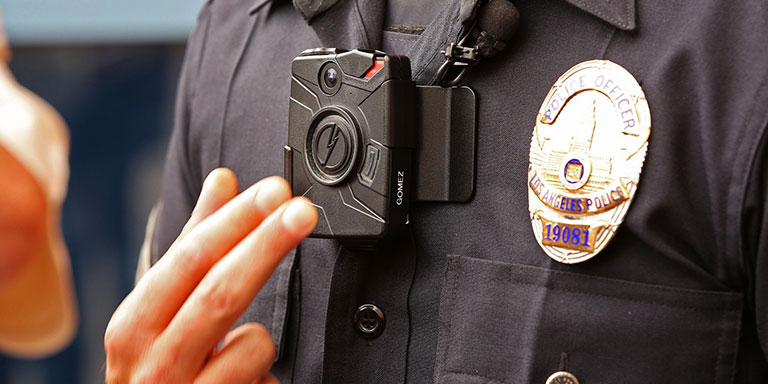
Body-worn cameras (BWCs) are the latest form of technology to aid in the mission of police officers. Their predecessors, early dash cams, were little more than handheld video cameras mounted to police car dashboards. As technology improved, police officers started wearing wireless microphones to add audio to the dash cam's video. These microphones were a vital improvement that demonstrated the importance of hearing the dialog in the dash cam footage, while also seeing the physical movements of the officers and civilians in frame. The main problem, though, was that once the officer left the area in front of their cruiser, the camera couldn't follow and capture the action.
As technology improved, video cameras became so small that companies added them into most cell phones. The thought naturally followed among law enforcement agencies: if cameras can be that small, why not have officers wear one? Police wore early body camera models in several different locations. These early prototypes were worn on duty belts and even incorporated into eyeglasses. Departments learned that body-worn cameras had to be durable and located where they could capture the most action, yet not impede or restrict an officer's motions. Today, most body cams are worn on the front torso of an officer's uniform. They're typically held in place using strong neodymium magnets on the unit, with a metal plate under the officer's shirt or in their vest trauma-plate pocket.
Newer cameras come with many optional features depending on the unit's manufacturer. In a time of crisis such as an armed encounter or high-speed chase, officers may not always remember to turn on their recorders. Some cameras, though, are activated automatically by specific events, like when an officer exceeds a certain speed or activates their cruiser's overhead lights. Some models can even activate when an officer unholsters their sidearm or taser. Using Bluetooth technology, other officers' body cameras will also activate when one officer draws their weapon (provided they are within thirty feet of the drawn weapon). Some manufacturers provide both body-worn and car cameras. Systems are available that allow both cameras to work together and start recording using the same automatic activation events. This also simplifies event data storage between the cameras.
Cost and Features
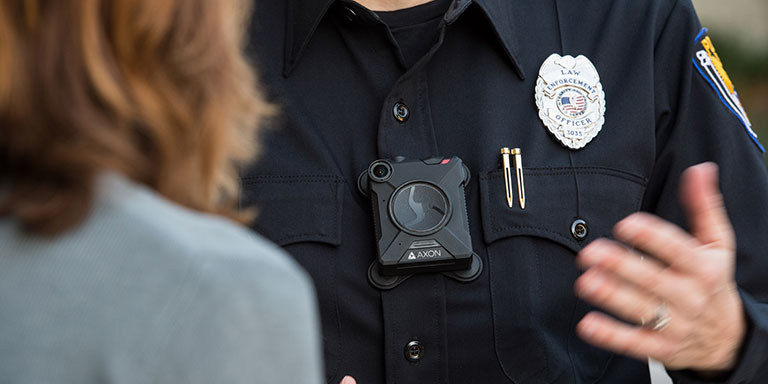
The cost of each camera unit and the features they come with are usually decided on by an individual jurisdiction's governing body (with input from the police administration). Many decisions regarding body-worn cameras simply boil down to finances — body cam systems are expensive, after all. They are costly to buy and maintain, but perhaps the most considerable expense (and the most often overlooked) is data storage. As most people know from using their own phones or computers, video recording takes up a massive amount of digital drive space.
The larger body-worn camera manufacturers offer secure video data storage systems for a monthly or yearly fee. They can be on-site through a local data storage system, a managed off-site system or a cloud storage setup. Regardless of the system selected, secure data storage is expensive.
A typical police body camera can generate a large number of data files during a single tour. Multiple BWCs in use around the clock can generate a massive quantity of data, all of which requires storage. All recorded video files must be maintained securely for a minimum set time (usually thirty to ninety days) before they may be purged from the system. Body cam files that document the use of force or evidence in a criminal case are usually held for much longer periods.
The essential features of a police body camera include a medium to high definition video camera and a high-quality microphone to capture noise and conversation. The quality of the video recording determines the size of the data — A 720p resolution results in much smaller data files than a camera with 1080p resolution. However, picture quality can be important when reviewing a video frame by frame to see exactly what happened during an incident.
Another important feature includes either a vibration or a beep every few minutes to remind the officer that they are still recording. Forgetting to turn off a body camera after a call can generate a lot of unnecessary video to be stored.
All of a BWC's components are housed in a hardshell casing that protects the unit from the weather and other physical damage. On the front of each unit is a prominent light that illuminates when the unit is recording. This light can alert citizens to the fact that they are being recorded, and confirm to the officer that their unit is on.
What is Buffering?
Buffering is a term that every officer should understand. A body-worn police camera that buffers means that it is always recording in the background. The unit is internally buffering (or recording) even when the unit is turned off. Many units record on a loop from thirty seconds to several minutes, continuously recording over the previously recorded video loop.
The positive argument for buffering is that it allows a department to go back several minutes before a critical event and recover the recording. Consider, for instance, an officer on the street being threatened or assaulted. By the time the officer activates their camera, significant evidence about the incident may be lost, if not for buffering. Some call this "recording before-the-fact."
Police officers must understand that the actions that lead to a body camera being turned on are likely to end up being recorded. Officers must make sure their reports accurately reflect the events that occurred. If unsure, the officer should ask to review the additional captured video so their report can be as accurate as possible.
Body-Worn Cameras: Both Good and Bad
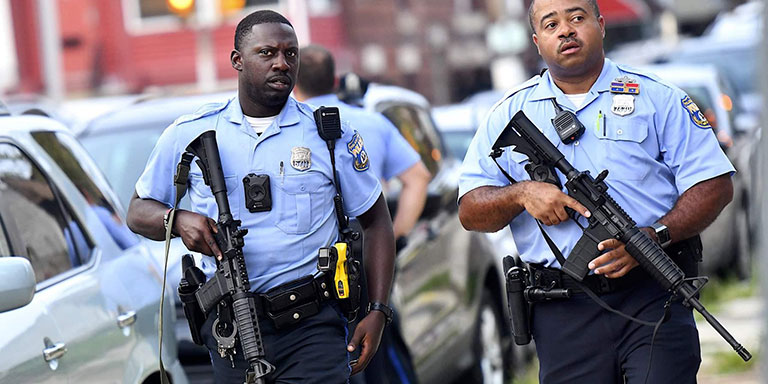
In many cases, a confrontation with a citizen often comes down to the officer's word against the citizen's. An audio and video recording, though, can quickly clear up what happened and even what words specifically were spoken. This has led to fewer internal complaints of police misconduct in many jurisdictions.
Wearing a body camera has changed the behavior of both police officers and citizens: knowing that every word is being recorded has led many officers to choose their words more carefully and keep their actions above reproach. However, the argument can be made that BWCs have changed and slowed officers' reaction times to threatening events. Police cannot afford to overthink their responses to dangerous and rapidly evolving events just because a camera is recording.
On the citizen side, knowing their actions and words are being recorded can sometimes positively impact the way they behave toward police officers. In other cases, the very presence of the body camera can cause them to act out and play to the camera.
Perhaps the best use of body-worn cameras is during physical confrontations and the application of deadly force. During critical events, officers may develop tunnel vision and have trouble recalling the events accurately after the fact.
For instance, during an encounter when they have to discharge their weapon, it's not uncommon for an officer to believe they fired only a few rounds, when in fact they emptied their entire magazine. An extreme, emotional, near-death experience takes a toll on the human brain. Going back and reviewing the audio and video recording of a critical incident can provide clarity and strong evidence of what occurred.
From a community perspective, police body cameras provide greater accountability between the officer and the community. Many people have a genuine fear of police interaction. The presence of a BWC lets the citizen know that both parties' actions are being recorded. This should help to quell any fears of a rogue cop out to abuse their authority.
Departmental Policy
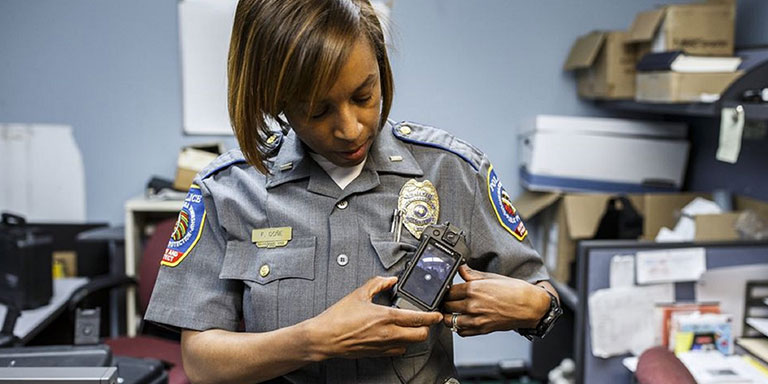
A clear policy is essential to the success of a body camera program in a police department. A comprehensive policy must be written that addresses citizen and officer concerns, and reviews applicable privacy statutes.
The policy should dictate when an officer must have their camera turned on and when they are allowed to turn it off or mute the sound. In general, the system should be activated whenever an officer is answering a call or is involved in any kind of citizen contact.
Matters of privacy must be addressed in the policy, too. Body cams should never be used to secretly record anyone, especially those speaking about confidential matters. Most units have a mute button to turn off the microphone. A good policy will maintain that this button may be used when meeting with a supervisor. The BWC policy should also address whether or not it's appropriate to record juveniles or victims of certain crimes. When writing the policy, departments should seek legal guidance regarding privacy issues and one and two party state consent laws.
The policy should allow officers to review video footage of events to verify that their written reports are accurate. Once a video is recorded, no one should be allowed to tamper with or erase a video. The policy should also set up a purge time-frame for all videos not saved as evidence. In some jurisdictions, this period may be dictated by state statute or an attorney general's policy.
The policy should also describe how and when video footage can be disseminated to the press or others under the Freedom of Information Act. Perhaps, most importantly, it should also set up a system of regular audits of recordings. These audits will verify that the system is operating properly, being adequately utilized and identifying potential problems that require additional training or correction.
Training
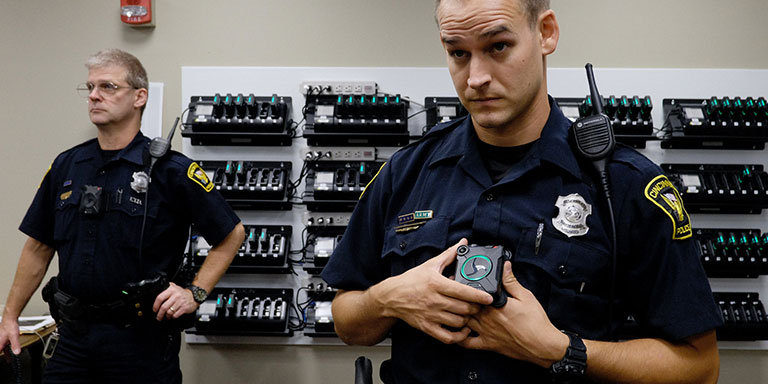
After writing a policy and receiving all necessary approvals, it's time to train the entire department. All officers should receive sufficient training to understand the new departmental policy and the physical operation of their body-worn camera. The program should not go into effect without a clearly understood policy and a training & testing period to document each officer's level of proficiency and understanding.
Police body cameras are a growing trend in the United States. Use of force incidents continue to make national news, and BWCs are often mentioned as a potential solution for greater police accountability. Body cams can certainly help to protect officers from false claims of inappropriate behavior. However, in critical incidents, the media may edit a twenty-minute camera recording, showing only a few seconds. The video clip shown may be entirely out of context, potentially making the officer's actions look inappropriate when they aren't.
A dichotomy continues to exist between the merits and pitfalls of body camera programs, and the jury is still out on whether they do more harm or good. Hopefully, with the continued implementation of good policies and with plenty of practice, citizens and officers alike will benefit from the use of police body cameras.