

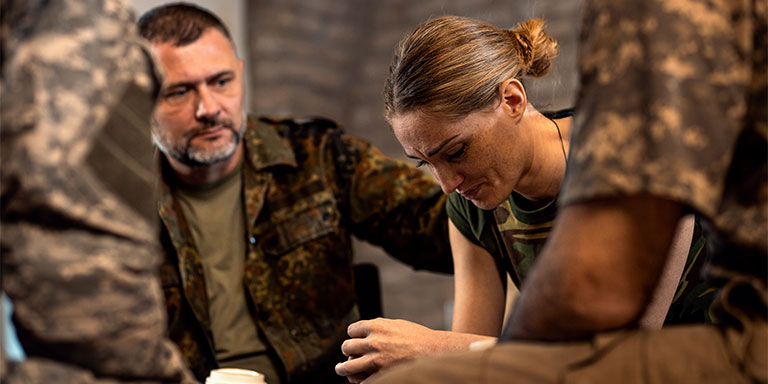
Unsurprisingly, military veterans are one of the most at-risk groups for post-traumatic stress disorder (PTSD). Studies disagree somewhat, but as many as fifteen percent of veterans will be diagnosed with PTSD at some point in their lives compared to six to eight percent in the general population.
In this guide, we'll review the signs and symptoms of PTSD and recommend some possible coping strategies. We'll also discuss survivor's guilt and strategies for talking to friends and family about your condition.
All that being said, this advice is general. We are not mental health professionals and this guide is not intended to replace the guidance of a qualified mental health professional. Never hesitate to seek professional help if you ever have thoughts about harming yourself or others.
PTSD: Common Questions and Answers

What Is PTSD?
Mayo Clinic defines post-traumatic stress disorder as "a mental health condition that's triggered by a terrifying event — either experiencing it or witnessing it. Symptoms may include flashbacks, nightmares and severe anxiety, as well as uncontrollable thoughts about the event."
Who Is at Risk of Developing PTSD?
Many people believe that PTSD only occurs in veterans who have been deployed to combat zones. Although combat vets are at greater risk of PTSD, it can affect anyone who experiences a deeply disturbing or traumatic event. Military life is extremely stressful even in the best cases, and prolonged stress can reduce your ability to cope with traumatic events that otherwise may have been manageable.
Other risk factors include:
- Prior history of other mental health conditions related to stress, anxiety, or trauma
- Drug or alcohol use
- Certain psychological traits or tendencies, such as increased neuroticism
- There may be a genetic component; women are roughly twice as likely as men to develop PTSD, all else being equal.
What Are the Symptoms of PTSD?
There are many signs and symptoms of PTSD, but none of them are exclusive of other conditions. If you experience any of these symptoms, seek help from a qualified professional — never self-diagnose.
- Recurrent and distressing memories or flashbacks of the triggering event
- Persistent or severe nightmares
- Severe emotional distress triggered by things that remind you of the event
- A strong desire to avoid people, places, things, or behaviors that remind you of the event
- Persistent and strong negative thoughts about yourself or others
- A general and persistent sense of hopelessness
- Memory loss
- Relationship strain
- Inability to enjoy activities that you once enjoyed
- A feeling of emotional "numbness"
- A constant state of alertness or feeling of impending danger
- Self-destructive behavior
- Trouble sleeping or concentrating
- Excessive irritability
- Strong feelings of guilt or shame
Symptoms can appear shortly after the event or not until many years later. Symptoms can also come and go over time, or they might change in severity or frequency.
What Are the Treatment Options for PTSD?
If you suspect that you or a loved one might have PTSD, the first and best treatment option is to seek help from a qualified mental health professional. Medication may be appropriate under the supervision of a professional and in conjunction with counseling and other treatment strategies. Although medication can be one part of a comprehensive treatment plan, it is not sufficient on its own. We'll go over some basic coping strategies in the next section.
How to Cope with PTSD
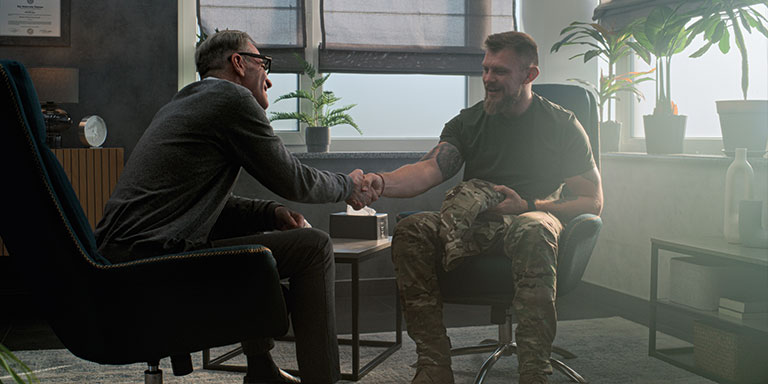
Here are some in-the-moment coping strategies that mental health professionals often recommend. However, we must stress again: Never use internet advice instead of or against the advice of a qualified professional.
- Don't neglect the essentials: good nutrition, quality sleep, exercise, meaningful work, and enjoyable hobbies. Some or all of these may be difficult to maintain if you have PTSD, but do your best.
- Create your own physical safe space where you can be alone and ask others not to enter that area unless you invite them. For most people, this is easiest to accomplish in your home or apartment. Many people who suffer from PTSD find that getting some distance from others can help relieve acute symptoms.
- Avoid drugs and alcohol. These substances can make PTSD symptoms much worse.
- Socialize when you can, to the extent that you can. If being around others is truly unbearable, then don't force it, but becoming a hermit isn't healthy, either.
- Seek counseling. There are options even if you don't have VA benefits or insurance. Many counselors offer reduced rates for veterans struggling with PTSD and some even provide services for free if you truly can't pay.
You may also find it helpful to practice "grounding strategies," which are specific thoughts or behaviors that can help bring you back to the present when you're struggling with painful memories.
- Practice "dual awareness," which involves talking to yourself out loud about what you're currently seeing, hearing, and feeling. PTSD can create very strong impressions or sensations that can make it seem as though you are reliving the original traumatic event. You can counter this by looking around and describing your surroundings, such as:
- "I'm in a parking lot, not the battlefield."
- "That sound was fireworks, not gunshots."
- Name things that you see: a fire hydrant, a dog, a playground — anything to reinforce your current surroundings and remind you that you're safe.
- Create a simple script for yourself and say it out loud: "I'm feeling (scared, panicked, or angry) because part of my mind is reliving (the event), but I can look around and see that I'm safe at home. There is no danger." For some people, saying it out loud is surprisingly helpful.
- Rituals can be helpful, too. Some vets find it helpful to carry a small, familiar object that fits comfortably in a pocket, such as a memento that has some sort of personal meaning. Holding or rubbing the object may help bring you back to reality. Alternatively, try reciting a poem or short story to yourself, counting backwards from ten, or "3x3 breathing" (breathe in over the course of three seconds, hold it for three seconds, breath out for three seconds, and repeat as needed).
- Try moving around (pacing a bit or jogging in place). Splashing cold water on your face or chewing mint gum may also help — anything that creates a strong (but not overpowering) physical sensation.
Work Through Survivor's Guilt
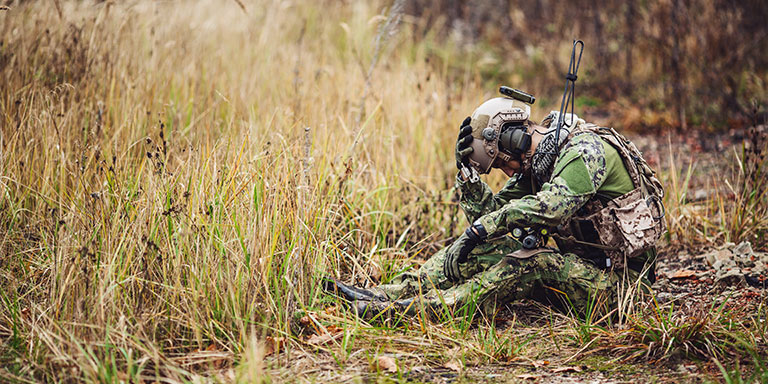
Survivor's guilt is a specific condition in which you feel guilty for surviving a traumatic event in which others were hurt or killed. It can manifest in a general sense ("Why me?") or it can be more specific ("If only I had done something differently, I could have stopped it"). Survivor's guilt can manifest in response to physically dangerous events, such as combat, or in response to trauma such as sexual assault (which certainly can cause physical harm, but in general, the damage tends to be primarily emotional and psychological).
The first line of defense against survivor's guilt is to explicitly understand its core component — guilt — and to consciously reinforce that understanding as needed. The emotion of guilt is normal and appropriate only when you've wronged someone through dishonesty, malice, or negligence. Those who suffer from PTSD sometimes feel as though they were negligent in "failing" to stop a disaster or save someone else from harm, but that isn't what negligence means. Negligence has four very specific components:
- You in fact had a responsibility to someone else (out of a desire to help, military personnel often impose unreasonable standards of responsibility on themselves, such as "I have to save everyone");
- You must have knowingly breached that responsibility;
- That breach must have been the direct cause of harm, and;
- You must have been able to reasonably foresee that harm would occur as a result of the breach.
The vast majority of vets who suffer from PTSD were not, in fact, negligent or malicious with regard to the traumatic event — which means that guilt isn't an appropriate response. Of course, it can take a lot of time, effort, counseling, and repetition to truly internalize and accept the fact that you weren't at fault. That process starts with acknowledging the facts that you aren't superhuman, perfect, or omniscient, and such expectations are unreasonable and unhelpful.
How to Interact with Others When You Have PTSD
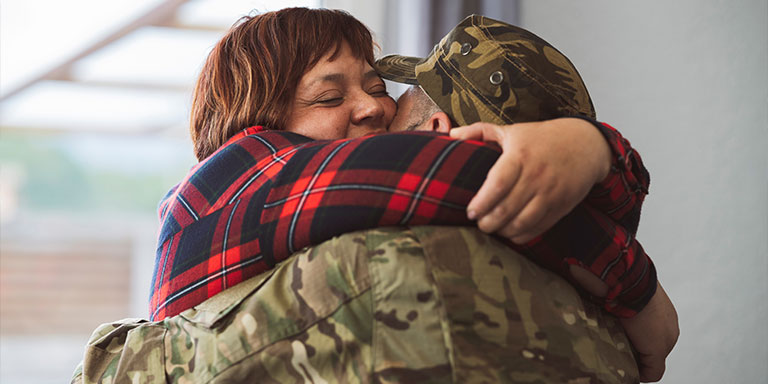
Most people don't know how to engage with someone who suffers from PTSD, so, for better or worse, it often falls to you to educate them. Conversely, if you don't have PTSD but know someone who does, consider this section of the guide a (very basic) primer.
- Explain to your friends and family that, although PTSD episodes can sometimes be frightening, confusing, or even accidentally violent toward others, they are never a personal or deliberate attack. Ask them to be patient and understanding. Explain that you may have little or no awareness or control, especially during the onset of an episode. Emphasize that their safety is important to you and that you never want to frighten or hurt your loved ones, even unintentionally.
- Gently but firmly request that others should let you decide if, when, and how you want to "talk about it." A good friend will make themselves available if you want to talk but won't push it if you don't.
- Understand your triggers and explain them to others to the best of your ability. If your friends and family know what sorts of external events or stimuli are likely to trigger an episode, they can help you anticipate and avoid those things.
- Be patient and understanding with those around you, just as you ask them to be patient and understanding with you. Living with PTSD is not easy but neither is living with someone who has it. As marriage counselors often say, "It should be us against the problem, not us against each other." It may be trite, but it's true.
PTSD can seem like an all-consuming affliction at times, but with proper, evidence-based treatment and coping strategies, it can be manageable. Many vets with PTSD lead normal lives with only occasional episodes once they find a treatment plan that works for them. It will take time and hard work to figure out exactly what works for you, but it's work worth doing — for yourself and your loved ones.