

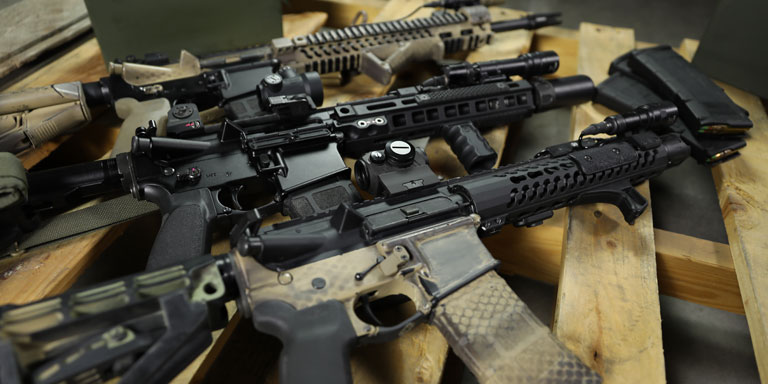
Dry firing a gun is the act of firing an empty weapon, either to practice or to correct the mechanics involved in marksmanship. Dry firing a handgun was once one of many techniques to correct specific problems a newer shooter might experience. It's an excellent technique for overcoming recoil anticipation. The entire dry firing concept has changed from a single, corrective technique to a complete regiment of dry weapons training in recent years.
The Ammunition Shortage
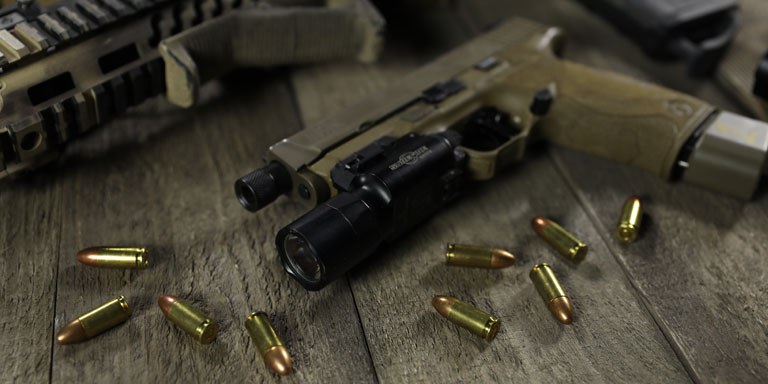
The newest force driving shooters to embrace dry firing for practice is the cost and scarcity of practice ammunition. A fifty-round box of handgun practice ammunition that, several years ago, sold for less than ten bucks is now forty dollars or more. As many typical handgun rounds approach a dollar apiece, shooters are having trouble finding ammunition at any price.
An unprecedented number of new handgun owners entering the market has caused a severe shortage of available ammunition. Given the law of supply and demand, the less ammunition available for purchase, the higher the price. Many gun stores have nearly empty handgun display cases to match the empty shelves that once displayed thousands of rounds of ammunition for sale. Sales of both are currently outpacing manufacturing.
Can Dry Firing Damage a Gun?
This is the most commonly asked question whenever the topic of dry firing comes up. The short answer is that dry firing is safe for modern, semi-automatic center-fire firearms. For added firing pin protection, dummy rounds or snap caps are highly recommended. However, there are a few exceptions.
The first distinction is whether or not your weapon uses center-fire or rimfire cartridges. Center-fire guns have a firing pin that strikes the center of a round or, during dry fire, travels harmlessly into an empty chamber.
The exception is a revolver with a hammer that acts as a firing pin. These weapons are easy to identify, as the front of the hammer will come to a point. Over time, dry firing places added stress on the narrow portion of this combination hammer/firing pin. This can cause microfractures, eventually causing the metal to weaken and break.
It's crucial to use snap-caps when dry firing revolvers. Snap-caps provide the firing pin with a softer surface to strike, lessening inert forces that cause stress to the firing pin's metal, resulting in eventual damage.
Rimfire weapon's firing pins strike toward the outside of the cartridge. The most common being the twenty-two caliber long-rifle cartridge. If fired empty, a rimfire weapon's firing pin can hit the metal on the firing chamber's sider and weaken or damage the firing pin. Rimfire weapons should only be dry fired with dummy rounds or snap caps.
Using Snap Caps
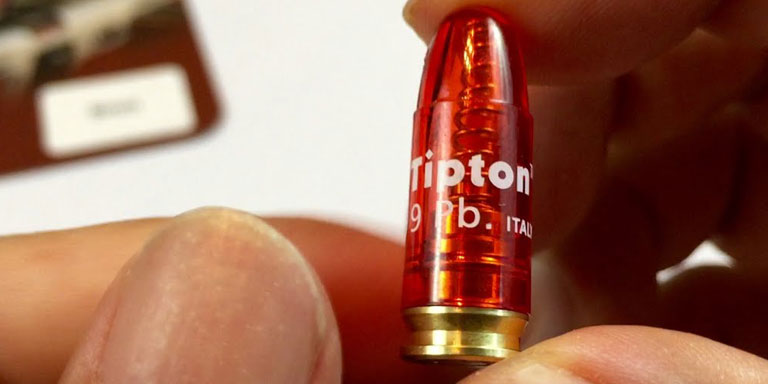
Snap caps are excellent to use and highly recommended in all dry fire scenarios for handguns, rifles and shotguns. They protect the weapon's firing pin from stress by allowing them to strike a surface similar to a live round.
The quality of snap caps varies greatly; don't put a five-cent snap cap in a five-hundred dollar weapon. A pack of five quality snap caps with spring-loaded primers costs about ten or fifteen bucks. One center-fire snap cap can protect a firing pin for hundreds of firings. Rimfire snap caps have to be replaced regularly, but they are less expensive to buy.
One final consideration: once a brightly colored snap cap is placed into the chamber, the shooter can be confident the weapon is empty and safe to dry fire.
A Range at Home
Dry firing can be like a visit to the range without the actual trip. Range day is always fun — preparing your range bag, cleaning and oiling your weapons and reviewing your range day checklist is an enjoyable routine and experience. But setting up a dry fire location is a little different.
First, pick a location where there is sufficient space to point the weapon and align the front and rear sights with a target. A concrete wall is the best choice if available, as it can likely stop an accidental discharge. Many shooters select a basement wall for this reason. Hang the target on the chosen wall and then back up to a suitable firing line. During practice, shoot from all the positions you usually practice at the range.
Safety First
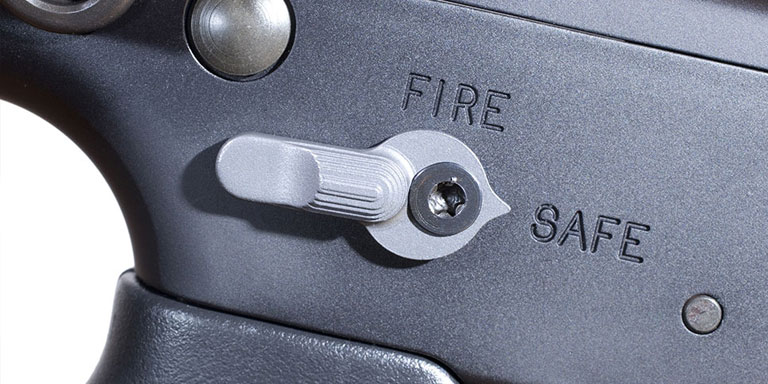
A firearm is still a deadly weapon, loaded or not. The basic principles of gun safety still apply: treat every weapon as if it were loaded until it's proven empty; only point a gun at an intended target, maintaining muzzle awareness; keep your finger off the trigger until you are ready to shoot. Be sure to read up on firearm safety on and off the range if you're unfamiliar with these rules.
Once an indoor dry fire location is set up, all weapons must be checked and verified to be empty. Remove the empty magazine, lock the slide to the rear and physically inspect the chamber to prove it's empty. Be sure that there is no live ammunition in the room set up for dry fire — be sure even to check your pockets. This is the time to place snap cap rounds or perhaps even a laser round into the chamber.
The Laser Round and Targeting System
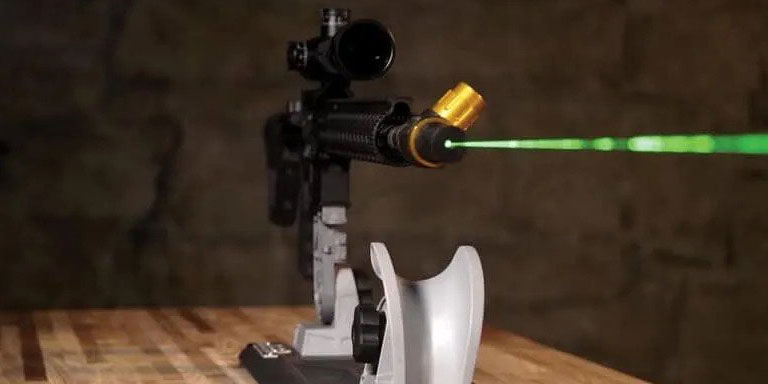
Shooters have been using bore-sighting lasers to sight in rifles for years. They are small lasers in the shape of bullets placed in the chamber of a weapon. The laser shoots a continuous beam through the barrel and onto a target downrange. Shooters use these to roughly zero in scopes or iron sights. They then use shot groups to adjust the final calibrations.
Similar lasers still in the shape of cartridges are now popular as dry fire aides and are manufactured by several companies. The main difference is that dry fire lasers have a primer switch, unlike the bore sighting lasers. When the trigger is pulled, the firing pin hits this switch, and a short laser flash is sent onto the target. Some have adaptors that allow the same laser to sit snugly in several different caliber handguns, rifles and even shotguns. The more features and versatility a laser system has, the greater the price. Most good lasers sell for more than a hundred dollars and come with several caliber adapters. Dry fire lasers seem expensive until you remember the cost of a box of ammunition.
While the dry fire laser is technically all that's needed, a laser target makes for a much better experience. There are several types of laser targets on the market. These targets receive and record where each laser shot hits. Some have multiple modes that can record accuracy as well as reaction time and the time between shots. Laser targets can cost several hundred dollars.
A less expensive approach is to use a dry fire laser and a smartphone. Some manufacturers have smartphone apps that allow the shooter to lock onto a paper target hung on the wall with their smartphone. The location of each hit is recorded and superimposed on the picture on the phone. This provides excellent feedback on a shooter's marksmanship.
Dry Fire Weapons Training
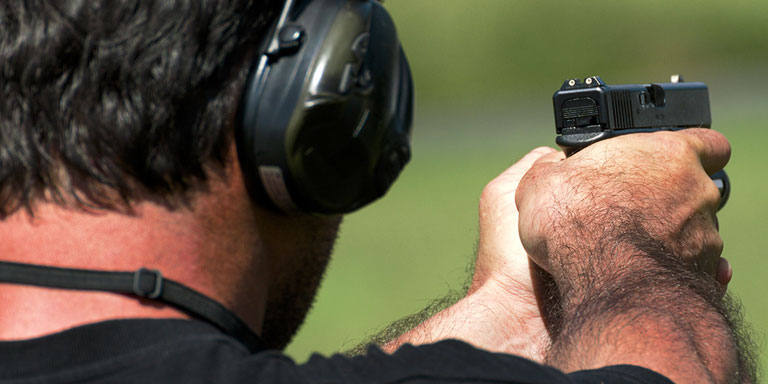
Supplementing visits to the range with short dry-fire training sessions can help maintain a shooter's skill level. The skills practiced should include properly drawing and pointing the firearm. Proper stance and grip are equally important. Next, concentrate on sight picture and alignment. Finally, don't forget about breath control and proper trigger squeeze. All the fundamentals of marksmanship that a shooter practices on the range can be incorporated in dry-fire drills.
Many beginning shooters experience difficulty controlling their flinch response in anticipation of recoil. Dry fire practice will help shooters to focus on trigger control and will reduce the effect of recoil anticipation.
A favorite drill for both trigger control and sight alignment is to balance a coin on the front sight. Now try to aim and pull the trigger without causing the coin to drop.
The same dry fire drills used at home can and should be used at visits to the range. Complete five dry-fire repetitions and then several live fire repetitions. With time and practice, muscle memory and repetition help overcome most deficiencies. Mixing dry fire and live fire drills together at the range allows that box of expensive ammunition to last longer. Remember, dry fire drills are free.
Once the basics are mastered, you should move on to more challenging drills. These can involve the speed of drawing your weapon and the accuracy of hitting a target on your first try. Dry fire laser systems can be set to time your response time using an included shot clock.
There's no skill practiced during live-fire drills that can't also be practiced during a dry-fire drill. These include weapon malfunctions, magazine changes and even transitioning between targets or shooting positions. If it can be done during live fire, then it can be practiced using dry-fire drills. This allows a shooter to take the most challenging exercises from the range and practice them at home. Perhaps the best part of dry-fire drills is that it enables a shooter to practice every day without a trip to the range or the considerable expense of ammunition.