

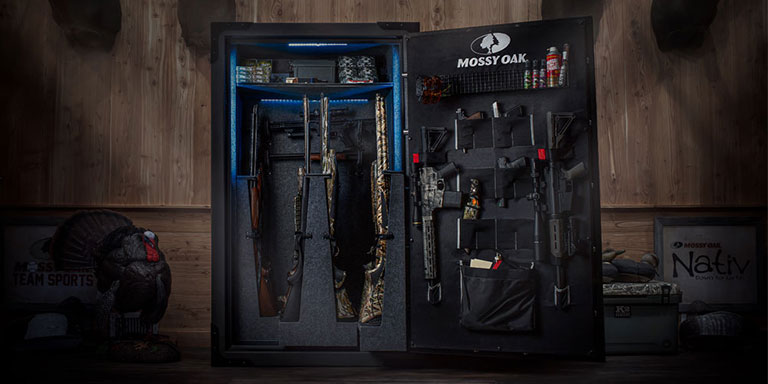
Buying a gun safe is a worthwhile investment, especially if you own multiple firearms. There are a lot of questions and caveats about choosing the right safe, though, like which size to buy, where in your home the safe should go, how to secure the safe to the floor and more.
In this guide, we aim to answer all of those questions for you to help you find the best gun safe in which to store your firearms collection.
Methods of Securing Firearms in the Home
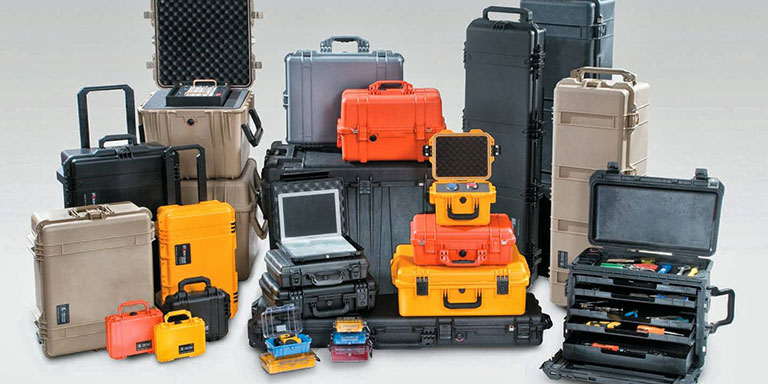
There are many good reasons to secure firearms in the home. In fact in most jurisdictions, the law requires it. It's also a part of responsible gun ownership to keep firearms secured from the reach of children and protected against thieves. Deciding on the size, type and location of a gun safe will depend on the level of protection the gun owner desires and what they can afford.
Taken to the extreme, a serious collector of rare firearms may construct an entire room as a fortified walk-in vault with an autonomous alarm and fire suppression systems. Most avid gun owners dream of having such a room with a James Bond-style hidden door concealing the vault entrance. Getting back to reality, the average gun owner must work within their budget to secure and protect their firearms.
Two Categories of Gun Owners
Most gun owners fall into one of two categories. In the first, the gun owner has a single handgun for home protection (check out some of the best guns to buy for home defense). The gun is typically located in the master bedroom and secured in a small, quick-access handgun vault. The primary purpose of these small metal lockboxes is to secure them from the curious fingers of children. Most of these can be opened very quickly with a keypad combination or a fingerprint reader. If there's an intruder in the house, seconds matter.
On the negative side, these weapons are the most likely to be located and stolen during a burglary when no one's home. This is because they are usually not very burglar-resistant, and the master bedroom is the number one place burglars look for jewelry, guns and other valuables.
The second category of gun owner has a combination of handguns and sporting rifles. They too need quick access to a home defense firearm but do not need immediate access to their entire arsenal. The best solution for them may be a combination of quick-access handgun vaults and a larger safe permanently secured to the floor as a significant barrier against burglars.
The Self-defense Handgun Safe
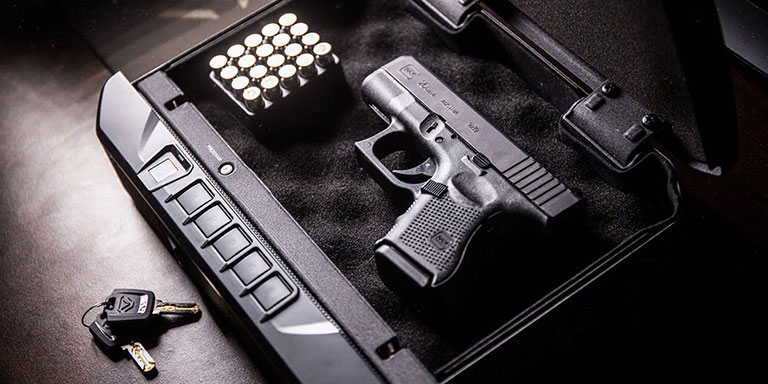
Single self-defense handgun safes tend to be small, easy to open quickly and are often concealed or hidden from view. They tend to be located in one or more locations where the homeowner has an expectation of immediate need. The most common place is in the master bedroom for protection against a nighttime intruder. The second is a common area near the front door to protect against a home invasion or a daytime intruder.
These small safes are highly concealable, and many are portable. In a common area, they can be secured in a furniture cabinet drawer. Some furniture manufacturers are developing unique compartments to hide handguns, such as inside mantles or behind mirrors.
In the master bedroom, standard locations for a handgun include the bottom drawer of a nightstand or under the bed. Hiding spots can also be built into a piece of furniture or shelf system. The homeowner can quickly access the weapon; however, there is little security against theft other than the cleverness of concealment.
A small combat pouch should accompany a self-defense firearm inside the safe. In the pouch should be a flashlight, an extra loaded magazine and either handcuffs or zip-ties. The bag might also include a less-than-lethal option, such as pepper spray or a taser (but only if legally possessed in the owner's jurisdiction).
Large Safes and Vaults
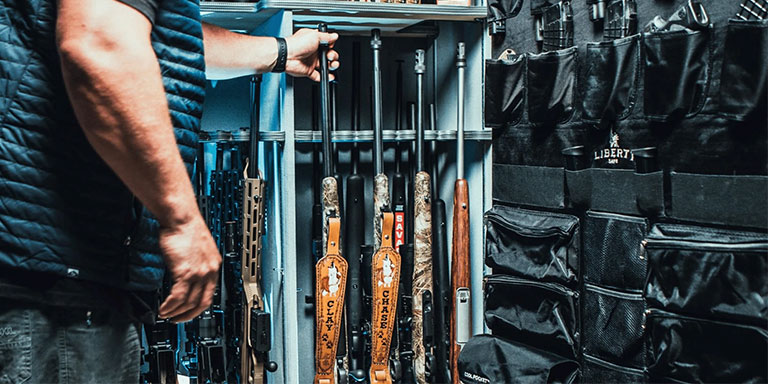
While a small, easy-to-access handgun vault may be necessary, the owner of multiple guns will also need a large gun safe or vault. These tend to be tall, heavy units that can hold multiple handguns, a row of long guns and a lot of ammunition. They offer additional security against loss by theft, as well as some protection against fire and water damage.
Firearms (especially handguns) are one of the most highly prized items burglars go after. Robbers tend to fence many stolen items for a fraction of their value; however, handguns are the exception, often selling far above retail value. If a thief can't open a safe, they might try to make off with the entire thing in order to break into it later by force.
As a result, large vaults need to be secured to make them immovable. Gun vaults can be securely bolted both to floors and walls. Almost all safes have pre-drilled holes and instructions for proper installation. Anyone not particularly handy with power tools may want to have their safe professionally installed.
Size is an essential consideration in the purchase of a large gun safe. Consider how many firearms you currently own and how many guns you're likely to purchase in the future (our gun buyer's guide to used firearms has more information on that topic). It's never good to run out of space in the gun vault, so bigger is usually better.
Securing to Wood Floors
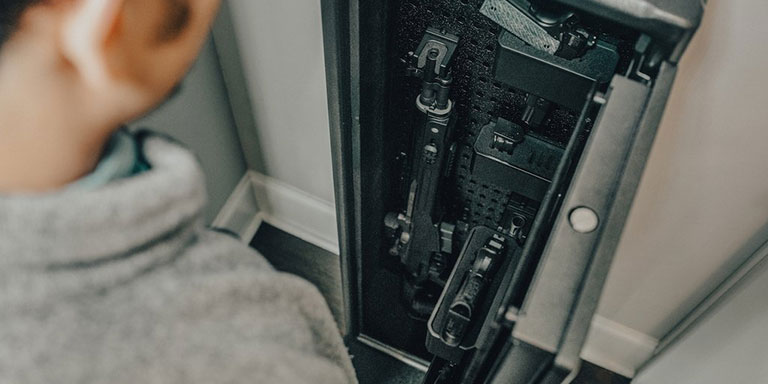
The next consideration when deciding on a gun safe is the safe's weight. Many more extensive vaults can weigh in at, up to or exceed one thousand pounds. This may put a severe strain on floor joists. The strongest area of a floor (in conventionally built houses) is the area closest to an exterior wall — this is where the exterior wall plate and floor joists meet. Both floor joists and wall studs should be located using a stud finder. The safe should be secured to multiple wall studs and floor joists with screws or bolts recommended by (or in a lot of cases, provided by) the safe manufacturer.
A second-story installation may be a little tricky depending on the safe's weight. The strongest points on higher floors are against an exterior wall, preferably directly above a first-story load-bearing wall. If you're unsure, err on the side of caution and speak with a building contractor or safe installer regarding the proper placement of a heavy safe.
Securing to Concrete Floors
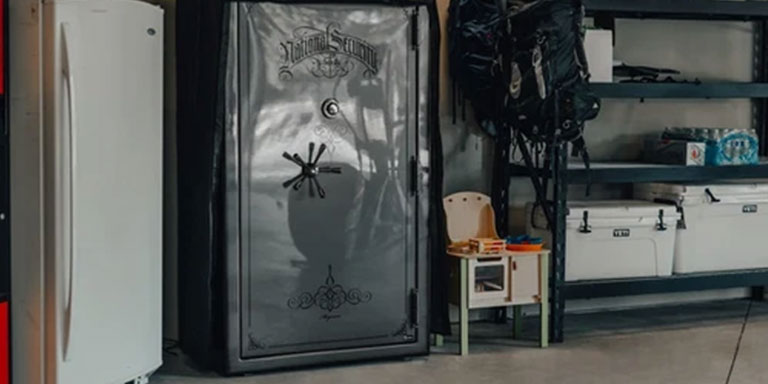
Vaults may also be secured to concrete floors. These usually involve either an attached garage or a basement floor. Special expanding bolts can be used and epoxied in place, providing superior holding strength.
A word of caution concerning securing a vault to concrete: some concrete floors are designed with cables running through them under tension. Hitting one of these cables while drilling may damage the floor's integrity. These floors usually have warnings stamped into the concrete advising not to drill.
Garage Safes
A safe located in a garage should not be visible to passers-by, even when the garage door is open. It may be a good idea to build a cabinet around the safe with cabinet doors to conceal it.
Locating a gun safe in the garage may allow a criminal with a truck to use the vehicle's power to break the vault free from its bolts. Additionally, even a large, heavy safe can be tipped over and forced into the bed of a pickup.
The Basement Safe
A safe located in the basement has unique challenges. First, it may be challenging to get such a large and heavy object into the space. Some safes are not waterproof, and a basement may become flooded by a severe weather event or plumbing failure. An additional consideration is the humidity of the space. A damp or musty basement may cause weapons to rust. If you're considering a basement safe, look for one expressly guaranteed to be waterproof.
Fire Protection
Another consideration for any vault is its ability to protect the contents from fire. Many safes have fire resistance ratings. Generally, the higher the temperature rating and the longer the protection time, the higher the price. These protection standards are shown in degrees and minutes. An example would be a safe rated to withstand 1,500 degrees for forty-five minutes. A firearm collection of significant value should be photographed, cataloged and separately insured.
Never Advertise
It's always best if the fewest number of people know that a residence contains firearms. It may be very cool to have a hidden gun compartment in a bookshelf or piece of furniture, but it only works if it remains a secret. These locations should not be revealed to impress your friends or neighbors; the information has a way of innocently being passed on until it eventually reaches the wrong ears. The only people that should know how a gun owner secures or conceals their firearms are the household members allowed to use them.
Oddly enough, there are a plethora of novelty signs people buy and post outdoors regarding gun ownership. Most of these signs are meant to be humorous, such as the sign depicting a pointed handgun reading, “WARNING: anyone found here at night will be found here in the morning.” These signs convey a message to a criminal: here's a house that contains guns. This may appear to be a strong deterrent, but to a robber, it's an enticement that firearms are there for the taking.
Anyone who owns firearms must also own a means of securing them. Firearms are deadly weapons and must never be allowed to fall into the hands of children. A gun safe is an essential element of responsible gun ownership. They come in all shapes and sizes, and at prices to fit any budget. If you're currently keeping guns unsecured, buy a safe, properly install it and become a responsible gun owner.