

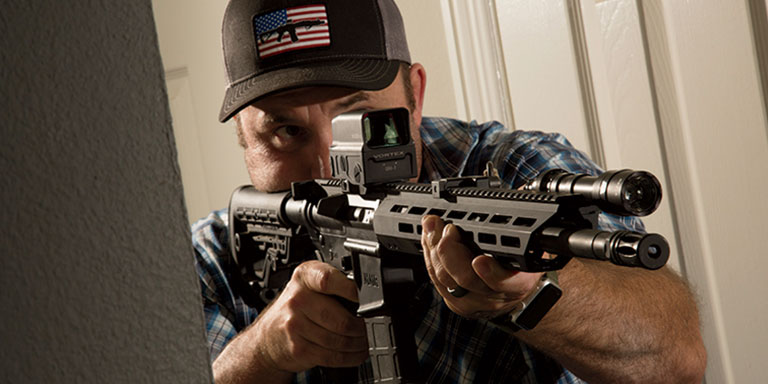
When seconds matter, your firearm choice matters more. Choosing the right home-defense gun means balancing stopping power, maneuverability, ease of operation, and safe storage—all under the unique conditions of your home layout and household.
This guide gives you a direct answer up front, walks you through every critical buying factor, compares your platform options, and rounds out with 14 reliable firearms worth considering. Always verify local and state regulations before purchasing and investing in professional training.
What Is the Best Gun for Home Defense?
For most people, a reliable 9mm handgun or a 12-gauge pump-action shotgun is the best choice for home defense. Handguns offer maneuverability and ease of storage. Shotguns deliver significant stopping power at close range. The right choice ultimately comes down to your physical comfort, home layout, training level, and household safety requirements.
If you need a one-sentence answer for a search engine or a conversation: the best home-defense firearm is the one you can operate safely, accurately, and confidently under stress.
Handguns vs. Shotguns vs. Rifles for Home Defense
Each platform has strengths and limitations. Here is how they stack up.
Handguns
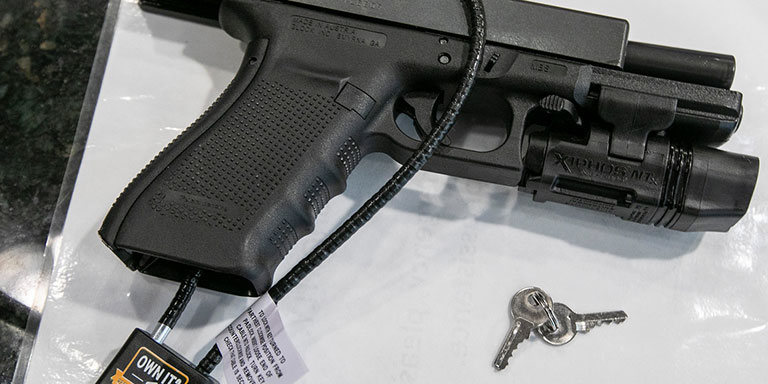
Handguns are the most popular home-defense choice for a reason. They are compact, easy to store securely, and simple to maneuver through hallways and doorways. A full-sized 9mm with a 15-round capacity gives you meaningful firepower without excessive bulk. Semi-automatic pistols are generally easier to operate quickly than revolvers, though revolvers offer simplicity and mechanical reliability. The main tradeoff is stopping power—handgun rounds, especially 9mm, may require multiple shots to stop a determined attacker.
Best for: Most homeowners, especially those who also carry concealed or store firearms in quick-access safes.
Shotguns
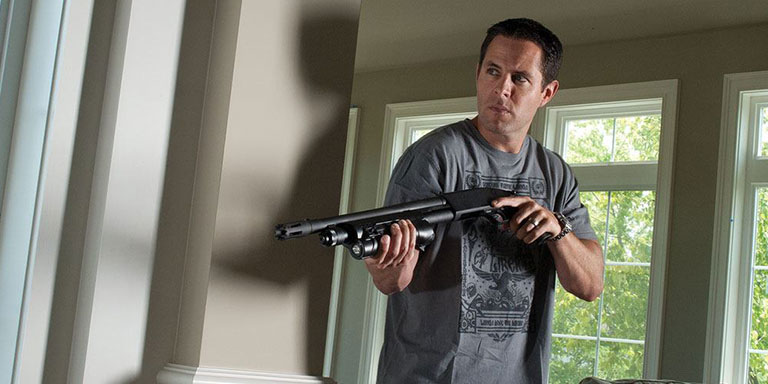
A 12-gauge pump-action shotgun is one of the most effective close-range defensive weapons ever built. At indoor distances, a load of buckshot delivers devastating energy transfer with minimal need for precision aiming. Pump actions are mechanically simple, highly reliable, and familiar to most shooters. The downsides: longer overall length can make navigation through tight spaces harder, recoil can be significant, and capacity is limited. Choosing the right load, such as No. 4 buckshot over 00 buckshot, reduces overpenetration risk.
Best for: Homeowners with space, moderate shooting experience, and no close neighbors in potential lines of fire.
Rifles

Rifles bring high velocity, excellent accuracy, and significant stopping power. An AR-15 chambered in 5.56/.223 with a 16-inch barrel is manageable indoors, and purpose-built defensive ammunition such as Remington 62gr Ultimate Defense reduces overpenetration. The challenge is length—rifles are harder to maneuver in confined spaces. Overpenetration is also a genuine concern with most rifle calibers unless you use specifically designed loads. Rifles make sense for rural properties with longer sightlines and no neighbors in potential downrange areas.
Best for: Rural homeowners, those with larger properties, and experienced shooters comfortable with rifle operation under stress.
Key Buying Factors
Stopping Power and Caliber
Larger calibers generally incapacitate attackers more effectively but carry tradeoffs: heavier recoil, larger frames, and reduced magazine capacity. The 9mm is the benchmark for home-defense pistol calibers—modern hollow-point ammunition has largely closed the performance gap between 9mm and larger calibers such as .40 S&W and .45 ACP. For shotguns, 12-gauge buckshot remains the standard. Choose a caliber you can shoot accurately and quickly.
Reliability
In a home-defense scenario, you need a firearm that functions every time. Focus on platforms with proven track records. Glock, Mossberg, Remington, Smith & Wesson, Heckler & Koch, and Benelli all produce defensive firearms with well-documented reliability histories. Whatever you choose, run at least several hundred rounds through it before trusting it for defense.
Maneuverability
Consider the layout of your home. Narrow hallways, stairwells, and doorways limit how you can handle a longer firearm. Pistols and compact shotguns with 18-inch barrels perform better in tight environments than standard-length rifles or full-sized shotguns. If you choose a rifle, a shorter-barreled option improves close-quarters handling.
Capacity
You likely will not have spare magazines or shells within reach during a nighttime home-defense event. Your firearm's loaded capacity is what you have. Higher-capacity pistols, such as those holding 15 rounds or more, provide a meaningful buffer. Shotguns typically carry five to seven shells—fewer, but each round delivers substantially more energy.
Recoil Management
A firearm you struggle to control is a liability. Full-sized handguns absorb recoil better than compact models. Semi-automatic shotguns reduce felt recoil compared to pump-actions. If you are new to shooting or building your skills, prioritize a platform that is easier to manage so you can focus on accuracy.
Overpenetration
This is a critical safety factor. Bullets—especially fast rifle rounds—can pass through drywall, interior walls, and exterior walls. This puts family members and neighbors at risk. Hollow-point pistol rounds and purpose-built defensive shotgun loads such as No. 4 buckshot reduce overpenetration risk. If you live in a densely populated area, factor this heavily into your platform and ammunition selection.
Storage and Accessibility
Balance quick access against secure storage. If you live alone or with another responsible adult, a bedside drawer or lockbox may be sufficient. If children are present, a quick-access biometric safe is the right tool. It keeps the firearm out of unauthorized hands while allowing access in seconds. Storing a loaded firearm in Condition Red—round chambered, weapon ready—requires that the entire trigger is protected by a hard-sided holster or case.
A quick reminder on weapon condition states:
- Clear: No magazine loaded, no round chambered, action open.
- Green: No magazine loaded, no round chambered, action closed.
- Amber: Magazine inserted, no round chambered, action closed. (Not applicable to revolvers.)
- Red: Magazine loaded, round chambered. Weapon is ready to fire.
Training
Owning a home-defense firearm without training is like owning a first aid kit you've never opened. Being jarred awake at 2 a.m. is nothing like shooting on a calm range. Train specifically for defensive scenarios—low light, disrupted sleep, stress. Practice clearing the weapon, reloading, and firing from retention positions. Consider running drills immediately after waking to simulate the real conditions you may face. Use snap caps or training barrels during dry-fire practice for safety.
14 Best Guns for Home Defense
Home-defense needs vary widely, so we've assembled a diverse roster of our favorite shotguns, pistols, and rifles for that purpose. We chose these guns primarily for their reliability and ease of operation — two characteristics you'll definitely appreciate if you ever have to fight back against an attacker at night.
Mossberg 590 Cruiser
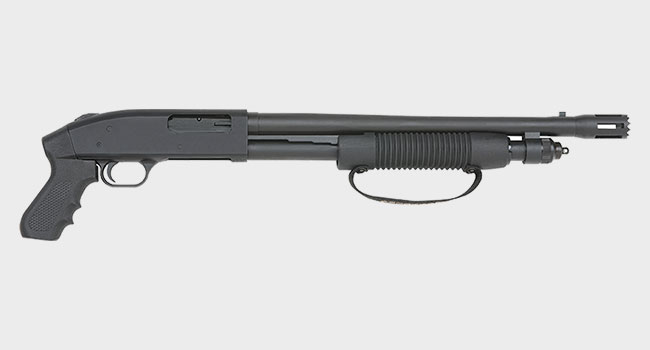
Caliber: 12-gauge
Capacity: 5+1
Action: Pump
Overall length: 31"
Barrel length: 18.5"
Weight: 5.75 lbs (unloaded)
The Mossberg 500 series of shotguns is one of the two most popular lines in the world, and for good reason. The 590 Cruiser is affordable, reliable, and highly customizable — many companies produce a wide selection of rails and accessories for this beloved pump gun. The 590 is more mechanically complicated than its spiritual twin, the Remington 870, but even so, it's pretty easy to operate, disassemble, and clean.
This shotgun generally comes with a pistol grip for increased maneuverability indoors, but there are plenty of affordable aftermarket stocks to choose from if you'd prefer. If you'd like to make it even smaller and more maneuverable, you can get a 2+1 capacity version from Serbu Firearms that's just 16.5" long in total — provided you're willing to wait nine months for the ATF to issue an AOW stamp.
Remington 870 Hardwood Home Defense
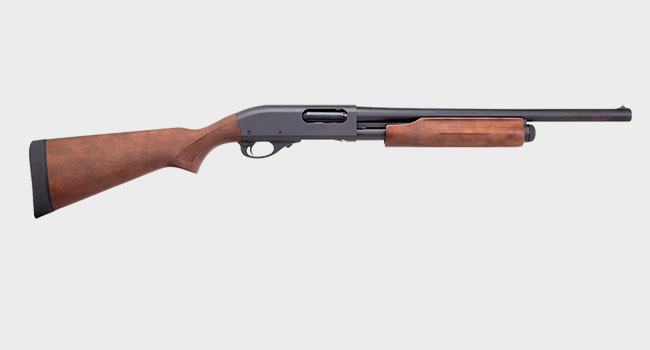
Caliber: 12-gauge
Capacity: 6+1
Action: Pump
Overall length: 38.5"
Barrel length: 18.5"
Weight: 7.5 lbs (unloaded)
The Remington 870 (the other most popular shotgun in the world) is ruggedly straightforward. It has fewer moving parts than the Mossberg Cruiser, which makes it slightly less prone to malfunctions. It's also much easier to disassemble and clean.
Most likely, whether you prefer this pump gun or the Cruiser will come down to your preferences on length, weight, and capacity; the 870 is larger in all respects. Serbu makes a super-short version of this shotgun as well, which costs $50 more than the Mossberg 500 variant but holds one additional 2 3/4" shell.
Mossberg Maverick 88
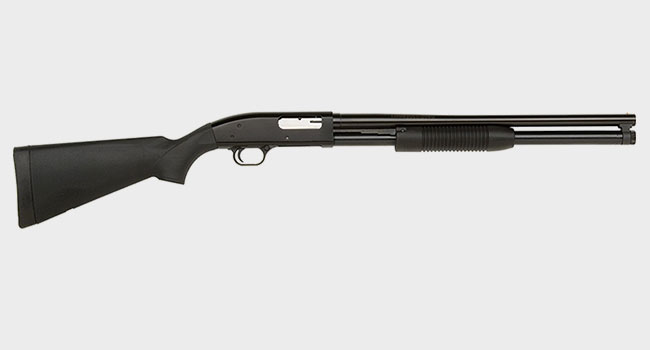
Caliber: 12-gauge
Capacity: 5+1
Action: Pump
Overall length: 47.75"
Barrel length: 28"
Weight: 7 lbs (unloaded)
Want a rock-solid pump shotgun for under $250? Mossberg subsidiary Maverick Arms makes a line of shotguns very similar to its parent company's 500 line. Many parts are even interchangeable between the two product families.
Functionally, the Maverick 88 is very nearly identical to anything in the Mossberg 500 line. Overall, the Maverick 88 is more basic and lacks some of the 500's minor features, such as swivel mounts and a pre-drilled and tapped receiver for scope mounts. The finish is also a bare-bones steel bluing, as opposed to the nickel or parkerized finishes you'll find on most 500s. If you don't mind these small differences, the Maverick 88 is an excellent pump gun at an unbeatable price.
Benelli M4
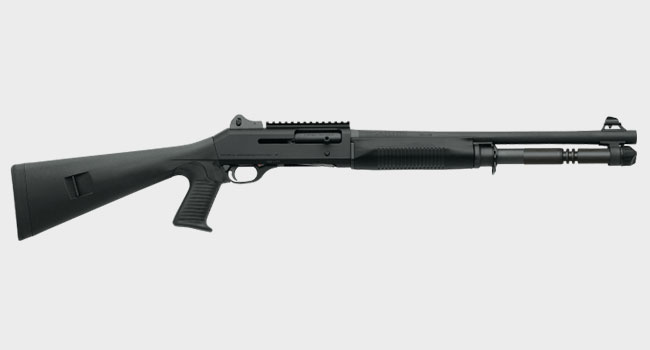
Caliber: 12-gauge
Capacity: 5+1
Action: Gas-operated semi-automatic
Overall length: 40"
Barrel length: 18.5"
Weight: 7.8 lbs (unloaded)
If you're looking to get rid of a lot of extra cash, semi-automatic shotguns are a good way to do it. The Benelli M4 is widely lauded as one of the best on the market, and it makes frequent appearances at competitive shooting events, particularly 3-gun matches.
The main advantage that a semi-automatic shotgun has over its break and pump-action brethren is, of course, a superior rate of fire — especially useful when engaging multiple targets. The M4 has another distinct advantage in home-defense scenarios: not having to work the action manually means one less thing that you have to focus on during a tense, adrenaline-fueled situation.
Heckler & Koch VP9
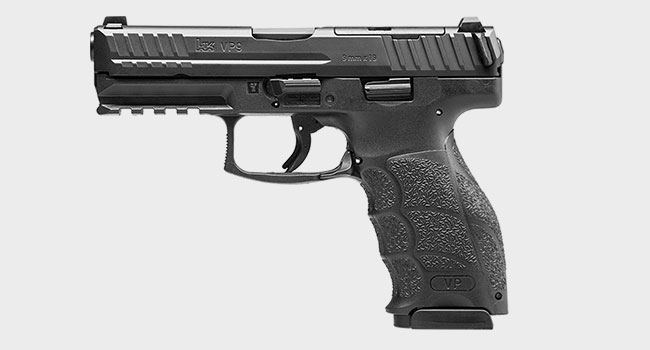
Caliber: 9mm
Capacity: 15+1
Action: DAO
Overall length: 7.34"
Barrel length: 4.09"
Weight: 25.56 oz. (unloaded)
HK's superlatively comfortable, full-sized VP9 is one of the most accurate 9mm handguns you'll find anywhere, and its notably low muzzle flip makes it very easy to handle. It also comes factory standard with fully ambidextrous controls and a smooth, easy-to-reach slide release lever.
If the 9mm round has a drawback as a home-defense caliber, it's that it will likely take multiple shots to fully incapacitate an attacker. However, the VP9 is exceptionally easy to fire both quickly and accurately, even for relatively inexperienced shooters, leaving it with few or no drawbacks as a nightstand gun.
Taurus Model 66
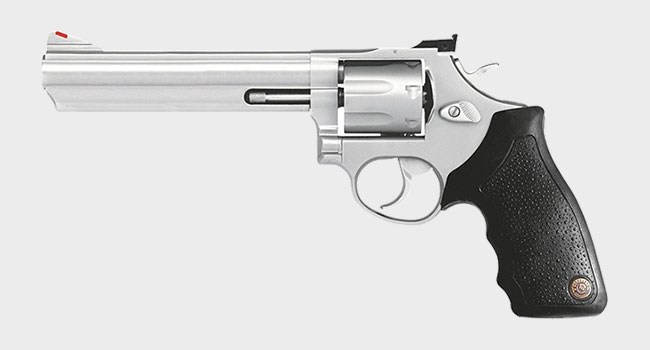
Caliber: .357
Capacity: 7
Action: SA/DA
Overall length: 12.25"
Barrel length: 6"
Weight: 40 oz. (unloaded)
Many well-built .357 revolvers under $600 tend to be small, which often also means that they're difficult (and sometimes painful) to shoot. As a home-defense gun, though, a .357 doesn't need to be small. In fact, a bigger and heavier frame is better — it will soak up some recoil and make the weapon easier to control.
The Taurus Model 66 is a 7-shot, foot-long Magnum with a smooth, medium-weight, double-action trigger pull. It comes with textured synthetic grips, which may not be as pretty as wood, but they do make the revolver a bit easier to hold onto. If you want top-tier stopping power with a mid-tier price tag, look no further.
Glock 21
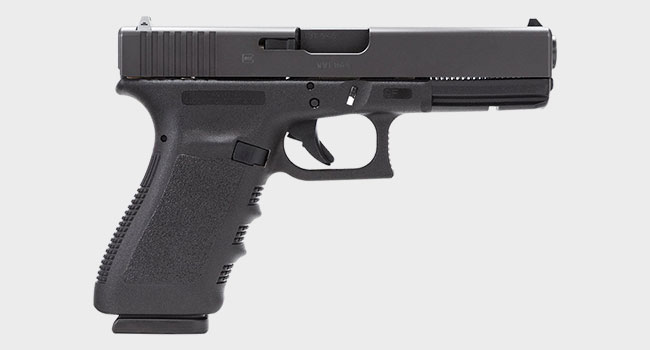
Caliber: .45 ACP
Capacity: 13
Action: DAO
Overall length: 8.07"
Barrel length: 4.61"
Weight: 26.28 oz. (unloaded)
Inside your home, where an attacker can close distance in a fraction of a second, stopping power is critical. The large .45 ACP cartridge offers plenty of that — enough to stand in as an approximate substitute for a .357 Magnum or 12-gauge shotgun.
If the fourth-generation Glock 21 has a flaw, it's that it's 1.34" wide — a bit large for small hands to hold comfortably. In exchange, though, you get enough space in the grip to accommodate a 13-round, double-stack magazine. And, of course, the G21 is as supremely reliable as every other Glock; many owners report firing 5,000 rounds or more without a single malfunction.
FN Five-Seven (5.7)
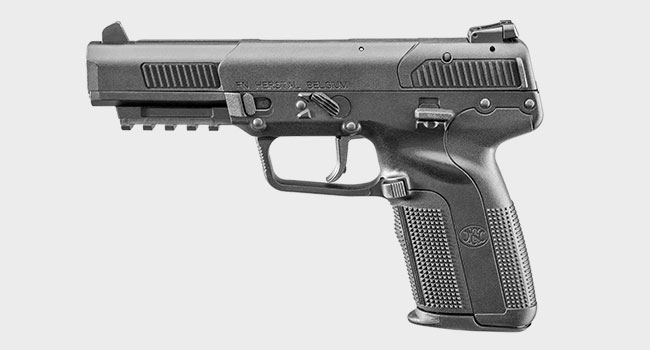
Caliber: 5.7mm
Capacity: 20+1
Action: DAO
Overall length: 8.2"
Barrel length: 4.8"
Weight: 21 oz. (unloaded)
If you've heard of the FN Five-Seven, you've probably heard that it uses armor-piercing ammunition, which is generally a bad thing for home-defense weapons. It's true that the Five-Seven was originally developed to use AP rounds, but these rounds are illegal for civilians to own in most places. Civilian-legal 5.7mm ammunition does not pierce armor, although it still has a slightly higher tendency to overpenetrate than many other small and medium-caliber pistol rounds.
Provided you account for that, the Five-Seven's stellar ammunition capacity, low recoil, light weight, ambidextrous operation, and ease of use make it a great pistol to keep in your nightstand drawer. If you're not looking to spend a whole lot on a handgun, consider Ruger's more budget-friendly take on the Five-Seven design, the Ruger 57.
Walther PDP Match Full Size (Polymer Frame)
Caliber: 9mm
Capacity: 20+1
Action: Striker-fired
Overall Length: 8.5 in
Barrel Length: 5 in
Weight: 26.9 oz (unloaded)
The PDP Match takes Walther's already well regarded PDP platform and adds a 5 inch match grade barrel, a Dynamic Performance Trigger with a notably crisp, short-reset break, and an extended magwell. One of its strongest selling points for home defense is capacity: it ships with a 20-round magazine standard, giving you more rounds on tap than any other gun on this list out of the box. The polymer frame keeps it nearly a pound lighter than the steel-frame version while still tempering recoil well, and the longer sight radius helps with fast, accurate follow up shots. It's a bigger gun than the others on this list, but Walther did an amazing job on the ergonomics on this gun, and myself with smaller hands enjoy the feel of this gun over some smaller competitors.
Best for: Shooters who want the best available trigger and capacity and don't mind a larger frame.
Sig Sauer P365-XMACRO TacOps
Caliber: 9mm
Capacity: 17+1
Action: Striker-fired
Overall Length: 6.6 in
Barrel Length: 3.7 in
Weight: approx. 23 oz (unloaded)
The XMACRO TacOps takes the ultra slim P365 platform and stretches the grip to fit a 17-round magazine, landing on a footprint noticeably smaller than a Glock 19 while beating its capacity. It ships with four 17-round steel magazines, an extended slide catch, and a flared magwell, it’s aimed at shooters who want compact carry dimensions without giving up rounds on board.
Best for: Shooters who want higher capacity in a slimmer, more concealable frame.
Glock 17 Gen 6
Caliber: 9mm
Capacity: 17+1
Action: Striker-fired
Overall Length: 7.95 in
Barrel Length: 4.49 in
Weight: 22.26 oz (unloaded, no magazine)
The Glock 17 is the full size original of the Glock lineup, and the Gen 6 update released in January 2026 carries over the same size, weight, and 17-round capacity while adding reshaped grip ergonomics, a flatter trigger with a cleaner reset, and a lower profile optics ready cut. Its longer grip and sight radius make it a natural fit for larger hands, and it's backed by the same reliability and simple manual of arms that made the platform the most proven in the category.
Best for: Shooters who want maximum capacity in the most proven platform on the list.
Smith & Wesson M&P9 M2.0
Caliber: 9mm
Capacity: 17+1
Action: Striker-fired
Overall Length: 7.25 in
Barrel Length: 4.25 in
Weight: 24.7 oz (unloaded)
The M&P9 M2.0 pairs a 17 round standard magazine with an aggressively textured grip and a low bore axis that keeps muzzle rise manageable shot to shot. It's slightly more compact overall than a full size duty pistol while still holding the same capacity, which makes it an easy gun to grip fully for shooters with smaller to medium hands.
Best for: Shooters who want full 17 round capacity in a slightly more compact, easier to grip frame.
Smith & Wesson M&P 15 Sport II
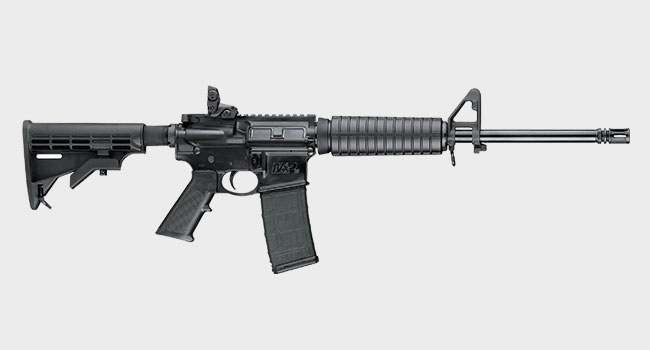
Caliber: 5.56/.223
Capacity: 30+1
Action: Gas-operated semi-automatic
Overall length: 35"
Barrel length: 16"
Weight: 6.4 lbs (unloaded)
AR-15s can get expensive quickly. Knowing this, Smith & Wesson offers a no-frills, budget-friendly 5.56/.223 rifle built for the essentials of home defense. Its 16" barrel makes it a little easier to use indoors than the standard 18" barrel, and the 5.56 round is tried and true when it comes to stopping power; just be wary of overpenetration.
The M&P 15 Sport II is manufactured specifically to fire the less expensive .223 cartridges as well, making range time a little easier on your wallet (all 5.56 rifles can fire .223, but some handle it better than others due to slight differences in how the two rounds are manufactured). All in all, this is one of the best sub-$1,000 AR-15s on the market.
Century Arms C39V2
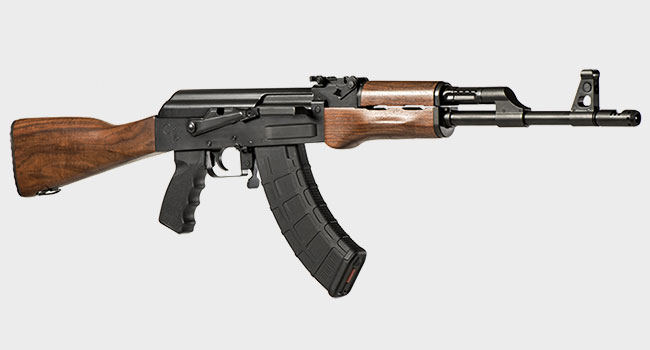
Caliber: 7.62
Capacity: 30+1
Action: Gas-operated semi-automatic
Overall length: 36"
Barrel length: 16.5"
Weight: 8.1 lbs (unloaded)
7.62 consistently ranks among the three most popular rifle calibers in the world. It's a little less accurate than a 5.56 or .223, but it hits much harder, and for a home-defense weapon, the lost accuracy is usually negligible. The C39V2 from Century Arms makes a superlative bedside rifle as long as overpenetration is not a serious concern.
Like the M&P 15, the C39V2 has a shorter-than-average barrel that makes it easier to wield in close quarters. It also comes with flip-up sights and a few other nice features most commonly seen on more expensive rifles. The C39V2 is compatible with most aftermarket AKM parts, and it has a proprietary side rail that mitigates a problem common to many 7.62 rifles: scopes and lasers being knocked off-center by recoil. Overall, this is a fantastic home-defense AK, especially considering its price point.
How to Choose: Platform Comparison at a Glance
|
Factor |
Handgun |
Shotgun |
Rifle |
|
Maneuverability |
Excellent |
Good |
Fair |
|
Stopping Power |
Good |
Excellent |
Excellent |
|
Capacity |
High |
Low to moderate |
High |
|
Overpenetration Risk |
Low (hollow point) |
Low to moderate |
Moderate to high |
|
Ease of Training |
High |
Moderate |
Moderate |
|
Storage Flexibility |
Excellent |
Moderate |
Limited |
|
Cost to Entry |
Low to moderate |
Low to moderate |
Moderate to high |
Stay Prepared
Choosing your home-defense firearm is only the first step. Firearm safety practices should be reviewed regularly, especially if new household members are involved. If you are weighing your options between platforms, our dedicated guide on why you should use a shotgun for home defense goes deeper on that comparison. If you are also looking for a daily-carry option, our guide to choosing the best CCW handgun covers that ground thoroughly.
The right firearm, proper training, and a sound storage plan form the foundation of a solid home-defense strategy. Gear up. Train consistently. Stay ready.
Frequently Asked Questions
What is the best home-defense gun for beginners?
A full-sized 9mm semi-automatic pistol is generally the best starting point. It offers manageable recoil, high capacity, and a straightforward manual of arms. The Walther PDP, Sig P365, Glock 17 Gen 6 and S&W M&P9 M2.0 are all excellent options for someone new to handguns.
Is a shotgun or handgun better for home defense?
For the close range, indoor scenarios most home defenders actually face, a handgun is easier to maneuver through hallways and doorways, generally has softer recoil than a 12-gauge shotgun, and takes less training to run well in tight spaces than a rifle. Shotguns and rifles can both be effective, but they ask more of the shooter physically and in training time than most home defense situations call for.
What caliber is best for home defense?
9mm with quality hollow point ammunition is the standard recommendation. .45 ACP, .40 cal, and 10mm offer more stopping power per round at the cost of higher recoil and reduced capacity. Caliber matters less than shot placement, so train consistently with whatever you choose. 9mm is more than enough for a home defense round.
Why does magazine capacity matter so much?
You likely won't have a spare magazine within reach during a nighttime home defense event, so your gun's loaded capacity is all you have. A 15 round or better magazine gives you a meaningful buffer if you miss under stress, face more than one attacker, or need more than one shot to stop a threat.
How do I store a home-defense firearm safely with children in the house?
A quick access biometric safe is the right solution. It secures the firearm from unauthorized access while allowing adults to retrieve it in seconds. Never store a loaded firearm in Condition One without the trigger fully covered by a hard sided holster or case.
Does home-defense ammunition differ from range ammunition?
Yes, significantly. Hollow point rounds are designed to expand on impact, transferring energy more effectively and reducing over penetration risk. Full metal jacket (FMJ) ammunition, the standard range round, passes through targets and walls more easily, making it a poor choice for defensive use.
Do I need a permit to own a home-defense firearm?
Laws vary by state and municipality. Some states require permits to purchase, registration, or specific storage requirements. Always research your local and state regulations before purchasing any firearm. When in doubt, consult a licensed firearms dealer or legal professional in your area.
What training should I do for home defense?
At minimum, take a basic firearm safety course and a defensive shooting course. Practice low light scenarios, since most home intrusions happen at night. Dry fire regularly. Consider a weapon mounted light from a reputable manufacturer, such as Modlite. Training with the firearm and weapon mounted light together can be a force multiplier compared to using a standard handheld flashlight with a pistol.