

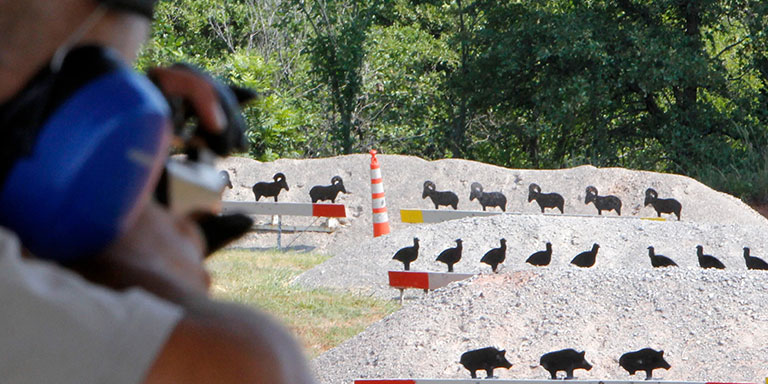
If you're new to the world of competitive shooting sports, metallic silhouette shooting is a great place to start. Most events are either untimed or have a generous time limit, you don't need fancy equipment and the ammo cost is low, making it a low-pressure, affordable sport for newcomers.
In this guide, we'll give you a basic overview of metallic silhouette shooting, as well as the most common categories and rules. We'll also offer some 101-level tips for newcomers just getting started.
A Brief History of Metallic Silhouette Shooting
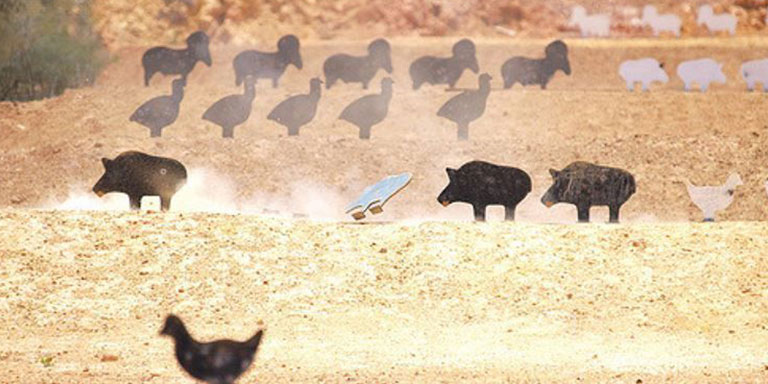
In the early 1900s, Mexican shooters created the predecessor to metallic silhouette shooting, firing at live animals at various distances and awarding points for each hit. This practice soon spread north of the border and became popular with American cowboys. By the 1940s, live animals had been replaced with metal, animal-shaped targets. Leagues and competitions became more common as the new, cruelty-free sport continued to grow.
Because of the sport's Mexican roots, even today the targets are sometimes called gallinas (chickens), jabalis (pigs), guajalotes (turkeys) and borregos (rams).
Basic Rules and Equipment
Metallic silhouette shooting isn't really one sport; it's more like an umbrella term covering many similar but distinct events. Because there are too many variants to cover in detail here, we'll instead explain only the most common ones. If you're interested in competitive shooting as a whole, our introduction to competitive shooting sports is a must-read.
The basic premise is always the same: rows (or "banks") of targets are set up at varying distances from the shooter. There are five targets per bank, and the targets within each bank are always the same type (chickens, pigs, turkeys or rams).
Once a match begins, shooters have a limited time (usually thirty seconds) to take one and only one shot at each target in a single bank. To count for points, targets must be shot in order from left to right and must be knocked off of their stands. Because only one shot per target is permitted, shooters can't make up for misses. Accuracy is paramount.
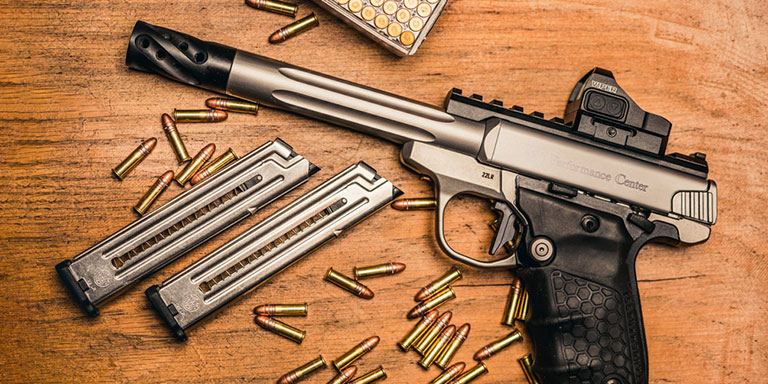
Because silhouette shooting is a precision sport, shotguns are not allowed. Most participants use rifles or handguns, each of which has its own categories and event types. Less commonly, airguns, black powder guns or bows may be used.
Many metallic silhouette shooters use basic, inexpensive equipment, with the possible exception of a high-end scope for long-range rifle events. Essential gear includes:
Binoculars and a spotting scope for rifle shooters
Sight adjustment tools
Notebook and pencil for basic ballistic calculations
Personal timer, for shooters who don't want to have to look away or behind them to see the official timer
Disallowed items vary by category and event type, but supports such as bipods and shooting rests are universally prohibited. Shooters must shoot unsupported, except for black powder enthusiasts, who may be allowed to use shooting sticks. Unusually heavy or thick clothing that could offer additional support is also banned.
All events require shooters to fire a minimum of 10 shots at each target type, meaning that each competitor will fire at least 40 shots during a match. Longer matches consist of several rounds and can last 80 or 120 shots.
Rifle Events
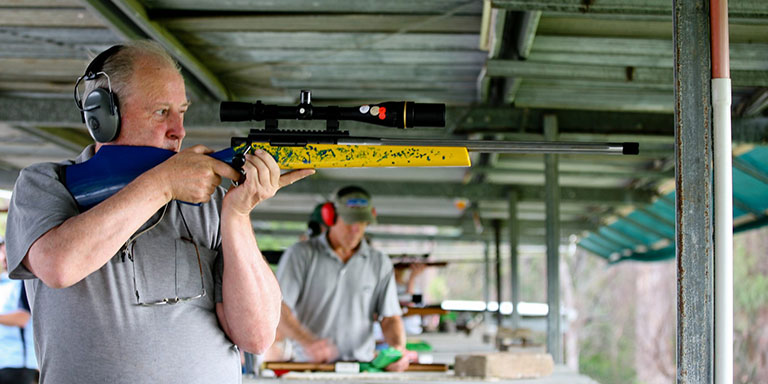
All rifle shooters must fire from a standing, unsupported position. The farthest targets (the rams) may be as far as 500 meters from the firing line. Because not all ranges are that long, National Rifle Association (NRA) rules allow targets to be downscaled and placed closer, to simulate shooting a larger target that is farther away.
There are two official organizations that each have their own rifle categories. In the U.S., most competitions are held and regulated by the United States Metallic Silhouette Association (USMSA), whereas the International Metallic Silhouette Shooting Union (IMSSU) hosts events in other countries. The USMSA follows IMSSU rules in World Championship events and NRA rules for most others. Common USMSA categories include Cowboy Lever-Action (Pistol Calibers), Cowboy Lever-Action (Rifle Calibers) and High-Powered Semi-Automatic Military Rifles.
The major IMSSU rifle categories are High-Powered Silhouette Rifle, Hunting Rifle, Smallbore Silhouette Rifle, and Smallbore Hunting Rifle. The IMSSU has definitions and specifications for these terms, with 6mm being the cutoff between large and small calibers. There are also limits on barrel length, optics and overall weapon weight.
Regardless of category or event, rifle shooters must choose their preferred calibers carefully. The round should be large and powerful enough to reliably knock over the metallic targets, but not so large that the shooter struggles to land precise shots on subsequent targets.
Handgun Events
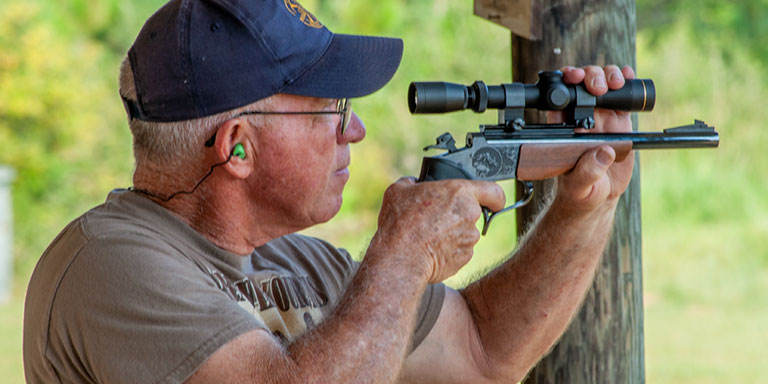
Semi-automatic handguns like the ones you might own for self-defense are rarely (if ever) permitted at metallic silhouette events. Allowed handguns are generally bolt-action, break-action or revolvers. Many are designed specifically for the sport's particular demands, namely maximum power and accuracy with minimum recoil. Because time limits are relatively generous, rate of fire is not a major concern.
Like rifle shooters, handgun shooters are required to fire from an unsupported position. Most choose to fire from a prone position because of the need for maximum stability and accuracy. And, like rifles, competition handguns must conform to restrictions on barrel length, optics and weight.
International handgun events are governed by the IMSSU. U.S. events are instead regulated by the International Handgun Metallic Silhouette Association (IHMSA).
The four IMSSU categories are Unlimited (fewest restrictions), Production (readily available, unmodified guns only), Standing (same as Production, except all shooters must fire from a standing position) and Revolver (wheelguns only).
Domestic handgun categories are governed by NRA or IHMSA rules, and in most cases, these two rule sets are very similar to one another. In general, the differences between handgun categories are smaller than the differences between rifle categories.
Black Powder, Airgun and Bow Events
Some metallic silhouette shooters consider rifles and handguns to be the only official weapons used in the sport, preferring to think of bow, airgun and black powder events as separate sports. The NRA, USMSA, IHMSA and IMSSU don't recognize these other weapons as being part of metallic silhouette shooting, but the basic idea is the same. Certain modifications are necessary; for example, bow users fire at foam targets instead of metal ones.
Usually, you can find small, local clubs dedicated to these unofficial variants. Black powder shooters are often encouraged to compete in historically accurate costumes — some clubs even require it. Some shooting clubs have silhouette airgun leagues for kids and teens, although many allow adults to participate as well.
Basic Tips for Beginners
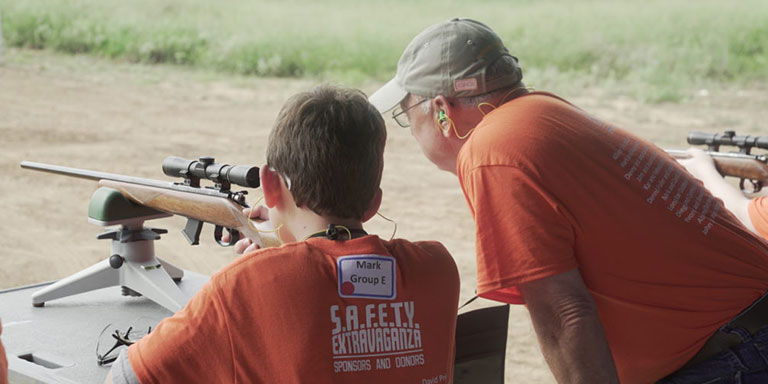
If you want to give metallic silhouette shooting a try, you can either start practicing by yourself or search for a club or league in your area. Either way, these basic tips will help you figure out whether the sport is a good fit for you.
At first, don't worry about conforming to category-specific restrictions. Buy (or make) some basic silhouette targets and just start shooting at them slowly and carefully. Get a feel for the specific demands of the sport and practice its fundamental skill — accuracy — before you worry about placing more limits and restrictions on yourself.
Resist the temptation to shoot quickly. Many (if not most) shooting sports emphasize speed, but silhouette shooting is different. A precise shot is much, much more important than a quick one.
Metal targets (and the bank stands that go with them) can be a bit pricey. To save money, print or draw your own targets on paper, and tape them to cardboard backings. Make different versions using official shapes and dimensions. If you stick with the sport for a while and end up liking it, then you can invest in metal targets if you want.
As we mentioned above, bigger calibers are generally better because they knock down targets more reliably, but there's also something to be said for calibers that you can easily control. Experiment with many different permissible calibers to see which one offers the best balance of power and ease of use.
Many metallic silhouette events are team-based, allowing shooters and spotters to work in pairs. Look for a partner who can help you practice, and switch roles often. Improving your spotting skills will make you a better shooter (and vice versa).
The world of competitive shooting sports is a big one, and in our opinion, metallic silhouette shooting is one of the best places to start. It's an accessible, relatively inexpensive sport with few rules, and it's a good way to make new friends. Now that you've made it through our introductory guide, you should be ready to jump right in.