

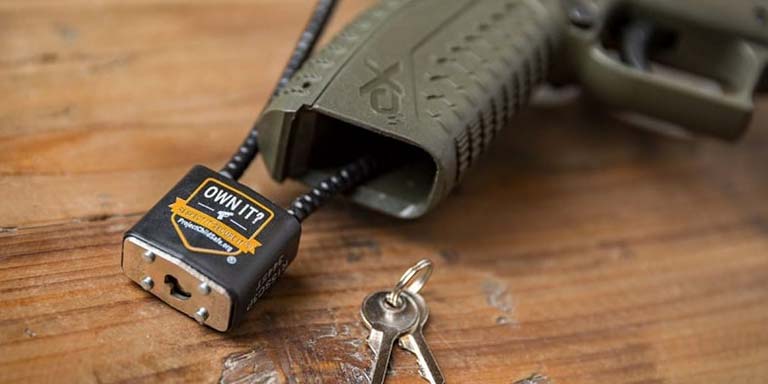
Gun safety is pretty straightforward when you live alone or with other responsible adults, but it gets a lot more complicated with kids in the picture. The basic principles of gun safety never change, but the specific practices you implement need to evolve as your children grow up. And of course, different children have different personalities and levels of maturity, so another family's gun safety habits may not work for yours.
In this guide, we'll review tools and strategies you can use to keep your kids safe. We'll also offer age-specific recommendations and advice on how to talk to your kids about firearm safety.
Gun Safety: Basic Best Practices
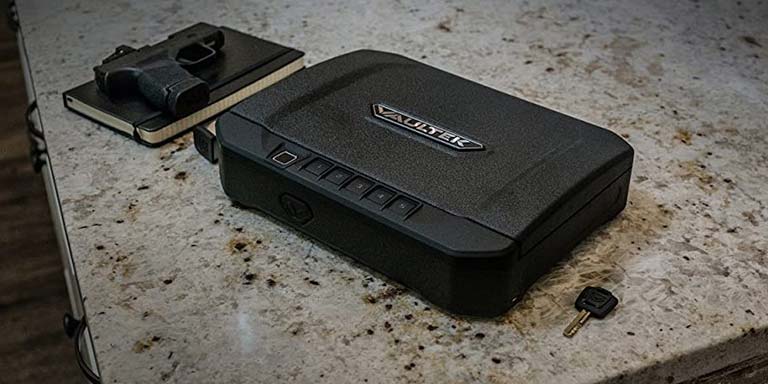
Regardless of your child's age or maturity, the only completely reliable way to prevent firearm accidents is to make it physically impossible for your child to access your guns. Truly secure gun safes can cost hundreds or thousands of dollars, leading some parents to buy cheaper models — but there's definitely a correlation between price and level of security. Many inexpensive safes and lockboxes can be picked or bashed open with relative ease, and some electronic models have obvious flaws; we've seen battery-powered safes that can be opened simply by removing and reinserting the batteries. Make sure to buy a safe that can't be pried open with a crowbar or otherwise bypassed; our guide to gun safes should help you make the right choice. If you need additional assistance, don't hesitate to visit your local safe store for advice.
Any safe or lockbox that uses a physical key can be picked open (at least in theory), and kids, especially teens, can be awfully resourceful when they want something they're not allowed to have. Even if you buy a high-quality safe that no kid is going to be able to pick, the mere existence of physical keys is also a potential security risk. No matter how carefully you hide the keys, there's always a chance your kids might find them. We recommend biometric or combination safes for this reason. If you choose a combination safe, set a combination that's easy for you to remember but that your kids won't be able to guess — and never write it down.
If your kids are older teens and you've already thoroughly educated them in gun safety, less secure devices such as wall locks or cable locks may be sufficient; it depends heavily on how confident you are in your child's ability to consistently practice good gun safety habits. If you have even the slightest doubts about your teen's maturity, mental health or susceptibility to peer pressure, err on the side of more secure firearm storage.
All guns to which you don't need immediate access should be stored unloaded, double-locked, and separate from ammunition. Ideally, you should store ammunition in a separate safe or lockbox that uses a different key or combination.
Your home-defense guns are, of course, a slightly different story. They're not much good as defensive weapons if it takes a minute or longer to access and load them, but you still need to prevent your kids from getting ahold of them without your supervision. Any guns that are kept loaded absolutely must be stored in a safe designed to offer both speedy and secure access, such as a biometric safe that can be opened only with authorized handprints or fingerprints. Again, make sure to do careful research and avoid cheap models that can be "hacked." For instance, some knockoff biometric lockboxes can be opened with packing tape, should your child manage to lift a clean print from something you've touched.
Age-Specific Guidelines on Gun Safety
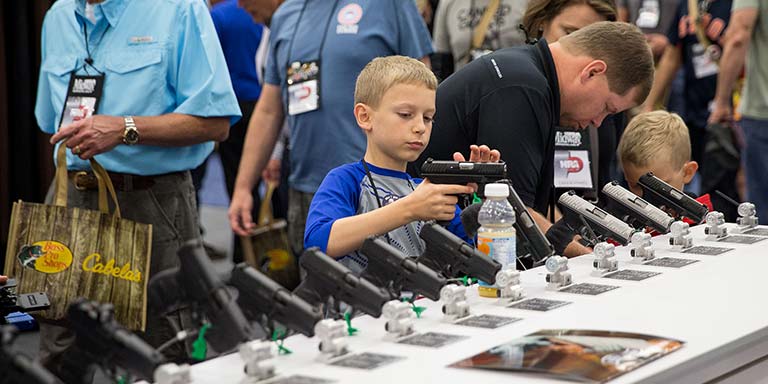
For gun safety purposes, young children, preteens, young teens and older teens all need to be treated differently. All kids are different, and some are more mature than others, especially as they begin to develop adult-level reasoning abilities. Safety measures appropriate for one child may be inappropriate for another, so the age ranges we define here are merely general guidelines.
Toddlers and Young Children (Ages 2 to 8)
Very young children are nothing if not curious. Of course, at this stage of development, it would be completely inappropriate to let them handle deadly weapons, but you should start talking to your kids about gun safety as soon as they're old enough to understand what guns are. Virtually all children are strongly attracted to mysterious things — they want to experiment and play with things in order to understand them. As kids get older, they're often increasingly tempted by forbidden things because they're forbidden.
Show your guns to your young children but don't let them touch. Use age-appropriate language to explain why you have guns in the house and emphasize how dangerous they are. Let your kids know that they'll be allowed to handle guns when they're older. Allow them to play with toy guns if they want to, but take care to clearly and frequently emphasize the difference between toys and real weapons.
Speaking of toys: there are toy guns, real guns and guns that fall somewhere in between. NERF guns and similar items that are (virtually) incapable of causing harm are the only guns you should refer to as toys. BB guns and pellet guns, although less lethal than firearms, are still weapons and should be treated as such — young children shouldn't be allowed to play with them. Airsoft and paintball guns occupy a gray area; they aren't designed to cause harm, but they certainly can. Allow older children and preteens to play with these items only if you're completely confident that they're mature enough to consistently wear safety gear and to handle the guns responsibly. In both cases, allow them to use low-velocity guns only.
Preteens (Ages 9 to 12)
At this age, children are growing up rapidly, both physically and mentally, but of course, they're still a long way from adulthood. Preteens are likely to be even more curious about guns, especially as peer pressure starts to become a bigger concern (more on that a bit later).
At this age, it may be appropriate (depending on your child) to start teaching your kids about hands-on gun safety using BB or pellet guns. If they consistently demonstrate good habits and maturity over an extended period of time, consider moving up to a .22 rifle — always under your supervision. Regularly stress that, although you trust your kids, they're not yet allowed to handle real guns without you.
Young Teens (Ages 13 to 15)
Of course, the transition from childhood to adulthood doesn't happen overnight; rather, it's a gradual series of many individual changes that different kids experience at different times. Adolescence is a tough time for parents because kids this age are starting to become adults in some respects, but in others, they're still very much children. This is why it's extra important to be actively involved in your kids' lives (without being a helicopter parent, which can cause them to distance themselves and hide things from you) — it's the only way you'll have enough information about their maturity and mental state to make good decisions about gun safety.
Assuming your teen is generally mature and well-adjusted, it may be time to start or continue allowing them to practice gun safety with real guns, still under your supervision. If you have any doubts about their readiness, though, listen to your gut. You can always revisit the idea later, after your teen has had more time to mature.
Older Teens (Ages 16+)
A parent's main job is to give their kids the tools necessary to be healthy and successful adults. This job begins as soon as your kids are born, but as they approach legal adulthood (18 in most places), it's time to start granting them full adult autonomy in certain situations — always within the context of your particular child's maturity and capabilities.
If you've already been teaching your older teen about gun safety for years and they haven't given you any reason to think that they're a danger to themselves or others, this is probably the right time to see how they handle gun safety at a nearly adult level (emphasis on "nearly"). However, as long as your kids are not yet legal adults and are still living in your home, their safety is ultimately your responsibility. Don't get complacent just because your kids are almost grown up. Peer pressure is an especially dangerous threat at this stage of development and you need to always take an active role in preventing firearm-related tragedies.
How to Talk to Your Kids about Peer Pressure

Peer pressure among kids and teens comes in a variety of different forms, but they all have the same root cause: a desire for approval that overrides an individual's better judgment or sense of identity. Many psychologists and psychology websites say that peer pressure can incentivize positive behaviors in some cases, and that is true — for instance, teens sometimes talk their friends out of using drugs.
However, it's critical to understand that there are two different ways in which your child's peers can influence them, and each needs to be handled differently. If a child or teen uses logic, reason, and evidence to convince their friends to do or not do certain things, that's not actually peer pressure — it's just making a good argument, which the listeners will choose to accept or not. For example, they might say, "I don't think you should smoke weed because it will probably hurt your grades, and you'll lose your job the next time you take a drug test."
Peer pressure is different (and dangerous) because it substitutes psychological pressure for rational argument. Even if the thing your teen is being pressured into is a good thing (like deciding not to do drugs), the way in which they come to that conclusion is critically important. If they make a decision because they're seeking approval from their peers as opposed to making the same decision by using reason to determine the best course of action, that's a big problem.
Young children are, of course, not yet capable of adult-level reasoning, which is the best defense against peer pressure. You can and should talk to your kids about peer pressure as soon as they're old enough to have friends, but you must adjust your presentation of the topic based on your child's ability to understand it.
For instance, if you have an eight-year-old, you'll need to keep the conversation simple and focused on outcomes. You might ask questions like, "Your friend told you to show him our guns — do you think that's the right thing to do? Why is it right or wrong?" Most eight-year-olds are capable of understanding that an action is wrong if it's likely to hurt or kill someone. Of course, you would phrase this differently when talking to an older teen who can better understand a wider range of context, such as self-defense.
You can then follow up with something like "Nobody thinks your friend is a bad person, and nobody thinks he wants anyone to get hurt. He just made a mistake. We all make mistakes sometimes. I'm happy you told me about this." It's important to bear in mind the nature of peer pressure and teach your kids to resist it by showing them why their own reasoned judgments about right and wrong are more important than their friends' approval (again, with respect to your child's ability to reason at different stages of development).
Ensuring Your Child Stays Safe in Other Families' Homes

Assuming you've implemented all of the gun safety strategies we've talked about so far, talking to other families about gun safety becomes relatively simple. Anytime your child makes a new friend, have a frank conversation with the friend's parents about guns in their home. If they don't have any, there's nothing to worry about (but you still need to talk about what you'll do when the friend comes to your home). Ensure that you're all on the same page about safety practices and supervision. Never make assumptions. Many tragic accidents happen because one parent assumed that another's gun safety practices were adequate without actually asking questions or inspecting the home.
Make clear that it's not that you automatically distrust the other parent; you just want to make absolutely sure that your children and theirs can't hurt themselves accidentally. The best way to ensure their safety is to ensure that all guns are stored appropriately, all parents are working together on a comprehensive safety plan, and all children are given age-appropriate training about gun safety.
When you're a parent who owns guns, keeping your kids safe is an 18-year job. Gun safety in the home is an ongoing process, not just one event. As long as you regularly engage with your kids, update their knowledge as they get older and ensure that unauthorized access to your guns is physically impossible, you shouldn't have anything to worry about.