

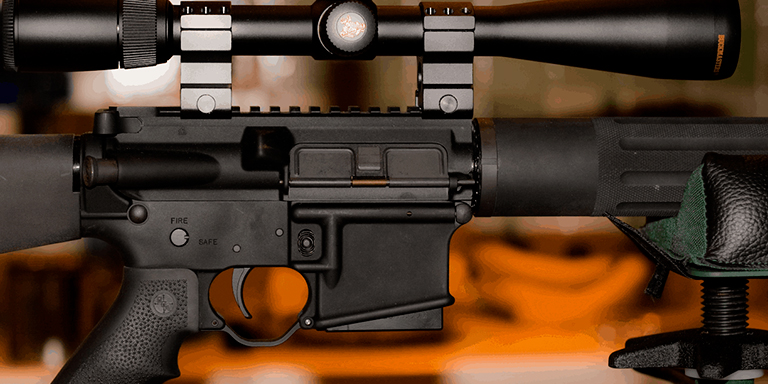
A rifle scope is a magnified optical device that helps shooters shoot more accurately at a greater distance than iron sights would allow. There are many factors in selecting the proper scope for a rifle. The first is to consider the weapon's purpose: hunting, target shooting, competition shooting or just plinking tin cans are some of the most common. The second (and for many, the most important) is the shooter's budget. Rifle scopes range in price from forty dollars to well over a thousand dollars.
If you plan to spend hundreds of dollars on a rifle scope, you should be armed with all the proper knowledge to help you make the right choice. In this guide, we lay out everything you need to know about rifle scopes. From magnification and fixed power vs. variable power to types of reticles and windage and elevation adjustments, we cover it all to help you find the perfect scope for your rifle.
The Magnification (or Optical Power) of a Scope
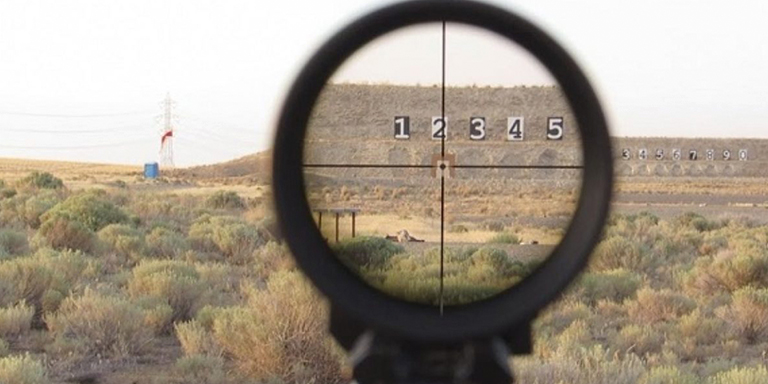
The magnification of a scope is how much closer the target appears when viewed through the scope as opposed to the naked eye. To understand magnification, consider a scope labeled 3-9x40mm. The first number (or numbers) indicates the magnification, or the scope's power (in this case, a range between three and nine).
A magnification of three means that when the shooter looks through the scope, the target will appear three times closer than it is. As the power of the scope increases, the visible area downrange decreases. So at twenty-five yards and using a three-power scope, the shooter will see an 18" x 18" target, but will also see about six feet to either side of the target and above and below it.
Increasing the magnification power to nine means that the same target will nearly fill the entire scope's sight picture. Low magnification scopes are best when a shooter must see the target and the area around the target.
Low magnification is also more suitable for close-quarters combat. Many SWAT and special operations law enforcement units use low or no magnification optics for dynamic building entries. These allow threats to be identified and engaged quickly. Relatively low, four-powered scopes were sent into combat on M-4 and M-16 rifles by the United States armed forces for over a decade. This has changed recently as military specs now seek variable magnification.
Variable Power Scopes vs. Fixed Power Scopes
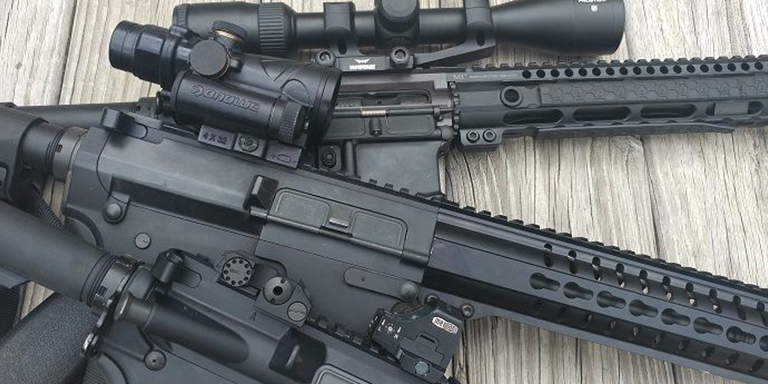
Many rifle scopes produced today provide variable magnification. You can tell a scope has variable power based on its labeling — the "3-9" in "3-9x40mm" indicates a variable magnification between three and nine. The main caveats of variable power scopes are that they weigh more, they don't provide the same level of clarity as a fixed power scope, and they are not as brightly lit. However, it's hard to beat their versatility.
A fixed power scope, on the other hand, does not provide a variable level of magnification; you get one level of magnification and that's it. You can tell whether or not a scope has fixed power based on its labeling conventions the same way you can for a variable power scope — while a 3-9x40mm scope indicates a range of magnification between three and nine, a 4x32 scope is set at a fixed magnification of four.
The United States military used the 4x32 ACOG scope for years. They are deadly accurate, tough as nails, small and lightweight. There is a growing civilian market for this type of scope, and several reputable manufacturers produce them for civilian and law enforcement purposes. The US army is currently working to bring a new variable-powered scope into service. These new scopes will provide magnification between one and six, extending the scope's effective range.
The critical thing to remember for civilian shooters is to buy based on the magnification and features you need; more is not always better. Also, remember — the more magnification, the smaller your field of view through the scope.
Lens Size
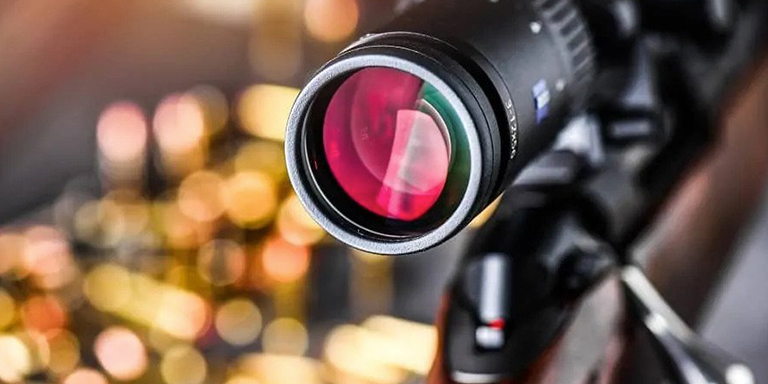
Consider the 3-9x40mm scope in the earlier example. As you know, three is the lowest level magnification, and the scope is variable up to nine times magnification. But what about the 40mm? That number is the diameter of the front lens of the scope in millimeters. The larger the front lens (also known as the objective lens), the more light the scope allows in, making the image through the scope clearer and brighter.
Most rifle scope's objective lenses are between 30mm and 40mm. Going smaller is okay for closer target shooting, but larger is generally better if it's within your budget. Those intending to use a higher-powered or a variable magnification scope should note that the objective lens should be closer to 40mm. A shooter engaged in extended-range shooting may need an objective lens of 50mm or larger. Using a scope with a large objective lens may require some modification to the scope mounting system to allow room for the larger front optics.
Types of Reticles
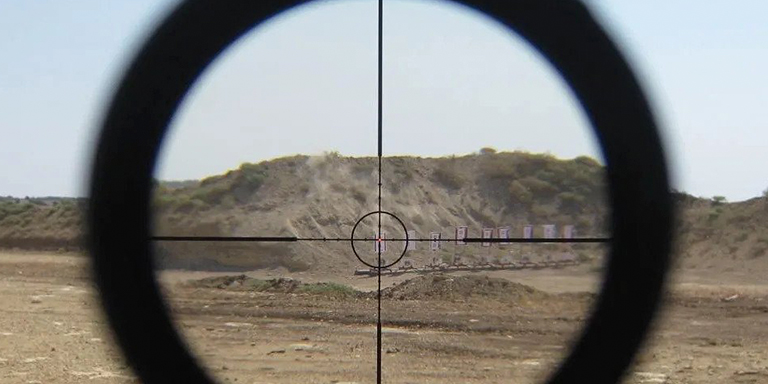
The reticle is what the shooter sees inside the scope itself; it helps to give the shooter a fixed aiming point. The most common type of reticles are crosshairs. Scopes can have simple crosshairs or more elaborate windage and elevation lines incorporated into the optics.
Many reticles have bullet drop compensator (BDC) lines and windage lines. Windage lines are a set of small lines to the left and right of the center. They allow a shooter to adjust for the wind by shifting their aim, using the small hash marks on the crosshairs. Elevation (or BDC) marks are a series of vertical lines, allowing the shooter to compensate for bullet drop based on their distance from the target.
A reticle may also feature electronic illumination for greater visibility in low-light conditions. The illumination can either come in the form of illumination of the center dot or illumination of the entire optic. Due to battery drainage, illuminated scopes should be turned off when not in use. Also not that scopes utilizing electronic illumination tend to cost more.
Windage and Elevation Adjustment Turrets
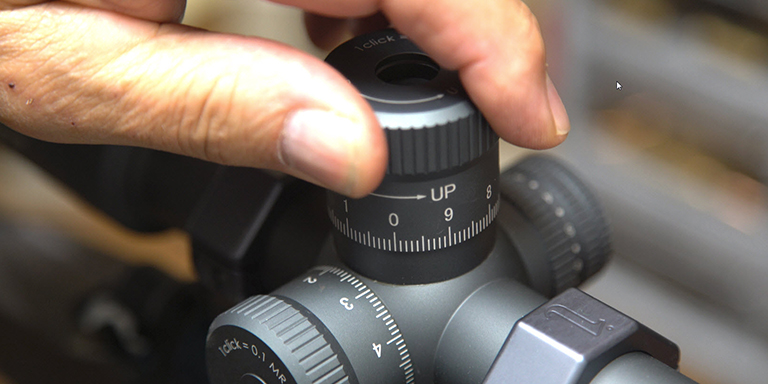
Medium to higher-end rifle scopes will have windage and elevation knobs or turrets. These will be prominent on the scope — one on the top controlling elevation and one on the side controlling windage. These knobs should be firm, never turn loosely, and make an audible click with each adjustment of windage or elevation. The knobs should also clearly indicate which direction to rotate the knob to achieve the desired adjustment. In addition, scopes should be marked with how many minutes of angle a click adjusts for so shooters can make proper calculations.
What's the Third Knob?
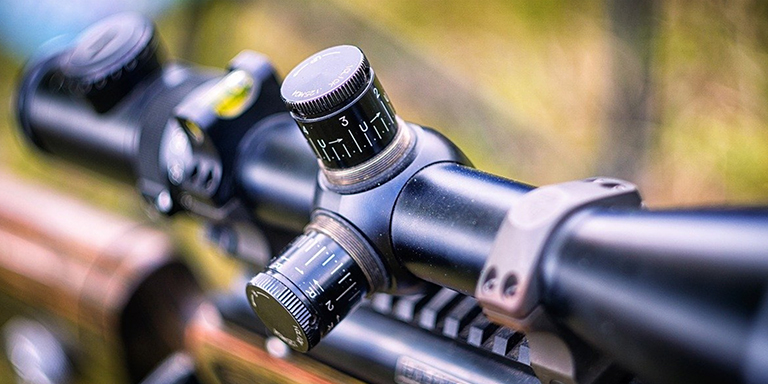
One some scopes, there's a third knob present that adjusts for parallax. It's usually located on the opposite side of the windage knob. Generally, parallax adjustment knobs only come on high magnification scopes that are accurate at distances exceeding three hundred yards; parallax adjustment is essentially unnecessary if you're shooting at something less than three hundred yards away.
At distances over three hundred yards, a shooter's view of their reticle and target may not be on the same plane, making the target appear blurry. The parallax knob on a scope helps fix this issue. A more straightforward explanation is that it acts as a focus knob for shooting over long distances. If a long-range target is blurry, use this adjustment knob to sharpen the focus.
Cheek Weld and Eye Relief
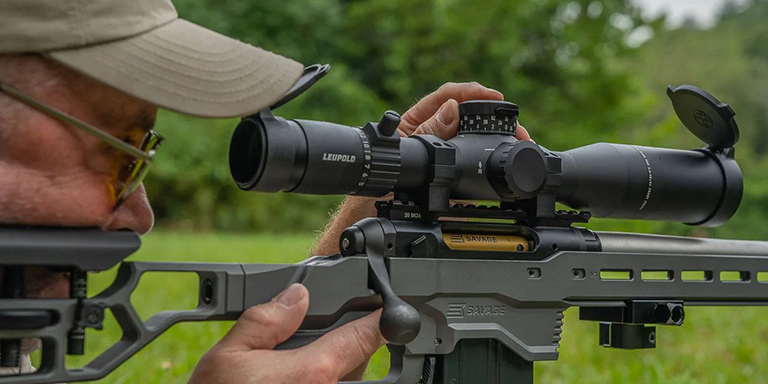
Cheek weld is where the shooter's cheek contacts the rifle stock. A shooter must achieve a secure cheek weld while also being able to see through the rifle scope comfortably. Not every scope is a good fit for every rifle, and cheek weld is a good way to tell if your scope and rifle will work well together.
The second concern is the amount of eye relief a scope provides. Eye relief is the amount of space between a shooter's eye and the back of the scope. Plinking with a twenty-two is never a problem, but shooting a rifle with a substantial kick makes eye relief a concern. The scope should be mounted in such a way that allows a space of four or more inches between the shooter's eye and the scope. Any less, and the shooter may soon be sporting a blackeye.
Mounting a Scope
A rifle scope is only as accurate as its ability to stay mounted rock solidly to the rifle. There are three basic scope mount platforms: dovetail, Weaver and Picatinny.
Dovetail
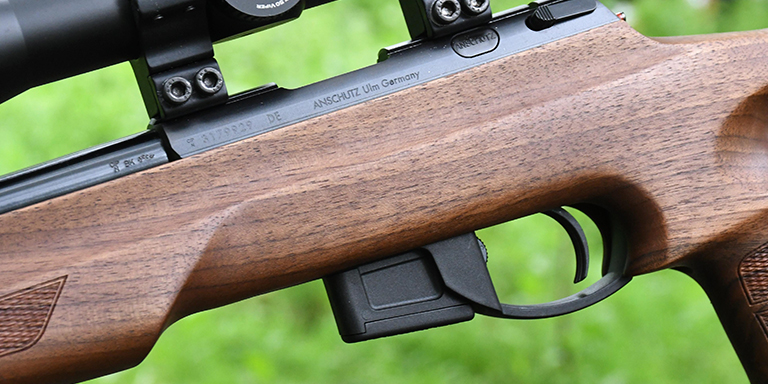
The dovetail system consists of two grooves milled into the rifle's frame, usually by the manufacturer. The scope mounting system clamps onto these milled grooves. The dovetail mounting system is most common on smaller caliber weapons.
Weaver
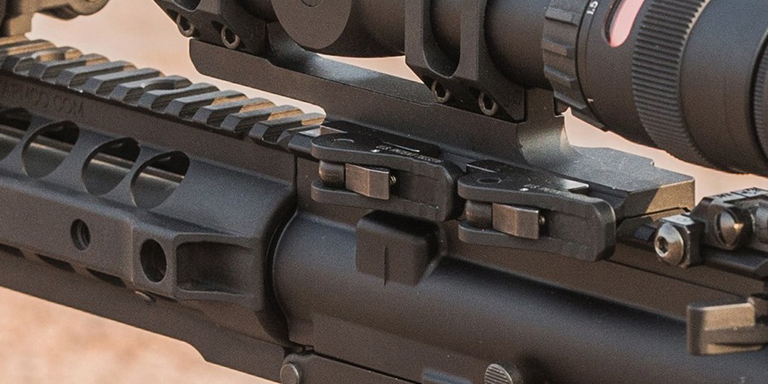
The Weaver platform sits flat on top of the rifle and features grooves cut into it to accept scope mounts. The grooves are not always uniformly spaced. The groves are also slightly closer together than the grooves on Picatinny rails, so you may run into compatibility issues between the two.
Picatinny
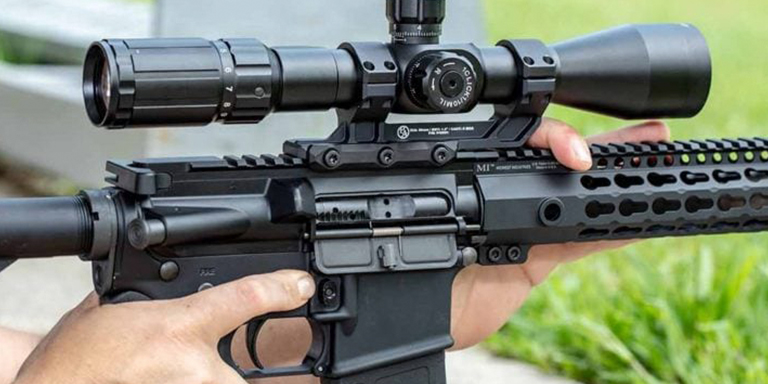
This platform sits flat on top of a rifle and has uniform grooves cut across it to accept different scopes. In 1995, the United States military adopted this scope mounting platform design for their weapons. Picatinny rails are the most popular rifle scope platform and are typically preferred by shooters of Weaver and dovetail rails.
Scopes That Don't Magnify
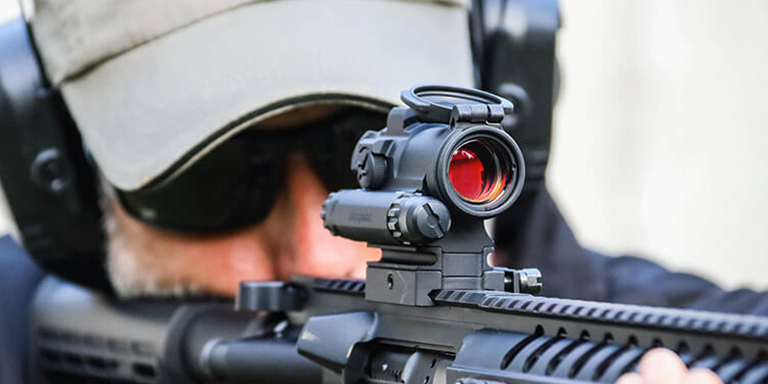
Several types of sighting systems that don't magnify a target fit into the rifle scope category. Holographic or red dot sighting systems are very popular for those engaged in close-quarters combat or instinctive shooting. They generate an electronic red dot or hologram within the sighting system, allowing the user to align the red dot with the target very quickly. These can be used while keeping both eyes open, and are excellent for instinctive shooting.
In the end, selecting a rifle scope has a lot to do with personal choice. The most significant determining factor should be the intended purpose of the weapon. Different scopes are fit for different activities, like hunting, target shooting, competition or perhaps even deployment on a police department's patrol rifles. The second consideration is your budget. Rifle optics are not items for which you should bargain hunt. A good, quality scope will not be discarded after a couple of years, but is an investment to be enjoyed for many years.