

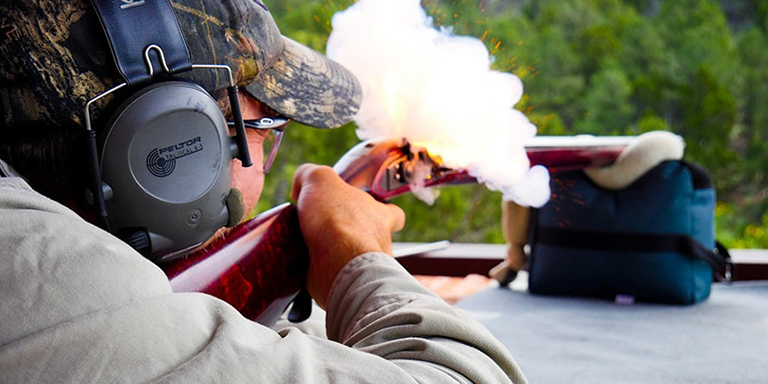
In movies, people fire guns without hearing protection all the time, but in real life, unprotected exposure to even a single gunshot can cause permanent hearing damage. To new shooters, proper hearing protection may seem optional or unnecessary, but it's critically important.
In this guide, we'll review the pros and cons of the three main kinds of hearing protection for shooters, offer tips on how to choose the right kind for your needs, and suggest a few other ways to protect your hearing.
Essential Tips for Avoiding Hearing Damage
As you probably already know, the loudness of sounds is measured in units called decibels (dB). The decibel scale is logarithmic, not linear. This means that, for example, a sound measured at 80 decibels is twice as loud as a 70dB sound — not 1/7th louder, as you might think. For reference, normal background noise in a home or office setting is about 40dB, whereas a gas-powered lawn mower is about 80dB. Prolonged exposure to sounds in the 80dB to 90dB range can cause long-term hearing damage.
Even a .22LR bullet is about 125dB. Shotguns and Magnum revolvers can exceed 160dB. In short: without hearing protection, any gunshot can potentially rupture your eardrums or cause other permanent hearing damage.
Noise Reduction Ratings
Headphones, earmuffs, and earplugs have noise reduction ratings (NRRs), also measured in dB. The NRR is a precisely-defined scientific standard used in virtually all sound-related applications in North America. Be careful if you're buying hearing protection online; devices manufactured in Europe may use a different standard called SNR. The standards are similar, but not identical. SNR numbers are typically higher, so these devices provide less protection than a device with the same rating on the NRR scale.
For shooting, you'll need hearing protection with an NRR rating at least in the high 20s. Combining multiple forms of hearing protection such as foam earplugs and earmuffs does provide additional protection, but the benefits are not additive (i.e. wearing 25 NRR earplugs with 25 NRR earmuffs doesn't provide an effective NRR rating of 50 — it's significantly less than that).
Special Considerations If You've Already Suffered Hearing Damage
If you've already lost some of your hearing, protecting what's left becomes even more important (and more difficult). The inner structures in your ear are very delicate, and once injured, they become even more fragile.
For patients with prior hearing loss, most audiologists recommend using both in-ear and over-the-ear protection for exposure to very loud noises like gunshots. One or the other alone may not be able to protect you from further hearing damage.
Earplugs
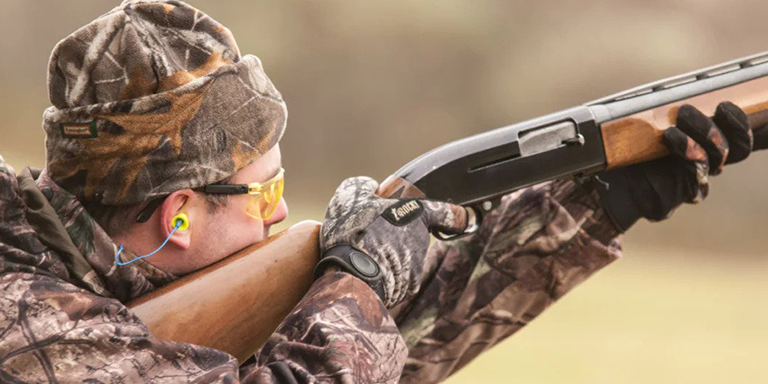
Often considered “entry-level” hearing protection, earplugs are typically inferior to earmuffs in terms of noise reduction. However, there are high-end models that can equal or exceed the protection offered by many earmuffs.
Most earplugs are made of either foam or silicone. Foam earplugs are disposable, whereas silicone earplugs can be washed and reused. Noise reduction ratings vary between each type; one isn't necessarily better than the other. Foam earplugs are usually one-size-fits-all (because they expand to fill your ear canal), but silicone earplugs may need to be custom-fit.
Use caution when shooting with earplugs alone. Make sure that your specific earplugs provide adequate protection for the level of noise generated by your firearm and those of anyone who will be shooting close to you. Earplugs alone may be insufficient if you'll be using high-caliber weapons, or if you're shooting at an indoor range where gunshots are louder than they would be outdoors.
Passive (Non-Electronic) Earmuffs
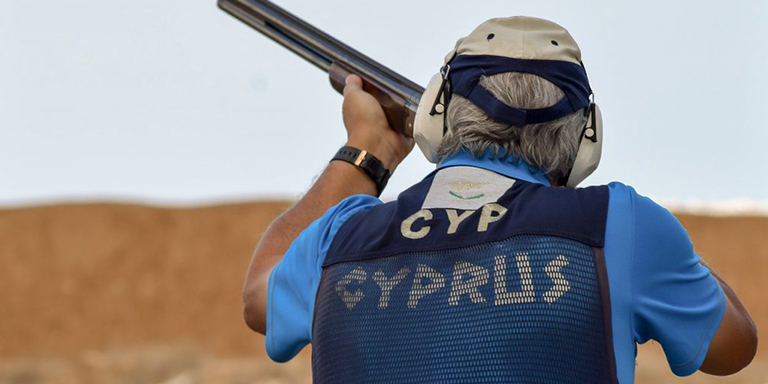
We recommend using at least this level of hearing protection whenever possible. The molded cups on the earmuffs should completely cover your ears on all sides without pinching. Properly-fit earmuffs generally provide about 30% more protection than earplugs alone, but again, there are exceptions.
Passive earmuffs are sufficient for most shooters, especially if paired with earplugs, but there are downsides. Because they dampen all sounds, it can be difficult or impossible to hear important things — the range safety officer's commands, for example.
Finally, be sure to assess the earmuffs' overall quality, especially the moving parts that connect the earcups to the band. Inexpensive earmuffs may come apart easily and unexpectedly — potentially a big problem if it happens on the firing line while guns are going off all around you.
Electronic Earmuffs
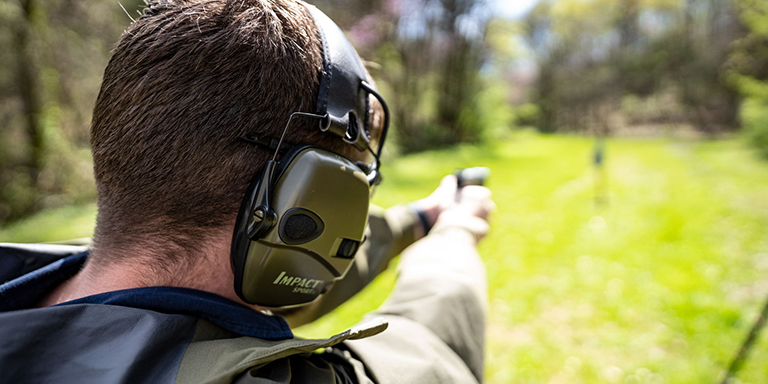
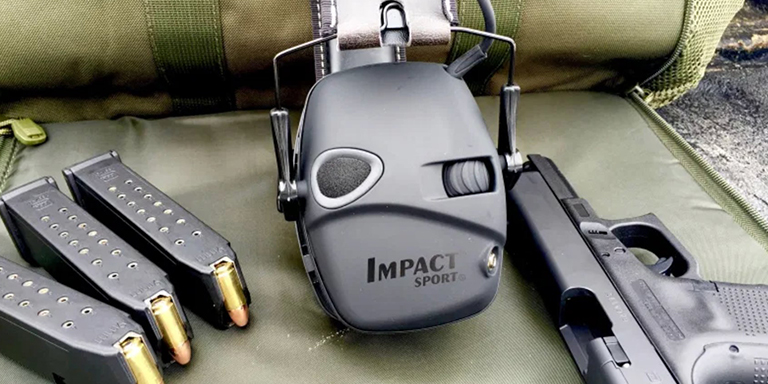
Electronic noise-canceling earmuffs are the gold standard for any shooter. When they were first introduced, some models cost $500 or more, making them unaffordable for many people. Nowadays, you can find decent-quality models for as little as $50.
Electronic earmuffs are great because they simultaneously dampen loud sounds and amplify quieter ones, like voices. They have no real downsides, except for the fact that they require batteries, but that's hardly a big deal. Batteries usually last at least 20 hours, and even when the earmuffs are unpowered, they still provide passive hearing protection. We advise all shooters to pick up a pair.
One last note: electronic earmuffs aren't designed to be used in conjunction with earplugs, which can mess with both the noise amplification and noise reduction systems, producing subpar results.
Best Kinds of Hearing Protection for Different Scenarios
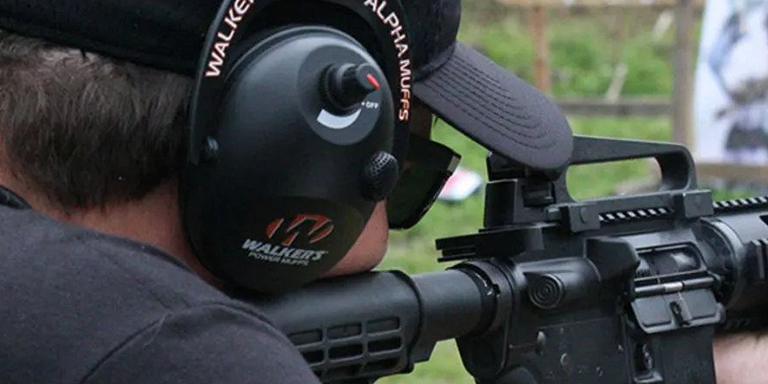
For everyday target practice, most any kind of hearing protection will do, as long as its noise reduction rating is sufficient for the weapon caliber and shooting environment. If you'll be shooting in a setting where you need to be able to hear the range master or other shooters, make sure you can still hear voices if you're using non-electronic protection.
For sport shooters, electronic earmuffs are all but essential. It's imperative to be able to hear range commands, your teammates and helpful audio cues, such as the sound made by a clay thrower launching a target.
Hunters have a bit more flexibility, because most don't don their hearing protection until they're ready to take a shot, which could be hours or days into the hunt. Even so, we still recommend electronic hearing protection, especially if you're hunting with others. It's critical to ensure that you'll be able to hear one another at all times.
Other Ways to Protect Your Hearing
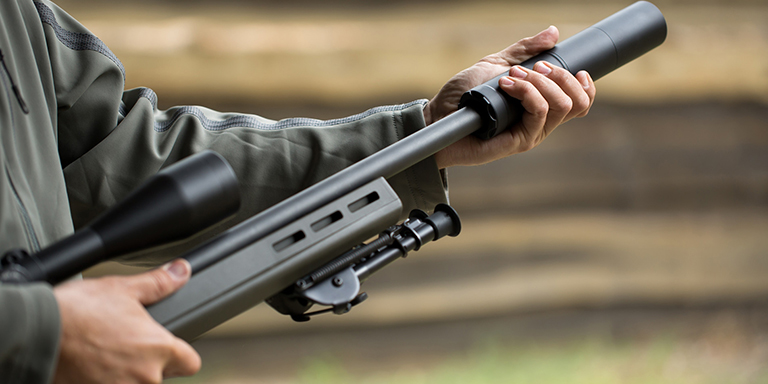
There are a few other ways to make gunshots less dangerous to your hearing, namely suppressors and subsonic ammunition. The latter generally isn't subject to any laws or regulations beyond those that apply to regular ammunition, but suppressors require additional signatures and stamps from the Bureau of Alcohol, Tobacco, and Firearms (ATF). Be sure to work with a firearms dealer or gunsmith who can help you navigate the process legally. You can check out our firearm suppressor buyer's guide for a more in-depth look at the process.
Depending on the weapon, the ammunition used and many other factors, suppressors can make gunshots a little quieter, a lot quieter, or somewhere in between. Most guns are still loud enough to cause potential hearing damage even when suppressed, so suppressors aren't a substitute for earplugs or earmuffs.
Subsonic rounds, as the name implies, travel slower than the speed of sound, making the gunshot significantly quieter than it otherwise would be. Not all calibers and types of ammunition are available in subsonic varieties, and subsonic rounds typically carry significant penalties in terms of ballistic performance, so be sure to factor these drawbacks into your decision.
All that being said, suppressors and subsonic ammunition may be banned by sport shooting leagues, illegal for hunting, or otherwise inappropriate for the situation, but both can be good choices if you just want additional hearing protection while you're putting practice rounds downrange.
Protecting your hearing from gunshots is as simple as it is important. Given that quality hearing protection costs about as much as a few boxes of ammo, money shouldn't be an obstacle even for the most budget-conscious shooters. As long as you wear your hearing protection properly and use it every time you go shooting, you shouldn't have anything to worry about.