

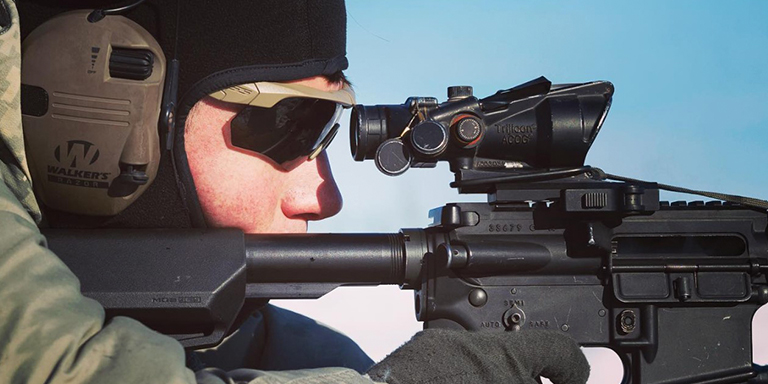
Everybody needs a good pair of sunglasses. But if you're a police officer, military service member or you just like to frequent the gun range, a standard pair of mall-bought shades won't do the trick. You need something tough that can both block out sunlight and stand up to heavy wear and tear. You need something with the features that can handle high-stress impacts. You need a pair of tactical sunglasses.
But what are tactical sunglasses, and what sets them apart from regular, run-of-the-mill shades? That's the question we've set out to answer for you. We'll cover lens and frame technologies, materials, features and more to help you find the perfect pair of tactical sunglasses.
What Makes Sunglasses Tactical?
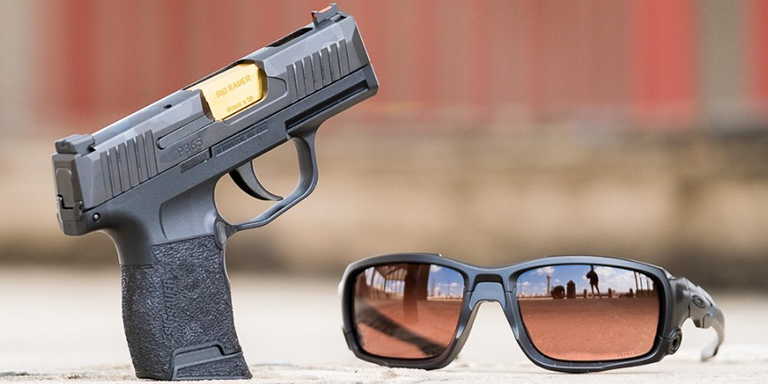
There's certainly a good deal of crossover between the design, features and functionality of both tactical and non-tactical sunglasses. Specialized lens colors, polarized lenses, anti-fog coatings — many of the important features that make regular sunglasses stand out are present in tactical shades, too. But what really makes tactical sunglasses shine is their ability to stand up to heavy, demanding use.
Whether you're in a combat zone or you're shooting guns casually, it's vital that your eyewear maintains some level of ballistic protection. Tactical sunglasses meet these standards. Their lenses are engineered to withstand small-caliber projectiles traveling at hundreds of miles per hour without breaking or shattering. Many styles are designed to meet the rigorous safety and protection standards outlined by the American National Standards Institute (ANSI), and some even rise to meet MIL-PRF-31013, the ballistic safety standards outlined by the U.S. military. Still more styles are made durably enough to make the Army's very selective Authorized Protective Eyewear List (APEL).
How do these tactical sunglasses manage to meet and exceed such high safety and durability standards? It's all in the materials. Polycarbonate lenses are rigid yet flexible, allowing for high impacts without breaking or shattering. The frame materials are important, too; many styles are engineered from metal or high-strength nylon. The lens and frame materials work in concert with each other to form a pair of shades that maintain their integrity in some of the world's most unforgiving environments.
Tactical Sunglasses Lenses
The lenses are arguably the most important aspect of a pair of tactical shades. Optical clarity is paramount on the battlefield and during police work, and lens coatings, colors, sizes and materials all work together to ensure not only that you can see, but that you can see much better than if you weren't wearing sunglasses at all. The following lens properties are at the heart of what makes a pair of tactical sunglasses tick.
Visible Light Transmission (VLT)
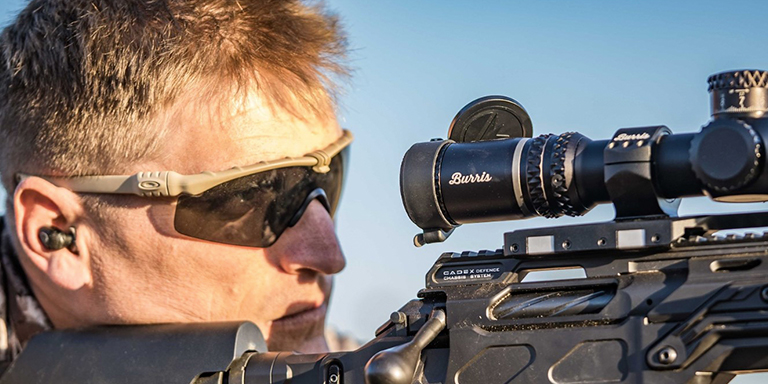
Visible light transmission is at the crux of sunglass lens technology. Expressed as a percentage, VLT is the amount of light that passes through sunglass lenses and reaches your eyes. This percentage is affected by the lenses' color, thickness, material and any added coatings, and different levels of light transmission are better suited for different environments and situations. Here are some levels of visible light transmission and the conditions in which they work best:
0-19% VLT: good for bright, sunny conditions
20-40% VLT: good for all-purpose use
40-79% VLT: good for overcast, low-light conditions
80-90% VLT: virtually clear lenses best for dim/nighttime conditions
Tactical Sunglasses Lens Colors (Tints)
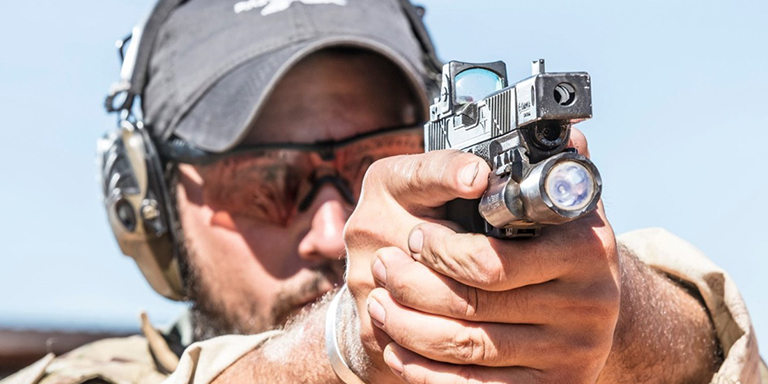
Most commonly called "tint," the color of the sunglasses's lenses play a huge role in visible light transmission, optical clarity and overall visual perception. Lens color also affects how well you see certain colors, especially in contrast to other colors. There are essentially two lens color categories: light-colored lenses and dark-colored lenses.
Light Lenses
Light-colored sunglass lenses consist of shades of yellow and orange (from amber to gold) and shades of red (most commonly rose and vermillion). These lenses work well in moderate and low-light conditions. They're ideal for situations in which you'll be looking at things against a light-colored background like snow or concrete.
Light-colored lenses help to enhance color contrasts and depth perception, which is why they're preferred by shooters. These lenses also improve the visibility of objects by making surroundings appear brighter than they really are (again, very advantageous when aiming down range).
Dark Lenses
Gray is the most common dark lens color, but you may also see some brown and green lenses out there. Darker lenses are great for everyday use, and they're well-suited to most outdoor activities. They help to reduce glare (especially if they're polarized), and they work well in reducing eye strain in moderate and bright conditions.
Keep in mind that gray and green lenses generally don't distort colors very much, but brown lenses may result in some color distortion. This distortion could become an issue as you're aiming down your sights at a target, or if you're trying to find your mark among dense foliage.
Tactical Sunglasses Lens Materials
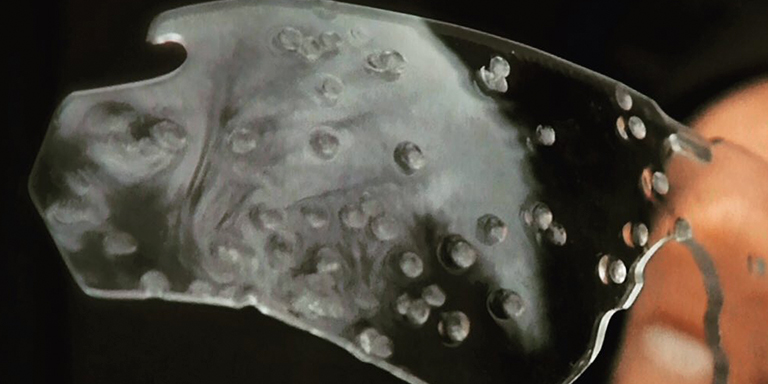
The lens materials of a pair of tactical shades are just as important as their color. Lens materials affect light transmission and color contrast, and when it comes to durability, materials can make or break your lenses in a very literal sense. Not all lens materials are created equally, and some are better or worse than others in a variety of aspects. Here are some of the most common sunglass lens materials and some properties of each.
Glass
They are called "glasses," after all, and glass is a foundational lens material. Glass lenses provide some of the best optical clarity available. They also offer superior scratch-resistance, which is vital for keeping your field of vision clear.
Keep in mind, though, that glass lenses are typically heavier than their alternatives. They also tend to be much more expensive. Like any glass surface (think phone screens and windshields), they're prone to shattering or even cracking in a sort of spider web effect, basically ruining the sunglasses.
Polyurethane
Do you wear contact lenses? If you do, yours are likely made from polyurethane. This synthetic plastic offers great impact resistance and excellent optical clarity. Like contact lenses, they're ultra-flexible and refreshingly lightweight.
What's their downside, then? In fact, it's the biggest downside that tends to make or break any purchase: they're expensive. If you shell out for them, though, there's no doubt that you'll be satisfied with the level of performance and durability polyurethane lenses offer.
Polycarbonate
Another synthetic material, polycarbonate is a thermoplastic polymer. Like polyurethane, polycarbonate lenses check the boxes for impact resistance and optical clarity, providing an excellent level of protection while maintaining perfect visuals.
On the upside, polycarbonate lenses are less expensive than their polyurethane counterparts. They're also lightweight and offer a comparable performance to other lens materials while being less bulky. There's always a downside, though, and the downside of polycarbonate is its relatively limited scratch resistance.
Tactical Sunglasses Lens Coatings
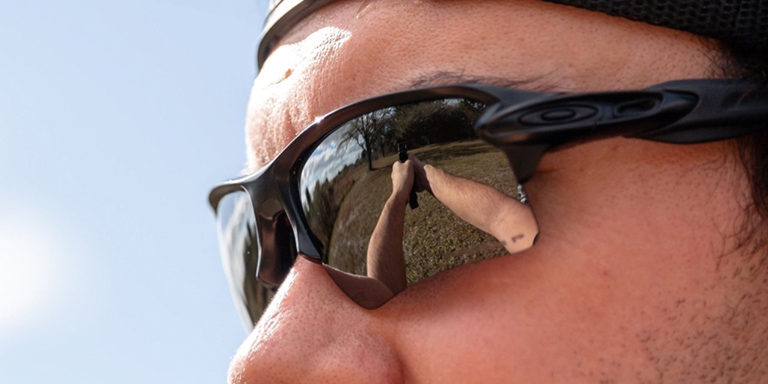
While the materials from which lenses are made certainly matter and provide some distinctive and important features on their own, the addition of a lens coating helps to add additional properties that may not be present in the lens materials themselves. There exist several lens coatings to account for multiple eyewear issues, and you may want to consider one on your next pair of tactical shades.
Hydrophobic Coatings
In the field or at the range, the last thing you need on your sunglass lenses is an obstruction. And on a rainy day, water can build up quickly on the surface of your lenses and compromise your field of vision. A hydrophobic coating helps to curtail this problem. Like a durable water-resistant coating on a pair of pants, a hydrophobic lens coating causes water to roll right off, keeping your sight line clear.
Anti-scratch Coatings
A badly placed scratch can effectively ruin a great pair of sunglass lenses and, as we mentioned, some lens materials are better at repelling scratches than others. Adding an anti-scratch coating (to, say, a scratch-prone pair of polycarbonate lenses) can help keep scrapes and gouges to a minimum, resulting in an uninhibited field of vision.
Anti-fog Coatings
Lens fog is perhaps the most dangerous eyewear hazard. Enough fog on your lenses can completely inhibit your entire field of view, rendering you completely blind during crucial moments. Whether it's a result of your own breath or changes in humidity levels, an anti-fog lens coating can help to keep lens fog at a minimum.
Mirrored Coating
Also called a flash coating, mirrored lens coatings are simple, reflective films applied to the front of sunglass lenses. These coatings work similarly to polarized lenses in a bit of a different way: the mirror coating itself reduces glare by reflecting light away from your eyes. Mirrored coatings are typically used on light-colored lenses, as the coating itself makes objects appear darker, and the lighter tint helps to compensate for this problem.
Tactical Sunglasses Lens Features
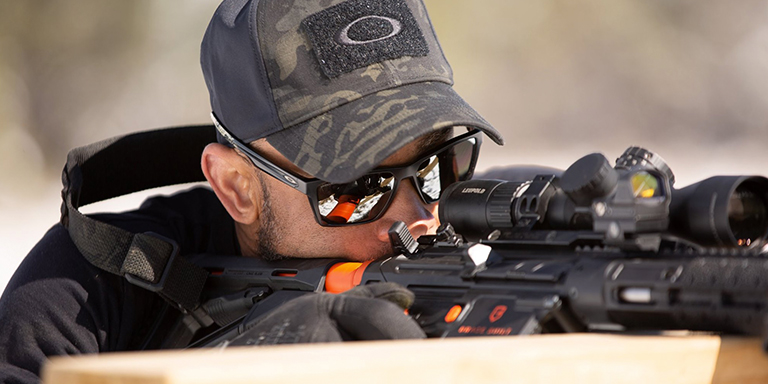
Tactical sunglass lens features are built-in technologies that you likely wouldn't even notice just by looking at your shades. Manufacturers work hard to ensure that these subtle yet vital nuances work hard to keep your vision sharp and your mind (and eyes) focused on the task at hand.
Polarization
Lens polarization is supremely important if you're near water or any other environment where reflected sunlight is an issue. Polarized lenses are designed to reduce glare, eliminating blinding reflected light that tends to find its way into your eyes at the worst, most critical moments.
Many consumers see polarized lenses as a kind of standard, expected feature nowadays, but be warned: they're not for everyone. Polarized lenses can cause blindspots when looking through dark, tinted windows. They also cause LCD screens to appear completely blacked out from certain angles, so if you work with those often, it may be best to opt for a non-polarized eyewear style.
UV Protection
Ultraviolet rays are harmful both to your skin and your eyes. Enough exposure to these harmful rays can cause long term health consequences. You can easily avoid future medical issues by investing in a pair of sunglasses with lenses that protect against UV light.
Be sure to look for a style that blocks 100% of UV rays (a manufacturer may also express this as "blocks out 400nm rays" — this is the same as "blocks 100% of UV rays"). Also worth noting is that there are three kinds of UV rays: UVA, UVB and UVC. If the style you're considering blocks all three, even better.
Photochromic Lenses
A cool, interesting technology, photochromic lenses automatically adjust to changing light intensities and conditions. When you step outside into blinding sunlight, the clear lenses quickly darken on their own to provide appropriate cover. When you go back inside to a more controlled environment, the darkened lenses dissipate, transitioning back to their clear, uninhibited form.
As fascinating (and almost science-fiction-inspired) as photochromic lenses sound, they're not without their caveats. The transition effect works much more slowly on cold days, potentially wasting valuable time while causing vision issues. Also, they don't work well at all with light that's already passed through a glass surface (i.e. they won't work in a vehicle because the sunlight has already traveled through your windshield by the time it reaches your lenses).
Interchangeable Lenses
It's nice to be able to swap your lenses out due to varying circumstances. For instance, if you find yourself in an environment that isn't conducive to polarized lenses, you can simply swap them out for non-polarized alternatives. Interchangeability also allows you to experiment with different lens colors. During the day, you can use a dark pair of lenses that filter out most visible light. As the sun sets, you can swap your dark lenses out for a lighter color that works best in moderate and low-light conditions.
The downsides of interchangeable lenses are pretty self-evident. Your backup lenses, while useful, are just another piece of gear to carry and keep track of. Lenses are small and easy to lose, too, and they're potentially expensive to replace. On top of that, the mechanism that allows for the lens replacement in the first place is a potential point of failure on the shades; if it breaks, the frames themselves become unusable.
Tactical Sunglasses Frame Materials
Frames are much more than a mere housing for your sunglasses' lenses. The materials from which frames are made play a huge role in establishing how durable the frames themselves are (and, as a result, how durable the sunglasses are overall). Sunglass frames also determine how your shades will fit and the level of comfort they offer. There are three primary materials from which tactical sunglass frames are made and, as with anything else, they each come with some pros and cons.
Metal Frames
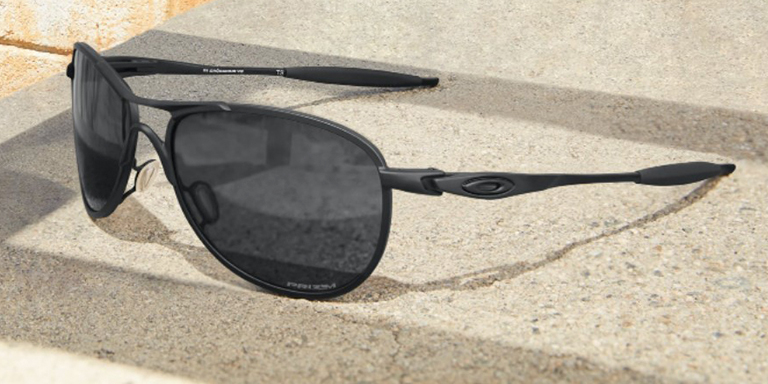
The best thing about metal frames is their pliability. Carefully bending either the bridge or the arms of the frames can offer a level of adjustment that makes the difference between a perfect fit and a pair of glasses that constantly falls off your face. Adjusting metal frames even slightly can also do wonders for how comfortable they feel on your head throughout the day.
Sunglasses with metal frames do tend to be more expensive, and they can rust without proper preventative maintenance and care. They're also potentially dangerous during high-impact activities — one sudden blow may result in an incredibly hazardous, jagged edge that will likely be too close to your eyes for comfort. Metal retains heat, too. If you leave metal-framed sunglasses in your car during the summer, they may end up too hot to wear for a while.
Nylon Frames
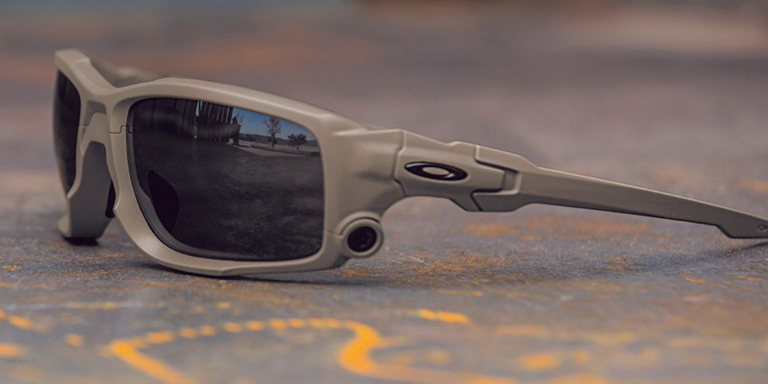
Nylon frames are popular among both consumers and manufacturers because they're inexpensive, lightweight and, surprisingly, they're more durable than metal frames, which are prone to rust and corrosion. Nylon frames do have one major drawback compared to metal frames though: they're not adjustable.
Acetate Frames
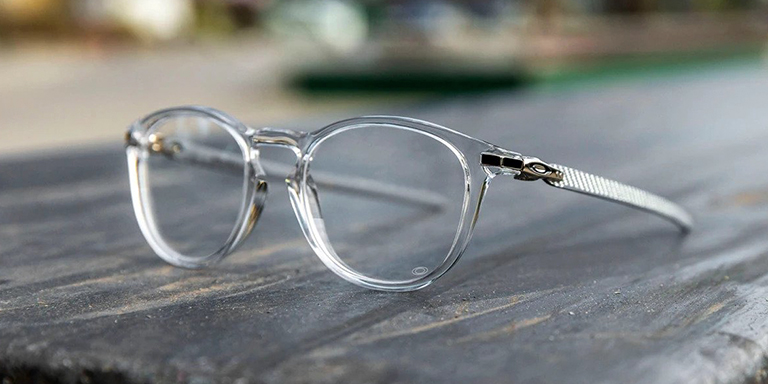
Acetate is a variation of plastic that's more popular on stylistic, fashion-oriented sunglasses than anything else. It's easy to dye acetate, resulting in essentially any colored frames imaginable. While acetate frames are less flexible and not intended for high-impact activities, they can still get the job done for a casual day at the shooting range.
Tactical Sunglasses Fit Tips

Lens materials, frame materials, features — none of these important aspects of tactical sunglasses really matter at all if they don't fit correctly. The following tips should help you find a pair of shades that fit so well, you'll hardly realize they're there.
The frames should fit snugly on your ears and nose, but not pinch or rub against them
The weight of the sunglasses should be evenly distributed between your ears and nose
The frames should also be light enough to avoid excess friction on your ears and nose
Your eyelashes should not make contact with the lenses
As mentioned, you can adjust metal frames by bending them carefully at the bridge and/or temples
Some styles feature rubber nose pieces that are adjustable by pinching them or spreading them out
As you can tell, there's more that goes into choosing a pair of tactical sunglasses than first meets the eye. To ensure perfect optical clarity and the right level of visible light transmission, you'll need to consider the color, material and features of your lenses. Comfort and fit lie solely in finding the right frames and materials. If you take your time and do your research, though, you'll find a pair of tactical sunglasses that will keep your eyes safe and protected for years to come.