

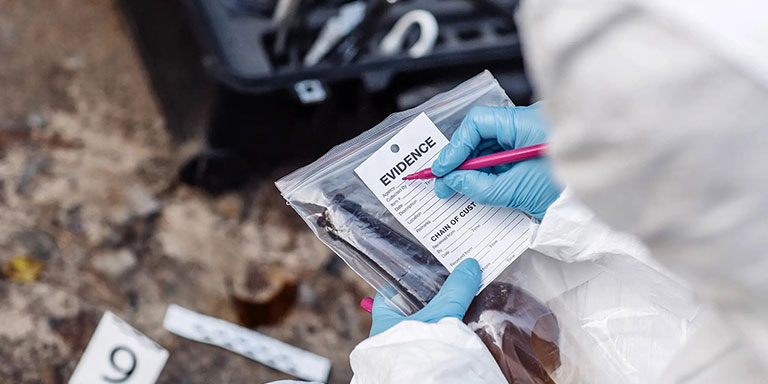
DNA is the most significant discovery in the field of forensic investigation in the last fifty years. Not since the discovery and implementation of latent fingerprints has there been a more reliable way to identify a perpetrator and tie them to a crime scene or a victim. At the same time, though, DNA is complex in its structure, and it takes a lot of training to understand its use and applications.
In this guide, we cover the ways in which law enforcement officers and investigators use DNA to solve crimes. We'll go over the collection of DNA from suspects and crime scenes, how DNA is used in courtrooms, and we'll even examine how DNA technology was used retrospectively to help solve a famous cold case.
The Basics
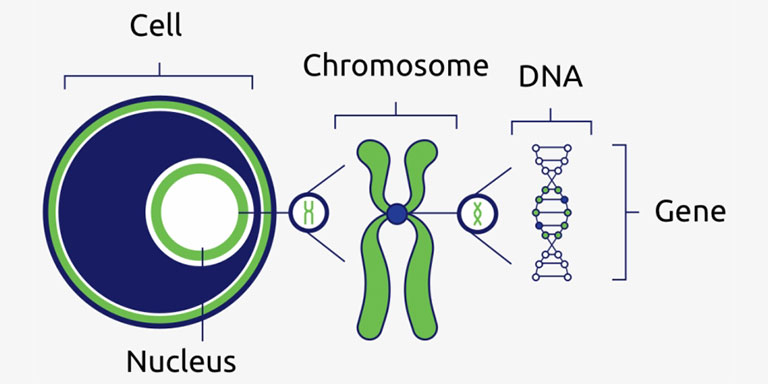
In order to understand how DNA is used in police work, it is first helpful to understand the basics of what DNA is and how it's identified. The topic of DNA is deep and difficult to understand, so we'll outline the very basics of it here.
There are twenty-three chromosomes in the inner core of each cell in the human body. Deoxyribonucleic acid (or DNA) is embedded in these chromosomes, and each DNA strand contains markers — points where short DNA sequences repeat again and again. Initially, there were only thirteen places where these repeated sequences could be counted, but that number has increased to twenty as technology has progressed. Each person has two copies of these repeated sequences called alleles. One allele comes from a person's father, and one comes from their mother. Because DNA is inherited, it is also used in identifying a parent in paternity proceedings.
Collecting Samples from People
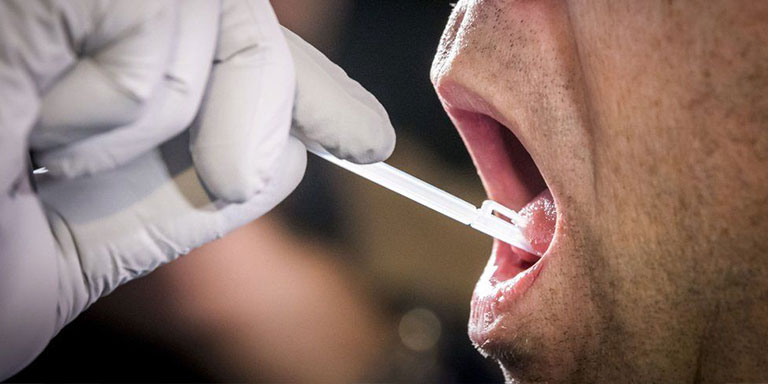
DNA is collected from people by swabbing the inside of their cheek with a cotton swab. The sample is then placed in a plastic tube and sealed to prevent contamination. The sample is finally sent to a laboratory for sequencing.
In all fifty states, police are authorized to take DNA samples from persons who have been convicted of a felony. Additionally, DNA samples may be collected from individuals arrested for (but not yet convicted of) a felony in twenty-eight states. Finally, in certain circumstances, police officers can apply for a court order compelling a person to submit to giving a DNA sample.
Not all DNA samples are necessarily collected by the police. As DNA technology has progressed, entire markets have cropped up to serve peoples' interest in learning about their heritage and ancestry. Companies such as Ancestory.com, 23andMe and others sell do-it-yourself collection kits that are processed by the companies and produce written results for the consumer.
DNA results from private companies cannot be used by law enforcement. These private companies look at many more than the twenty sequencing points to determine a person's ancestry. They can also quantify how closely related one person is to another. As a result, they do a much deeper scan of the human genome and gather much more information regarding kinship. Law enforcement DNA searches are only allowed to identify immediate relatives like parents, siblings or children. Private companies can identify relationships much more remote, such as second and third cousins.
Collecting DNA at a Crime Scene
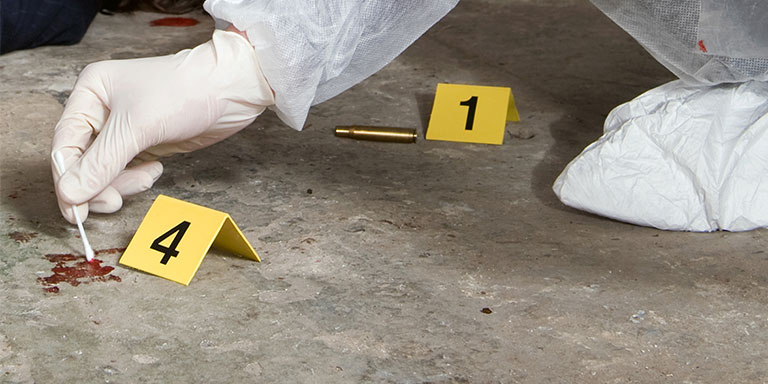
Most police departments have written policies on the processing of crime scenes and how potential DNA is to be collected. In addition, larger departments employ crime scene investigators knowledgeable in the methods of collecting DNA evidence. Even so, it's essential that all officers on the scene protect potential DNA evidence from contamination by preserving the crime scene.
DNA is found in bodily fluids such as blood, saliva and sexual secretions. DNA can also be recovered from skin cells, hair, sweat, mucus and even ear wax. Common sources of DNA evidence at a crime scene may include the following:
- The weapon used on the victim may contain blood, sweat or skin cells
- A toothpick, cigarette butt, bottle, cup or postage stamp may contain saliva
- A used condom may hold semen, vaginal secretions, blood or hair
- A mask or hat may contain sweat, hairs or dandruff
- Bed sheets may hold sweat, hair, blood or semen
The best DNA evidence is recovered from locations where a perpetrator can have no reasonable explanation for being. Conversely, DNA recovered outdoors in areas with public access can be problematic for investigators depending on the circumstances.
Items collected for DNA analysis should first be photographed. Many liquids (like blood, for example) are collected using DNA-free cotton-tipped swabs and are secured in special containers. If an item is smaller and movable (e.g. a bedsheet), then the entire item should be collected. Proper protective equipment should be worn to prevent cross-contamination. Items should be placed in paper bags and not plastic bags, as plastic retains moisture and can damage the DNA. Heat and direct sunlight can also degrade DNA. Wet items containing body fluids are allowed to dry at room temperature, and the DNA on them can be collected after the item dries.
As always, the chain of custody of any collected DNA must remain intact. Written on the outside of each paper bag should be:
- What the bag contains
- Where it was found
- Who collected the evidence
- Where it is being sent for DNA analysis
- The date, time and case number
Cross-contamination is always a potential issue regarding DNA. Something as simple as a cough or a sneeze could compromise the DNA on a surface. Elimination samples will also have to be collected. Similar to elimination prints in fingerprint analysis, elimination samples verify that the items being tested don't hold the DNA of an officer or first responder.
The Golden State Killer
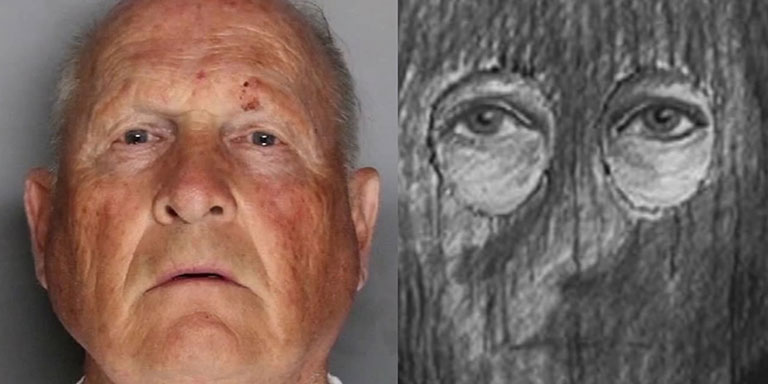
One of the most famous cases of DNA being used to identify a perpetrator was the case of the Golden State Killer, a murderer and rapist who terrorized numerous cities in California during the 1970s and 1980s. After his crimes, the Golden State Killer disappeared for thirty years. Multiple independent task forces from each of the affected cities worked to identify the criminal without success.
Throughout his criminal career, the Golden State Killer went by many different names. Starting as a burglar in the 1970s, he was called the Visalia Ransacker. He then moved north to Sacramento, committed over fifty sexual assaults in three years and was given the name The East Area Rapist. He then moved south to Santa Barbara, started killing people, and was described by the newspapers as The Night Stalker. After police identified similarities in the burglaries, sexual assaults and murders, they eventually determined that all the crimes were committed by the same person — a person who was finally dubbed The Golden State Killer.
The Golden State Killer went silent for five years from 1981 to 1986. After a single murder in 1986, the attacks stopped altogether. The year 1986 is significant: it's the year in which a murder case was solved using DNA for the very first time. Many believe the Golden State Killer may have stopped his crime spree because of the proliferation of DNA technology in courtrooms. As police would later learn, the killer worked for several years as a police officer. While the Golden State Killer was always careful to wear gloves and keep his face covered, he left DNA at many scenes in the form of bodily fluids.
In 2001, three samples of the Golden State Killer's DNA were sent to the FBI's DNA database. Called CODIS (the Combined DNA Index System), the system is used to store and match DNA nationwide. Despite investigators' best efforts, the CODIS system never returned a single match for the Golden State Killer. Investigators speculated that a distant relative of the killer probably provided DNA to one of the private ancestry sites, but those sites were off limits to law enforcement.
However, another site called GEDmatch.com had been set up to allow people to connect with relatives. This provided the turning point in this case, as the site allowed the uploading of raw data from private testing companies to search for matches against a person's DNA. (Note: GEDmatch will now only enable law enforcement searches of persons who have agreed to allow them.)
Investigators searched for a match to their killer using GEDmatch. The results were promising: they were able to identify several third cousins. Working backwards and using multiple databases of both the living and the deceased, investigators built a family tree of more than a thousand people going back many years until they traced the cousins back to their two original common ancestors. They were then able to pare down the search based on the criteria that the person was male, white, within certain age perimeters and lived in California during the years of the crimes. This narrowed the search down to just five possible matches.
Police investigated all five suspects. During this time, they surreptitiously collected DNA samples from a car door handle and a trash can of one of the five suspects. The DNA was a match to the DNA at the thirty-year-old crime scenes. Joseph DeAngelo was subsequently arrested and confessed to the rapes and murders at the age of 74. He received multiple life sentences.
Defense Arguments
DNA evidence is widely used and upheld by courts, including the United States Supreme Court. 99.9% of each person's DNA is exactly like every other person's DNA. It's that 0.1% that makes us all different. Most defense arguments today do not attack the credibility or reliability of DNA, but rather the probable cause for an arrest or the conduct of the police. The only chance of refuting DNA evidence is to have it entirely excluded by asserting that it should have never been collected in the first place. DNA is some of the most compelling evidence available to authorities.
Identifying the Innocent
No discussion of DNA evidence would be complete without acknowledging that the use of DNA testing has led to the release of a number of convicted felons whose DNA testing proved them innocent. Eyewitness testimony continues to be the number one reason why people are wrongfully convicted.
In 1984, a man was convicted of the rape and murder of a juvenile. He was identified by no fewer than five eyewitnesses who saw him with the juvenile at the time of their disappearance. He was convicted and sentenced to death. Eight years later, DNA evidence proved that all five eyewitnesses were wrong. DNA testing of the victim's underwear and clothing showed that another man was the real perpetrator. The second man, an already convicted sex offender, plead guilty to the rape and murder of the juvenile.
DNA is a tool that continues to evolve through scientific discoveries. It can convict the guilty and, in some cases, free the falsely accused. DNA evidence is powerful, and law enforcement officers should collect it and handle it with proper care.