

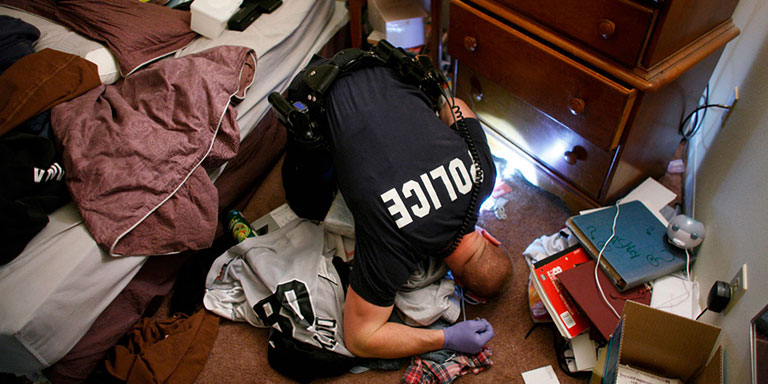
Throughout a police officer's career, search and seizure questions are likely to come up while conducting investigations. Search warrants are an integral part of this process. Officers should be familiar with the rules regarding search and seizure. Additionally, they should have a basic understanding of how to apply for, obtain and execute a search warrant.
Legal basis
The idea that "every man's house is his castle" was a concept that came from England, and was the basis of the Fourth Amendment to the Constitution, which was ratified in 1791. Few police procedures are so directly addressed in the Constitution as the provisions of search and seizure, as outlined in the Fourth Amendment:
The right of the people to be secure in their persons, houses, papers, and effects, against unreasonable searches and seizures, shall not be violated, and no Warrants shall issue, but upon probable cause, supported by Oath or affirmation, and particularly describing the place to be searched, and the persons or things to be seized.
The Investigation and Affidavit
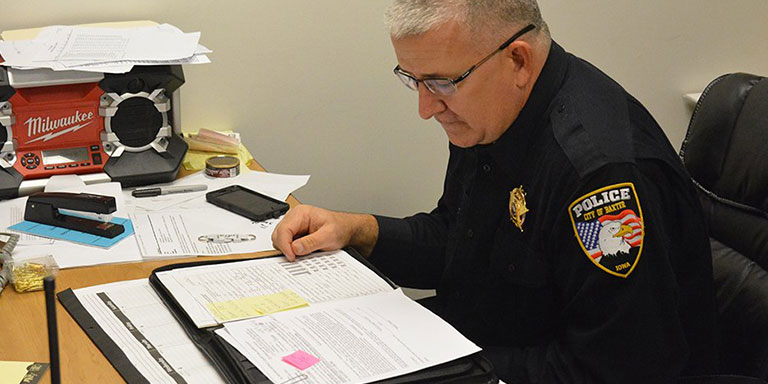
As stated in the Constitution, a police officer who is applying for a search warrant must articulate sufficient facts to demonstrate probable cause. A warrant is based on the belief that a crime was or is being committed, and the search area contains the fruits of illegal activity or evidence of a crime.
The investigating officer must also submit an affidavit, or a summary of their investigation. This document, presented to a judge, must convince the court that probable cause exists for the warrant's issuance. It should document all the evidence the officer gathered, leading to the conclusion that probable cause exists for the search. As the affidavit's affiant, the officer will be sworn in to testify that all the facts in the affidavit are true to the best of their knowledge. The judge will read the affidavit, and if, given their legal expertise, they agree that probable cause exists, they will authorize the search warrant based on the affidavit.
The Search Warrant
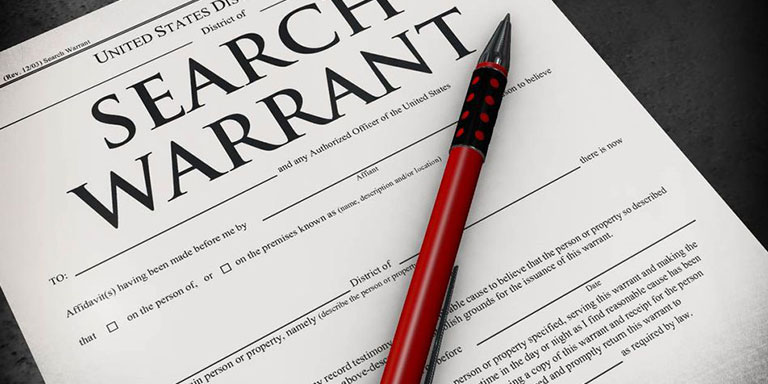
The search warrant is an entirely separate form from the affidavit. It is generally a much shorter document, but just as important. As specified in the Fourth Amendment, the search must particularly describe the place to be searched and the persons or things to be seized. The premises should be described in sufficient detail such that a person completely unfamiliar with the area could identify that premises from all others. A description might read:
123 Main Street, Anytown NY, is a red single-story ranch-style framed dwelling. It has a green entry door facing Main Street. The numbers 123 are black and are affixed to the house just to the left of the door. 123 Main Street is the third house north of the High Street intersection and is on the east side of the street.
The warrant also must list the types of property that may be searched for and seized. These may include specific items of evidence in a crime, contraband (such as drugs), business records (either written or electronic) and the proceeds of illegal activities. The list of items included depends on the type of crime the officer is investigating. The search warrant also lists the targets of the investigation.
The judge signs both the affidavit and the search warrant. A copy of the search warrant is given to the occupants of the premises being searched at the time of the execution of the warrant. If no one is home, it should be left in a conspicuous location such as the kitchen table. Some jurisdictions also require a copy to be sent to the registered occupant by certified mail.
The No-Knock Provision
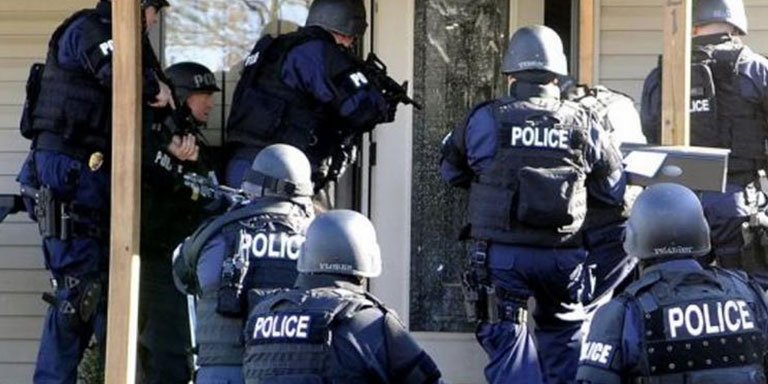
There is currently much discussion on the use of the "no-knock" provision of some search warrants. This provision allows officers to force entry into a premise without knocking or announcing their presence.
The no-knock search warrant is a byproduct of the decades-old war on drugs. Dealers could (and did) get rid of their drugs quickly by flushing them down the toilet. Drug dealers also had guns to protect their business (and those without guns were robbed and were soon out of business). For these reasons, police officers needed the element of surprise when raiding drug dens.
On the search warrant, a box usually has to be checked and separately authorized by the issuing judge for a no-knock warrant. The biggest difference comes in the affidavit, though: the investigating officer must make a compelling case for needing no-knock authorization.
The two reasons most frequently used in a no-knock warrant affidavit are the likelihood of the destruction of evidence and the potential of police being injured by an armed resident (like in the examples above). The officer should have specific, documented information that one or both of these events are likely to occur.
Pre-Raid Surveillance
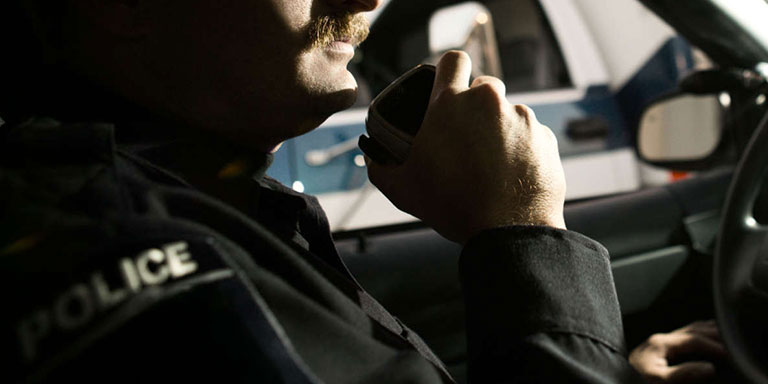
The necessity of surveillance depends on the crime being investigated. If officers are investigating an ongoing criminal enterprise, surveillance is required. Often, drugs are only present at a location during the times when they're being sold. Pre-raid surveillance is crucial in determining the best time to execute the warrant. In other cases, pre-raid surveillance may not be necessary. For example, there is usually no need for this kind of surveillance when a search warrant is required to search a crime scene the police already control, or when searching the residence of a person already in custody.
Gathering Intelligence and Creating a Plan
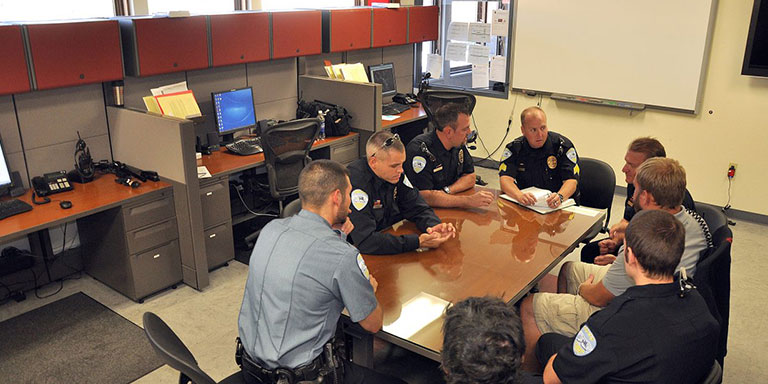
Knowing the layout of the target location is a big advantage. Most newer residences have blueprints on file with various local or county government agencies. Larger buildings, such as apartment complexes or high-rise buildings, have plans on file with the fire department in most jurisdictions.
It is also essential to identify whether or not any small children reside at the target location, as officers must consider their safety as part of the entry plan. Informants can provide valuable intelligence regarding weapons on the premises, increased fortifications at entry points and even potential boobytraps meant to injure officers.
While at a drug search warrant location, a quick sketch of the floor plan may be helpful later. It can be used to show where persons were initially located in relation to the location of drugs. It can also be used in future briefings, as many of the same locations are raided repeatedly.
If a tactical entry team is used, the team leader should develop the entry plan in consultation with the investigating officer. An entry plan must include the number of personnel necessary given the target location's size or complexity, how the team will get to the target location and the best point of entry.
The Pre-Raid Briefing
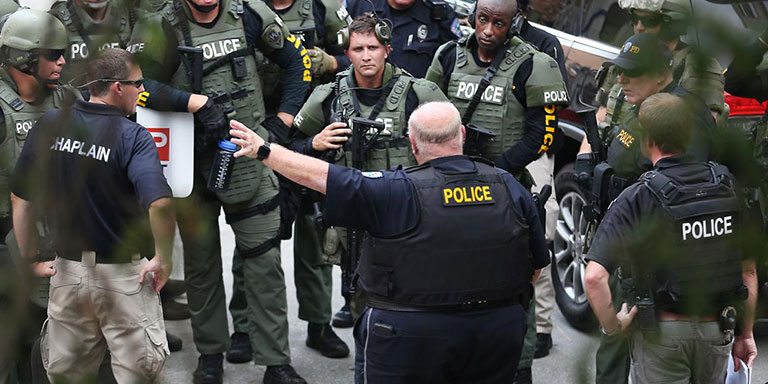
Every officer participating in the execution of a search warrant must attend the pre-raid briefing. It's conducted either by the team leader if an entry team is used or by the investigating officer if uniformed personnel are used. A superior officer often gives out specific assignments to those participating in the raid.
The briefing should cover the target location and the named persons in the search warrant. Photographs of these persons should be available so each raid team member can identify the targets on sight. The plan of entry is covered in the briefing, including what door will be breached and the location's floor-plan. Officers should pay particular attention to other exits and bathrooms used for the destruction of evidence.
The final part of the briefing is for the tactical commander to give out specific assignments. After an officer is assigned a duty, they have to repeat back their assignments.
For example, "Officer Smith, you are assigned to go around to the back of the house and cover the back door. Anyone attempting to flee upon the team's entry will be taken into custody." After all assignments are given out, the commander will call on officer Smith, who will state,
"My assignment is to cover the back of the residence and to take anyone fleeing into custody." Besides covering the back of the house, there are officers assigned to do the following:
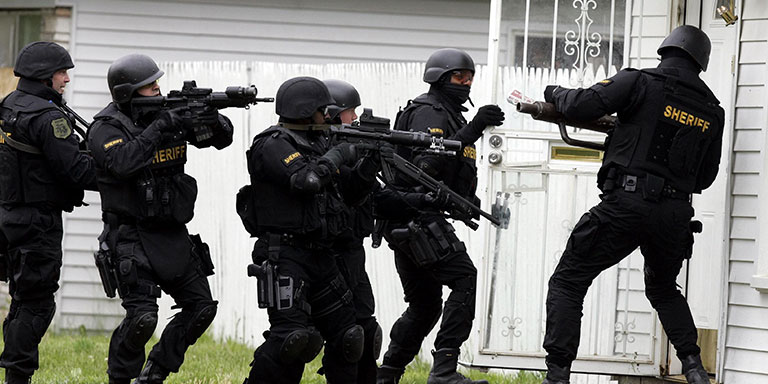
One officer will knock loudly and announce, "Police search warrant!"
If no one answers the door, another officer is assigned as the breacher to force the door open with the aid of a handheld battering ram or pry tool
Specific officers are given the task of entering and securing the persons inside the residence. The first officer entering may use a ballistic shield to provide protection from gunfire
One or more officers are tasked to go directly to the bathroom to prevent the destruction of evidence
Once the location is secure, one officer secures all persons in a central room while an orderly search is conducted
One officer is designated as the evidence officer. This officer is responsible for photographing, collecting and bagging or tagging all evidence. This officer completes a list of items seized and a copy is given to the residents.
Each room should be searched twice and separately by two different officers.
Warrant Execution
It is essential that the team only search places where the category of items in the search warrant could be hidden. If a warrant directs that officers should search for a particular rifle, officers can only look in places where the rifle could fit.
In narcotics search warrants, dealers can hide drugs anywhere, and drug dealers get very creative with their hiding spots. For instance, a dealer may hide drugs in a bag, tied to a string, inside an oil tank. Another dealer may hide their drugs in the freezer inside of a frozen turkey. As an alternative to a hand search, officers can bring in a drug-sniffing K9 (read our police officer's guide to K9 searches here). If the dog fails to alert, then a hand search can follow.
A search should be an orderly event where all areas are thoroughly searched while causing minimal damage or disruption to the target residence. While not all items and furnishings may necessarily be left in their same exact locations, it also shouldn't look like the aftermath of a tornado by the time police are finished.
Clearing the Scene
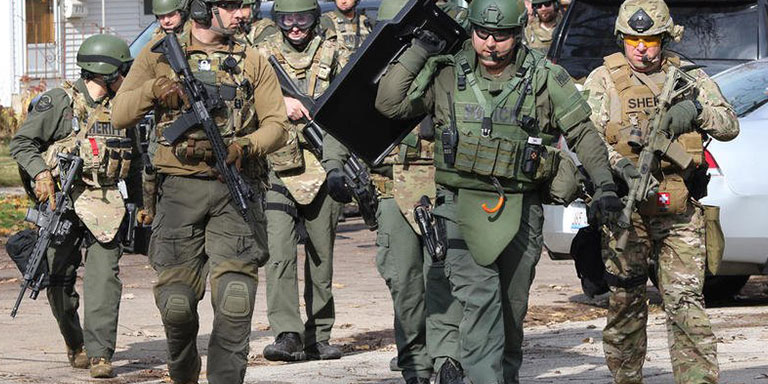
A search warrant is deemed to have ended when the last officer exits the premises. After the search, collection of evidence and any arrests, it’s time to clear the scene. If no adults remain at the residence, the premises must be re-secured. Before leaving, be sure all police equipment is removed. Certain items are initially used, then set down and potentially left behind. The most common forgotten items are breaching tools and shields.
The execution of a search warrant is one of the most dangerous assignments a police officer will face. An officer can never be sure what awaits them on the other side of that door. Prior planning, accurate intelligence and a well-trained team can mitigate some of the risks, but the danger is always there. Stay safe.