

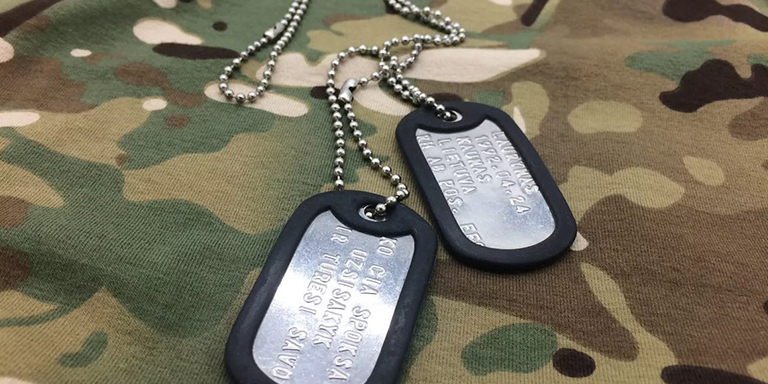
Identification tags have been used in combat for hundreds of years, and they have a rich history of use throughout the battles and wars of the United States. Soldiers in early American conflicts created makeshift ID tags from whatever materials they could find and, over the years, the military standardized them into the ubiquitous pair of stainless steel rectangles we know today.
In this guide, we'll cover the small (but important) differences between the official dog tags of each branch of the U.S. military. We'll also take a look at the history of identification tags, and cover some non-military uses for modern dog tags.
At TacticalGear.com, we offer dog tags in multiple styles, from classic stainless steel, to Special Forces black, to red medical tags. We also offer customizable, personalized dog tags made with the same machines used by the United States Army to ensure authenticity and strict adherence to military standards.
U.S. Military Dog Tags by Branch
Much like uniforms and footwear, every branch of the United States military wears dog tags, but, much like uniforms and footwear, the tags contain slight differences from branch to branch. The dog tags themselves are almost always made from stainless steel, and they're usually worn on a ball chain, but the identifying information they bear depends on each branch's individual regulations.
Army Dog Tags
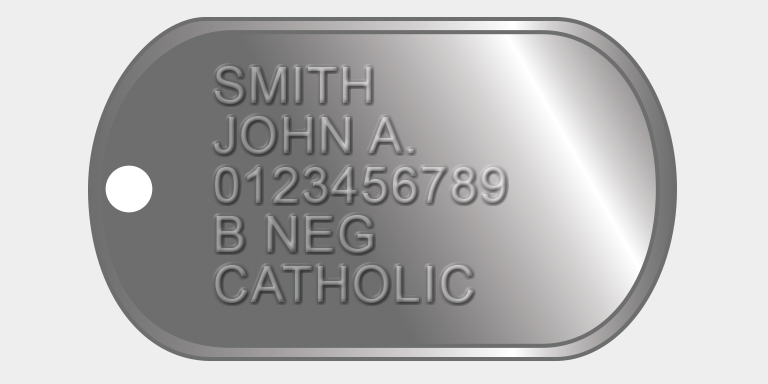
Soldiers' dog tags contain important identifiers, including each soldier's first name, last name and middle initial. Army dog tags used to feature soldiers' Social Security numbers, but the Army started issuing tags with Department of Defense identification numbers instead in November of 2015. The tags also include the wearer's blood type and religious affiliation. The information is laid out as follows, line by line:
- Last name
- First name, middle initial
- DOD ID number
- Blood type
- Religious affiliation
Emergency Medical Dog Tags
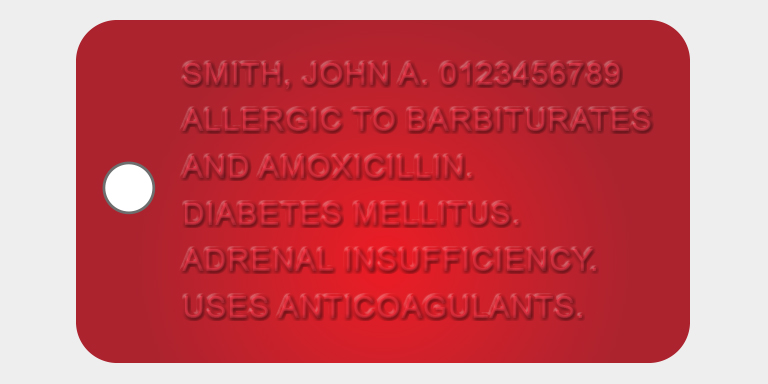
Emergency medical dog tags are worn by service members who have medical diagnoses that may affect them in the course of their duties. These red, aluminum tags contain important information that can be relayed to medical professionals in case the wearer becomes unresponsive. The information found on them goes as follows, line by line:
- Last name, first name, middle initial, DOD ID number
- Allergy information
- Medical conditions (and other potential complications)
- Prescription medication information
Note: Due to the varying nature of the ailments of each particular servicemember, there is a bit of leeway afforded in how the information can be displayed on the tags.
Marine Corps Dog Tags

Marine Corps dog tags mostly feature the same information as Army dog tags. However, the last name, first name and middle initial are separated onto two lines, and the blood type is featured on the same line as the first name and middle initial. Marine Corps dog tags include the abbreviated branch name on them (USMC), with each Marine's gas mask size included on the same line (S — small, M — medium, L — large). Religious affiliation goes on the last line. The identifying information on each tag is laid out like this:
- Last name
- First name, middle initial, blood type
- DOD ID number
- "USMC," gas mask size (S, M, or L)
- Religious affiliation
Navy Dog Tags
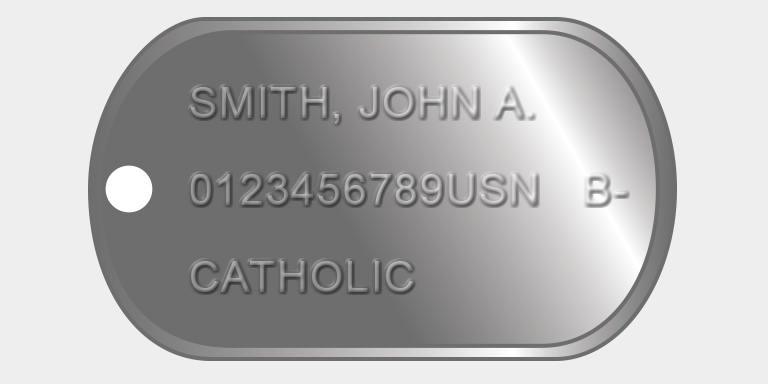
The U.S. Navy's dog tags are the simplest and most straightforward of any branch. Sailor's tags include their last name, first name and middle initial, all on one line. The next line contains the wearer's DOD identification number followed immediately by the branch abbreviation: USN (with no space). On the same line is the sailor's blood type, usually with plus or minus signs to indicate their Rh factor (instead of writing out "POS" or "NEG"). Religious affiliation goes on the final line. Here's the information line by line:
- Last name, first name, middle initial
- DOD ID number followed by "USN" (no space), blood type
- Religious affiliation
Air Force Dog Tags
In 2019, the U.S. Air Force began taking actions to change their uniform regulations to match the Army's OCP uniform adoption. This included changing their uniform clothing to the occupational camouflage pattern (from the digital tiger stripe pattern) and wearing coyote brown boots (instead of sage green).
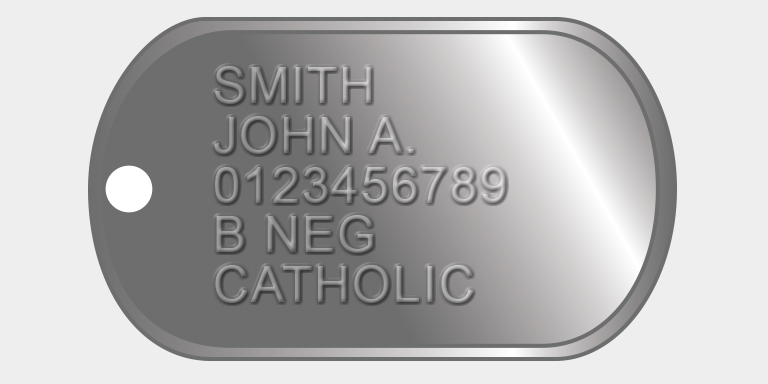
Air Force dog tags were affected by the changes as well. The biggest change was the removal of the branch's identifying initials (AF) from the dog tags. Now, airmen's ID tags follow the exact same template as the Army:
- Last name
- First name, middle initial
- DOD ID number
- Blood type
- Religious affiliation
Coast Guard Dog Tags
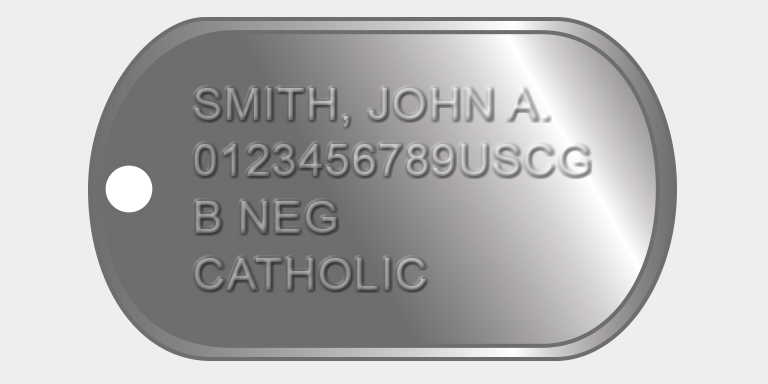
The Coast Guard's dog tags are very similar to that of the Navy: last name, first name and middle initial on the first line, followed by a DOD ID number and branch abbreviation (USCG, no space). The blood type, however, is placed on the third line. Religious affiliation still goes last. Line by line, the information looks like this:
- Last name, first name, middle initial
- DOD ID number followed by "USCG" (no space)
- Blood type
- Religious affiliation
Special Forces Dog Tags
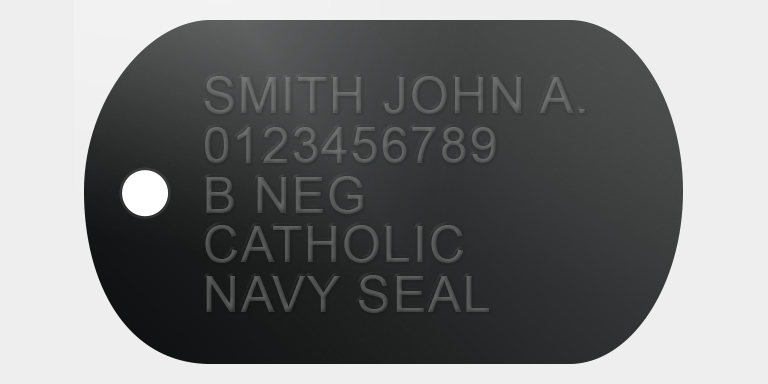
Special forces dog tags were mandated by the military in January of 1967. Instead of the traditional silver colorway, these ID tags are black to provide concealment during night operations. Black special forces dog tags are used by elite combat groups like the Navy SEALs, Delta Force, the Green Berets and the Army Rangers. There's no official designation as to what goes on the tags, but based on the standards of other ID tags, special forces dog tags may look something like this:
- Last name, first name, middle initial
- DOD ID number
- Blood type
- Religious affiliation
- Unit
History of Dog Tags
Though we may think of them as a relatively new idea, the history of military identification tags goes back very far — all the way to the 2nd century, in fact (and possibly even earlier). Battles are vicious and chaotic and, especially in a pre-DNA era, soldiers were worried that no one would be able to identify them in case they fell on the battlefield. Military identification markers have changed quite a bit over the years, but the idea behind them has been the same for centuries: to identify oneself in the event that they make the ultimate sacrifice.
Early Use
As historical literature goes, military IDs started with the Spartans (which is unsurprising, given their well-known warrior culture). Polyaenus, a second-century author, mentioned in his writings that Sparta's hoplites would sometimes go into battle with sticks tied around their left wrists. These sticks were carved with soldiers' names and other identifying information in case they were killed in battle.
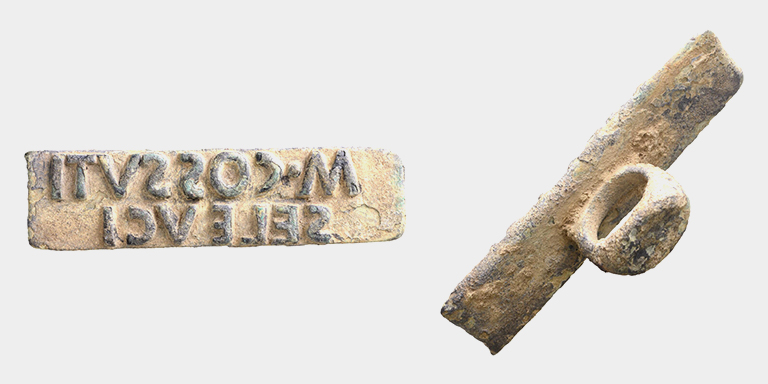
Roman soldiers used a type of dog tag as well. They were called signacula (singular: signaculum), and they were a bit more sophisticated than those of the Spartans. Made from lead as opposed to simple wooden sticks, soldiers carried them into battle in a leather pouch. The tradition of military ID tags would continue over the years, making their mark during the conflicts of the early United States.
Civil War
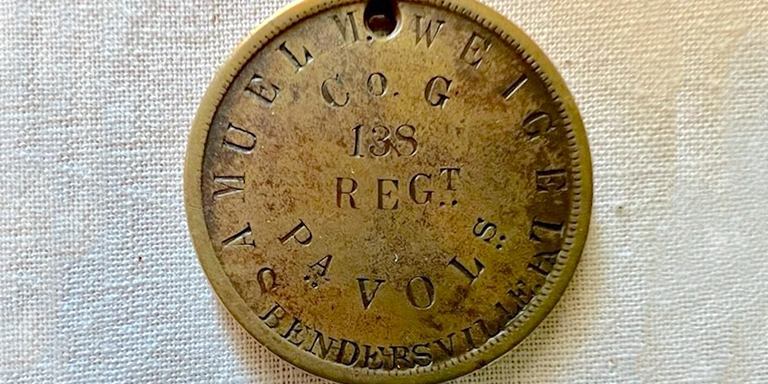
By the time the Civil War broke out in April of 1861, there was still no official system for battlefield identification among the American armed forces. Faced with the same fears as the Spartan and Roman soldiers before them, Union troops got creative with their identification methods. Some soldiers wrote their names and home addresses on scraps of paper and pinned them to the backs of their coats. Others put their ID on their knapsacks. Some resorted to scratching their names into old coins, bits of round lead or copper, and even the lead backings of their belt buckles. Still others took a queue from the Spartans, carving their names into chunks of wood they'd wear on strings around their necks.
Manufacturers were quick to take notice of these makeshift solutions and began to advertise personalized pins engraved with soldiers' names, units and branches of service. A New Yorker named John Kennedy even offered to make thousands of tags for the War Department, but they declined his offer.
Troops continued to make or purchase their own dog tags throughout the war. Despite soldiers' best efforts, historians maintain that, by the end of the conflict, as many as 40% of the Union Army's dead remain unidentified. It was becoming clear to the nation (and its military, in particular) that their battlefield identification problem was not going away.
World War I
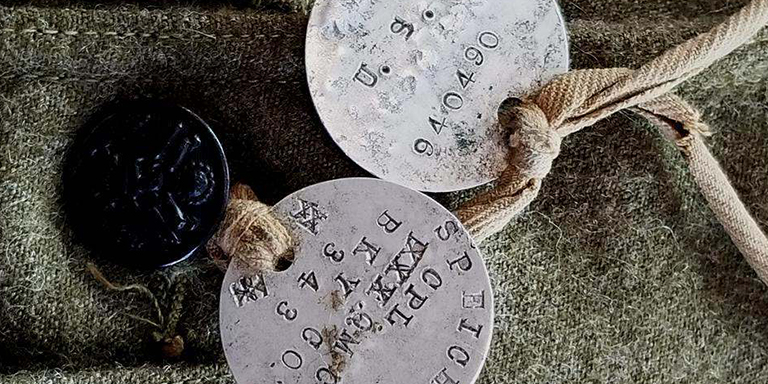
On the heels of the Civil War and the Spanish-American War, Charles C. Pierce — an Army chaplain in charge of the Army's morgue — recommended in 1899 that the entire Army should have some kind of lightweight, portable documentation they could carry into battle. Later, on December 20th, 1906, the U.S. Army authorized War Department General Order No. 204, which stated that each soldier would carry one coin-shaped, aluminum tag that featured the corps, company, rank, regiment and/or name of the wearer.
Just under a decade later on July 6th, 1916, the War Department amended the order, requiring two ID tags instead of just one. One aluminum tag was to remain with a deceased soldier's body, and the other was to be taken by the individual in charge of burying their body to ensure no instances of mistaken identity. It was at this point that the modern concept of military dog tags began taking shape.
World War II and Beyond
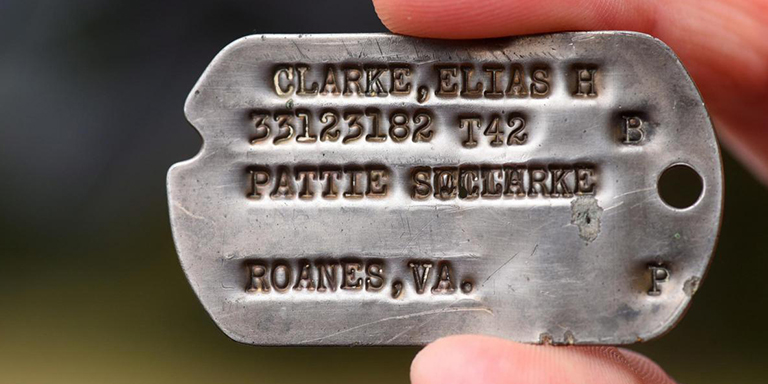
At the time of the Second World War, U.S. military dog tags began being produced with a notch on one of their shorter edges. A macabre rumor circulated among troops that this notch existed so the tag could be wedged into the teeth of a fallen soldier. In reality, however, the notch was simply a result of the tags' manufacturing process.
World War II dog tags were stamped with a machine called the Model 70 imprinter. The device was shaped like a handgun, and one easy pull of its trigger would stamp a soldier's identifying information onto the metal tags. The infamous notch in the WWII-era dog tags simply existed so the tags could be lined up with the stamping mechanism of the Model 70 more easily. The notch disappeared in the 1970s as new manufacturing machinery was introduced, leaving older dog tags from the Second World War with a very unique and distinct look.
By 1969 and the height of the Vietnam War, U.S. military dog tags were being issued with each service member's Social Security number. The inclusion of the SSN was a good idea in the sense that fallen troops could be easily identified by record keepers. However, service members became easy targets for bad actors who would commandeer their dog tags for the purpose of stealing their identities by way of their SSNs. In response to these incidents, the military did away with Social Security numbers on dog tags in 2015, opting instead to include Department of Defense identification numbers.
Possible Origins of the Term "Dog Tags"
As you can probably tell, dog tags have a long, storied history throughout the battles and conflicts of the past. The question naturally follows: how did they get their name? After all, no official U.S. military documentation has ever explicitly called them "dog tags." As far as the military is concerned, they're called "identification tags."
One speculation on the origin of the term says that American World War II draftees referred to their ID tags as "dog tags" because they were treated "like dogs" upon entering the service. Another explanation is more simple: military ID tags look very similar to what dogs wear on their collars, so that's what people started calling them. The most likely explanation, though, comes from a rivalry between a high-profile businessman and a sitting U.S. president.
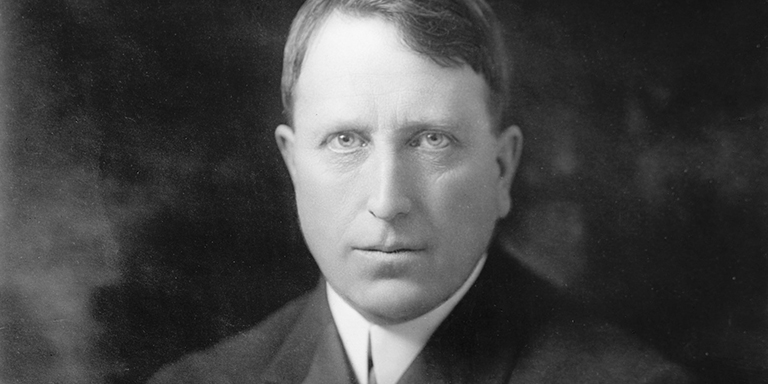
Common sentiment maintains that the name "dog tag" was at least popularized (if not directly coined) by William Randolf Hearst, a newspaper tycoon who owned The San Francisco Examiner and the New York Journal. After supporting Democratic candidate Franklin D. Roosevelt for president in 1932, Hearst's politics quickly shifted to the right. He became critical of big government and, in particular, FDR's New Deal.
Hearst knew that the government was manufacturing ID tags for soldiers. To drum up support for his newfound anti-government agenda, he began referring to the ID badges as "dog tags" to disparage Roosevelt's administration (and big government in general), implying that the federal government treats its service members like dogs. The name may or may not have been used intermittently by the public before, but when Hearst started using it, it was there to stay.
Modern Dog Tags
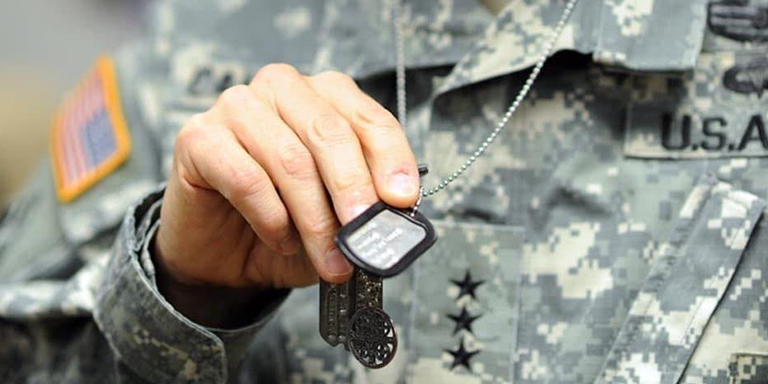
Present-day dog tags are usually made from stainless steel. The alloy often contains chromium and nickel, as these metals resist corrosion and hold up well over the duration of a service member's career. Both tags may be worn together on a beaded chain. In some instances, though, the wearer might keep one around their neck and one tied to their boot laces. For covert operations, rubber silencers are often added to the edges of the tags (similar to how a phone case slides over a cell phone) to prevent them from clanking together noisily.
Non-military Uses for Dog Tags
Dog tags have become a bit of a cultural phenomenon outside of the military. Many civilians wear their own emergency medical dog tags to provide vital medical information to professionals in case they're unresponsive. Civilian medical dog tags may also contain an individual's emergency contact information.
Dog tags have also made their way into the fashion industry. They're a part of what's called the "military chic" look — the adoption of military-style clothing by civilians. Military chic apparel and accessories include camouflage clothing, combat boots, flight suits, military insignia and even dog tags. Others may wear dog tags with religious symbols and designs. They can be manufactured with virtually any color, imagery or customizable text customers desire.
Today, dog tags are used in the U.S. military both out of respect for their tradition and for quick identification purposes. A service member's dog tags usually become a tangible, sentimental token of the time they spent fighting for their country. The history of military identification tags in the United States is well-chronicled, and dog tags continue to be issued due to their prominent place in the heritage of military culture.