

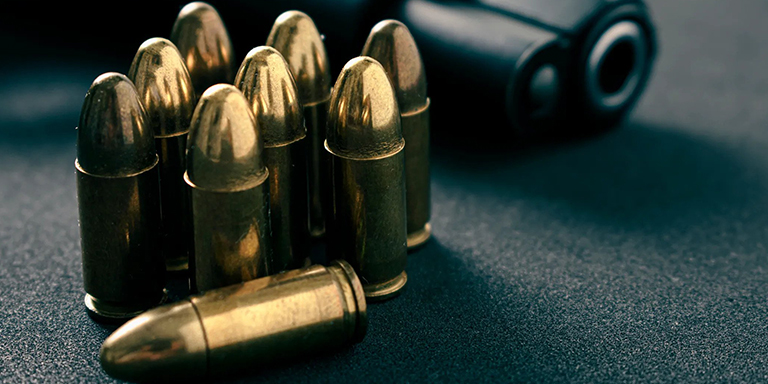
If you've been around the shooting world long enough, you've probably heard terms like grain, weight and caliber. Some of these terms are easily defined. For instance, caliber is the projectile's diameter at its widest point — a 9mm bullet measures 9mm across at its base. A .223 and a 5.56mm bullet are the same caliber, the former measured in inches and the latter in its metric conversion to millimeters. Within each caliber, there are variations in weight, typically measured in grains. But what is a bullet's weight, and why does it matter?
That's exactly what we set out to cover in this guide. We'll go over important aspects of ammunition, including how bullet weight affects accuracy and recoil, in order to help you find the perfect ammo for whatever you're shooting. For more info on ammo, be sure to read up on ammo 101.
Where Does the Term "Grain" Come From?

In the old days before precision scales, merchants measured weights with a balance. A certain number of items would be placed on one side of the balance as weights were added to the other side. One common measure of weight was grain — as in wheat, corn or barley. The problem was that it was an imprecise measurement because not all grains weighed the same every season. Wheat, for example, might weigh less during a dry season than in a wet season. Exact measurements were sometimes difficult to achieve.
Today, however, we have settled on a consistent measurement: a "grain" is equal to 0.0648 grams. So, for example, a 115 grain 9mm bullet weighs 7.45 grams (115 x 0.0648 = 7.45). Furthermore, if the manufacturer of that 115 grain 9mm bullet claims it has a velocity of 1,200 feet per second, then every one of their bullets in that caliber and weight will exit the muzzle of the gun at 1,200 feet per second. This standardization is important in order to know exactly what to expect from a bullet's performance.
Of course, this begs the question: rather than doing all this math, why don't we just use grams? After all, hasn't most of the world switched to metric already anyway? Yes, they have, but we are gun people. We don't change easily without reason, and because “the rest of the world does it" is not usually a good reason in the gun world. So we still measure bullets in grains. But what does it all mean? Why should we care about the grain of a bullet?
Caliber vs. Grain: An Inverse Relationship
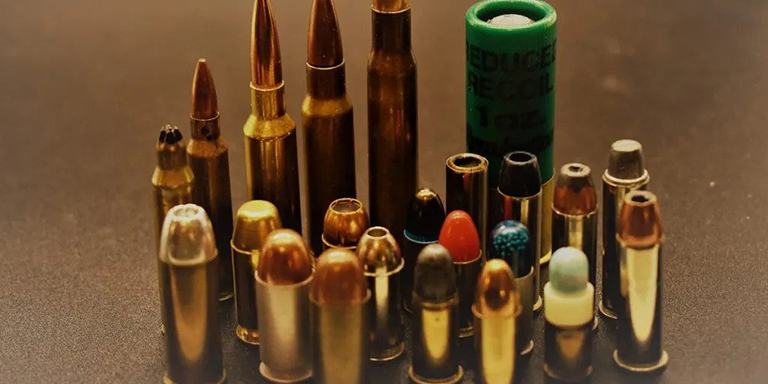
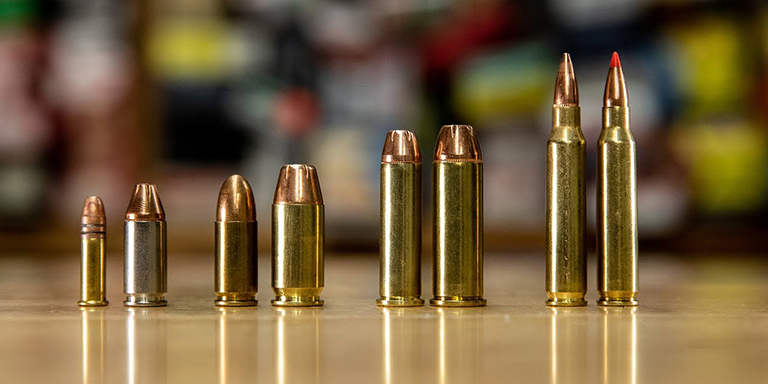
You might notice that the grain measurement typically goes down as the caliber increases. For example, take the smaller 147 grain 9mm vs. the larger 55 grain .223. The 9mm is typically a pistol round, whereas the .223 is a rifle round. Why would a slower pistol round designed for shorter distances be heavier than a faster rifle round designed for longer-range shooting?
The main reason is the amount of power a bullet has at its point of impact on the target. When shooting at closer range targets, you need the power factor to reach its maximum level sooner because the bullet travels less distance before striking the target. However, at a longer range, you have the luxury of reaching the maximum power factor later in the bullet's flight path because the target is farther away. Therefore, a bullet that reaches its maximum power factor too early becomes less effective at longer range because it begins to lose the power factor prematurely.
Bullets with similar diameters can often be far apart in terms of grains. A .22LR round, for instance, is a mere .003 inches narrower than a .223, yet the two bullets are completely different in many regards, including their shape and grain. And they perform differently when fired, too, with the .22LR maintaining a much shorter range than the larger .223.
Recoil
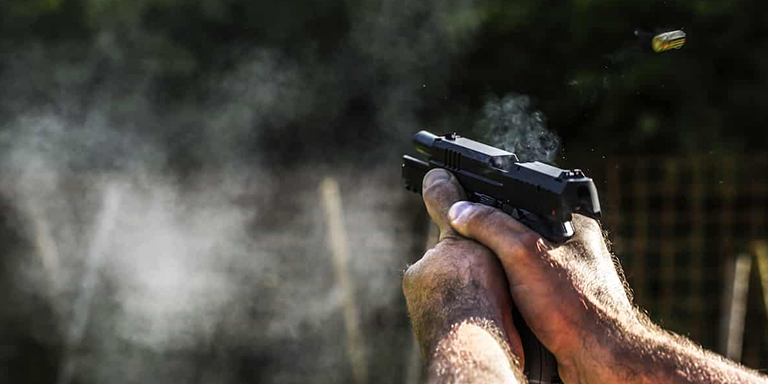
Before we get too far into ballistic performance, let's talk about how much effect bullet weight has on the shooter via recoil. Every gun recoils. The question is: how much recoil? While many factors affect recoil, including caliber, the weight of the gun and the shooter's strength, one often overlooked factor is bullet grain. Lighter bullets must travel faster to reach the same power factor as a heavier bullet. Therefore, a lighter bullet that mimics the power factor of a heavier bullet will leave the barrel at a higher speed, minimizing its time in the barrel, diminishing recoil. Typically, if a shooter shoots three different grains of bullet from the same gun, the recoil will be different for each.
Accuracy
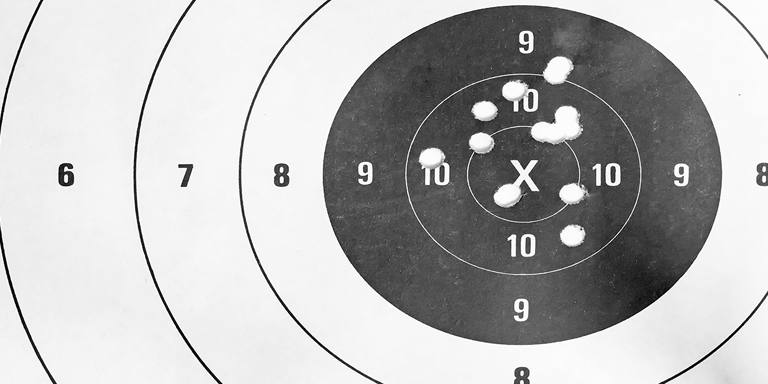
Does the weight of a bullet affect accuracy? Yes and no — it's complicated. Certain weights are not intrinsically more accurate than others. Heavier is not more accurate than lighter (or vice versa). However, certain grain bullets can work better in certain conditions. For example, you may want to choose a heavier bullet for a long-range shot on a windy day, because the wind would blow a lighter bullet off course. Conversely, heavier bullets may not generate enough velocity out of the muzzle to maintain aerodynamic stability all the way to the target, depending on the distance. The best way to find out what works best for each scenario is to test several different grains at different distances and conditions.
In summary, a lighter bullet will travel farther faster than a heavier bullet, but is susceptible to wind knocking it off course. Conversely, a heavier bullet is slower but more likely to stay on target (assuming your target is inside the expected ballistic performance of the bullet).
Choosing the Right Grain for the Right Application
The two main reasons people choose a bullet are hunting and self-defense. Practice ammo can be just about any grain, because all you're doing is poking holes in paper or dinging steel. Nobody's life or livelihood is on the line, and you're not trying to put food on the table. For practice ammo, buy what you can most easily afford. For hunting and self-defense, though, grain is an important consideration.
For self-defense, bullet weight is a concern due to penetration and recoil. As mentioned above, a lighter load tends to recoil less. So if you're concerned about managing the gun for follow-up shots, a lighter load may be the way to go. On the other hand, if that's not a concern and you're more worried about penetration power, a heavier load might be a good choice. It's not that the lighter load won't penetrate — it will — but heavier loads simply have more kinetic energy. That being said, since more self-defense shooting is at very close range (typically inside seven yards), grain is less of an issue for penetration than recoil management.
Hunting is a different story. Once you have chosen the caliber to shoot based on what kind of game you're pursuing, the grain issue becomes one of distance and weather conditions. Also, when it comes to hunting, be sure to check your local laws about grain restrictions. Take a look at our hunter safety tips, too.
As mentioned, long-range performance varies by grain based on wind and distance. Figure out what distance from which you will likely be shooting or the maximum range at which you know your chosen round is effective, and gear your hunt and expectations to those parameters. If the game is too far away, don't shoot. Hold off until it's closer, or wait for the next one inside your effective range.
Where to Start
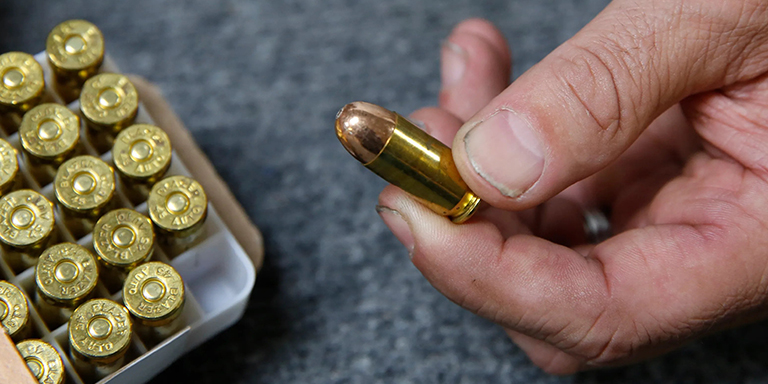
If you're new to bullet and grain selection and have no idea what you may need, start with the middle-of-the-road "standard" grain. For example, .223 bullets commonly come in 55 grains because it is a versatile round — not too heavy, not too light. Play around with the 55 grain and see where it gets you. You can adjust up or down depending on distance and wind.
The same goes for self-defense. If you shoot 9mm, start with a 124 grain bullet and then decide if you want to stick with that or move up or down the scale. The most common heavy 9mm bullet is 147 grain, and they go as low as 100-115 grains.
While grain is important for whatever bullet you're shooting, it matters far more in long-range marksmanship than short-range self-defense. So don't get too hung up on grain regarding handgun rounds. Grain can make quite a difference for hunting and other long-range needs, though. So get out there and practice, experiment, and find what works best for you.