

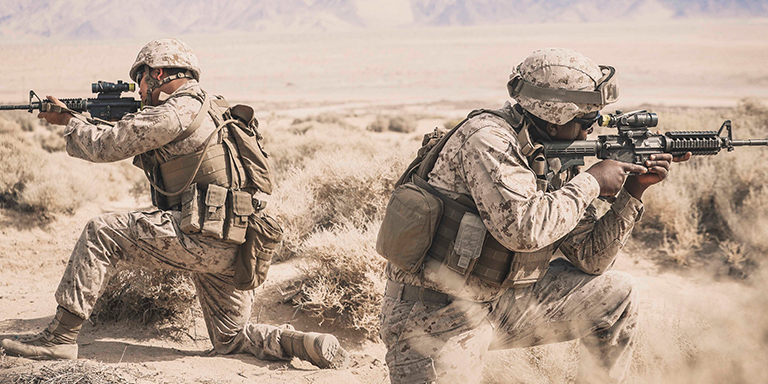
If you’re in the military, Basic Training provided a brief overview of how to respond to enemy attacks, but if you’re not in a combat-focused MOS , your combat training likely ended there. Even if Basic Training is still fresh in your mind, the combat instruction you received there was probably mostly focused on tactics and didn’t fully cover the principles of combat.
In this guide, we’ll review basic combat tactics and tie them to some helpful, actionable principles that could one day save your life, or the life of a friend. We’ll also review managing stress and fear in combat and debunk some common myths about gun battles.
Principles, Strategies, and Tactics
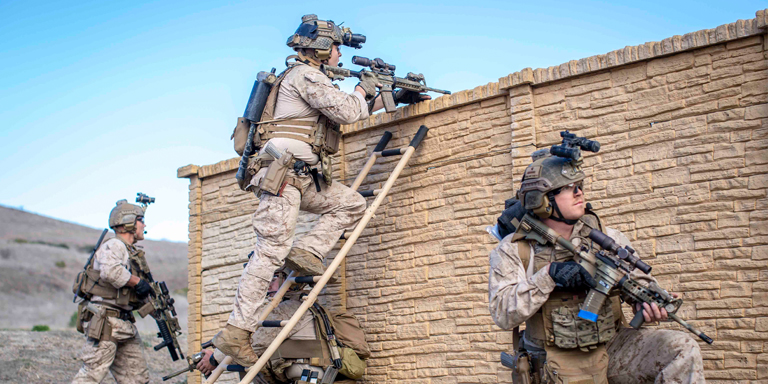
When you’re engaged by enemy forces, your reaction must be swift, precise, and decisive (although remembering the rules of engagement is also imperative). Anything less will likely get you or your allies captured, injured or killed.
This statement is an example of a principle of combat: an overarching, general truth that describes a goal rather than the particular means of achieving it. Reacting effectively to enemy contact requires understanding the difference between combat principles, strategies and tactics.
In a nutshell, strategies and tactics are related but distinct aspects of putting principles into practice. Tactics are the specific, squad and platoon-centric maneuvers designed to achieve an immediate, “boots-on-the-ground” objective. Strategies are higher-level, long-range plans typically encompassing companies, battalions or entire armies. Strategies also account for geopolitical conditions and other factors not directly related to combat.
Properly formulated and understood, principles of combat are a powerful tool for both ground-level operatives and their commanders. Incorporate these important principles into your regular training and remember them when you’re engaged by enemy forces.
Move Immediately
Once bullets start flying, staying put is very rarely a good idea. If at all possible, get to an elevated, highly defensible and/or offensively advantageous position right away, or escape the situation altogether. If the enemy fired first, chances are that they did so from a tactically superior position, so by staying put, you’re staying exactly where they want you to be.
Positive Target Identification
Knowing who and what you’re shooting at goes beyond being sure that it’s “the enemy.” What enemies, specifically? What are they armed with and where are they shooting from? Identifying as many details as possible will help you form a plan.
Communicate
Obviously, communicating with your allies is important, but communicating with your enemies is critical, too. Present an organized, effective, aggressive response to an attack and let your enemies know what they’re up against. You may be able to convince them to surrender or retreat if they realize you’re not an easy target.
Keep your allies informed of your location and status, and let them know when you’re moving — nonverbally, if possible. Call out new threats, enemy movements and other significant battlefield changes.
Be Decisive
Whatever you do, do it with conviction. Think and act quickly and decisively. In most cases, even a bad decision is better than inaction. If you must fire, shoot to end the threat as quickly as possible.
Rely on Your Training (But Not Exclusively)
Good training is meant to be a solid foundation for effective combat skills, but inevitably, situations will arise that your training didn’t cover. Before you deploy to a combat zone, drill the basics until they’re second nature, and practice creative thinking under duress.
When reacting to enemy contact, maintain constant awareness of your surroundings and look for outside-the-box opportunities to gain the upper hand. For instance, if you’re in an open area that’s too large for smoke grenades to effectively obscure you, try tossing them into the room or building that enemies are shooting from to hinder their vision that way.
Remember Your ABCs
That is, Always Be in Cover. Put the biggest, heaviest objects between you and enemy bullets. Leave cover only to move to better cover, and, ideally, only when your allies can lay down suppressing fire first (be sure to read up on the basics of fire support).
Get on Offense
Battles are rarely won defensively. If you’re attacked, turn the tables and become the attacker as quickly as possible, especially if you find yourself on the wrong end of an ambush. As long as you’re on defense, you’re playing by the enemy’s rules in a tactical environment of their choosing. Mount a bold counterattack and steadily reduce the enemy’s options to zero.
Get Back to Basics
In Basic Training, you only got about two days of training on infantry tactics, although you likely got some extra reinforcement during field training exercises. Regularly review the basics in your handbook and practice them with your squadmates.
Infantry Formations
There are many different formations your squad might travel in, although you’ll be in one of five formations 80% of the time.
-
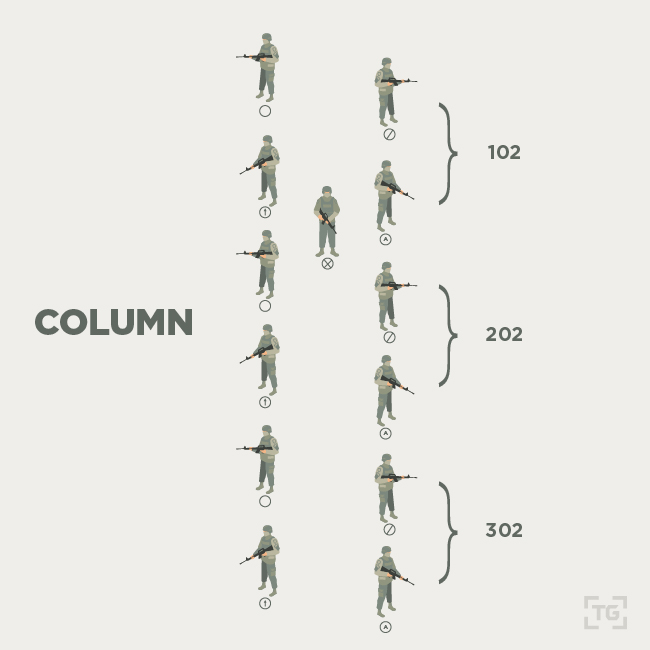
Column
The squad column is the most versatile and common way to travel on foot. It’s actually two columns of soldiers spaced about ten meters apart with the squad leader between them. This formation provides good maneuverability and an even distribution of firepower on all sides, but it requires open terrain and good visibility. -
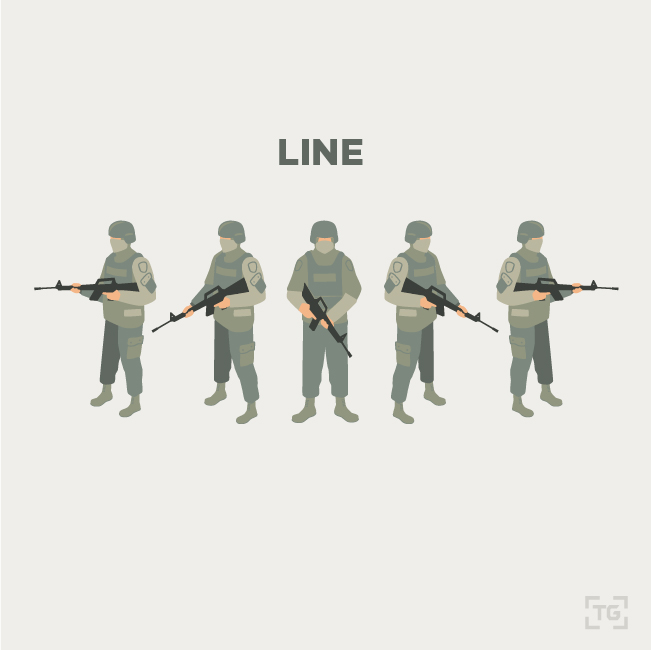
Line
A squad line formation entails the entire squad lined up shoulder to shoulder with everyone facing and firing in the same direction. It’s useful for closing in on and overwhelming a single enemy position, but it leaves your sides and back dangerously exposed. -
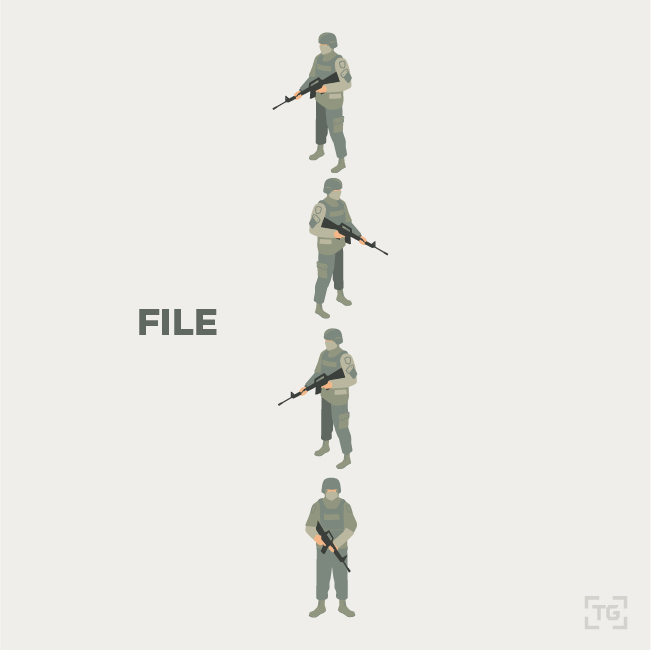
File
Use the squad file formation indoors, or when traveling through dense, difficult foliage or smoke. Everyone lines up single-file within arm’s length of the people in front and behind. Because the squad file is not versatile and limits firepower to the front and rear, you should use this formation only when there are no better options. -
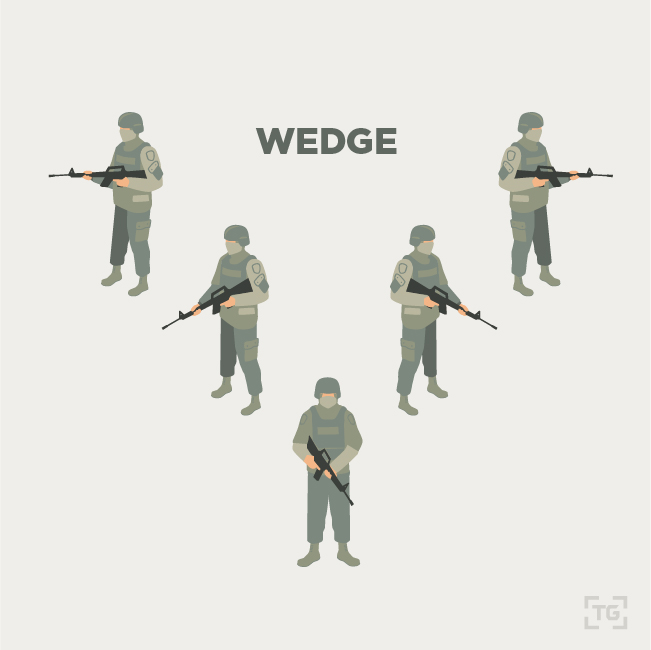
Wedge
The wedge is generally used for traveling through hostile territory when the enemy’s position is unknown. From above, the wedge looks like an arrow with the squad leader at the tip and everyone else staggered to either side at roughly 45-degree angles. This formation provides good firepower in all directions but keeps squad members spread far apart. -
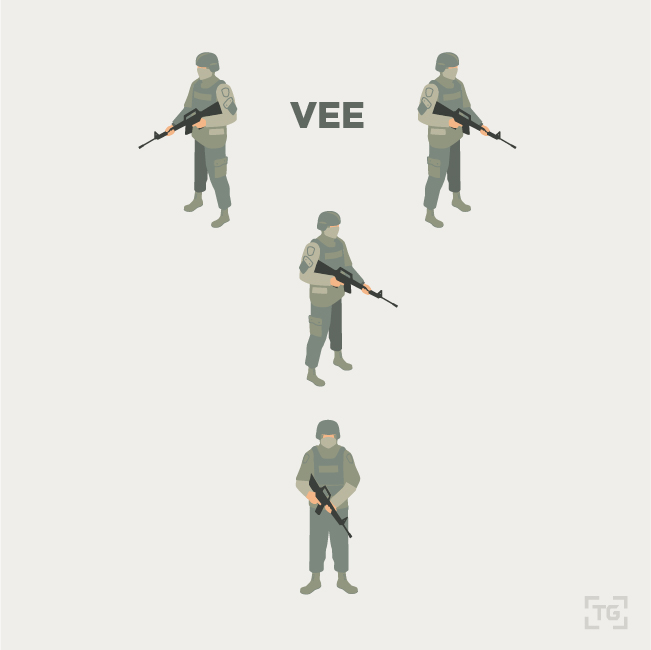
Vee
A vee formation is similar to an inverted wedge. It’s preferred when the enemy is to the front and sides because it concentrates firepower in those directions while limiting firepower to the rear.
Hand Signals and Verbal Commands
In general, hand signals are preferable to verbal commands because they’re silent and less likely to be understood by the enemy. If stealth isn’t a concern or if you have reason to believe the enemy knows your hand signals, verbal commands may be the better choice.
There are many commands and signals related to formations and battle commands. Be sure to review them regularly so they’re always fresh in your mind.
Utilizing Cover and Concealment
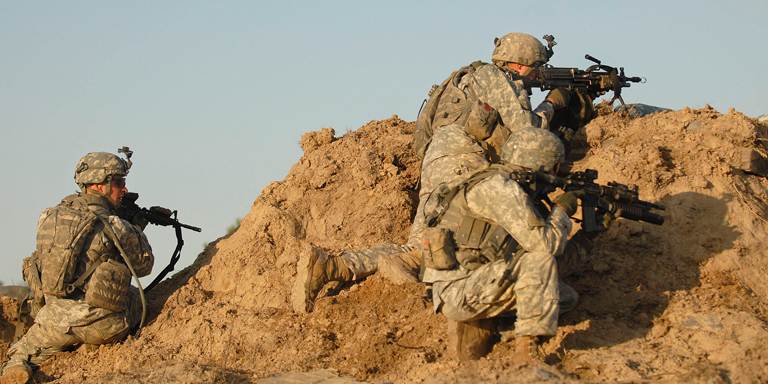
Remember that cover is a physical object that (hopefully) blocks bullets, whereas concealment is merely visual obscurement. Smoke, darkness, blinding light and dense foliage are examples of concealment. If you have a choice, cover is always better than concealment, but concealment is certainly better than nothing.
Overwatch
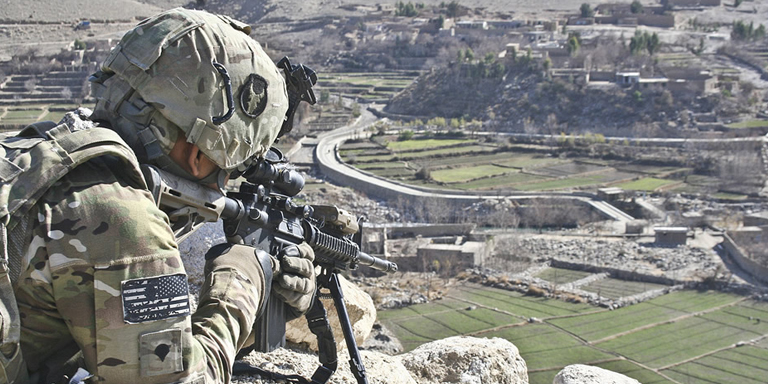
Overwatch and bounding overwatch maneuvers are asymmetric and symmetric versions of the same tactic, respectively. An overwatching team is one that takes up a fixed position (ideally, an elevated one with good visibility) in order to provide covering fire, recon and support for another team that is advancing toward an objective.
Bounding overwatch involves two teams alternating movement and covering fire as they both advance toward an objective; Team A takes up a defensible position and covers Team B while they move to a new location, then the teams switch roles. This repeats until both teams reach the objective.
Overwatch and bounding overwatch are simple principles, but they require regular practice and trust between all soldiers. Because allies are constantly crossing one another’s fields of fire, situational awareness and perfect trigger discipline are absolutely essential.
“Up and Down” Movement
Even for experienced marksmen, hitting moving targets is difficult, particularly those that are moving laterally to the shooter. “Up and down” movement refers to the principle that you should sprint between cover as fast as you can, and only in short bursts of two seconds or less. Very few shooters can accurately acquire and fire on a moving target in under two seconds, so hopefully, you’re back in cover before the enemy can line up a shot on you.
When possible, move laterally to enemy shooters, and if you must move toward them, do so at an angle. You’re easier to hit if you’re moving straight toward the shooter.
Suppressing Fire
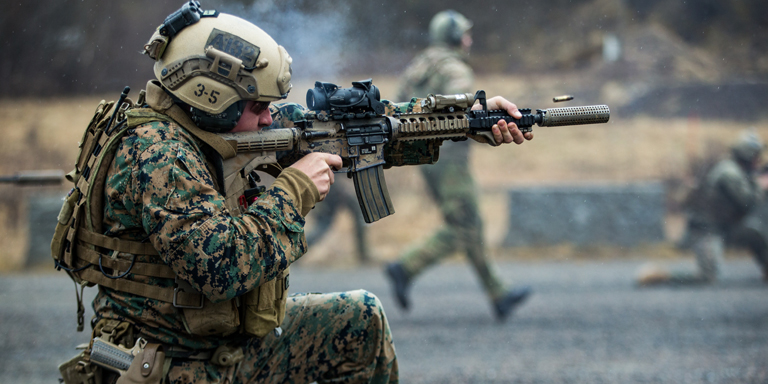
Suppressing fire is sustained fire intended primarily to keep the enemy in cover long enough to move or complete an objective. If you’re providing suppressing fire, watch your ammo reserves, especially if you’re firing an automatic weapon. A single shot or short burst at random intervals every 1-3 seconds is usually enough to keep the enemy in cover. Coordinate with allies when you need to reload so they can provide uninterrupted fire.
Flanking
Most firefights are won or lost on the basis of positioning. An enemy is flanked when you’ve successfully approached them from the side or rear and gained a clear line of fire. If you can flank the enemy, victory is all but assured.
Bounding overwatch is very often used to flank enemy positions. One team suppresses the enemy while the other circles around to the side or rear. That team then suppresses the enemy while the first team moves to the enemy’s other side so that both teams can execute a pincer attack (just be sure that you and your allies aren’t in one another’s direct line of fire).
“Slicing the Pie”
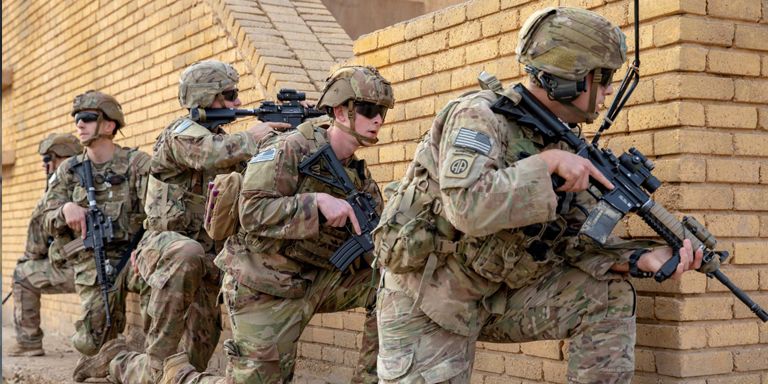
In infantry tactics, “slicing the pie” means turning a corner in a series of shallow angles with the goal of lining up a clean shot on the enemy without exposing yourself to return fire. Remember to keep your distance when slicing the pie — stay five to ten meters away from the edge of the corner or doorway and you’ll be less vulnerable.
Tactical and Emergency Reloads
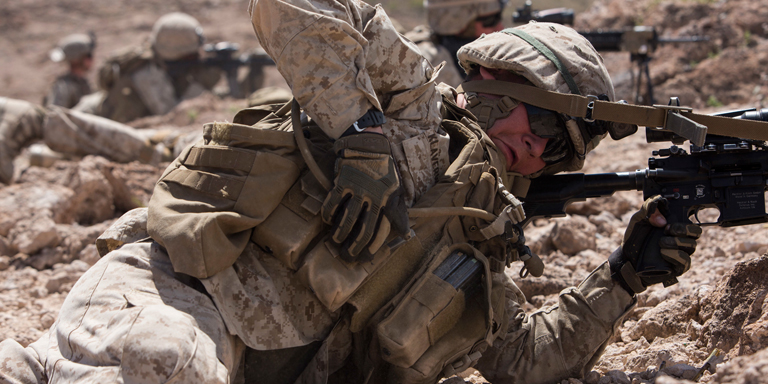
Recall that a tactical reload is one in which you retain your current magazine, whereas an emergency reload drops your current magazine to the ground in the interest of loading a fresh one as quickly as possible. Granted, everything is an emergency during a firefight, but you should prioritize tactical reloads whenever possible. Leaving magazines behind could mean finding yourself with only one (or none) later on. Perform emergency reloads only when you truly don’t have a few seconds to spare.
To perform a tactical reload, leave the current magazine in the gun and retrieve a fresh one with your support hand. Release the current mag and pull it free with the same hand that’s holding the fresh mag, then insert the new one, seat it firmly and store the old mag in a pouch, pocket or holster. There are many different grips you can use while doing this, so experiment to see what feels most natural to you.
Managing Stress and Fear in Combat
There are only two kinds of people who don’t feel fear in the middle of a firefight: psychopaths and liars. It’s totally normal to be afraid when your life is in danger, but being afraid isn’t the same thing as letting fear dictate your actions. If you don’t think and act logically, you will lose the fight. Irrespective of your emotions, certain actions are more likely to lead to victory, and others — such as freezing and panicking — almost inevitably spell defeat.
Instincts take thousands of years to evolve and change, and many human instincts are long outdated. Fear and stress-based reactions that may have helped our ancestors survive saber-toothed tiger attacks are not effective in modern combat. Acknowledge your fear, let yourself feel it without trying to ignore or suppress it and then do what needs to be done.
Know These Dangerous Gunfight Myths
Sometimes, even well-trained soldiers can make mistakes based on myths, rumors or misunderstandings that they’ve internalized over time. Know and avoid the Hollywood misconceptions about gunfights, particularly these five.
Gunshots are immediately lethal
In reality, gunshots — barring headshots — are rarely immediately fatal. Even headshots don’t always take the enemy out of the fight right away, and people shot in the heart can survive (and fight) for several seconds or even a few minutes. Never assume that your target is permanently down just moments after taking a clean hit.Basic shooting fundamentals go out the window in a real firefight
This myth is particularly insidious because, in a sense, it’s partly true. Many people do forget their fundamentals in combat, but that doesn’t mean you should. If you’ve practiced marksmanship until your stance, grip, breathing, sight picture, trigger squeeze and follow-through are second nature, you’re much more likely to survive a firefight.Cars and buildings make good cover
Bullets penetrate much better than most people realize. The engine block is the only part of a car thick enough to stop bullets somewhat reliably, and even walls made of brick or cinder block aren’t guaranteed to protect you from enemy fire. Of course, any cover is better than no cover; just remember that most obstacles aren’t completely bulletproof.You can get away with holding a gun on someone at close range
Guns are ranged weapons, not melee weapons. There are good reasons that police departments train officers not to let dangerous suspects get within thirty feet; even an average person with average reflexes can close the distance surprisingly fast. If you can avoid it, never give an enemy an opportunity to rush you. Keep your distance.You don’t/can’t aim down the sights in combat
This myth, like #2, is complicated and partially true. It’s certainly true that, in some cases, speed is so critical that you need to just fire in the enemy’s general direction as quickly as possible, and it’s definitely a good idea to practice reflex shooting to get better at it. But no matter how good you are at this kind of shooting, you should always use your sights whenever possible. Accuracy beats speed more often than not.
While basic tips for reacting to enemy contact are helpful, there’s no replacement for regular training. Commit to a schedule and practice often, both on-duty and off-duty, so that you and your squadmates will have the best chance of coming home safe.