

Share:
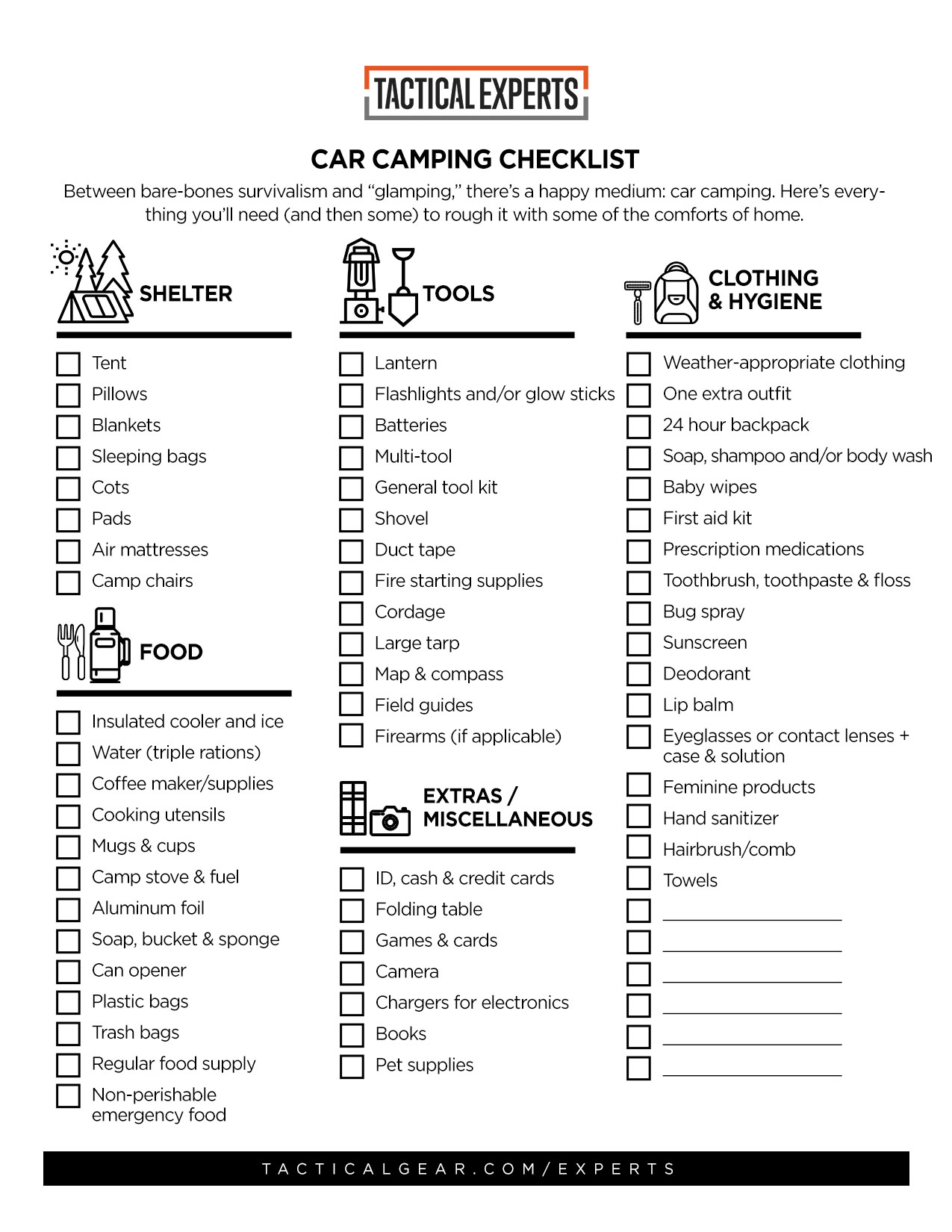
Car Camping Checklist
As they say: an ounce of prevention is worth a pound of cure. Many camping trips have been ruined by hasty packing, so take the extra time to ensure you've got everything you need before you hit the road.
Shelter
Tent: Unless you plan to sleep in the car, you'll need somewhere to bed down for the night.
Pillows, blankets, sleeping bags, cots, pads, and/or air mattresses: The ground is hard, uneven, and uncomfortable; put something soft, like a good sleeping bag, between it and yourself.
Camp chairs: Every campsite needs somewhere to sit while watching the sunset or making s'mores.
Tools
Lantern: A bright, battery-powered lantern makes a good primary light source for your camp after sundown.
Flashlights and/or glow sticks: Portable light sources, especially a good flashlight, are necessary if you venture out at night, and it's nice to have backups if your lantern fails.
Batteries: Pack at least one extra set of batteries for each device that needs them.
Multi-tool: If your campsite is simple or if you only plan to camp for a few days, a handheld multi-tool is probably sufficient for your general assembly and repair needs.
General tool kit: You may need something more than a multi-tool for elaborate campsites or extended stays in the wilderness. A hammer, saw, crowbar, screwdriver and hatchet, along with a set of vehicle maintenance tools, should cover most of your needs.
Shovel: At minimum, you'll need a shovel to safely extinguish campfires. If you're really looking to connect with nature, you'll also need one to dig latrines.
Duct tape: You know the old adage: there's almost nothing duct tape can't fix.
Fire starting supplies: Bring a few different fire starting tools in case you have trouble with one. We usually recommend waterproof matches, flint & steel and a focusing lens.
Cordage: Nylon rope, paracord and fishing line should be able to handle anything you need to tie, haul, climb or drag.
Large tarp: A tarp is a handy general-purpose item that can serve as the foundation of your tent or as a makeshift awning.
Map and compass: Even if you don't plan to do any hiking, knowing how to read a map is a useful survival skill, especially if you'll be camping far from civilization.
Field guides: There are many “genres” of field guides covering everything from herbs and wildlife to basic survival medicine. You don't need to bring a whole library, but consider packing one or two field guides relevant to your planned activities.
Firearms (if applicable): It's always a good idea to bring at least one firearm for self-defense or emergency hunting, as long as you can handle it skillfully and safely.
Clothing & Hygiene
Weather-appropriate clothing + one extra outfit: Pack more clothes than you think you'll need in case some of your clothes get excessively dirty or torn.
24 hour backpack: A high-quality, durable 24-hour backpack is essential if you're going to be away from camp for any length of time.
Soap, shampoo and/or body wash: If you'll have access to water for showering or bathing, don't forget the soap.
Baby wipes: If showers and baths are out of the question, at least have some sponge bath materials on hand.
First aid kit: A basic first aid kit is a good place to start. We strongly recommend also taking the time to put together an IFAK (individual first aid kit) with supplies for treating serious injuries.
Prescription medications: Just like clothes, bring more than you anticipate needing.
Toothbrush, toothpaste and floss: Few things are worse than driving several hours to a remote campsite only to realize you have to go to bed without brushing your teeth all weekend.
Bug spray: Unless it's the dead of winter, there will probably be at least some bugs to contend with.
Sunscreen: Even if it's cold and overcast, you can still get a nasty sunburn when you're outdoors all day.
Deodorant: Your tent mates will thank you.
Lip balm: Chapped lips can become downright painful after several days, especially in cold, dry climates.
Eyeglasses or contact lenses + case and solution: It's probably best not to wear contacts on a long camping trip, but if you do, take extra care to keep your hands and lenses clean.
Feminine products: As with clothing, food and medications, bring plenty. It's better to have them and not need them than to need them and not have them.
Hand sanitizer: Without running water, this may be the best you can do.
Hairbrush or comb: Hair gets tangled and matted awfully fast when you're living outside.
Towels: Pack a few towels reserved for personal hygiene and some others for general cleaning.
Food
Insulated cooler and ice: Make sure you have a cooler capable of keeping perishable food cold until you're ready to eat it. If you're camping in bear country, lock food in your car or suspend it from a high tree branch before you go to sleep.
Water (triple rations): One extra day of water won't cut it. Should you become lost or seriously injured, fresh water will be one of your most critical needs.
Coffee maker and coffee supplies: Some people can't live without their morning joe. Try a percolator; they don't use electricity, and a campsite that doesn't need power is a much simpler one.
Cooking utensils: A compact, space-efficient set of pans, pots, knives, skewers, tongs, eating utensils, a cutting board and a spatula should be all you need to prepare delicious camp meals.
Mugs and cups: You might also need insulated drinkware if you like hot coffee or tea.
Camp stove and fuel: You can always cook over an open fire, but using a camp stove is easier. Some use propane and some use solid fuel, so double check that you've got the right kind.
Aluminum foil: From steaming food to wrapping and storing it, foil has a myriad of uses in outdoor cooking. It can also reflect sunlight if you need to signal for help in an emergency.
Soap, bucket and sponge: Doing the dishes is nobody's favorite part of camping, but it's better than going home with a trunk full of dirty plates.
Can opener: You can open cans by stabbing them with a knife like a barbarian, but we don't recommend it for safety reasons.
Plastic bags: It's good to have a box of kitchen bags on hand for storing food and keeping loose items organized.
Trash bags: Even if you're sure that your campsite has trash cans or dumpsters, it's best to bring a roll of trash bags anyway. Responsible campers always leave their campsites free of trash.
Regular food supply: Whatever fresh food you want to bring, make sure you can eat or store all of it before it goes bad.
Non-perishable emergency food: Keep several weeks' worth of emergency rations in your car just in case something goes terribly wrong.
Extras/Miscellaneous
ID, cash and credit cards: Sometimes, even the best-laid plans go south and you need to buy a $7 loaf of bread at the nearest convenience store.
Folding table: It's nice to have someplace to eat, play cards or clean fish (not all on the same table, hopefully).
Games and cards: Hiking and stargazing are all well and good, but make time to lounge around at camp, too.
Camera: Smartphone cameras have come a long way in the last few years, but for truly gorgeous nature shots, you'll probably need an actual camera.
Chargers for electronics: Some heavily trafficked campsites have power outlets, but if yours doesn't, you could pick up an inexpensive portable solar charger.
Books: Modern life is often hectic, and it can be hard to make time for reading. Catch up on your backlogged books while you're living outside with few other distractions.
Pet supplies: If the family dog is tagging along, make sure (s)he has enough food, water and toys for the whole trip.