

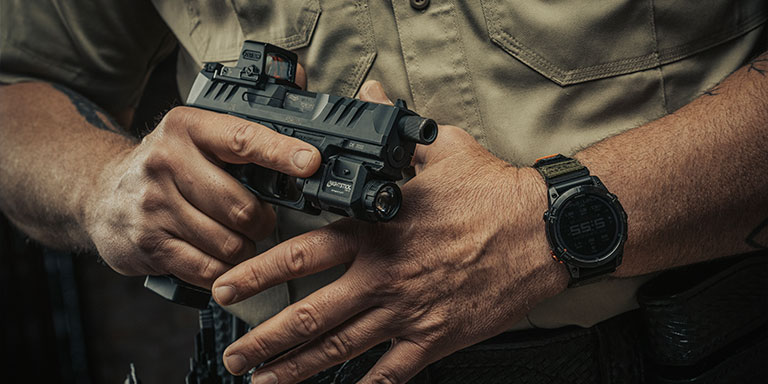
Police, firemen, EMS workers, private security guards, military service members—all regularly work long shifts at night. There are obvious downsides to the night shift—fatigue, boredom, your schedule being misaligned with those of your friends and family—but darkness itself is an often-understated risk. In most fields related to public safety, workers are more likely to be injured at night.
While an EDC kit is useful for everyone from outdoor enthusiasts and city dwellers to military, law enforcement, the goal is to carry essential tools for both routine tasks and unexpected situations, with each kit customized to fit the user's lifestyle and needs. This guide covers the key risks of night duty, offers tips for staying safe and effective in low light, and suggests essential tactical EDC gear.
Why Working in the Dark Is Dangerous, Even for Professionals
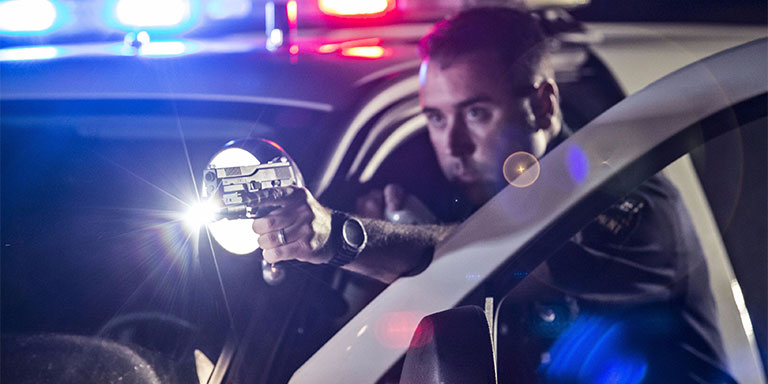
You already know the basic dangers of working in the dark but, in many areas of life, it's the dangers to which we've become accustomed that eventually get us, not so much the new and unfamiliar ones. Even the most experienced of us risk complacency after hundreds of shifts; constant vigilance is critically important.
More Difficult Communication
Obviously, it's harder to see in the dark, which makes visual communication more difficult and sometimes impossible. This can be problematic in many ways. For example:
- Police officers will find it harder to deescalate a confrontation if the officer and the suspect can't see one another clearly (because visual ambiguity reduces trust).
- Fighting a fire at night is much more dangerous for firemen, who are particularly reliant on visual communication with one another and on sight-based diagnosis of the scene.
- Medical personnel often need to be directed to an unfamiliar location in order to reach their patients, especially in rural areas. This is much harder at night.
- All of us rely partly on visual cues such as facial expressions and body language in nearly all conversations. These cues are less reliable at night, which often means that we must talk louder or more often to compensate. More chatter makes the scene louder, which further complicates all other communication.
There are many other ways in which darkness inhibits critical communication; this short list is only an indication. Always be mindful of the ways in which darkness makes it harder to communicate with your coworkers or patients and try to always be thinking a few steps ahead to compensate for these challenges.
Increased Risk of Trips, Falls, and Other Accidents
This one's pretty obvious, but it bears repeating because it causes thousands of workplace injuries every year. Most public safety workers are used to moving quickly. Lives are often on the line, after all. At night, though, remember the old sharpshooter motto: "Slow is smooth; smooth is fast." Working more slowly and cautiously in the dark might make the task at hand take a few seconds longer, but if someone falls or gets injured, the job might not get done at all.
Hidden Threats
Darkness, of course, gives criminals more places to hide but people who may mean you harm aren't the only kind of concealed danger. Wild animals, toxic substances, and environmental hazards, such as damaged infrastructure, are only a few of the things that public safety workers need to consider. If you must venture into an area that's not well-lit, move slowly and inspect the area thoroughly as you go.
Increased Stress and Fatigue
One often understated risk of working in the dark is that it inherently makes almost any job more mentally taxing, even if there is no specific complicating factor beyond the darkness itself. Not being able to see what's going on around you is stressful, and that stress takes a toll over time, whether you consciously feel it's building or not. If your work routinely takes you into dark places, take extra care to prioritize good sleep, a healthy diet, and regular downtime when you're off duty.
Working Smart in the Dark
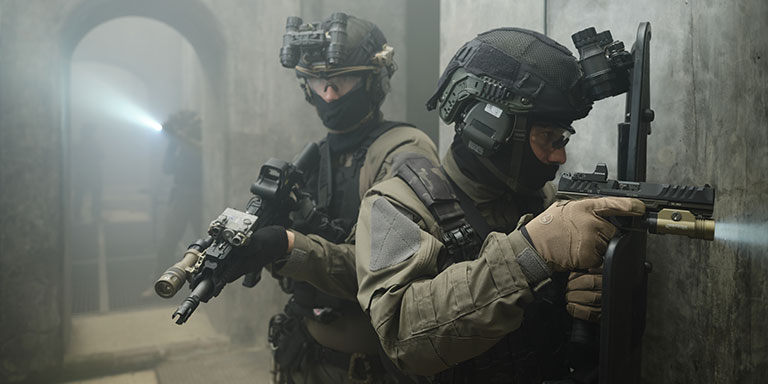
Here are six tried-and-true strategies for working safely and effectively at night or in dark interior spaces, gathered from our collective experience working in law enforcement, EMS, and military roles.
Give Your Eyes Time to Adjust
Everyone knows that it takes your eyes a little time to adjust when you move from a bright area into a dark one, but not everyone knows that the length of this adjustment period varies widely from one individual to another; one person might be fully adjusted within fifteen seconds whereas another needs several minutes. Do a simple experiment at home: Stand in a brightly lit room for a minute or so, then turn off the lights and time how long it takes for your eyes to fully adjust to the darkness. Knowing your personal adjustment period will make night work easier and safer, especially if you're well-practiced at relying more heavily on your other senses during the transition period (we'll talk more about that soon).
Preserve Night Vision
Once your eyes are acclimated to the local light conditions, there are a few tricks you can employ to reduce your acclimation time during subsequent lighting changes. If night vision optics aren't available, try these tips:
- Avoid looking directly at bright lights whenever possible. If you must briefly enter a brightly lit area or look directly into a bright light after you've acclimated to the darkness, close one eye and keep it closed until you're away from the light source. Not only will you see better out of the previously closed eye, but your other eye should also readjust to the darkness much more quickly.
- Lower the screen brightness of all your electronic devices to a minimum or use a blue-light filter (ideally both). This may seem like a minor detail, but for some people, looking at a bright phone screen—even briefly—can significantly disrupt night vision.
- Use narrowly focused beams of light whenever possible. Keep your lights aimed downward and shield them from others' eyes and faces and ask your coworkers to do the same.
- Use red or blue-green filters if you can. Many modern flashlights come with red/blue-green modes or attachable lens filters. Red light minimally disrupts night vision; blue green is a bit more harsh than red but may be necessary if you need to see small print or fine details.
Use Your Peripheral Vision
Under normal light conditions, we see things best and most clearly by looking straight at them, but in the dark, your peripheral vision outperforms your focused vision in some respects. This is because your eyes contain both cones and rods; cones work better in bright light, and rods work better in low light. The center of your eye has more cones whereas the sides have more rods, so when it's dark, try looking at things slightly off-center (offset by about fifteen degrees) if you're having trouble seeing them straight on.
Be Cautious and Slow
We briefly mentioned the importance of slowing down before, but it's important enough to warrant touching on it one more time. When adrenaline is flowing and the stakes are high, it's natural to want to move as quickly as possible, but mission success very rarely hinges on a difference of a few seconds. Moving more slowly and cautiously in the dark may feel counterintuitive or even wrong, but it dramatically reduces the risk of injuries and complications for everyone on scene, and it rarely results in a meaningful delay.
Give Danger Spots a Wide Berth
Environmental dangers (and potentially dangerous people) aren't only more difficult to see in the dark—they're also more difficult to react to quickly. If you must round a corner without knowing what's on the other side, do so at double or triple the distance you would allow in normal light. Similarly, approach hazardous terrain, potential hiding spots, and other danger zones only if necessary, and if it is necessary, illuminate the area as much as you can and approach with elevated caution.
Make Active Use of Your Other Senses
The human body's ability to heighten the acuity of certain senses when others are compromised is well-documented. It's not that your other senses physically become more sensitive when your vision is impaired, but by actively focusing your attention on your other senses (especially your hearing), you become significantly better able to notice things that you otherwise might have missed. If you're almost functionally blind anyway, closing your eyes entirely can enhance this effect even further.
Essential Gear Items for Night Duty
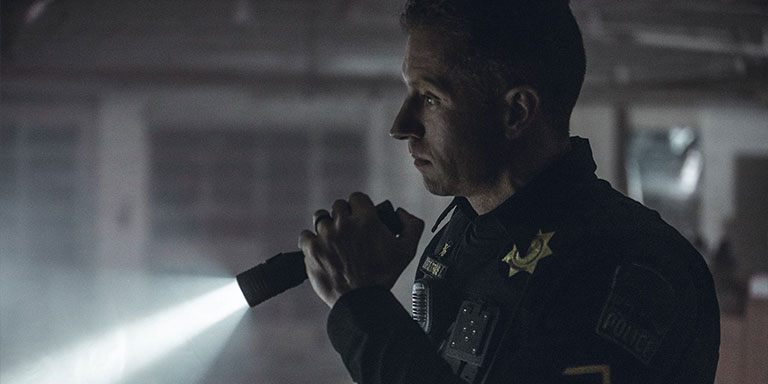
Here are our top picks for personal light sources and other visibility-enhancing equipment, such as tactical lights, designed for public safety work. Whether you work in law enforcement and are setting up a duty belt, or serve in EMS, fire, security, or the military, one of these options is sure to make your nighttime shifts easier and safer.
Flashlight: Streamlight Wedge
A great EDC flashlight is compact, bright, and durable. The Streamlight Wedge checks all of these boxes, featuring a tough aluminum body, a damage-resistant polycarbonate lens, 300-lumen brightness, and three hours of run time on a single charge with 50,000 hours of total battery life. Its low profile and removable pocket clip allow concealed carry almost anywhere on your person. It's simply one of the best tactical flashlights we've seen.
Headlamp: Black Diamond Storm 500-R Rechargeable Headlamp
If you need a hands-free, bright, and reliable light, the Black Diamond Storm 500-R is an excellent candidate. Its 500-lumen beam is bright enough for almost any nighttime task, and it can be toggled into red, green, or blue night modes when white light is too disruptive. It can also be toggled between up-close, distance, dim, or strobe modes as needed, and it runs up to 350 hours on a single charge. Check out more tactical headlamp options.
Clip-On LED Light: Streamlight ClipMate USB Clip-On Light
LED clip-on lights are great for attaching to your clipboard, vehicle dashboard, or anywhere else you need adjustable light over a small area. The Streamlight ClipMate features both red-light and 70-lumen, bright-white modes, and the rechargeable battery lasts up to 65 hours. With an impact- and water-resistant polymer case and a polycarbonate lens, it'll survive and thrive in almost any conditions.
Weapon Light: Streamlight TLR-7 X
All of the Streamlight TLR-7 weapon lights are absolutely excellent, but each model is firearm-specific; be sure to check Streamlight's fit chart before you buy. The TLR-7X is one of the most popular and widely compatible models, and it projects a bright and steady 500-lumen beam up to 140 meters with no dead spots. It's also waterproof up to one meter and rated for temperatures from -40ºF to 120ºF, ensuring reliability in harsh conditions.
Reflective Footwear: Carhartt 8" Met Guard Composite Toe Waterproof Boots
Many public safety workers are required to wear uniforms that don't incorporate reflective materials, making night work riskier. Enter the Carhartt 8" Met Guard Composite Toe Waterproof Boots, which feature non-metallic toe caps, a breathable waterproof membrane, and ASTM 2413-18 MT electrical hazard resistance in addition to high-visibility reflective striping along the upper edge of the outsole. Some other work boots are better suited to specific tasks, but these are some of the best general-purpose safety boots we've seen.
The night shift is an exhausting, risky, and often thankless one. Complacency amplifies many of the dangers associated with working in the dark, but a little extra preparation and caution go a long way toward keeping you and your team safe. If you still have questions about the best night-shift gear for you, feel free to reach out; our customer support team is always ready to help.