

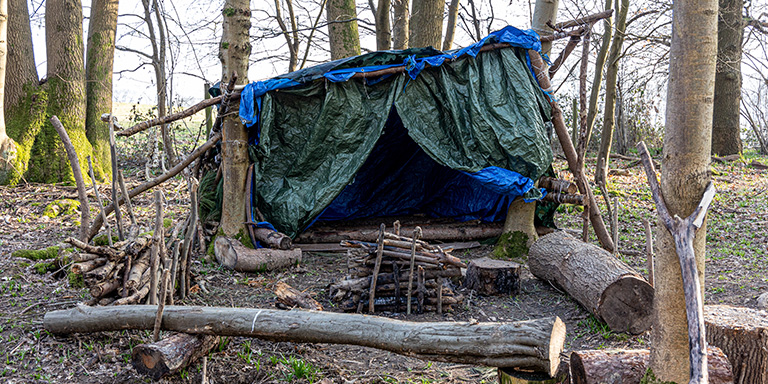
When disaster strikes, many factors will influence your decision to bug in or to bug out. In most cases, bugging in will be the better plan, but we recommend having a solid bug-out plan, too.
In this guide, we'll offer some tips on putting together an effective bug-out plan, even if you're short on time or money. We'll share some strategies for planning and for practicing high-value skills, as well as a packing list of essential gear. Finally, we'll suggest ways to modify your bug-out plan to accommodate different kinds of disaster scenarios.
No Zero Days

We've all heard about survivalists who have underground bunkers, huge generators, and enough food and ammunition to last a decade. Accumulating such a stockpile is a ton of work — so much work that most of us can't even imagine how we would ever pull it off.
There are two bits of good news: A good bug-out plan doesn't require a lot of stuff (you can't carry much when you leave home, anyway), and any big project can be broken down into small, easily-manageable steps. Even if you don't have much extra time or money, you can still do something every day to work on your bug-out plan. For example, you can practice marksmanship for half an hour or order some water purification tablets online. Small and consistent investments of time, energy, and money add up to big things over time.
The Unique Power of Writing
Writing is an incredibly powerful tool because it's the single most effective way to practice many kinds of thinking skills. Even if you're “not a writer,” sitting down and writing about your bug-out plan will help you organize and prioritize your thoughts, anticipate problems, and identify questions that may otherwise not have occurred to you.
Division of Labor
If you're including family or friends in your bug-out plan, put them to work! Not only is it impractical (and a little unfair) to expect one person to manage an entire disaster plan for a small group of people, it doesn't make for an effective team. Everyone in your group needs to have a specific, clearly-defined role and be well-practiced in various skills.
To the extent possible, assign jobs and tasks based on each person's skills and interests. It's much easier to stick with something if you like doing it (or don't mind it, at the very least). Try to see your bug-out plan preparations as a fun, team-building activity rather than a chore or a depressing apocalypse plan.
Cross-Training
Some studies suggest that, in certain fields — particularly hands-on skills like crafting or building things — students tend to learn most effectively from teachers who are only slightly more experienced than they are. One reason for this is that seasoned experts may have forgotten what it's like to be a beginner, which can make it harder for novices to understand them.
Once each member of your group has gained some proficiency in their respective roles, start teaching one another. Cross-training has many benefits for both students and teachers:
- An interactive, back-and-forth style of teaching helps both parties understand the subject more clearly
- When students asks questions that the teacher can't answer, it draws attention to the areas in which the group still needs improvement
- Having multiple team members proficient in the same skills will really help during a real emergency (what happens if your only medic gets sick or injured?)
Essential Bug-Out Skills

In a bug-in situation, stuff is more important than skills. In a bug-out situation, the reverse is true. When you leave your home base, you can only take whatever will fit in a backpack or tactical vest — which isn't very much. Even if you're able to bug out in a vehicle, few vehicles can carry more than a month or two of supplies, especially for multiple people. The more outdoor survival skills you have under your belt, the less you'll have to rely on your initial (and very limited) inventory.
Finding Water
In the vast majority of emergencies that last longer than 72 hours, lack of access to clean water will be your biggest and most immediate problem. It's also one of the most difficult problems to solve in a bug-out situation because water is heavy and you can't carry much of it, so being able to find it is critical. Be sure to check out our guide on how to find and purify water in the wilderness.
Foraging/Hunting
To a large extent, your local climate and environment will determine whether foraging, fishing, and hunting are viable options in a bug-out situation. Even if there isn't much wildlife or edible flora where you live, it never hurts to learn the basics. Your local game and fish department may offer classes and workshops. If they don't, there's surely a gun club full of hunters near you. Many seasoned hunters will be happy to share what they know (once they get to know and trust you a bit).
Marksmanship
A firearm will be an invaluable tool in a bug-out situation for both self-defense and hunting. Whether you choose a rifle, shotgun, or handgun, practice regularly with your preferred weapon and always follow the four rules of gun safety. If you're new to firearms training (or just out of practice), our recommended shooting drills for beginning marksmen will help you gain or regain basic proficiency.
Unarmed Combat
The most effective way to protect you and your family from harm is to avoid conflict with other people whenever possible. Even so, in a bug-out situation, you may be forced to defend yourself or your loved ones. If you have little or no firearms experience, it's best and safest to learn self-defense basics. Train with deadly weapons only once you've had practice managing stress and fear in high-pressure situations, such as full-contact sparring with a qualified self-defense instructor.
Building/Finding Shelter
Once your cleanwater situation is figured out, shelter will likely be your next most pressing need. Extremely hot or cold weather can be fatal within three hours when you're completely exposed to the elements. Like hunting and foraging, the types of shelter you'll be able to find or build depend largely on where you live, but there are some basic structures you can construct relatively quickly in most environments — we've covered a few of them in our guide to finding and building shelter.
Basic Field Medicine
As the old saying goes, “an ounce of prevention is worth a pound of cure.” This is especially true in a bug-out situation. Ideally, everyone in your group should learn basic survival medicine, which includes simple and effective treatments for major injuries such as arterial bleeding, knife and gunshot wounds, and broken bones. Ensure that each person on your team has an individual first aid kit and knows how to use everything in it.
Packing Your Bug-Out Bags
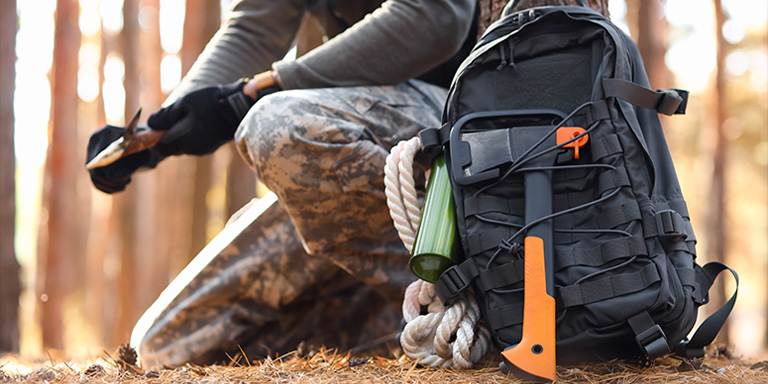
Deciding what to put in your bug-out bag is a lot harder than it may seem. Most of us would like to carry much more than we can actually carry, so you'll probably have to make some hard decisions about what to bring along and what to leave behind.
To the extent possible, pack your bag with gear that can be reused many times or that enables you to meet your basic needs by utilizing your outdoor skills, as opposed to consumable items. For example:
- A can of tuna is one meal, but a fishing kit can provide hundreds of meals, provided you know how to use it
- Matches and lighters get used up quickly, whereas a single magnesium striker can start hundreds of fires
- You can only carry about a gallon of water on your person, at most, but a tiny bottle of water purification tablets can make hundreds of gallons safe to drink
Should you ever have to bug out and travel on foot over great distances, weight management will be paramount. It's tempting to cram your bug-out bag with as much stuff as you can fit inside it, but an overloaded bag can quickly exhaust or injure you, even if you're in good shape. As a rule of thumb, use the 1:5 ratio. Try to limit your total carry weight to one pound of stuff per five pounds of body weight. Depending on your age, sex, body composition and other factors, you may be able to comfortably carry more (or less). Start with the 1:5 ratio, go on some practice hikes with your fully-stocked bag and make adjustments as needed.
If you're not sure what to pack, review our bug-out bag packing list. If you have some extra space once you've covered the essentials, consider including some of these less common but nonetheless useful items.
Planning for Different Disaster Scenarios
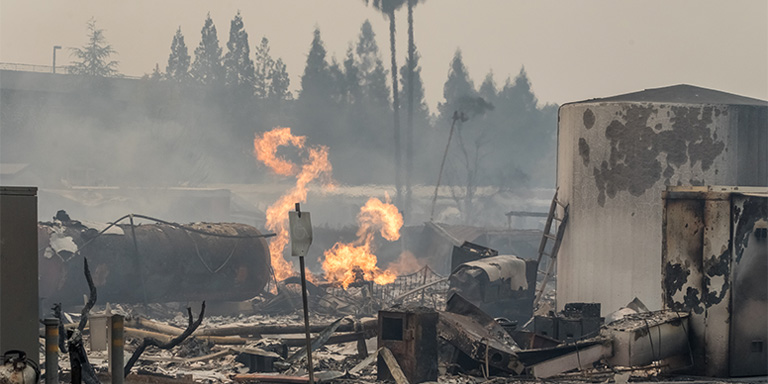
Not all bug-out scenarios are the same. The nature, cause, location, scale, and duration of the disaster will determine the best plan of action. We recommend preparing a basic, general-purpose bug-out plan, and then using that plan as a template to create additional plans tailored to specific kinds of emergencies. Most people who put their bug-out plans into action during a real-life disaster scenario return to their normal lives within a few weeks or months.
Civil Unrest, Martial Law, or Foreign Invasion
In an emergency wherein other people are the greatest danger, your plan and your gear should reflect that fact. Prioritize weapons, ammunition, and medical supplies, but don't go overboard on the ammo — it's very heavy. Most people are slow to react during the initial stages of an emergency, so speed will be a great advantage. Have a plan to leave the immediate area as quickly as possible. Get paper maps of your city, county, and state, study them regularly, and plan multiple routes out of town. Get your group together and practice evacuation drills, with an emphasis on speed. On a side note, it's important to keep in mind that you should never drive unsafely or otherwise endanger yourself or others during practice drills.
Natural Disasters
Most natural disasters are short in duration but can occur with little warning. If your home becomes unsafe, it may be best to leave town until the disaster passes. Because you have no way of knowing how long you might be displaced, you should bring as much food and water as you can comfortably carry. Research the types of natural disasters that are likely to happen in your area and plan evacuation routes accordingly. For example, if you live in a flood-prone area, avoid roads or paths that are near large bodies of water or low-lying terrain.
Deadly Disease Outbreaks
Disasters caused by infectious diseases are especially hard to plan for. Avoiding other people will be critically important, so you must prepare to be as self-sufficient as possible, for as long as possible, in a remote area that other people aren't likely to find. Choose your bug-out location with great care and practice living outdoors for long periods.
Nuclear and Chemical Disasters
Large-scale chemical spills and nuclear fallout can contaminate huge areas for generations. In such cases, you may never be able to return to your home — you won't be bugging out so much as moving. Pack items that can be used to start a new home if necessary, such as vegetable seeds, basic construction tools and generators (of course, you'll need a vehicle to carry anything big and heavy). Hunting, foraging and water-finding skills will be especially critical.
There's only so much you can learn about making a bug-out plan from a brief article, but hopefully this guide has given you some actionable starting points. Don't forget to work on a bug-in plan, too — any good survivalist knows the importance of maximizing options.