

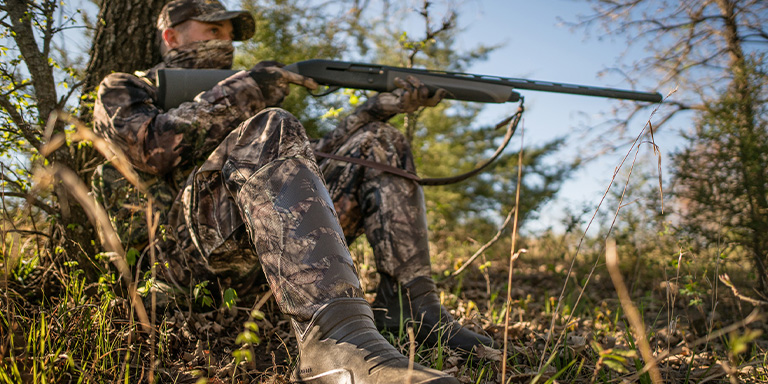
Many novice hunters begin their journey hunting on public land. It can offer many obstacles, but also many advantages. In this guide, we will cover common challenges with scouting, preparation, legality and more — and how to face them head on. From getting ready to the day of the hunt, we lay out everything you need to consider and plan for to guarantee a successful hunt on public land.
Advantages and Disadvantages
It is always advantageous to be able to hunt on private property where you have exclusive rights, because you can remove other hunters from the equation. That said, one of the advantages to hunting public land is that there is rarely a shortage of property on which to hunt. You don't have to pay taxes on public land, and there is likely public land with abundant game closer to your residence than you might think.
Not only does hunting on public land offer a breadth of land and game, it also helps fund and preserve the federal and state domains. Also, for many hunters, the obstacles of hunting on public land can be seen as a stimulating challenge. More hunters means more competition, and conditions can change frequently and without notice. It takes commitment and preparation to be successful, which makes success all the more rewarding.
Where to Begin
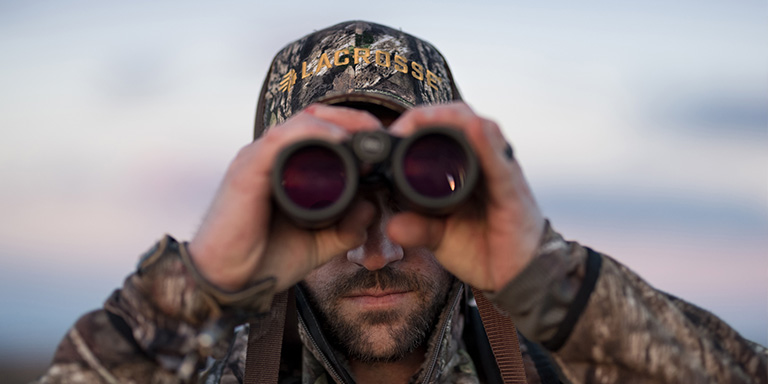
Successful hunting on public land starts on paper. Utilize the US Geological Survey and download or order a topographical map of the area you wish to hunt. This will help you identify better areas to hunt, cut down on scouting time and beat all the other hunters to better areas.
It's best to start by hunting a small area and then expanding once that area is conquered. In the northeastern United States, public land acreage tends to be smaller, so any areas you choose are likely to be manageable for a day's hunt. In contrast, the western part of the country is much more vast. Choosing only a small section and mastering that section is better than taking on all of the Idaho Rockies the first time out, and certainly much safer.
When using a topo map, what should you actually be looking for? Water sources are a good start. All game animals need water, and your chances increase tenfold when hunting near a water source. Next, look for elevation changes, which are shown on the map by contour lines. When contour lines are close together, it indicates a steep elevation. Lines that are further apart indicate terrain that is flat and even. The transition between different elevations likely indicates a change from a food source to cover — a place you want to be.
Contour lines also indicate the direction of water flow. When a contour line crosses a stream, for example, it will form a V-shape that points upstream and toward a higher elevation. Topo maps can also help you identify vegetation types. North-facing slopes usually have conifer stands, whereas south-facing slopes are more likely to have a combination of maple, beech, oak and other deciduous plants. For a more detailed look at map reading techniques, check out our guide to map reading fundamentals.
Aerial photographs and soil-survey maps can also help you identify vegetation types that you can then match to the species you are hunting, relative to cover and food requirements. Of course, these are old-school techniques. Nowadays, "there's always an app for that." Apps such as OnX hunt, Huntwise and Huntstand can not only help you with topographical features, but also delineate property boundaries, even allowing you to mark locations where you have observed game. In order to use some of these apps to their fullest potential, you should first experiment at home. Use your backyard as a parcel of property. Practice with the phone itself, including correctly using an alternate power source, such as a solar charger, should your battery drain while you're trying to find your way out before dark. If you need help finding the right hunting-oriented app, take a look at our beginner's guide to GPS phone apps.
Legal Considerations
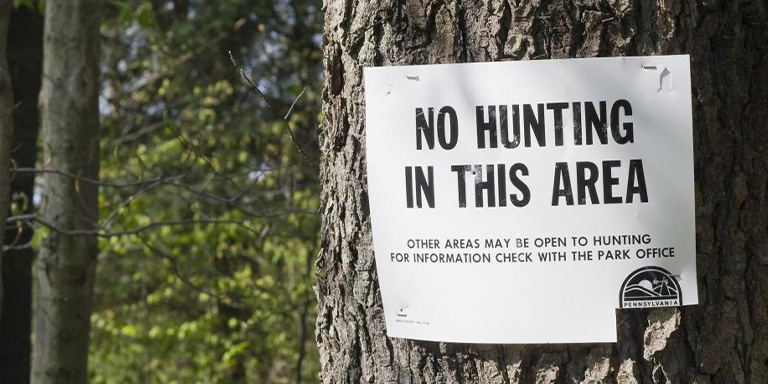
Hunting on public land has many of the same legal considerations as hunting on private property. The legal aspects can be broken down into several categories: licensing, land regulations and weapons regulations.
Proper licensing is always a priority. Most states have reciprocity agreements relative to hunter safety courses allowing public land hunting in multiple states, although the cost is always higher for non-resident hunters. When you purchase an out-of-state license, typically you have to make a copy of your hunter safety certificates and submit them along with your purchase. Some species, like elk or moose, have lottery drawings for tags, while in other states you can get them over the counter at any license-issuing agent. Further, many states have gone to online purchasing for license tags, making them easy to obtain.
Consider whether or not there are any special regulations or additional permits you have to obtain. Land use permits are common with smaller municipalities such as county or city-owned property. Most are free and are merely used to determine public usage and subsequent budget considerations, but hunters still need to obtain them.
Once you have chosen the parcel of public land you want to hunt, you have to research the land regulations. Find out who manages the property you want to hunt. Is it state or federal? Can you hunt there at all? Each piece of public land has a management plan that may or may not include hunting as a permitted activity. In many cases, public land has markers in accordance with real property law (or equivalent for your state) with the corner boundaries marked by two signs at 90 degrees. In some western states, not only do you have some vast areas of public land but also areas where state and federal land are adjacent. The actual property line is not marked, but you are still responsible for knowing and adhering to the regulations, which may differ from state to federal.
Parking is another consideration. If you park on one side of an access road, will that restrict your hunting to the side you're parked on? In New York state, for example, if the property you're hunting extends on both sides of an access road, you can't park on one side and hunt the other side, so choose wisely. Although rare, check to see if it is possible to access public land from a private landowner, which can be a tremendous advantage; you won't have to jockey other hunters for the few available parking spots.
Arguably, the most important regulation is what kind of hunting weapon may be used. Weapons are ranked according to effective distances a shot can travel: rifle, shotgun, muzzleloader, pistol, and finally, bow & crossbow. Rifles require the most space because of the distance a projectile can travel unimpeded. If the land permits a high-ranking weapon, typically anything lower in rank can also be used. For example, if a rifle is permitted, a bow will be as well, but not the other way around.
Scouting your location
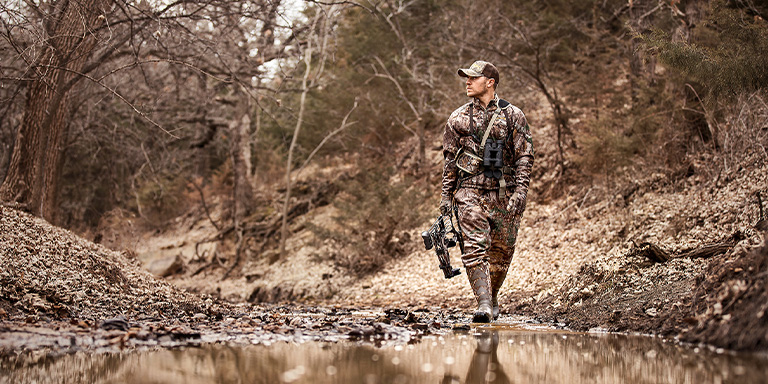
Scouting the location in advance is critical to success while hunting on public land. It's on you to find the ground that has the game. Much of public land will be overhunted, or just simply won't produce.
If you notice signs, such as droppings or rubs, turkey feathers, etc. when scouting, chances are, so have other hunters. So don't think that your honey hole hasn't been discovered and won't be occupied on opening day. Use harvest data from the Department of Natural Resources (DNR) for the past few years to pinpoint where the most game has been taken. That is where most of the hunters will be, especially if the game you're after is part of a tag lottery (meaning the population is limited and only select hunters in the area will have the license to hunt that species).
Plan to be close to popular areas. Other hunters will be temporarily driving game to the surrounding areas and right past your stand. In that same vein, make sure you're in place and ready to go earlier than the next guy, so that when the masses enter the woods at daybreak (or just before), they will drive any game to you.
Also, know that most hunters don't venture more than 200 yards from their vehicles, so going further into a given property has advantages of unpressured game. Plan for removal by being prepared with a cart or reinforcements. Remember that game preparation starts the moment an animal dies.
Safety
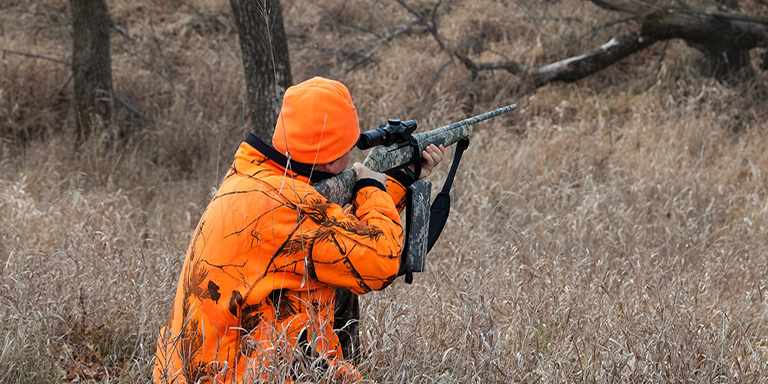
Hunting public land may present increased safety issues, especially if you are hunting in larger areas. Blaze orange, blaze orange, blaze orange — got it? Good. Enough said. Simple things like having a backup flashlight and batteries and telling your spouse or hunting partner where you will be that day and when you are likely to return are important. Obviously, having a cell phone is nice, but take into consideration you may not have service, so you'll also want to have a GPS and or a walkie-talkie. Pack food and water. You should hike in only as far as half your water supply so you'll have enough to get back. Don't be afraid to go old-school either — carry a compass and take a bearing along an access road so if you get turned around, you can set your compass 90 degrees perpendicular. Eventually, you will cross that access road.
What Species Are You Going to Hunt?
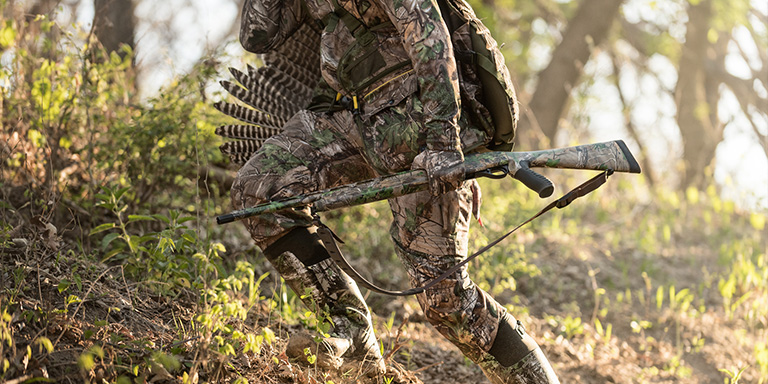
From deer and waterfowl to turkey and feral hogs, there's a range of permitted species to hunt on public lands.
The harvesting of wildlife on public lands is carefully regulated to ensure an equilibrium between wildlife and their habitats. Each location, whether it's a national preserve or wildlife refuge, decides the species that you can hunt, and when and exactly where you can hunt them. These decisions factor in species' populations, economic feasibility, habitat feasibility, public safety and demand.
Some species present more of a challenge than others when hunting on public land. Hunting wild turkeys or elk can be difficult due to the calling factor. Not only is it possible to wind up calling another hunter, but some hunters call more than they should (or are simply terrible at it).
If you eventually want to hunt whitetails, then you should start by hunting squirrels. Going after small game has many advantages on public land. There's increased likelihood of being more successful, which in turn builds confidence in your ability as a predator. Hunting small game allows you to get to know the lay of the land without the crowds so when eventually you move on to bigger and better game on that same property, you will have the advantage.
Whatever species you choose to hunt, read up on their habits. Know, for example, why squirrel chatter is an altruistic warning to every other critter within earshot, or why turkeys sometimes gobble in the fall when their mating season is late spring. Ultimately, you will see more game by being patient and observing as much as you can as you move through the woods.
Also, in your quest to be successful, do not dismiss any fishing opportunities, as they can also help getting to know the lay of the land, likely without much pressure from other hunters and anglers.
Proper Etiquette
There is no way to prepare proper hunting etiquette; either you know it and live it or you don't. That said, you may encounter another diehard like yourself, and you should always practice being courteous.
If you do encounter another hunter in a spot you have scouted and prepared, wave and make sure each is aware of the other and move onto your next spot. This is not a big deal, because you should have several spots scouted from your preparation. If you do have personal interaction with other hunters, be polite. If asked if you've seen anything, say something non-descript so you don't reveal any of your hard-earned knowledge. On the flip side of the etiquette coin, if you happen to witness a game violation, it is your duty to report that violation to make the woods safer for everyone. For this reason, it isn't a bad idea to have the local conservation officer in your contacts.
Final Preparation
Your final preparation should take place the night before your hunt (and in some cases, weeks before). Because getting to a public location early is a key factor, you don't want to waste any time in the morning packing. Double and triple check your food and water, license, backpack, ammunition and clothing. Over time, you should develop a packing list and even several backpacks packed for different seasons and game so you can be reasonably assured you will have what you need without having to put in much effort.
Above all, when it comes to hunting public land, be patient. It may take you several years to harvest a mature buck or tom. It is important to set annual goals and redefine what success looks like to you. It's a process — a marathon and not a sprint. Be diligent, put in the time and the effort and you'll reap one of the truly best benefits of hunting public land: the knowledge that you are a true hunter.