

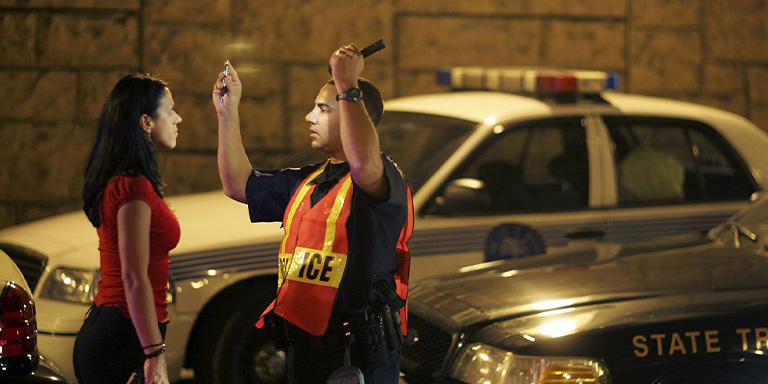
Every police officer is given the duty to protect the public they serve. One deadly threat to the motoring public is when an individual drives under the influence of drugs or alcohol. This is called “driving while intoxicated,” or DWI. Police officers must recognize the signs of impaired drivers and have the training necessary to arrest and aid in successful prosecutions.
In this guide, we'll offer some helpful advice for police officers on dealing with intoxicated motorists. We'll outline how to recognize impaired driving, how to handle drunk or high drivers, different kinds of field sobriety tests and more.
The Scope of the Problem
According to the United States Department of Transportation, over ten thousand people died in motor vehicle crashes involving an intoxicated driver in 2019. Statistically, every fifty-two minutes a drunk driver causes the death of another person. The victims of these crashes are random and often include children.
Alcohol is by far the largest (but not the only) problem substance. Addictive prescription drugs and the legalization of marijuana have both had an impact on impaired driving.
Recognizing Signs of Impaired Drivers
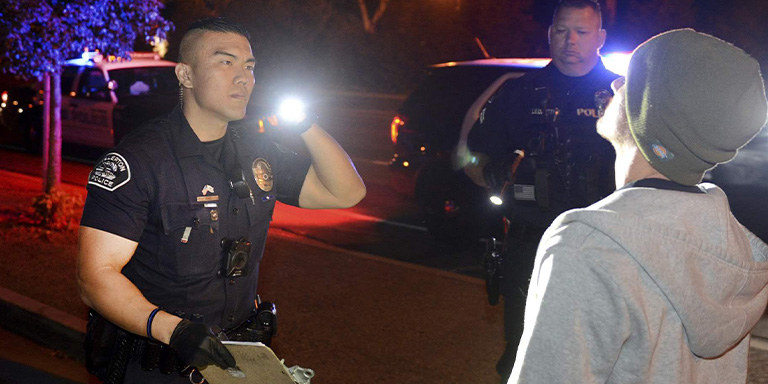
Police officers and the motoring public should be able to identify signs that a driver may be intoxicated. Speed is one indicator: an intoxicated driver may drive too fast or too slowly. In some cases, the driver may make erratic speed changes, moving very slowly one minute and then quickly increasing their speed the next minute.
The most obvious sign of an intoxicated driver is their inability to drive within the marked lanes. For example, a driver may appear to be driving normally, but then they'll drift across the center line into oncoming traffic, only to jerk the car back into the correct lane. The same is true of a driver drifting onto the shoulder of the roadway, then suddenly yanking the vehicle back into their lane. A driver operating their car at night with their lights off or with their turn signal blinking when there is nowhere to turn may also be signs of impairment.
There are several other things that may cause a driver to drift. A driver may be tired and on the verge of falling asleep. They might be distracted because they're dialing their cell phone, eating, or even worse — texting. Other warning signs include exaggerated driver actions like overshooting a stop sign before stopping (or quickly stopping short). Intoxicated drivers also have trouble negotiating curves, and they may over or undershoot their lane.
One note to non-law enforcement readers: if you suspect that a motorist in front of you is intoxicated, slow down and put plenty of distance between your car and theirs. When it's safe to do so, pull over and call 911. Report the erratic driver to the police, describing the vehicle, general location and direction of travel. Your action may save lives.
Handling the Traffic Stop
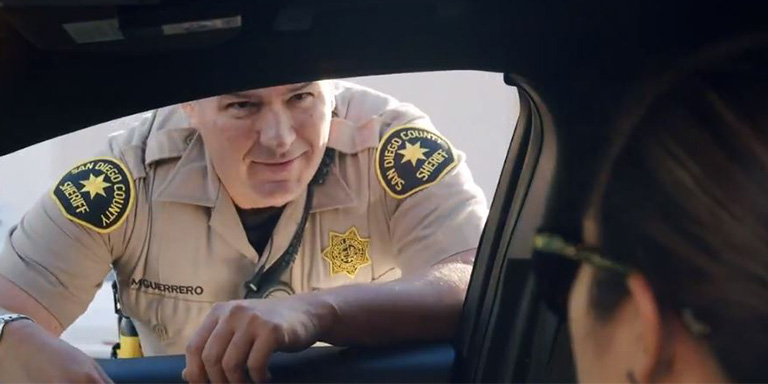
A police officer may develop a reasonable suspicion that a vehicle operator may be intoxicated based on their observations of the person's driving. Officers must use caution when pulling the car over, as intoxicated drivers are unpredictable. They may speed up and attempt to elude the pursuing officer (our officer's guide to vehicle pursuits goes in-depth on this topic), or they may slam on their brakes, stopping short in the middle of the roadway. When it comes to drivers under the influence, be ready for almost anything.
After stopping the vehicle, officers must move from a reasonable suspicion to probable cause. Car stops are allowed based on reasonable suspicion; however, it's the officer's investigation that must establish probable cause to make an arrest.
If possible, the officer should select a strategic spot to initiate the car stop. The perfect area would be well lit and have either a wide, flat shoulder or a sidewalk where the officer can conduct balance tests away from traffic. Unfortunately, many times this luxury isn't available; some stops have to be made quickly to prevent a crash.
If the officer doesn't have a partner, it's wise to call a second unit call for backup. Intoxicated drivers typically have impaired judgment, and they are often capable of aggressive and unpredictable, violent actions. To prepare for these instances, read our guide to law enforcement de-escalation techniques.
The officer should instruct the driver to turn off their car and remove the keys from the ignition. This is important as, in their impaired state, they may decide to drive away, possibly injuring the officer at their door. The officer should note the driver's motor skills in turning off the car and removing the keys. Slow or confused movements or fumbling with the keys may also add to the probability that the suspect is intoxicated.
The first step is to ask the driver if they have had anything to drink. The officer is not necessarily looking for a confession; more than anything, they're attempting to smell the driver's breath as they answer the question. Check to see if the suspect slurs their words, is slow to answer or seems otherwise confused. These indicators will help to separate a sleepy driver from an intoxicated driver. Once the officer is reasonably sure the operator may be impaired, it's time to ask them to exit the vehicle.
During this time, the officer should observe the driver's motor skills in opening the door and exiting the vehicle. For example, if the driver is balancing themselves by holding on to the side of their car as they walk, this is a sign of possible substance-induced motor skill problems. Remember, though: one indicator alone does not establish probable cause. In this example, the driver holding onto the door may be doing so because of a leg or foot injury. The officer making the stop must observe multiple suspicious behaviors to find probable cause to make an arrest.
Balance Tests
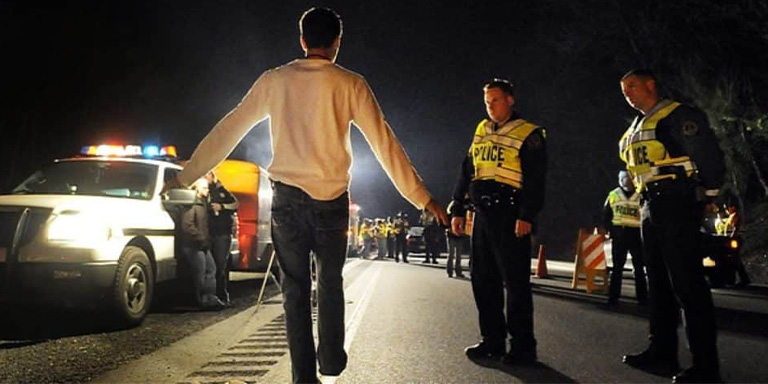
Once they're out of the car, the driver should be directed to a relatively safe area (such as a sidewalk) for balance tests. The National Highway Transportation Safety Administration recognizes three standardized field sobriety tests: the one-leg stand test, the walk-and-turn test and the horizontal gaze nystagmus test.
During the one-leg stand test, the officer instructs the driver to stand with one foot approximately six inches off the ground while counting out loud (by thousands) for about 30 seconds. During this time, the driver must keep their eyes closed and arms at their sides. During this test, the officer should watch to see if the driver sways, moves their arms away from their sides for balance or puts their foot down for balance.
The walk and turn (WAT) test is also referred to as the nine-step heel-to-toe test. The officer shows the driver a straight line on the pavement and demonstrates the test, requesting that the driver complete it themselves. The driver must take nine steps, walking heel-to-toe with their arms at their sides. They must then turn around on one foot and walk back, again using nine heel-to-toe steps. During this test, the officer should look out for the following signs of impairment:
- Starting too soon
- Using arms for balance
- Not walking heel-to-toe
- Not walking in a straight line
- Taking the wrong amount of steps
- Turning around incorrectly
- Losing balance and/or stepping off the line
During the horizontal gaze nystagmus (HGN) test, the officer checks the suspect for nystagmus, or an involuntary jerking of the eyes as the driver gazes toward the side. In addition to nystagmus being involuntary, the person experiencing it is unaware of its occurrence.
The officer instructs the suspect to follow a stimulus (usually a flashlight) to the left and the right with just their eyes. The officer should note the angle at which the pupil starts to exhibit nystagmus; the early onset of nystagmus before or at a 45-degree angle is a sign of high blood alcohol concentration. A proper test notes three possible clues per eye (for a total of six). A driver exhibiting a score of four or more clues has failed this test.
Police must follow detailed procedures when administering the horizontal gaze nystagmus test, and they must know how to identify and score the clues. Most officers receive special training in properly conducting this sobriety test. It is also notable that some persons with certain eye conditions may fail the test regardless of impairment.
There are also non-standardized sobriety tests officers may use, including:
- The finger-to-nose test, in which the suspect is asked to touch their finger to their nose six times (three with each hand)
- The Romberg balance test, in which the suspect is instructed to stand up straight, close their eyes and estimate as to when thirty seconds have passed
- The hand-pat test, in which the suspect is asked to extended both hands forward with their palms together, rotate their top hand so the back of it touches the bottom palm, then rotate the top hand again so both palms are touching once again (the suspect repeats the process until asked to stop, and is sometimes asked to count each rotation)
- The vertical gaze nystagmus test (essentially a vertical iteration of the horizontal gaze nystagmus test)
Identifying a Person Under the Influence of Drugs
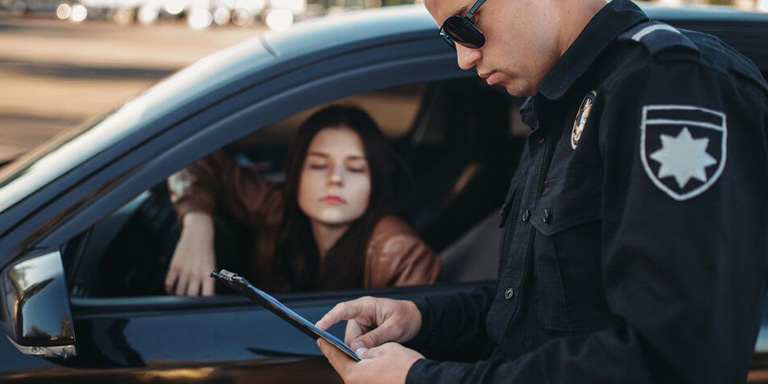
All fifty states implement the use of drug recognition experts, or DREs. These are specially trained police officers who have completed extensive training in identifying persons under the influence of drugs. They use a twelve-step process:
- Review results of a breath test or breathalyzer
- Interview the arresting officer
- Conduct a preliminary examination of the subject (first pulse reading)
- Complete an eye examination
- Complete four psychophysical tests (balance tests)
- Takes vital signs (blood pressure, second pulse reading and temperature check)
- Examination of pupils under different lighting conditions
- Examination of the subject's skeletal muscle tone
- Check for injection sites and take a third pulse reading
- Read Miranda warning, then question the subject about drug use
- Complete an analysis, form an opinion
- Toxicological examination (DRE requests a urine, blood or saliva sample for toxicology lab analysis)
Drug recognition experts are useful when a subject seems to exhibit signs of intoxication but their blood alcohol content doesn't exceed the legal limit. DREs can confirm that a suspect is indeed under the influence of illegal substances in order to keep them off the roadways.
Making the Arrest
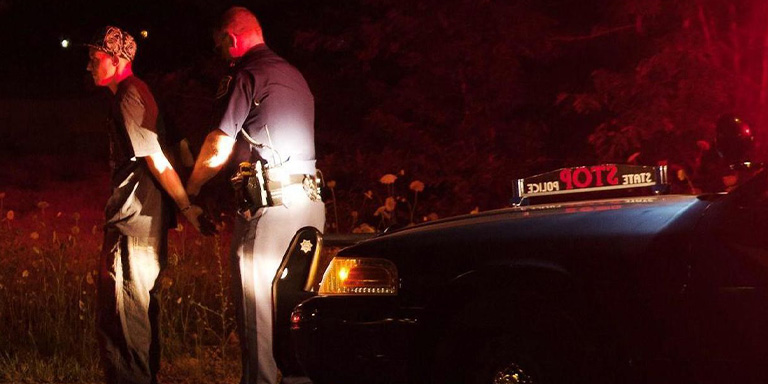
The officer makes the decision to arrest a driver under the influence of alcohol or drugs at the scene of the car stop based on their investigation. Any subsequent testing after the operator is arrested is only used to determine the person's level of intoxication or blood alcohol content (BAC). In certain states, penalties increase incrementally for drivers with higher BACs, but a baseline blood alcohol content reading of 0.08 identifies a driver as impaired in all fifty states.
In some cases, a lower BAC reading may also violate the law. For example, the Federal Motor Carrier Safety Administration, which controls standards and practices for commercial drivers, has set the legal blood alcohol content limit for professional truck drivers to 0.04.
Mechanical Tests
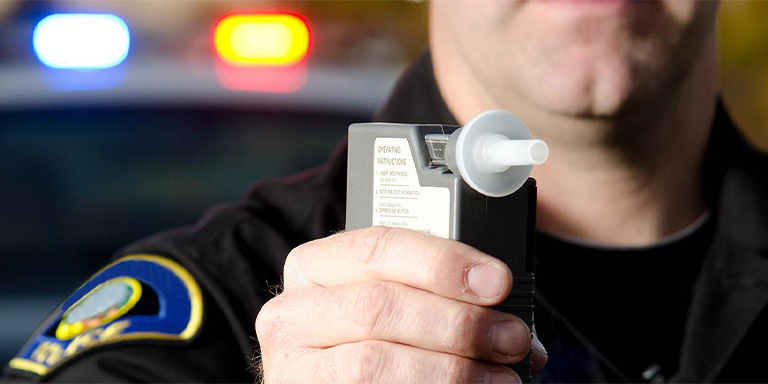
State laws differ on the type of mechanical apparatus that may be used to determine blood alcohol content. For example, some states use a portable breath testing device administered at the scene, while others keep breathalyzers at the station.
Some states have replaced breathalyzers with a more advanced and expensive instrument called the Dräger Alcotest machine. All of the instruments mentioned require the driver to blow a breath sample into the device. Drivers who refuse to provide a breath sample will receive a separate charge for their refusal. In some cases, such as auto crashes or violent crimes, blood may be drawn at a medical facility to determine the suspect's blood alcohol content.
Sobriety Checkpoints
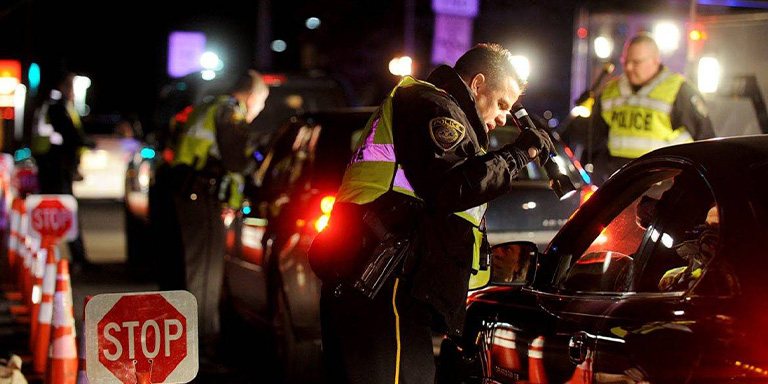
Checkpoints are generally more about making the public aware and influencing behavior than making many arrests. In most states, a checkpoint must be advertised before the event. Additionally, the checkpoint must be well marked, giving drivers advance notice of a checkpoint ahead.
Checkpoints must not unduly delay motorists or backup traffic. Many checkpoints only stop every fifth or sixth vehicle to maintain the flow of traffic. Sobriety checkpoints are an effective tool to publicize that the police are working to keep intoxicated drivers off the roadways. Many checkpoints coincide with holiday weekends — times where people tend to overindulge.
Police officers have a solemn duty to keep roadways safe and free from deadly drunk or high drivers. Law enforcement is all that stands between responsible drivers and those who irresponsibly get behind the wheel, causing crashes and deaths. With each new court ruling, officers' jobs get a little more complicated, but they continue to fight to protect us, saving lives and keeping our roads safe.