

The possible abduction of a child is one of the most important and challenging cases police officers investigate. In many instances, these cases are often a matter of life and death, and extremely time‐sensitive.
Fortunately, child abduction cases are rare. A small percentage of missing persons cases are abductions, and even a much smaller percentage of those are classified as stranger abductions. The findings of the initial police investigation determine in which direction the case goes. Officers should take these cases very seriously, and this guide will lay out best practices and procedures to help police succeed.
Four Classifications of Missing Children
Generally, there are four classifications of missing child cases. Whatever classification the investigation falls into will help determine the methods by which officers search for the missing child. Some classifications are more common than others, but the investigating officers should be able to distinguish which category their case falls into.
Voluntarily Missing
Many children reported missing are teens between thirteen and seventeen years old. A lot of these cases include runaways, or what is considered "voluntarily missing" children. An argument or conflict with a parent may precede the child's absence. Various types of abuse in the home are sometimes a motivating factor. Sadly, some children are considered unimportant by the authority figures in their life. They have not been properly cared or provided for by a responsible adult and end up living on the streets.
When officers suspect a voluntarily missing runaway, they should check available records to see if the child has a history of running off and from where they were previously recovered. It's important to remember that neither of these circumstances alone precludes the child from being abducted by a stranger; a young teen wandering on their own can go from being voluntarily missing to becoming an easy target for abduction by a stranger.
In these cases, the investigation starts with the child's known hangouts and visits to their friends' homes or the homes of relatives. In some instances, runaways are victims of parental physical or sexual abuse or an unhappy home life.
Parental Kidnapping
This is where a parent or other relative illegally takes or conceals a child from the child's rightful guardian. These types of kidnappings are common during ongoing domestic problems, divorce, separation proceedings and custody battles. The officer should confirm the guardians' marital status and review any court papers regarding custody or separation. It's vital for officers always to establish the missing child's legal custody.
Stranger Abductions
While stranger abductions make up the smallest group of abductions in terms of numbers, they are also the most dangerous and have the most significant percentage of tragic outcomes. Officers need to get the jump on these kinds of cases.
Unknown Missing
This is where the facts uncovered are too insufficient to determine what happened to a child (beyond the fact that they're missing). This often occurs with smaller children who wander away from home and become lost in wooded areas or wander towards hazardous locations, such as bodies of water. A lot of missing child cases initially start in this category until evidence involving foul play is uncovered.
The Initial Officer Investigation

Most missing child cases begin with a call from a parent or relative to the police, reporting their child missing. A uniformed patrol officer usually answers the call. The initial investigation attempts to identify the facts surrounding the disappearance and aid in providing some direction to the case.
The officer should interview each parent to determine the likelihood of whether the child is voluntarily missing, abducted by a parent or relative or taken by a stranger. The circumstances surrounding the disappearance may point in a specific direction.
The parents should be asked where and when they last saw the child, and if other persons were in the area. Officers complete a missing child report during this interview and enter it into the National Crime Information Center, Missing Person File (NCIC‐MPF). If the child was not immediately reported missing over the course of their disappearance, the officer should note that information, including the reason why the parents waited to report the disappearance.
In completing the NCIC Missing Person entry form, the officer documents the child's age, height, weight and physical characteristics. They should also note any outstanding features, such as scars or birthmarks. A description of the clothes the child was wearing when they were last seen and any recent photographs are also important: officers must enter this information into the NCIC database without delay.
As soon as they gather the descriptive information, the investigating officer should transmit a BOLO (Be On the LookOut) radio broadcast to all units with the missing child's information, description and last known whereabouts.
During the initial investigation, the officer should identify and verify the identities of all persons present. This can help secondary investigators identify persons to be interviewed later if the case is determined to be an abduction (see our officer's guide to custodial interviews for tips on this subject).
Officers should also ask the parents if they have a child identification kit. Many parents complete child ID kits, which are commercially available and provided by some schools. These kits allow a parent to collect and preserve a DNA sample and a set of the child's fingerprints for cases such as these. If a parent or relative is identified as a potential abductor, officers must collect all possible physical identifiers, the abductor's known addresses and description of their vehicle; this information could prove pivotal later.
Searching the Residence

Unless evidence is uncovered indicating an abduction occurred, the initial officer must search the child's residence. A search is especially important in the disappearance of small children. Police should thoroughly search the home and any adjacent structures (such as garages or outbuildings).
Special attention must be given to potential hiding places, including under beds, in attics or in crawl spaces. Searches should also include the inside of old appliances, especially refrigerators and cars (including the trunk). The search should include any area large enough for a child to fit. Many children end up being found hiding, asleep or trapped somewhere on the property.
Stranger Abduction
If the child is not found during the initial search of the residence and evidence does not suggest a runaway or parental abduction, then police must consider a stranger abduction. If any evidence points in this direction, the investigation will quickly broaden.
One specific investigator is assigned to lead the investigation, and a command post will be set up away from the residence. A police officer should remain at the home to allow contact between the command center and the parents. They may also monitor the telephone for a potential ransom demand or any communication with or about the child.
The Search

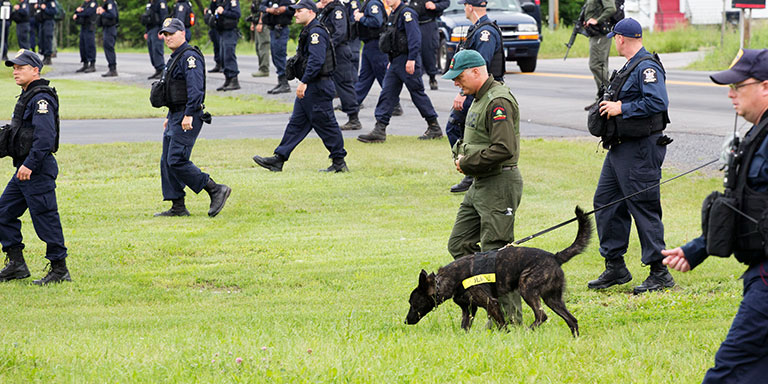
Search teams will be directed and mobilized to cover specific areas. They usually start where the child was last observed and work outward in all directions. As the scope of the search expands, searchers may be both professional and non‐sworn personnel. Law enforcement may call on specific organizations such as volunteer firefighters, fire‐police and neighborhood watch patrols to assist. If civilians are permitted to join the search, they must check in at the command post and provide a photo ID. All searchers will be part of a supervised team and will be given specific instructions on what evidence they may find and what to do if they locate any evidence.
One fact officers should keep in the back of their minds is that, just like in arson cases, child abductors like to return to the scene and become involved. They do this to monitor the case's progress, and sometimes they even volunteer to help search. Be weary of an abductor hiding in plain sight.
The search parties will look for the child and evidence that might help identify an abductor or travel direction. Evidence could be as obvious as a piece of the child's clothing or as obscure as a single small shoe impression in the soil.
Police officers must call in every resource at the disposal of the department (as appropriate). This can include helicopters for aerial surveillance of the area, bloodhounds for tracking and dive teams for searching wetlands. Specialized heat or thermal detecting equipment on helicopters may be available from state or federal agencies or the National Guard. Missing child investigations are time‐sensitive events where investigators can deploy massive resources in a short amount of time. With each hour that passes, the odds of a successful recovery lessen.
Behind the Scenes

The first forty-eight to seventy‐two hours are critical in trying to recover a child safely. At some point, the rescue mission may become a recovery mission. Investigators work around the clock at a fevered pace to run down leads, attempting to identify a suspect.
While area searches are underway, investigators will conduct interviews with every household member. Sibling interviews can often identify information that parents either don't know or have not shared. Investigators may tactfully ask about physical punishment or abuse within the family. Siblings may also know if the child ever spoke of running away, having a "secret, special friend," or if they ever contemplated suicide. Investigators should also identify and interview anyone who has recently visited the residence, such as delivery or service personnel. Persons living in the neighborhood may also be interviewed as potential witnesses. Any leads that are developed must be researched and investigated.
Officers should also search databases for known sex offenders who live in the general area. Police must follow up these leads, usually with home visits, interviews of the offenders and interviews of the neighbors when appropriate.
Depending on the location, investigators may gather video surveillance recordings from the surrounding area that show street views in urban environments. Officers will review these recordings carefully, looking for the missing child in a vehicle, or a known offender in the area near the time of the disappearance.
Asking the Public to Help

Getting the word out to as many people as possible as quickly as possible is crucial. People make observations all the time, and something a person might have earlier dismissed now may provide critical information to the case. The effective use of social media platforms as a force multiplier is perhaps more important than television press conferences. A public information officer should post a missing person flyer with the circumstances of the disappearance and police contact information to all popular social media sites.
Officers can establish a hotline staffed twenty-four hours a day, seeking information on the child's whereabouts. They may also offer a reward for information. Another option is to hold a press conference explaining the missing child case's circumstances, showing the child's picture, the toll-free tip line and the offering of a reward. The police chief or another high ranking official can use the press conference to make a personal appeal for the public's help.
AMBER Alerts

In 1996 in Arlington, Texas, resident Amber Hagerman, age 9, was abducted and murdered while riding her bicycle. Shocked by this senseless tragedy, community members called Dallas radio stations, suggesting they announce special alerts to inform the public of missing child events to help prevent future incidents.
This was the birth of the AMBER Alert system, now operating in all fifty states. According to the National Center for Missing & Exploited Children, as of May 2020, 988 children have been rescued specifically because of AMBER Alerts.
Criteria for an AMBER Alert
AMBER Alerts are used very sparingly over each state's emergency broadcast system. Cases must meet specific criteria before officials can make a public appeal over the system.
The first and most difficult criteria to meet is the reasonable belief that a child was abducted; police should have some evidence that an abduction occurred. Stranger abductions are the most dangerous and are the primary reason for the AMBER Alert system.
The second criteria is the belief that the child is in imminent danger of injury or death. In rare cases, parental abduction may meet the requirements based on well‐grounded facts that the abductor intends to harm their child. Each case is reviewed objectively, and a judgment call is made based on the evidence as to whether or not the alert is appropriate and necessary.
The AMBER alert system is designed to be used for child abductions by strangers; therefore, the person abducted must be seventeen years old or younger. The abducted child's information must be complete and entered into the National Crime Information Center system.
Lastly, the police must have enough descriptive information about the victim and the abduction circumstances to warrant seeking the public's assistance in the child's recovery. Each police department has detailed procedures for the investigation of missing children. Police officers should take their guidance and direction from these procedures and always act within their specific department's policies.
Children Who Remain Missing
Few cases are taken as personally by police officers as the abduction of a child by a stranger. Police officers understand the risks and the stark reality of these cases going unsolved. The longer investigations take without resolution, the harder these cases become to solve, and many do not end well.
Investigators will continue to conduct multiple searches in the same areas, looking for the smallest clues. Bodies of water will be searched by scuba divers and dragged from the surface by boat. Each person of interest or potential witness will be interviewed multiple times. National experts may be brought in to study the topography of the area and provide advice. Experts on missing and exploited children and serial crime profilers may also conduct analyses of the case.
Unresolved cases will remain open, and leads will continue to be followed as they are identified for as long as the case remains unsolved. Children have been located alive more than a decade after being abducted. These cases are relatively rare, but occasionally they do happen. It's important for anyone involved with the case to stay diligent, follow the evidence and, hopefully, work toward the safe recovery of a missing child.