

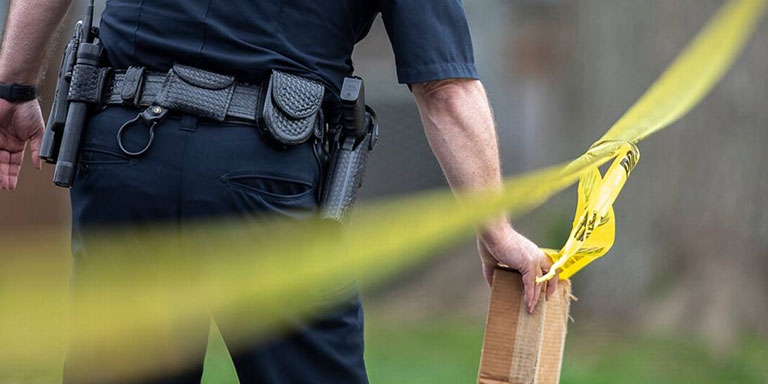
Preserving a crime scene may mean the difference between solving a crime, or that crime remaining a mystery. A common principle of crime scenes is that whenever anyone enters or leaves, some evidence is removed, and other evidence is left behind. It could be as small as a human hair, a fingerprint or a clothing fiber, or it could be as large as shoe prints, tire tracks or a blood trail. One of the investigating officer's primary functions is controlling and preserving the crime scene without contaminating it.
Status of a Crime Scene
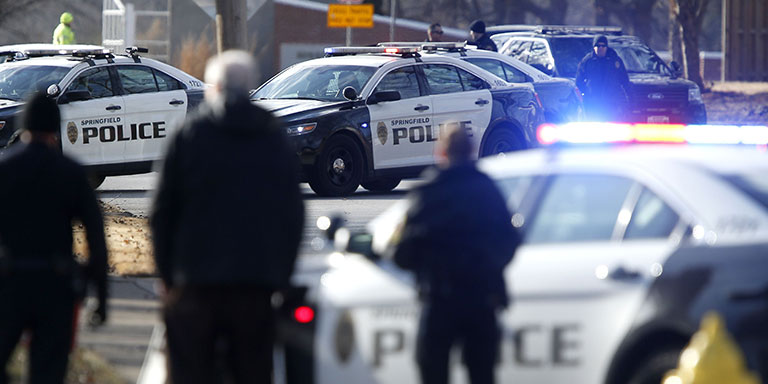
How an officer responds at the scene of a crime depends on the type of call. Responding to a crime in progress requires different actions than approaching a scene where the crime has already occurred.
During a crime in progress call, the officer's priority is to respond rapidly to the scene, check for a perpetrator and, if possible, take them into custody. Equally important is to give aid to any victims who may be injured. The first arriving officer should verify that the scene is safe before allowing medical first responders to enter and provide assistance to injured persons. In an active crime scene, officers must protect their life and the lives of any victims before taking action to preserve the scene.
If people are present at the crime scene, it is the officer's responsibility to identify them, limit their movements and separately secure them. Witnesses should be directed to a specific location, yet be separated and monitored so they don't discuss their unique observations. Putting the witnesses together can lead them all to tell the same story later. Family members and friends of the victim must be handled with compassion while limiting their movements — the goal is to prevent anyone from destroying, compromising or contaminating potential evidence. They must also be kept available to be interviewed later by the investigating officer or detective.
The way a crime scene is handled is determined by the scope and severity of the crime. A daytime burglary may be investigated (and the scene processed) by the initial responding patrol officer. Homicides and other serious offenses require a separate forensics officer to process the scene and a detective to conduct a secondary investigation.
Take Pictures and Mental Notes
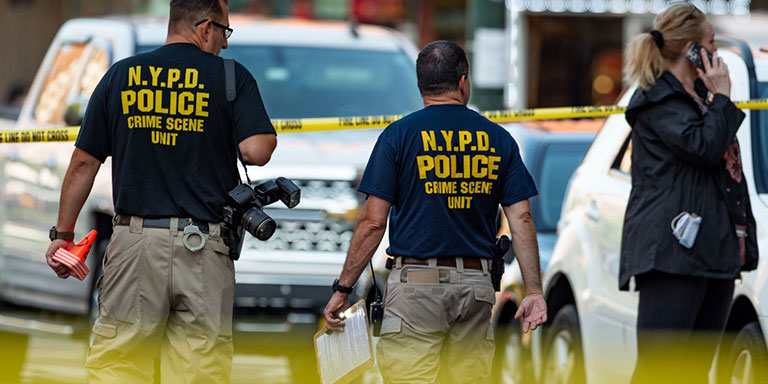
Once the scene is safe, the officer should start the mental note taking process, paying special attention to how they entered, what they saw and what they moved, touched or disturbed in their search for the perpetrator. In addition, it's important to note who was there and where each person was when the officer arrived.
Sharing mental notes with the forensics officer can potentially change the way some items are processed. It can be embarrassing when a detailed, latent print is recovered, only for it to match one of the officers at the scene later.
A body-worn camera is an excellent tool for surveying a crime scene, provided the officer has access to the video when they write their report. In the absence of video capabilities, officers may want to retrieve a camera from their patrol bag and take photographs of the scene (for tips on packing your patrol bag, take a look at our patrol officer's checklist).
Establish a Perimeter
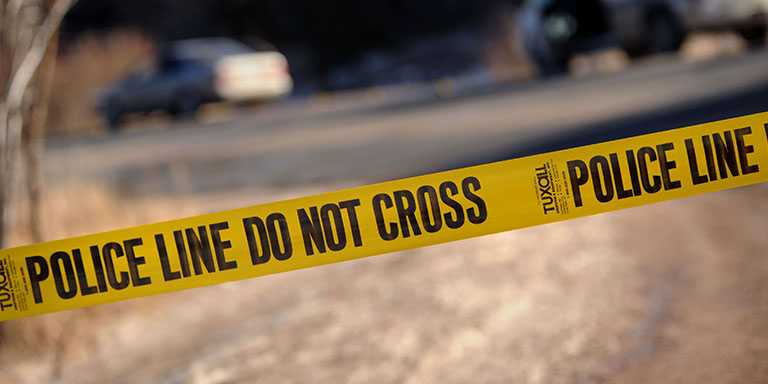
Once the scene is safe, victims receive treatment and witnesses and suspects are secured separately, it's time to establish a perimeter.
The first step is to determine the focal point (or center) of the crime scene. In the case of a homicide, the focal point is the location of the body. At a robbery scene, it's the room where the robbery occurred. If there is a point of forced entry but no other immediately visible evidence, that point of entry can serve as the focal point.
Once officers establish a focal point, they must work outward in all directions. The scene should include where the crime happened, the suspected entry and exit path of the perpetrators and any evidence observed. It should extend outward to include impression evidence such as footprints or tire tracks near the scene.
The guiding rule for establishing a crime scene perimeter is generally to go bigger than what may be needed. A crime scene can always be reduced in size later when the area is processed. If the scene is too small, then significant evidence may be compromised because the area was left unsecured.
There's more to securing a crime scene than just unrolling a large spool of yellow police tape. Physical barriers may include ropes, traffic barrels and traffic cones, in addition to the well known crime scene tape. Sufficient personnel must be present to enforce the scene's boundaries and keep unauthorized personnel out. Fixed objects such as telephone poles, signposts and fence posts are commonly used to secure crime scene tape. Establishing a boundary where no fixed object exists usually requires the placement of a police car; affixing crime scene tape to the vehicle can solve this problem.
Identifying a Suspect's Movements
Officers should attempt to identify the suspect's point of entry and movements within the crime scene based on the available physical evidence. The suspect's point of exit is especially important, as this will give a starting point if a K-9 track is undertaken (be sure to read our police officer's guide to K-9 searches). If it is only possible to secure either the entry or exit point against foot traffic, the exit point should be given priority.
Unauthorized People
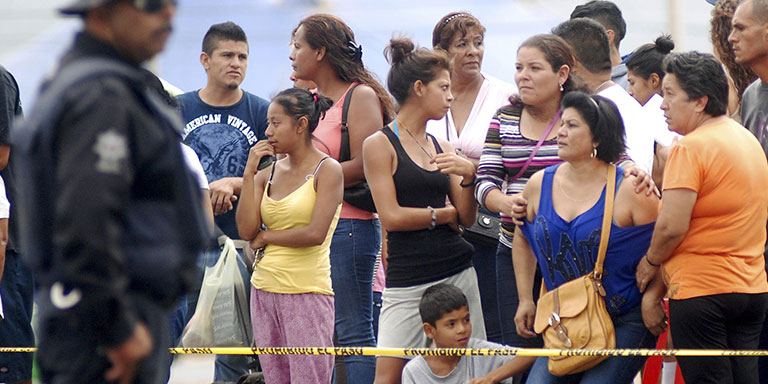
Keeping unauthorized people out of a crime scene is often more complicated than it may seem. First, all sides of the perimeter must be maintained, and people wishing to enter must be stopped if they are not there in any authorized, official capacity. Unauthorized people may include family members, interested neighbors, onlookers, local reporters and even local politicians.
One town mayor even tried to pull rank once, insisting he be allowed to pass. The officer controlling the perimeter pointed to the notebook he was holding. He explained that the names of every person entering the crime scene would be in the official report. If the mayor chose to enter the crime scene, his name would also be recorded. During any subsequent trial, he would likely have to explain why he entered an unprocessed crime scene. The mayor changed his mind and stayed behind the tape.
There should be only one authorized point of entry to a crime scene. At this designated point, one officer maintains the official crime scene log. This log documents each person entering, the agency they represent and the time they entered. The officer also needs to document the time each person exits the scene.
Conduct of Personnel on the Scene
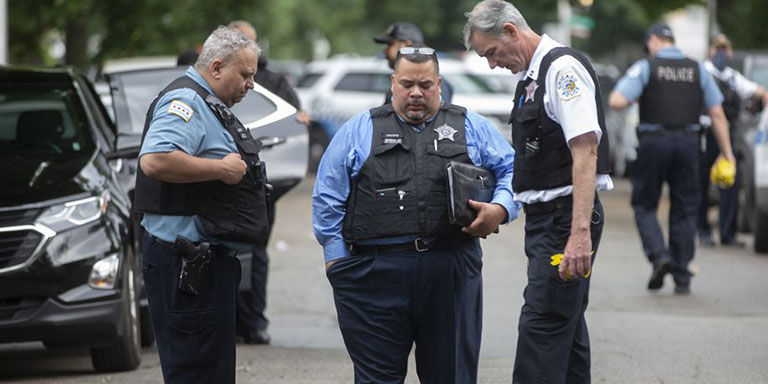
Much of this is common sense, but it's good to review the general principles so as to avoid mistakes. At any crime scene (but especially at serious, violent ones), there are things no one on the scene should do. There is no eating, drinking or smoking on a crime scene. Tobacco chewing is also taboo.
The scene must be left as close to untouched as possible. If a homicide scene has an unbearable odor, for example, resist the temptation to open a window or prop open doors to allow fresh air to enter. These actions may cause the temperature in the room to change significantly, and the temperature of a crime scene is part of the calculation in determining the time of death. Even casual, seemingly innocuous actions can have big consequences.
Moving around a crime scene, the initial officer must be aware of every step they take. There may be a small drop of blood on a carpet or a footprint impression that's hard to see; it's imperative not to disturb this evidence. The officer that is not careful can destroy evidence without even knowing or understanding what they've done.
It is never permissible to use any hardwired telephone at the scene or use the bathroom facilities. After the initial search for a perpetrator, the officer responsible for the scene should consider whether or not a search warrant may be required to look for further evidence. When in doubt, call a supervisor, or get authorization to contact a departmental legal advisor or member of the district attorney's office for guidance.
The Briefing and Documentation
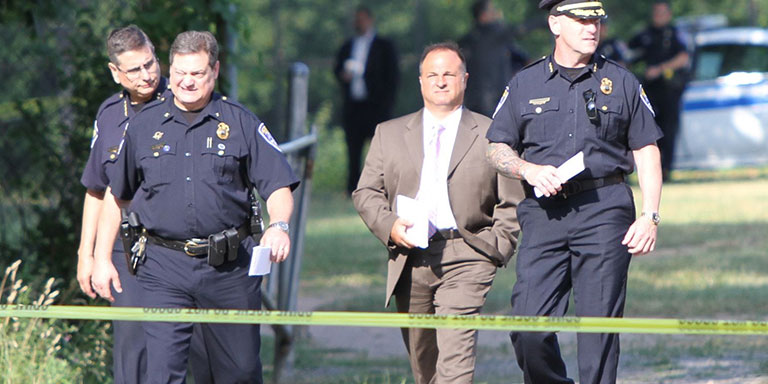
Officers at the scene must provide a detailed briefing to the detective investigating the case upon their arrival. This briefing should include what the officer did, what they observed and what was done before the detective arrived. Any evidence located by the officer should be pointed out. A list of witnesses or persons found at the crime scene should also be compiled and passed onto the detective.
A detailed explanation of the officer's actions should be documented in their report. The report starts with the moment they were dispatched or came upon the crime scene and ends with the moment they were instructed to clear the scene.
Every department has its own specific rules and guidelines for controlling and establishing crime scenes. Officers should read and retain a working knowledge of their department's policies and always follow the department's directives when securing a scene.
No two crime scenes are alike, and each presents unique challenges to the initial responding officers. Preserving the evidence at the scene can be crucial to identifying the perpetrator, and gathering sufficient, admissible evidence can help greatly in securing a conviction. For this reason, officers must take the task of preserving a crime scene very seriously. If they are well trained, thorough, diligent and deliberate in their actions, the process will go smoothly.