

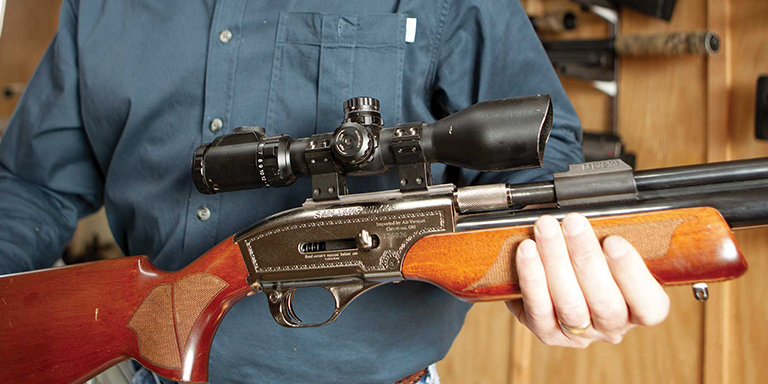
Air guns have a reputation as little more than toys, but they are weapons, and even useful tools in many cases. Like real firearms, there are many different types of air guns, each designed for specific purposes. If you need (or just want) one, a few hours of research are in order.
In this buyer's guide, we'll go over the types of air guns, the different propulsion systems they use and the pros and cons of each. We'll also cover types of ammunition and the most common use cases.
Air Gun Safety
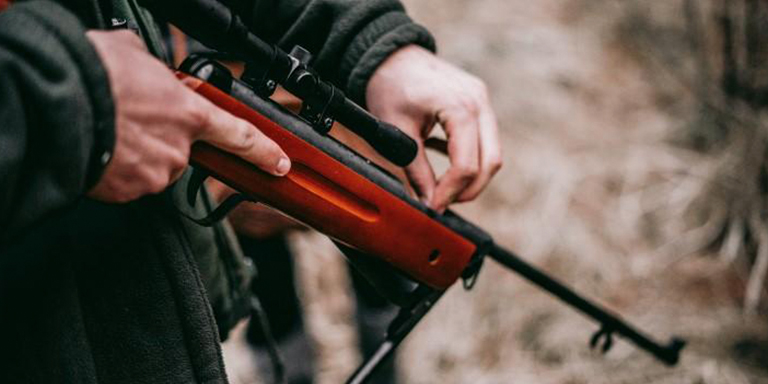
Although some air guns aren't designed to harm people or animals, some are — and all of them can. Of course, they aren't as deadly as real firearms, but they can injure and even kill. Data on this subject is sparse, but worldwide, as many as 100 people per year are killed by air guns.
Simply put, all air guns (with some exceptions for airsoft guns) should be treated the same as real firearms. Be sure always to follow the four rules of firearm safety:
Treat every gun (or airgun) as if it were loaded
Never aim a gun at anything you don't intend to injure or kill
Keep your finger off the trigger until ready to fire
Know who and what is beyond and around your target before firing
Although airsoft guns are designed to be fired at other people without causing serious harm, they should still be treated as real guns until the playing area is confirmed to be clear and all participants have donned appropriate safety gear.
Common Uses for Air Guns
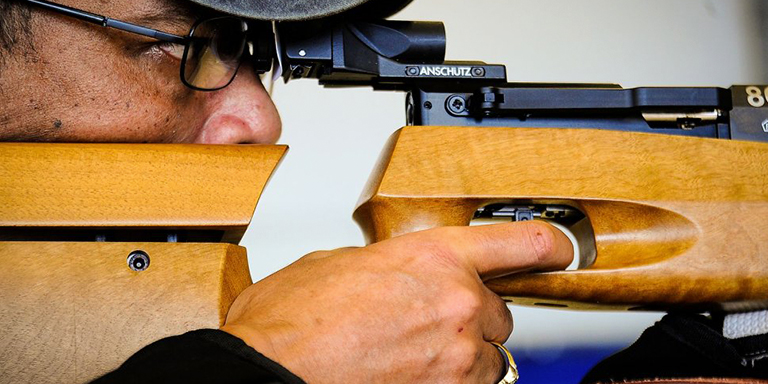
Most people buy air guns for one of four reasons.
Target Practice
Of course, real guns and air guns differ significantly when it comes to proper shooting technique, but the fundamentals are the same. Many shooters use air guns for regular target practice to save money on ammo. BBs and pellets aren't recommended for reuse after firing, but airgun ammo is much cheaper than real bullets.
Recreational Shooting
Shooting can be a fun hobby, and air guns let you do it more affordably and safely — even inside your home, with the right setup. And because air guns are whisper-quiet (or close to it), you don't need to worry about spooking your pets or annoying your neighbors.
Gun Safety Training
Whether you're slowly introducing your kids to gun safety or teaching an adult novice, it's best to start with something less lethal than firearms. Air guns are ideal for building good safety habits.
Pest and Varmint Control
Rabbits, moles, and other small animals can wreak havoc on your property, especially if you live in a rural area. Depending on your location and situation, killing such animals with real guns may be unsafe or inappropriate, making air guns the best option.
Types of Air Guns
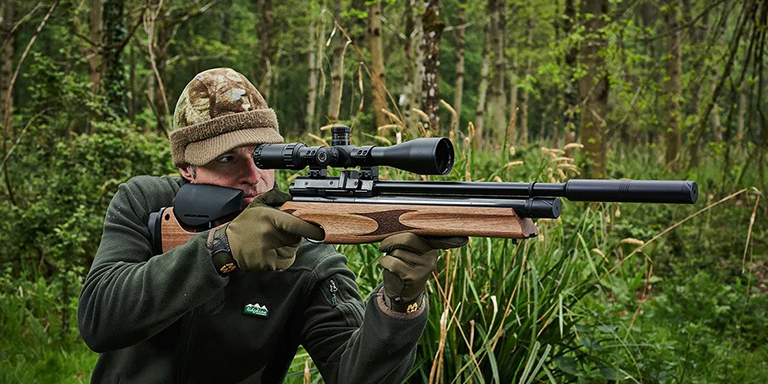
Air guns come in rifle, pistol and even shotgun and crossbow variants, but all of them use one of five propulsion systems. Each has distinct pros and cons, and knowing them will help you pick the best type for your needs.
CO2
Most commonly, air gun systems use portable CO2 (carbon dioxide) cartridges that can be swapped out like magazines when they're empty (although it takes a little longer). A sealed canister is inserted into the gun (usually in the grip or stock) and screwed into place. The compressed gas in the canister is then used to propel the pellets or BBs out of the barrel. Typically, a single CO2 cartridge is good for a few hundred shots.
CO2 guns are generally the least expensive kind, although the cost of the cartridges themselves adds up over time, especially if you shoot a lot. They offer simple controls, consistent accuracy and a high rate of fire, but they lack power compared to most other types of air guns.
Gas Piston
Also called a gas ram gun, this type of air gun uses a gas spring (as opposed to a coiled metal spring) to propel pellets or BBs. A gas spring is a sealed cylinder containing compressed air, a piston, and several other parts. Gas springs last much longer than metal springs, but they're much more expensive to produce and replace.
Gas piston air guns are usually more expensive than C02-powered models, but they're lighter and more powerful. However, the spring eventually wears out and needs to be replaced, and if it leaks, you're left with a useless rifle.
Spring Powered
These air guns can be considered the simpler, lower-tech counterpart to gas piston guns. They use traditional metal springs, which wear out more quickly but are cheaper and easier to replace. They also require more hand and finger strength from the user and can't be left cocked when not in use (or else the spring will quickly degrade).
Pre-Charged Pneumatic (PCP)
Whereas C02 guns use small, replaceable compressed gas tanks, pneumatic guns have a single large tank that can be refilled by the user. For low-power, entry-level models, any portable air compressor will do the job, but if you want a high-powered air gun to use for hunting or self-defense, you'll need a special, expensive kind of compressor to charge it.
The most powerful air guns use this design, but they're expensive, and if you run out of air in the field, your gun is useless until you can get back to your compressor to refill it.
Variable Pump
Like C02 guns, pump-action air guns are inexpensive, easy to use, and great for beginners. The user must manually pump the gun to build pressure in the air canister, much like a water gun. This way, the shooter can adjust the power of each shot by pumping more or less air.
Variable pump guns are affordable, simply built, easy to maintain and they usually last many years. The biggest downside is, of course, all the manual pumping. Some models require pumping before every shot whereas others can fire up to a few dozen shots at a time, but either way, it's your muscles doing most of the work.
Types of Air Gun Ammunition
There are a few different kinds of ammunition that air guns can fire, but BBs and pellets are the most common by far.
Airsoft BBs
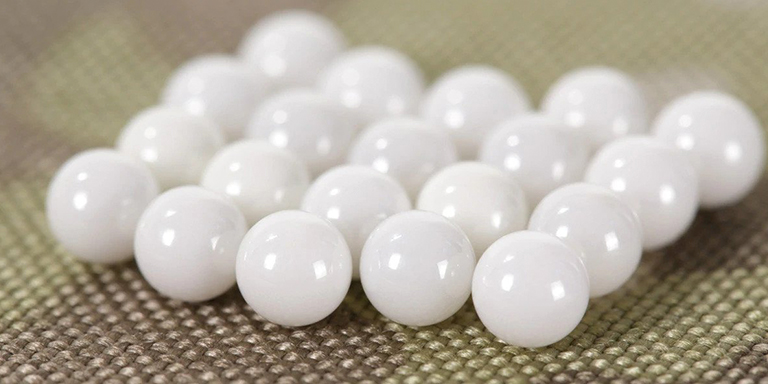
Because airsoft guns are closer to toys than weapons, the BBs they fire are made of foam or soft plastic. They come in a few different calibers, measured by their weight in grams. The slowest, least expensive airsoft BBs weigh about 0.12 grams, whereas those used for serious competitions or long-range shooting weigh 2-3x more.
Even though airsoft BBs are light and not designed to injure, they can cause serious harm if used improperly, especially to the eyes and ears.
Metal BBs
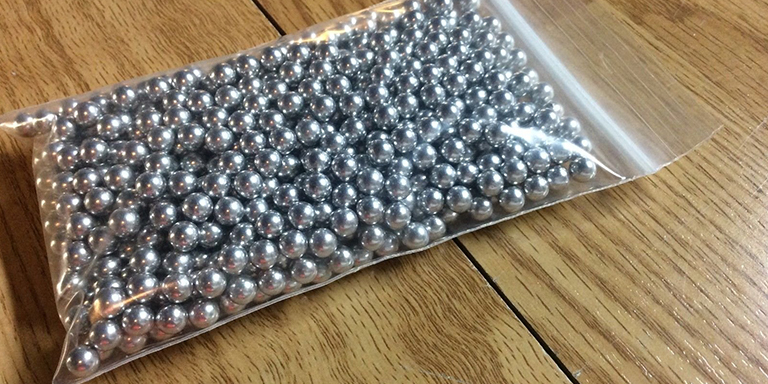
Air rifles that use metal BBs usually come in one of three calibers: .177 (most common), .22, or .25. Because BBs are spherical, they have a lot of drag and lose velocity quickly compared to pellets, which are shaped more like bullets. The majority of air rifles and pistols use metal BBs as ammunition; you can even get air-powered shotguns that fire multiple BBs at once.
Like real bullets, BBs can be made of a few different materials, namely copper, steel or lead. Copper BBs are cheaper, whereas steel offers better performance. Lead BBs are uncommon, mostly because lead is toxic if it enters the bloodstream or is absorbed through the skin.
Pellets
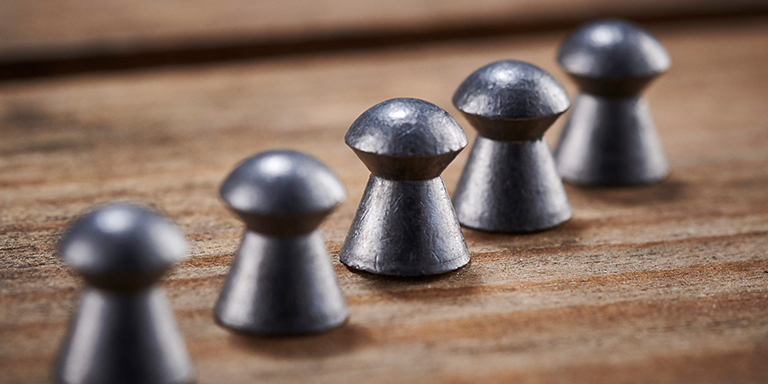
These more-or-less bullet-shaped projectiles are the heaviest and most dangerous kind. They're most often used for hunting. In places where it's difficult or impossible for civilians to legally own firearms, pellet guns are sometimes used for self-defense.
There are dozens of different kinds of pellets designed for different purposes. Like real bullets, there are pellets designed for maximum penetration, minimum penetration, competition shooting and many other uses. Pellet guns specially designed for hunting large animals are available in much bigger calibers, such as .357 and .50.
Darts and Arrows
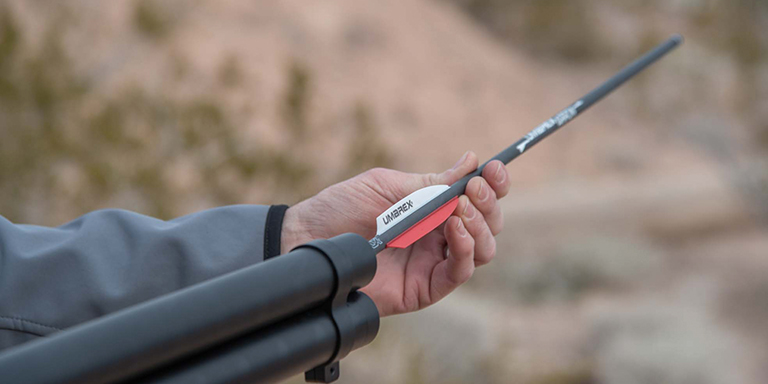
Air-powered tranquilizer rifles and crossbows are real, although they're much less common than BB and pellet guns. Dart guns are used to deliver drugs from a distance and are most common in zoos and specialized veterinary settings. Air-powered crossbows (also called air bows) are more common among hobbyists, but you can certainly hunt with them. Some air bows can even launch arrows with more velocity than a traditional crossbow.
Air guns are a great place to start for new shooters, and they can also fill many useful roles for which a firearm may not be the best choice. Buy your first air gun with confidence — just remember to always practice good gun safety habits and treat your air gun as you would treat a real firearm.