

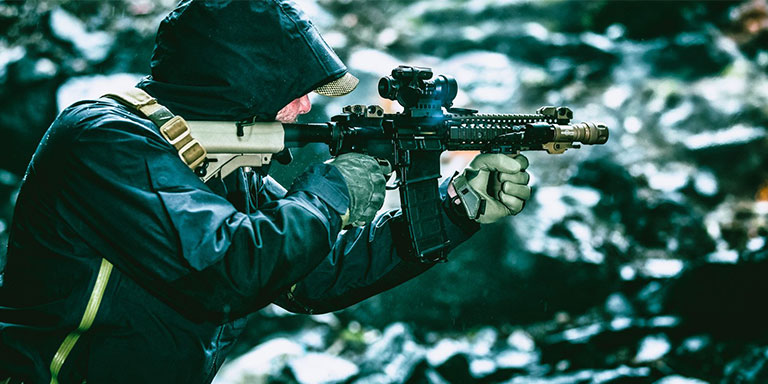
Some clichés aren't particularly useful, but some are important reminders of things we should never forget. One such trite-but-helpful cliché is: Train like you fight. There isn't necessarily anything wrong with showing up to the range in flip-flops carrying nothing but a few extra boxes of ammo, but if your goal is to get the most of your practice time, you should make it a habit to ensure that your range days strike a reasonable balance between mimicking real-world conditions and reducing friction and downtime.
In this guide, we'll go through a fairly comprehensive packing list of things you might want to consider adding to your range bag. We don't mean to imply that you'll need all of this stuff; most shooters won't. Instead, we suggest using this list as a template that you can customize to fit your needs and budget.
Train for Specific Scenarios
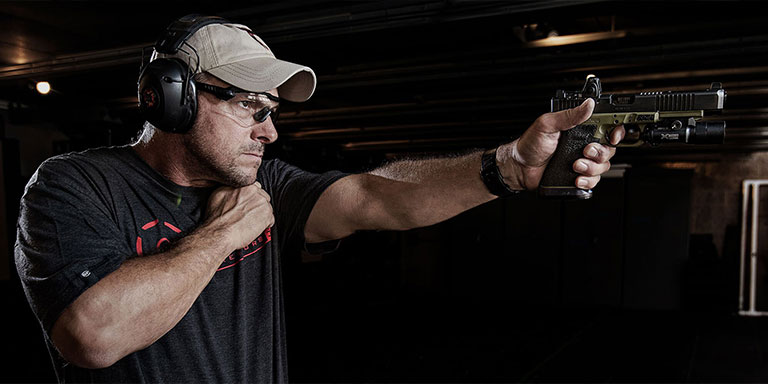
Before you start buying new gear or rearranging your kit, take some time to think about what, specifically, you want to get out of your range time. For example, SWAT officers generally train very differently from hunters, who, in turn, train differently from civilians who carry for personal defense. Are you training primarily for accuracy, speed, or rapid transitions between weapons? Perhaps you're an IDPA shooter and you need to work on shooting from unusual positions. Whatever the case may be, identify one or more specific goals and then pack your range bag accordingly.
Here are some examples of important variables to consider:
- Weather and terrain: Will it be hot, cold, wet, or dry? Will you be training in dirt, sand, snow, gravel, or grass?
- Ammunition: Will you be training for accuracy or doing speed drills? One tends to burn through a lot more ammo than the other.
- Cleaning supplies and tools: If you're training in rain or mud, or otherwise subjecting your gear to harsh conditions, be prepared to make minor repairs and adjustments.
- Support: Are you training solo, with a single partner, or with a team? If you're going out with others, who's bringing what?
The Essentials: Weapons, Magazines, Tools, and Safety Gear
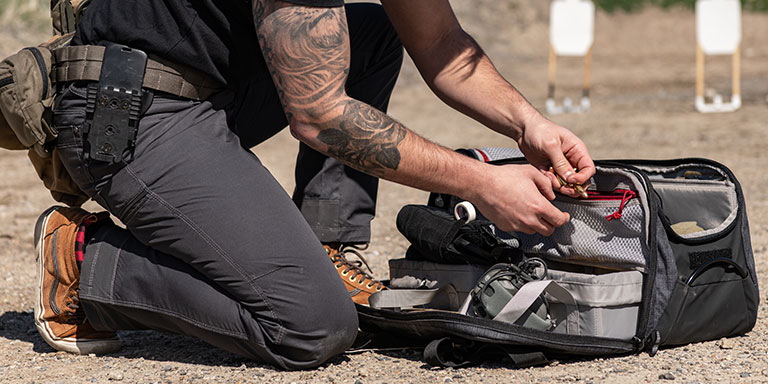
This is the stuff you'll need for any range day, no matter the end goal.
- Primary and secondary weapons: You won't get much done without these (obviously).
- Magazines for all weapons: As a rough rule of thumb, we recommend four magazines or speed loaders per weapon if you're doing accuracy training. Double that for speed and stress drills.
- Ammo: Bring however much you think you'll need, and then a little more. A surplus is better than a shortfall.
- Snap caps: There are many shooting drills for which live ammo isn't necessary. It's safer (and cheaper) to use dummy ammo whenever possible.
- Basic tools: We suggest a versatile multitool and a small gunsmithing kit that includes punches, a small hammer, clamps, and hex keys. These aren't for major repairs but rather quick fixes and adjustments: wobbly laser modules, loose screws, sight adjustments, and the like.
- Appropriate clothing: If it's cold, wear base layers and removable outer layers. If it's hot, wear lightweight, long sleeves and pants that will block the sun without overheating. You get the idea.
- Eye protection: High-end tactical eyewear is all well and good, but for basic safety, anything that protects your eyes from flying brass will do the trick.
- Hearing protection: Even if you're shooting outdoors, and even if you have a suppressor, you still need to protect your ears. All gunshots are loud, and permanent hearing damage is a real possibility without adequate protection.
- Range bag: A gym bag or duffle bag is fine for casual range days, but for serious training, you'll want a dedicated range bag.
Spotting and Targeting Tools
These items are especially important if you're dialing in accuracy at long range.
- Spotting scope: A good monocular or spotting scope improves results and saves a lot of time. If you're working with a spotter, consider packing some rangefinder binoculars as well.
- Marking and data capture: Bring a waterproof notebook and/or DOPE card (Data on Previous Engagements) for rifle days. If you're recording video data for later review, consider a remote control that lets you start and stop recording without having to leave your shooting position every time.
Gloves and Hand Protection
Even with good form, pulling the trigger hundreds of times in one day usually causes minor hand issues of one kind or another. The right protective gear can make these less of a problem.
- Shooting gloves: These aren't strictly necessary in most cases, but if you're going to be on the firing line for hours. A good pair of tactical gloves improves grip and reduces blisters.
- Tape: If you start getting hotspots on or between your fingers, a bit of medical tape will help stop them from getting worse.
Footwear
If you're going to be standing still and shooting at stationary targets all day, then any closed-toed shoe that's reasonably comfortable and supportive should be fine. However, if you plan to fire while moving, or if you'll be doing high-intensity stress drills, you'll want purpose-built footwear.
- Boots: Any training that demands consistent traction or puts heavy strain on your feet requires durable tactical boots.
- Socks: Good boots are only part of the equation; you'll want high-quality tactical socks, too (ideally a thin, inner pair and a thicker, outer pair).
Tactical Gear
Even if you're not necessarily training for combat encounters, certain gear can make your range day more productive and comfortable.
- Pouches: Tactical pouches come in four main varieties: ammo, medical, admin, and dump bags. All are useful for most shooters.
- Slings and holsters: Unless you're shooting from the bench all day, you'll need a solid gun holster for your sidearm, at minimum.
- Weatherproofing: Keep critical or fragile items (phones, documents, batteries) in small dry sacks or plastic bags inside your pouches. Even light rain will soak through your exterior gear in short order.
Inclement Weather Defense
In many parts of the country, you're more likely than not to face some kind of less-than-ideal weather conditions, especially if you plan to shoot for most of the day.
- Wet weather gear: A waterproof jacket or poncho never hurts. Alternatively, you can use a tarp and a few tent poles to rig a simple awning that will keep rain out as long as it's not too windy.
- Hot weather gear: Think hats, long sleeves, sunscreen, and bug repellant. Here, too, a simple awning can provide shade.
- Cold weather gear: In addition to warm clothing, it may help to pack hand warmers and insulated gloves. If any of your gear uses batteries, keep it in a warm pocket or bag when not in use (batteries drain faster in the cold).
Snacks and Drinks
You should always have a few liters of water no matter how long you plan to be out. If you plan to train for half the day or longer, you should have some snacks on hand, too.
- Hydration system: A 2- or 3-liter pack designed to fit inside your vest or plate carrier is ideal, but good old water bottles are fine, too.
- Electrolyte packets: Add them to your water to replace electrolytes lost through sweat but avoid brands that add lots of sugar.
- High-nutrition snacks: Protein-rich food like jerky, peanut butter, nuts, and cheese will keep you going strong all day.
Emergency Supplies
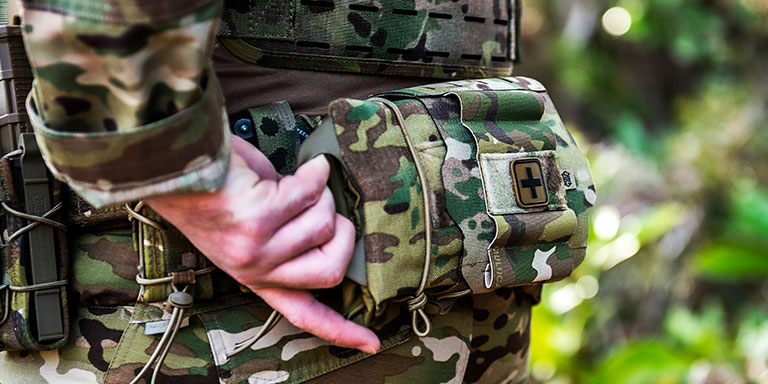
Serious injuries are rare, but you know the old saying: It's better to have it and not need it than to need it and not have it. That goes for medical supplies, too.
- IFAK: An individual first aid kit for shooters contains tourniquets, pressure dressings, hemostatic gauze, and chest seal kits. (Please seek professional training before trying to use any of this, though.)
- Squib rod: A “squib” is a rare but dangerous malfunction in which a bullet becomes lodged in the barrel of a firearm. A squib rod is a simple tool for safely clearing such obstructions.
- Emergency documents: Bring laminated cards that list your name, DOB, emergency contact information, allergies, blood type, and next of kin. Hopefully, you'll never need this, but you should definitely have it.
Other Gear
Here are some miscellaneous things you should consider packing.
- Brass bags: These are handy if you don't want to manually pick up all your brass at the end of the day.
- Cleaning kit: You don't necessarily need to give your guns a full cleaning before you leave the range, but a quick wipe never hurts, especially if you're firing hundreds of rounds.
- D-Lead wipes: Take extra care to use a lead-removal wipe or soap before eating or putting your hands in your mouth.
- Targets: At one time or another, we've all gotten to the range and then realized that we didn't bring anything to shoot at.
- Tape: You'll probably need to tape up targets or temporarily patch a hole. Duct tape, masking tape, and electrical tape is a solid trio; we recommend bringing a small roll of each.
- Markers and pens: Necessary for marking targets or recording ballistics data.
- Flashlight or headlamp: It's better to have one if there's any chance you'll be out past sunset. Remember to bring extra batteries, too.
- Timer: The timer on your phone is okay for casual use, but for serious shooting drills, a standalone timer is best.
High-quality tactical gloves or ammo pouches won't make you a better shooter in and of themselves, but they'll enable you to practice longer, more safely, and more effectively—and that's one way to get better, faster. Train with the gear that best helps you master the tasks you'll need to do in the field. If you're not sure which range bag, holster, or hearing protection is best for your needs, or if you have other questions, our customer support team is ready to help whenever you need us.