

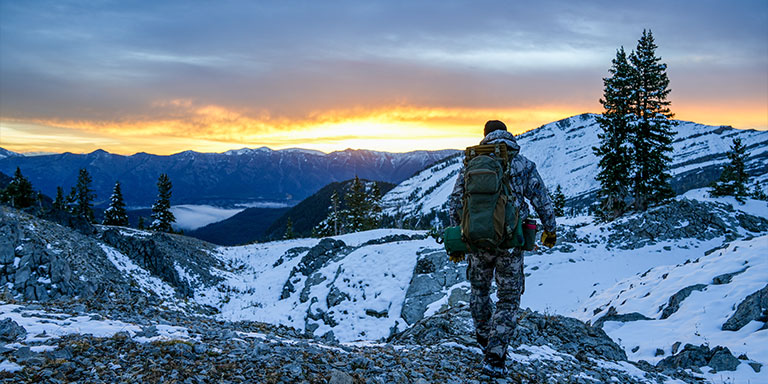
Cold weather is exponentially more dangerous than hot weather. Up to 94% of weather-related deaths are caused by prolonged exposure to cold temperatures. The survivalist’s rule of threes states that most people can survive for:
- Three minutes without air
- Three hours without shelter in extreme weather (especially cold weather)
- Three days without water
- Three weeks without food
Should you find yourself in a hazardously cold environment, you’ll need a certain set of knowledge and skills. In this guide, we’ll cover general cold weather wisdom, recognizing and avoiding environmental hazards, building or finding shelter, firecraft, finding food and water in cold climates and the prevention and treatment of cold weather injuries.
Basic Tips for Cold Weather Survival
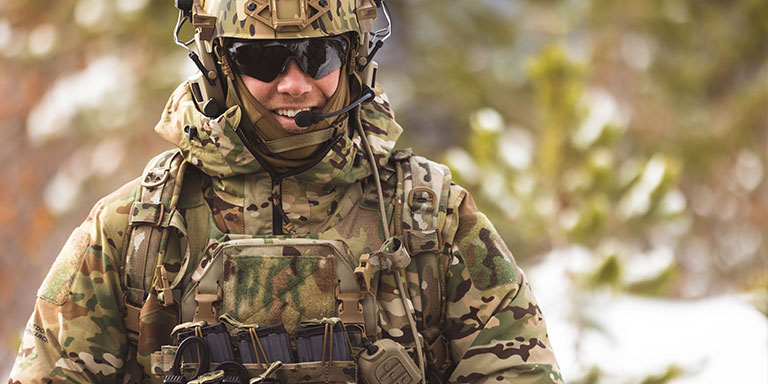
As with most things, an ounce of prevention is worth a pound of cure. You’ll be much more resilient to cold weather if you gradually acclimate yourself over time. These three basic strategies will go a long way toward improving your survivability:
- Frequently expose yourself to cold weather, but start slowly and safely. At first, spend short periods of time outside when it’s merely chilly. Over a period of several weeks or months, steadily increase your exposure time and frequency and wear lighter clothing or less clothing. Expose yourself to colder temperatures as your tolerance increases, if possible. Always have warm shelter nearby that you can retreat to if necessary. Gradual acclimatization will improve your body’s ability to use heat and energy efficiently in the cold.
- Shift your dietary habits until you’re getting most of your calories from fat and protein with minimal carbohydrates. If you’ve never done this before, you may experience “keto sickness,” mild headaches or lack of energy that persists for a week or two. Once you get your body used to using fat as its primary fuel source, you’ll find that you’re much better able to tolerate cold weather. Always consult your doctor before making any radical changes to your diet.
- Improving your cardiovascular fitness is another way to get your muscles, organs, and body systems working more effectively and efficiently, which also improves your ability to live outdoors in harsh weather.
Aside from acclimating yourself, there are a few other essential tips to keep in mind:
- When you’re going somewhere that’s deeply cold, wear several layers of light clothing rather than a single layer of heavy clothing. Not only does this provide better insulation, it makes it easier to regulate your body temperature by adding or removing layers as needed.
- Choose your gear carefully. Buy well-made, rugged equipment designed to handle harsh conditions — and don’t rely too heavily on electronics, which are increasingly likely to fail as the temperature drops.
- If you find yourself caught in a blizzard or otherwise in imminent danger of freezing to death, keep moving at all costs until you find warm shelter. Your body’s natural inclination will be to stop and rest in order to conserve energy, but this could be a death sentence — you may fall asleep and never wake up again, even if you don’t feel sleepy.
- Stay dry! Getting wet can prove fatal, even if the weather isn’t otherwise cold enough to be dangerous.
- If you’ve been in deep cold for several hours, warm up slowly once you find shelter, especially if you have cold weather injuries like frostbite. Reheating cold tissue too quickly can cause additional injuries. However, don’t thaw out frostbitten fingers and toes if you expect that they’ll freeze again before you return to civilization. If frostbitten tissue thaws out and refreezes multiple times, the damage will be worse.
Recognizing and Avoiding Environmental Hazards
There are many weather events and terrain features that can be dangerous in cold areas — but you should at least be on the lookout for these three, which are especially common and potentially fatal.
- A tree well is a seemingly harmless patch of deep snow at the base of a large tree. At a glance, it looks just like all the snow around it, but often, the tree’s branches can stop some of the snow from reaching the ground. When that happens, the snow around the trunk is less densely packed, and if you step on it, you can sink very quickly. If the surrounding snow then collapses on top of you, you’ll be in a lot of trouble; freeing yourself may be nearly impossible.
- Snow cornices are essentially fake cliffs that claim hundreds of lives every year. When wind blows snow over a large rock, cliff edge, or hillside, a semi-solid ledge — a cornice forms. Stepping on it will cause the snow to collapse because there’s nothing solid underneath it. This can easily lead to fatal falls in some cases.
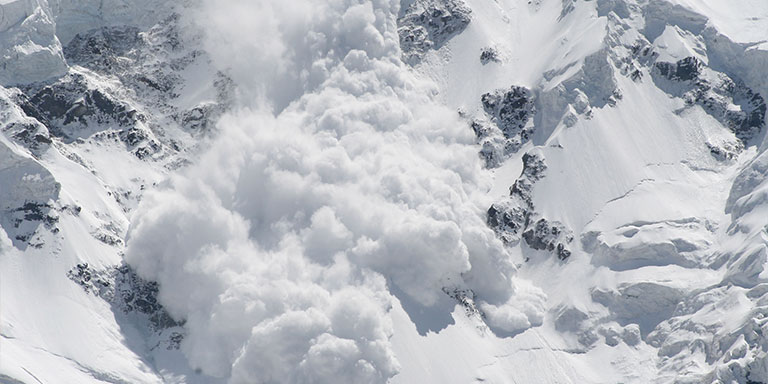
- About 80% of avalanches occur during or shortly after major snowstorms, but in areas that get a lot of snowfall, they can happen anytime. Avoid steep slopes and paths that have steep slopes above them. Snow that cracks, collapses easily, or sounds hollow when you step on it is another warning sign. For more information, check out this concise 2-page pamphlet on avalanche avoidance.
Learn to Find and Build Basic Shelter
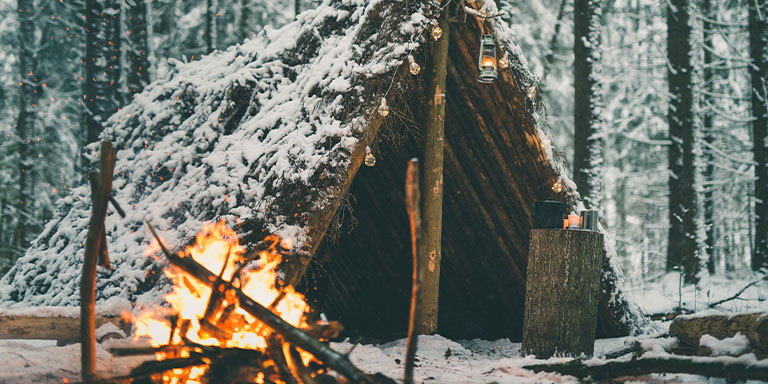
In the midst of a raging blizzard, it’s usually best to find somewhere relatively warm and wait it out — traveling through it can be extremely dangerous. The first decision you’ll need to make (and make quickly) is whether to build shelter or try to find existing shelter. In a nutshell, finding shelter takes time and building shelter takes energy. Ask yourself which you have more of.
Our introductory guide to finding and building shelter covers the basics and includes a quick tutorial on building a snow cave shelter.
A tree well shelter is another quick and easy short-term option, but be extremely careful (remember how dangerous tree wells can be.) You should only attempt to build this type of shelter if you are at least a foot taller than the tree well is deep. Assuming that’s true, carefully stamp down the snow at the bottom of the well and line it with boughs or branches, then hunker down and cover the entrance with more foliage. Should the well collapse, you can at least stand up and get your head above the snow.
Building a Fire
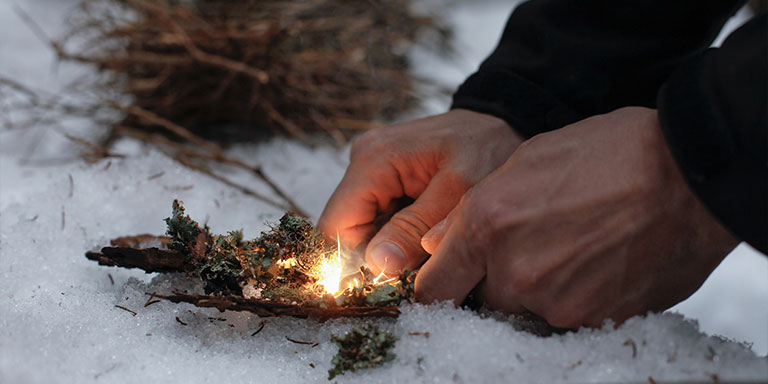
Obviously, having a warm fire is great when you’re stuck in the snow, but it’s usually not your first priority. A shelter without fire will serve you better than fire without a shelter; you need protection from the wind, snow, and/or rain first and foremost. In a wide open space, most of a fire’s heat is dissipating into the air instead of warming your body.
Once you’ve got four walls and a roof in some form, you can build one of the three easiest and most common types of fires (assuming you have adequate ventilation and access to wood for fuel.)
- The log cabin is the simplest and most versatile campfire. If you only learn one way to build a fire, master this one. A middle-of-the-road fire in all respects, it’s decent but not great in terms of cooking, warmth, and fuel efficiency. Just lay two logs a few feet apart and parallel to each other, then add another layer, perpendicular to the first. Build three or four layers of alternating logs, then start your fire in the open center.
- If you need maximum heat but aren’t planning on cooking anything in the near future, opt for a cone fire. Stack your kindling in a teepee shape at roughly a 30-degree angle, then stack thicker logs in a similar pattern around the inner layer. The cone fire will keep you nice and toasty, but it consumes fuel quickly.
- The pyramid arrangement sacrifices heat and cooking utility for maximum fuel efficiency, so it’s likely the best choice if very little wood is available. It’s built like a log cabin fire, with two major differences. Pack each layer of logs tightly together instead of spacing them apart, and make each layer smaller than the one below. Four or five layers is usually about right. Light the pyramid from the top and it will slowly burn down over several hours, providing modest warmth.
For more detailed information, browse our guide to basic firecraft .
Finding Food and Water in the Cold
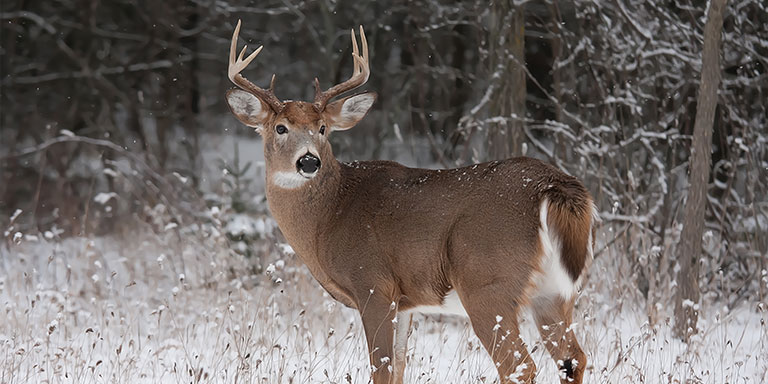
If you’re somewhere the weather is cold enough to be potentially fatal, odds are that finding edible food will be very difficult or nearly impossible. The best and easiest thing to do is to bring your own food if possible. Prioritize lightweight, calorie and nutrient-dense foods that don’t take up much space in your bag; peanut butter, jerky, and nuts are good choices. Alternatively, prepare some freezer-bag dinners ahead of time for a morale-boosting hot meal, provided you’ve got fire and water to heat them up.
If you must resort to finding your own food in extremely cold places, try hunting, fishing, or collecting eggs before you eat any local flora. In most cases, plants that grow in these areas are inedible or dangerous to humans; the animals that eat them have evolved the ability to do so over thousands of years.
Fortunately, water should be much less of a problem. Feel free to melt snow or ice, but don’t drink it directly after melting — filter and boil it first to make it reasonably safe to drink. Drink the water soon after boiling it, when it’s warm but no longer hot — drinking cold water will sap a lot of your precious body heat.
Prevention and Treatment of Cold Weather Injuries
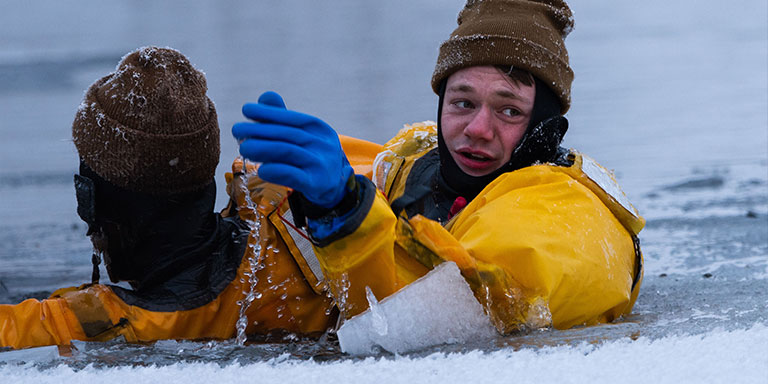
The most common cold weather injuries are much more difficult to treat than they are to prevent, so be prepared, dress warmly and keep a close eye on your skin condition and mental state.
- We briefly mentioned frostbite; tissue is frostbitten when it’s frozen deeply enough to damage or kill some or all of the blood vessels in the area. It usually develops in fingers and toes before spreading further up the affected limb. Symptoms of frostbite include initial pain followed by numbness; yellow, waxy skin; blistering; swelling; and severe pain after rewarming. Proper treatment of frostbite requires hospital equipment and trained medical personnel.
- Despite the name, trench foot can affect any part of the body. In some respects, it’s frostbite on steroids. It can develop when skin is cold and wet for a long time, usually a day or longer. Left untreated, trench foot can cause permanent nerve damage and tissue death, and treatment may require amputation. In some cases, trench foot can lead to infections that may spread throughout the body and become fatal.
- The majority of cold weather deaths are directly or indirectly caused by hypothermia, defined as a lowering of the body’s core temperature below 35° Celsius/95° Fahrenheit. A core temperature of 95° Fahrenheit may sound pretty toasty, but it’s far enough below your normal temperature to start causing major problems in many body systems. Initial signs of hypothermia include shivering, difficulty moving your limbs, mild confusion, loss of coordination and blue or pale skin. Severe and prolonged hypothermia can cause major confusion, memory loss, slurred speech, sleepiness, weak pulse, rapid breathing and loss of consciousness. It’s not hard to see that many of these symptoms can be fatal, especially if you’re alone when they start to set in. The best ways to prevent hypothermia are to follow all the other tips in this guide and to limit your exposure to the elements as much as possible.
We hope that this guide has given you a solid foundation of basic knowledge and a list of cold weather survival skills to practice — skills that could one day save your life.