

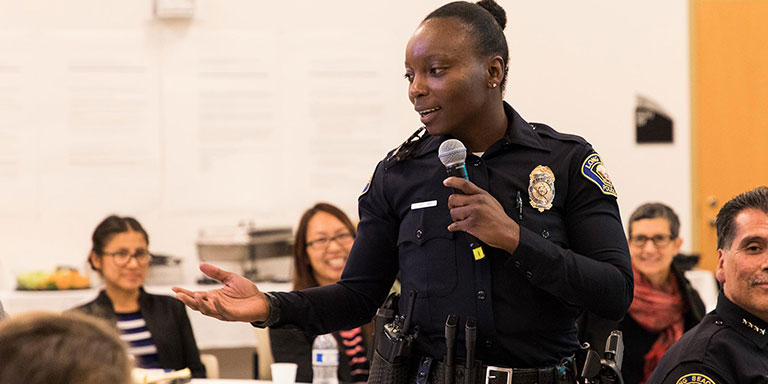
Throughout their careers, police officers must develop the ability to communicate effectively. They need to be quick on their feet and must be able to call on their knowledge as the situation dictates. Successful officers are master communicators, both when speaking to fellow officers and to the public they protect and serve.
Hiring Process and Training
Great communication and interviewing skills are, essentially, prerequisites for becoming a police officer. In order even to be considered for the academy, future officers must go in front of an oral review board as part of the interview process (among a myriad of other interview phases). If they pass, they'll receive further training of their oratory abilities at the academy.
The Oral Review Board
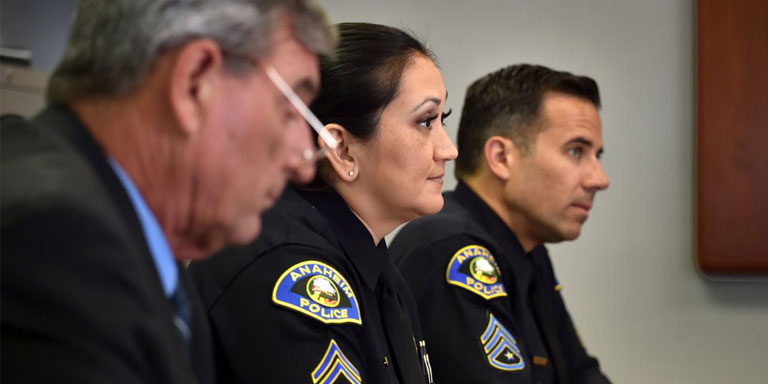
A police applicant will have to pass a written test, a physical exam, a psychological exam and a background investigation. Usually, the final step in the selection process is the oral review board. This is usually an officer's first opportunity to demonstrate their public speaking ability.
Generally, upon entering a large interview room, the candidate will find one lone chair positioned in the middle of a nearly empty room; there's no place to hide. In front of the candidate will be a panel of uniformed, senior-level officers.
Each candidate will field questions from this panel of officers. The panel is looking for certain personality traits and attributes in the interviewee. High on their list is a recruit's ability to speak clearly, think on their feet, act respectfully and demonstrate self-confidence. The candidate should have their nerves under control and demonstrate emotional maturity. Through their questioning, the senior staff will identify the weaknesses and strengths of each candidate.
The questions may be as open-ended as, "Tell us what you know about this city or this department." The panel can determine if the candidate did their homework and whether or not they can speak to the history and makeup of the town and its police department. A well prepared candidate will have done the research. At a minimum, the candidate should know a brief history of the city and department. They should know the city charter that constitutes and authorizes the power of the local governing body. They should also know the city's size and population and the size of the police department's workforce.
Other questions may be situational, putting the candidate in difficult circumstances, such as responding to the improper actions of a fellow officer or superior. These questions will reveal much about the candidate's level of integrity.
The Academy Experience
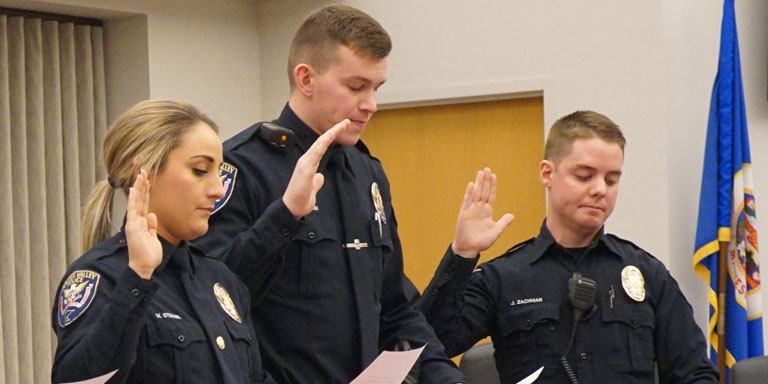
Once hired, a police academy trains a recruit to be a competent officer. Academies and their programs help recruits to develop their communication abilities further. Part of the process includes oral presentations in front of the class and mock situations where the recruit must react verbally to a set of circumstances.
Recruits also participate in simulated courtroom testimony and various citizen interactions, such as domestic calls and disputes. They're taught de-escalation techniques which they are then asked to perform during mock interactions with academy staff. Recruits also learn how to communicate with and serve individuals with special needs and disabilities.
How to Improve Your Interviewee Skills
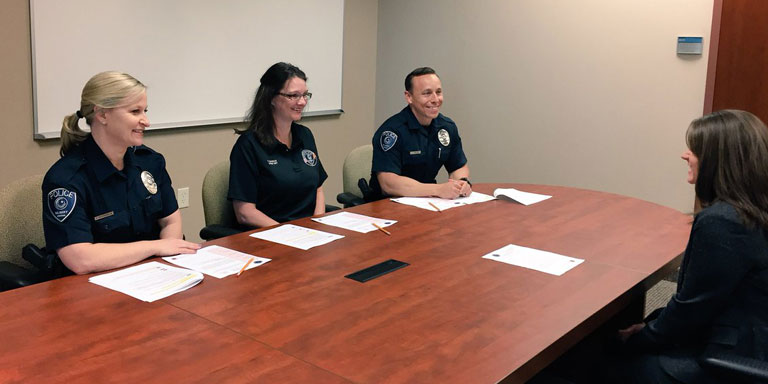
Everyone gets a little nervous at the prospect of sitting for an interview; after all, it can potentially determine your future. Part of this is a fear of the unknown: what will be asked? Will I be able to answer?
There is no substitute for doing your homework. There is a ton of information online about any police department or city; read, study and learn and you will be mentally prepared.
Next, look at some examples of moral questions and determine how to answer them. What would you do if:
You saw your training officer take a package of pens from a store while responding to a nighttime burglary call?
You saw an officer using what you consider excessive force?
A co-worker complained to you about being harassed by another officer?
You saw a co-worker scratch a police car and fail to report the damage?
Each of these questions may be answered differently by each individual. Think them through and determine how you would handle each situation.
It's also a good idea to practice public speaking skills. To do this, take any available opportunity to speak in front of a group. Most colleges also teach public speaking courses, so don't be afraid to go that route.
Communicating with the Public
Every day of a police officer's career, they routinely conduct three types of interviews: witness interviews, victim interviews and suspect (or arrestee) interviews. Each type of interview is handled differently, and the officer's talents as a communicator significantly affect the information they're able to gather and the outcome of each investigation.
Witness Interviews
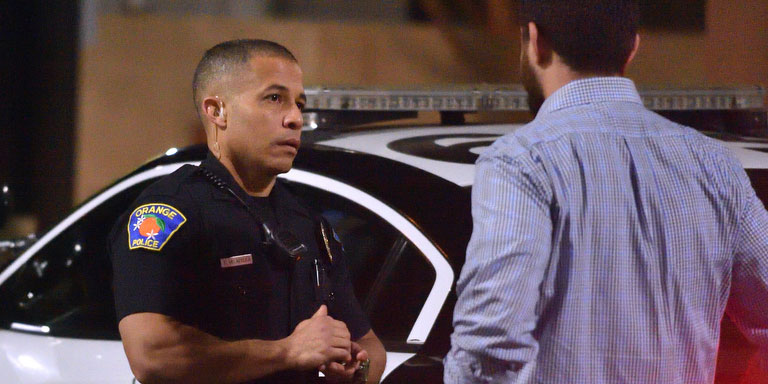
Witness interviews are the most common interview an officer performs — a person witnessed an event, and it is the officer's job to find out and accurately document what the witness saw or heard.
Some people want to give their account of what happened, but they'll be excited and often start in the middle of the incident. It's up to the officer to calm the person down. After calming the witness, the officer should ask them to start at the very beginning and then allow them to tell their story. A good officer only interrupts to keep the person on track.
It's essential to ask questions skillfully in order to elicit information about the critical points of the investigation. Once the statement is complete, use follow-up questions to clarify unclear or contradictory issues. The officer's tone should always be respectful, non-threatening and friendly. After the interview, be sure to thank witnesses for their cooperation.
Some people are reluctant to talk to the police. The ability to communicate and reassure hesitant witnesses may alleviate their resistance to getting involved. A sincere officer can communicate the value of a witness's cooperation and the catharsis of helping to solve a crime.
Victim Interviews
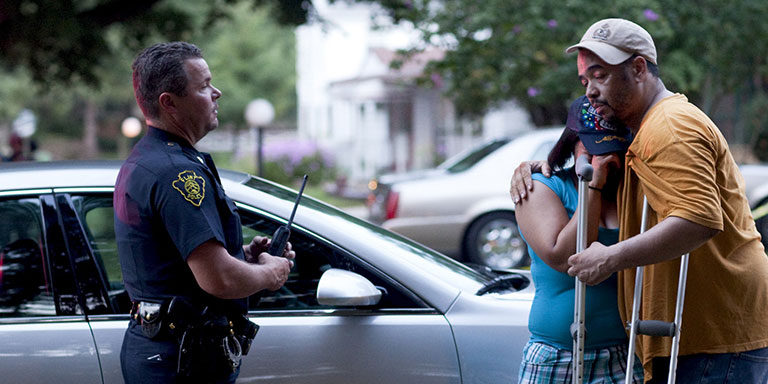
A victim of a violent crime may present unique obstacles to conducting a successful interview. The emotional state of the victim can vary depending on the offense; common emotions include extreme anger, embarrassment, shock, disbelief, confusion or even guilt. It is often helpful to acknowledge the feelings a victim may be presenting. In this way, an officer can start to establish a rapport with the victim. The officer must balance their need to get the facts with the emotional trauma the victim may be experiencing.
Once the interview begins, ask a few simple questions, and then allow the victim to talk and tell their story. Most investigations seek information to answer two key questions: "Exactly what happened?" and, "Who committed the crime?" The officer must skillfully address these two questions while allowing the victim the time to process the events. Many officers believe that the victim interview can be one of the most challenging parts of the job.
Suspect Interviews
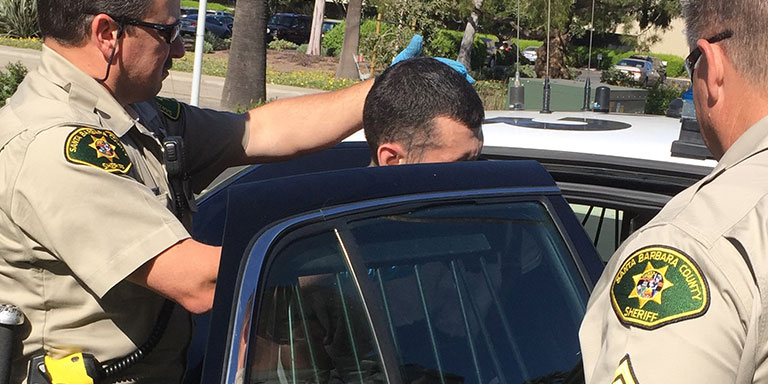
If a person is the suspect of a crime, the process is called a custodial interview, or an interrogation. Both have a common goal: to learn the truth. A skilled interviewer must be a master of communication — they must be able to relate to the suspect in a manner that the suspect can understand and believe. The goal is to gain enough information to clear the suspect or elicit a confession from them if they're guilty. Most suspect interviews become accusatory at some point: "We believe, based on the evidence we have collected, that you committed this crime."
The interviewer must be confident in these communications. It takes hours of planning and years to perfect the skills of a seasoned police interviewer. A knowledgeable interviewer is able to pick up on many non-verbal clues. However, a dodgy suspect who's experienced in these types of interviews can pick up any weakness in the interviewer's confidence or investigative abilities.
Interview and interrogation techniques are taught at several specialized schools. If given the opportunity, police officers should learn about these techniques and take part in the specialized training these schools offer. The oldest and one of the most highly respected schools is the John Reid School, which teaches the Reid interrogation technique, in use since the 1960s. A newer training program gaining wide acceptance is taught by Wicklander-Zulawski & Associates. To learn more about suspect interviews, be sure to read our officer's guide to custodial interviews.
How to Improve Your Interviewing Skills
As an interviewer, rather than learning the correct answers, the task is to develop the right line of questioning. This requires a strategy, and this strategy will likely change as answers are given. A skilled interviewer knows how to adjust and adapt their approach as they learn new information.
Completing a successful suspect interview, for example, may be a battle of wits played out over several hours of intense dialog. Convincing an offender to confess to their crimes may require a series of persuasive arguments from the interviewer. One of the best tools for any young detective is to watch a seasoned detective during an interview, or reviewing the interview tape and taking notes afterward.
One final practice tool may be as close as a laptop: most have microphones and cameras. Using simple software, practice as either interviewer or interviewee. Record the delivery of your questions or answers, then review the recordings. This will help to hone your verbal delivery of both questions and answers.
Effective communication is an essential skill for today's police officers. They must make correct decisions quickly and communicate them clearly to other officers and the public. An officer's success and upward mobility can be significantly affected by their ability to lead through clear communication. When interacting with the public, be sure to demonstrate confidence and professionalism through your words and deeds. Clear, respectful communication with citizens helps to build trust within the community.