

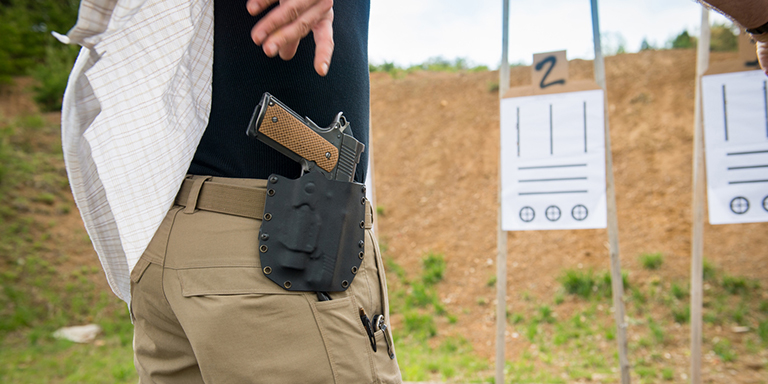
For a first-time firearm owner, visiting a shooting range is a must. Reading the manual that came with the gun and watching videos may increase a shooter's knowledge, but there is no substitute for actual trigger time.
If you have never been to a range before, the entire process can seem a little intimidating and confusing. Are you worried about exactly what to expect, what to bring and who will be there to help? This article will help take away most of the unknowns and help make everyone's first range experience a positive one they will want to repeat often.
Managed vs. Unmanaged Ranges
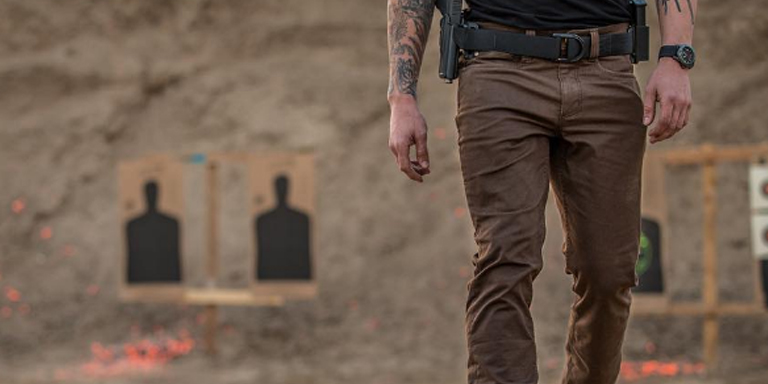
A shooting range is a broad term that can describe many different shooting environments. These may include both indoor and outdoor ranges. Most indoor ranges will be well supervised, while outdoor ranges vary in their level of service.
Some outdoor ranges are little more than a gravel pit with a row of 4x4 posts lined up to hold targets, and a high dirt hill (called a berm) to stop the bullets. The range may provide a gate key and list of rules, but little else. Other ranges may be well organized with clearly posted rules and seated bench rests that delineate the firing line.
An unmanaged range means no one person is in authority to give commands or keep shooters safe from one another. Shooters who use unmanaged ranges are responsible for the safety of themselves and all others on the range. Communication between shooters is vital, especially when calling a ceasefire.
If there are several shooters at the range, each shooter's responsibility is to practice good shooter etiquette. This includes following basic firearms safety rules (including muzzle awareness), considering all weapons as loaded and exercising proper trigger discipline. Additionally, the ceasefire command must be understood and used in the absence of a range supervising authority.
Any shooter on an unmanaged range can call for a ceasefire. It is best if shooters coordinate these through good communication. Once a ceasefire is called, all shooting must stop. The weapons must be unloaded and benched or secured in a holster. It is best if benched weapons have the firing chambers locked open. All persons should stay away from the benched firearms during this time.
After a ceasefire command is made and all weapons are secured, shooters must then walk forward together and retrieve or review their targets. Additionally, all shooters should also return behind the firing line together. Once the range is clear, the command can be given that the range is hot — meaning weapons can be reloaded and fired.
In contrast, a managed outdoor range will usually be well organized with proper supervision by a safety officer, a range instructor or both. These professionals are in charge of every aspect of range operation from making sure adequate eye and ear protection are used to giving commands to control all shooters. Firearms are deadly weapons, and the staff is there to assure each shooter is safe and gets the most out of their range visit. When possible, new shooters should look for a range that provides supervision and qualified instruction by a friendly staff.
Instruction is Important
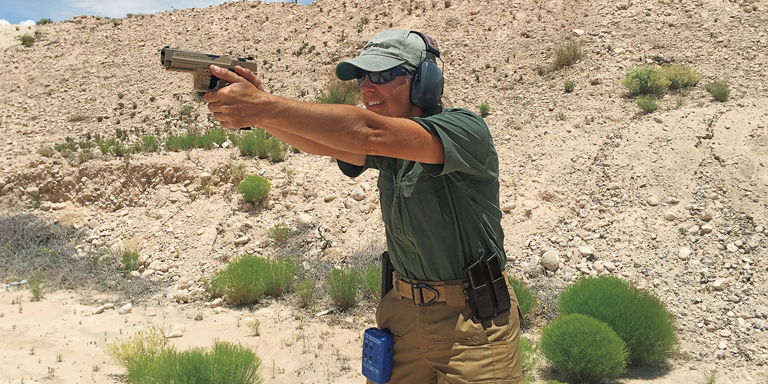
A new shooter should visit several managed ranges and determine which will meet their needs. The range should provide both safety training and the basics of marksmanship. Safety instruction is provided either as a block of classroom instruction or a video presentation.
Your second stage of training is usually on the range with the instructor teaching live-fire marksmanship skills such as stance, grip, sight alignment, trigger squeeze and breath control. Start off strong by learning how to correct common errors for new shooters.
Through learning the rules of gun safety and marksmanship, novice shooters can progress and gain experience. Firing hundreds of rounds of ammunition without learning the fundamentals of shooting will halt your progression.
It's often said at police academies that a new shooter will outperform an experienced shooter who has failed to learn the basic principles of marksmanship. The instructor has to break the recruit of their bad habits before teaching them the proper skill set. Bad habits are tough to break, so learning the correct skills from the beginning is crucial to any shooter's success.
How to Pick a Range
If there is only one range within driving distance, then this decision is already made. However, In most urban areas, a shooter will have their choice of indoor gun ranges. Many of these are attached to gun shops, which can be a plus.
In less populated areas, outdoor ranges are popular as they allow a shooter to move with their fellow shooters and advance on their targets. An outdoor range adequately supervised by qualified instructors is also a good choice. Most outdoor ranges provide shooters more space between firing lanes and more freedom to fire from various shooting positions.
Outdoor unmanaged ranges can also be effective; however, shooters must accept more responsibility for their own safety. A shooter must understand range safety and range etiquette to use an unsupervised range. If given a choice, new shooters should consider the well-supervised range.
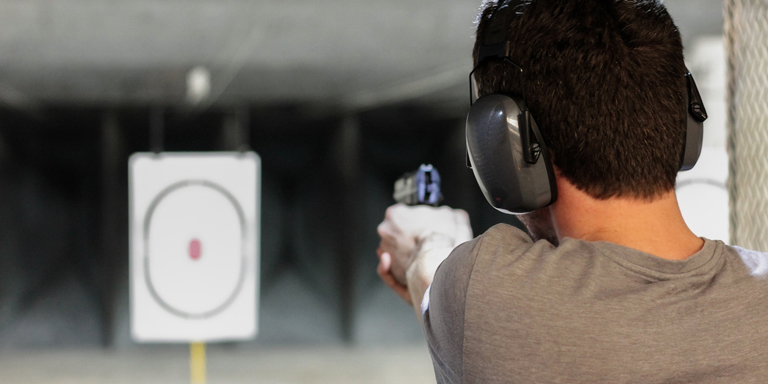
In indoor ranges, the target moves to change the indoor ranges' shooting distance. It is usually operated on a cable pulley system while the shooter remains stationary. In outdoor ranges, a long gun shooter may stay at a bench rest. However, handgun shooters must physically move to different distances from a stationary target.
Some outdoor ranges have separate areas for rifle and handgun shooters. Many indoor ranges do not allow shooters to draw from a holster or shoot from kneeling or prone positions, limiting the shooter's skill set. Weather is another factor to consider. Snow, rain, or other inclement weather may limit the useful days of an outdoor range.
Do a little homework and see what shooting ranges are available in the area. Next, call ahead and take a tour or a guided walk through of the facilities. Some facilities allow a new shooter to try out their range with a one-day pass before joining.
Get a feel for the level of instruction and supervision. Take in the sights, the sounds and even the smells (proper ventilation of indoor facilities is essential). Each range has its own way of doing things. Is there an identifiable range safety officer monitoring the range? Is this a comfortable environment in which to shoot?
Indoor ranges attached to gun shops have a distinct advantage: everything needed to shoot is available for purchase, including ammunition and targets. Many also have eye and ear protection available. Some ranges even rent a wide variety of guns to their members. A new shooter can experience shooting different types of weapons, adding to the fun of a range visit.
If a weapon develops a problem, there is usually an armorer at the store to address any mechanical issues. Should a shooter have a common problem such as a misfeed or a stovepipe, the range safety officer can safely clear the weapon. They can also teach the shooter why the malfunction occurred and how to address it in the future. (See gun safety on and off the range)
Most indoor ranges have observation areas available for non-shooters to watch from a safe location, usually behind thick glass. After the range tour, It may be a good idea to take a little time and observe the other shooters. By watching others, one can learn the routines and procedures used at the range. There's some range etiquette involved here, such as cleaning up the area and brass before leaving.
The Paperwork
After choosing a range, there is paperwork to be completed. One of the essential documents for the range owner is the waiver of liability. These state that the shooter understands and will follow all range safety policies. It also waives the range's liability, should the shooter cause injury to themself or someone else. These are standard for all shooting facilities, and a shooter should be wary of any range that doesn't have a liability waiver.
The second document is an acknowledgment that the shooter has received the rules of that range. Most of these state that membership can be revoked under certain circumstances, such as repeated safety violations (no one wants a loose-cannon on their firing line). Most memberships are contingent on a shooter receiving some form of training. This may be in the form of a video presentation or even an actual class. Some ranges require shooters to pass a written test documenting their understanding of the rules and safety procedures.
Learning Range Commands
It is essential to learn basic range commands on a supervised outdoor range. The most important command for either indoor or outdoor ranges is “cease fire.” Upon hearing this command, all shooters should immediately stop firing and take no further action with their weapons. This command is sometimes used when the range safety officer identifies a dangerous condition.
For example, a cease fire may be issued if an indoor range shooter drops their cell phone beyond the firing line and needs to retrieve it. Seeing this, the range safety officer may give a cease fire command. Once the range is safe, the phone may be retrieved.
Additionally, outdoor range commands may include the following:
- Load and charge: This means loading a magazine in the weapon and making it ready to fire.
- The range is hot: This means that weapons are loaded and ready to commence fire.
- Commence fire: This means to start shooting.
- Cease Fire: This means to stop shooting.
- Weapons safe: This means to make the weapon safe.
- The range is cold: This means all weapons are safe, and live fire has stopped.
Most well-run indoor or outdoor ranges require instruction covering the four basic gun safety rules and any additional rules specific to that range. Other courses may be offered to teach the basics of handgun operation and marksmanship skills. Knowledge is power, and the more information a shooter learns, the more comfortable they will become with their range experience. Once you gain confidence, try some shooting drills for beginner marksmen.
How to Dress
Firearms eject very hot casings (called brass) that may travel far enough to land on an adjacent shooter. Most shooters wear long sleeves and a shirt with a closed neckline. Catching a hot casing down the back of the shirt is an experience not soon forgotten.
Many indoor ranges have dividers between shooters that stop casings from traveling to the next lane. Casings will still drop to the floor though, so no sandals — closed-toe shoes only. Those hot casings always seem to find any bit of available unprotected skin.
What to Bring to the Range
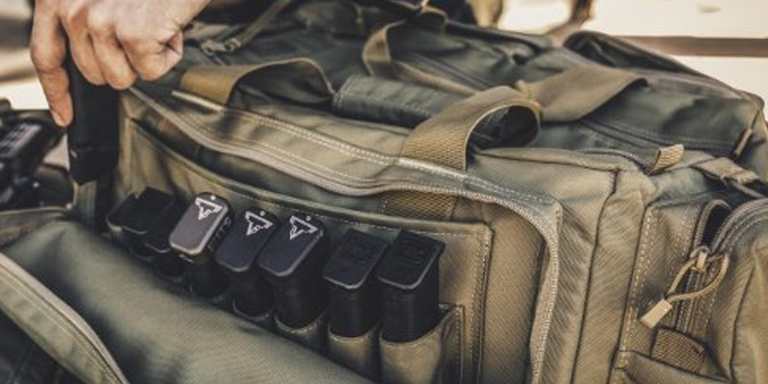
Whether you're at an indoor or outdoor range, all weapons brought to the facility should be in either a hard or soft carrying case. All guns should also enter the facility unloaded. Most shooters carry all other necessary equipment in a range bag. The most common items include ammunition, a cleaning kit, targets and eye & ear protection. These are only the basics and are far from a complete list of things shooters may want to bring. (See Range Day Checklist)
Another consideration goes back to the range rules. Some ranges only allow specific types of ammunition. Some common disallowed ammo includes certain large-caliber ammunition, tracer or armor-piercing ammunition and/or reloaded ammunition. (See Ammo 101)
A Step-by-Step Range Experience
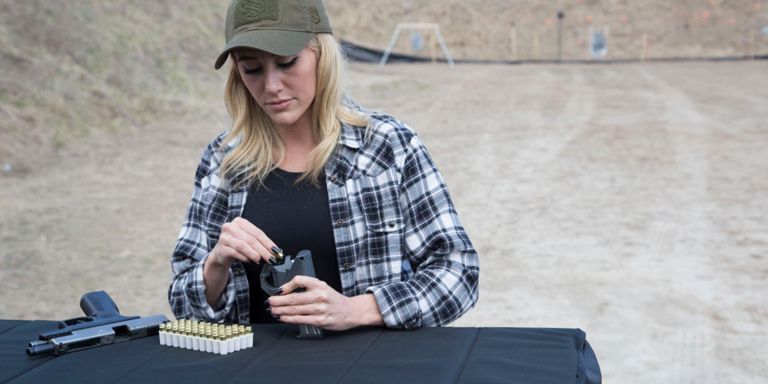
A typical trip to a shooting range may look something like this:
- Enter the facility with any firearms unloaded and in a closed case. Everything else needed should be in a range bag; items such as ammunition and targets can be purchased from the store.
- Most ranges have a check-in procedure, so sign in or follow the proper steps.
- Eye and ear protection must be worn before entering the range room (note: indoor ranges are louder than outdoor facilities).
- Select an open lane and remove the necessary items from the range bag.
- Let the range safety officer know it's your first visit and that you're new to shooting. They will keep an eye on you and assist you with any problems. They may also provide some basic skills instruction.
- Remove your weapon from its case, making sure to maintain muzzle discipline.
- Use the target controls to bring the target backer all the way forward.
- Affix a clean target to the backer and send it back to a distance of about twenty-one feet (seven yards).
- Load and charge your firearm.
- Take a relaxed stance, maintain a proper grip (with both thumbs on the same side for semi-autos) and fire a round or two at the target to get a feel for the weapon, its sound and its recoil.
- Then start to use the weapon's sights and commence firing.
- Once completed, make sure to re-secure the unloaded weapon in the gun case.
- Ask the safety officer for instructions on cleaning up. Some ranges have designated collection bins for brass casings.
- Leave no items or trash behind. This includes recovering your used target, which hopefully has lots of holes in it. Consider dating and keeping this first target to look back on.
Visiting a local range can be a lot of fun. Range rules should be committed to memory and must be followed to keep everyone safe. Looking around at the other shooters, remember that each one was also brand new to the experience at some point. Most shooters only concentrate on their shooting and target, so don't feel self-conscious. The only one watching will be the range officer, and they are there to help you have the best possible experience. Given time and enough practice, any shooter can become a highly proficient marksman and enjoy target shooting for years to come.