

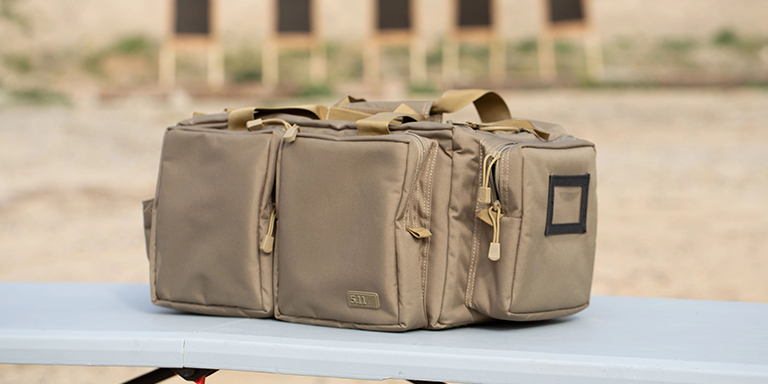
A range bag may not be an essential part of a shooter's kit, but it sure is nice to have one. A quality bag makes trips to the range faster, easier, and more convenient — small quality of life improvements that can really add up over time.
In this guide, we'll go over some of the reasons to choose a range bag over any other kind of bag and offer some tips on what to look for once you're ready to buy. We'll also recommend some essential items to put in your new bag to keep it range-ready at all times.
Why Invest in a Range Bag?
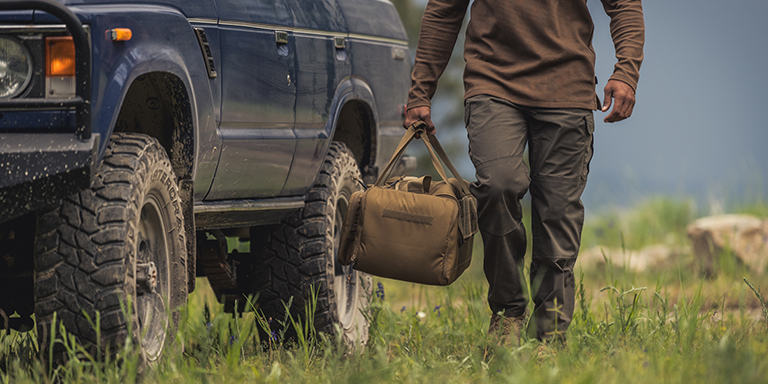
Many shooters use a regular gym bag or something similar for trips to the range. There's nothing wrong with that, but range bags have extra features that can make a big difference for some people.
Enhanced durability is a bonus that almost any shooter can appreciate. Range bags are made of thicker fabric with heavier stitching and better buckles or zippers. Bags that aren't made to carry firearms and ammunition (both of which can get very heavy) are more likely to wear and tear over time. You definitely don't want your expensive guns falling out if your bag suddenly develops a new hole.
This goes double if your firearm has an expensive scope or other delicate components. Entry-level range bags may have only one compartment, but mid-tier and high-end models usually have extra pockets specifically designed to protect glass, ammunition, and other impact-sensitive items. These extra pockets also make it a lot easier to stay organized.
Finally, a dedicated range bag can save you a fair bit of time over many years. Some of us still use gym bags for range days (we're mildly embarrassed to admit), and it can take ten minutes to unpack and repack that bag before and after each outing. If you go to the range once a week, that's 45 minutes per month (or 9 hours per year) swapping items in and out of a bag. Surely, there are better things you could do with that time.
Key Factors to Consider When Shopping for a Range Bag
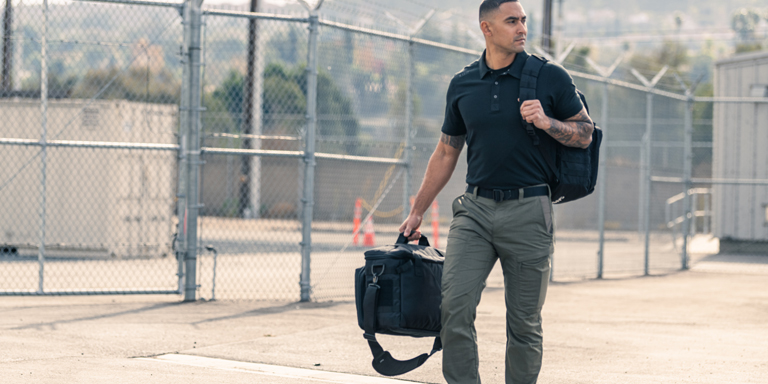
Like any other shooting accessory, the best range bag for you will depend on your needs. Even so, durability could be considered the most basic and essential aspect of any bag. Ensure that the bag you buy has double stitching at minimum (triple would be better). Heavy-duty nylon or Cordura are good fabric choices, but canvas is best (although it's harder to clean). The bottom should have a solid insert or separator made of dense foam or hard plastic for extra support.
When it comes to size, bigger is better if you can afford it, especially if you often bring multiple guns to the range. Also consider the number and type of compartments and their positions relative to one another. Ideally, fragile items like your shooting glasses and optics should have their own, well-padded (or hard-sided) compartment to protect them from being crushed by heavier items in the main compartment.
For the bag's bottom and hard-sided compartments, polycarbonate is the gold standard. It's a dense, very strong plastic (bulletproof glass isn't glass — it's polycarbonate). If polycarbonate is unavailable or out of your budget, opt for any other hard plastic, preferably a strong but flexible polymer blend.
If you do multiple shooting sports or just like to shoot different guns at different distances, look for a versatile bag that can hold all of your gear and (ideally) be modularly configured. For example, some bags have removable shoulder straps, pack straps, and carry handles to make them equally suitable for cross-country hikes or casual trips to an indoor range. Exterior MOLLE hook-and-loop straps are a good way to add lots of extra carrying capacity for tools and other small items.
Of course, price is an important consideration for most of us. We suggest buying the best bag you can afford, even if it stretches your budget a bit. Investing in a large, versatile, high-quality bag that can last forever will, in the long run, be cheaper than buying a new one every few years.
Packing Your Range Bag: The Essentials
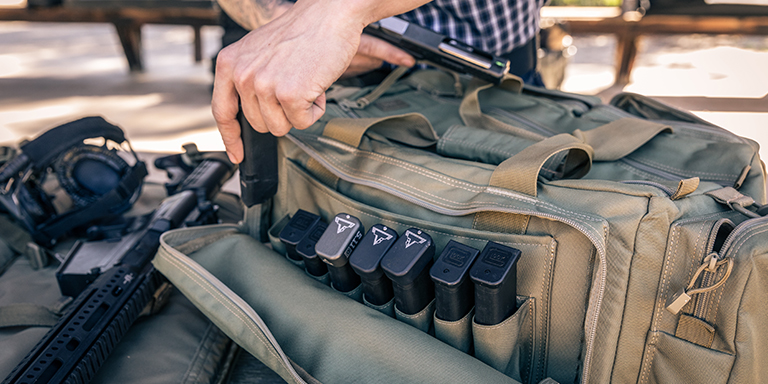
We already have a handy range-day checklist, but for your convenience, we'll provide a quick list of the essentials. Make sure your new range bag can comfortably and securely hold:
- Firearm(s) (unless you carry them in separate cases or holsters)
- Eye and ear protection (plus batteries, if you use electronic earmuffs)
- Ammunition, packed securely in appropriate boxes
- Multi-tool for making basic adjustments and repairs at the range
- Targets, masking tape, and a pen or marker
- Water, snacks, bug spray, and/or sunscreen (if you're going to an outdoor range)
- Small weapon cleaning kit
- D-Lead wipes or soap
- Trauma kit (hopefully you never need to use it)
- Spare magazines or speed loaders
- Optics, if you use them
- Rangefinder and/or spotting scope (for rifle days)
As long as you give it a bit of careful thought ahead of time, buying the perfect range bag for your needs should be pretty straightforward. Hopefully, this guide has helped clarify your thoughts about which features are most important to you.