

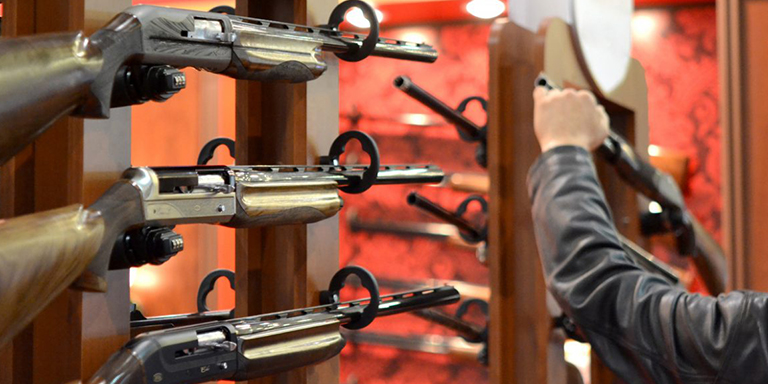
For the most part, the process of choosing your first shotgun is similar to choosing your first handgun. However, shotguns are a little harder to use, and they're more situational, so there's more to consider during the research and shopping stages.
In this guide, we'll review the different use cases for shotguns, as well as shotgun anatomy and ammunition types. We'll also cover relevant laws, safety considerations and tips on choosing the right shotgun for your needs.
Types and Parts of Shotguns
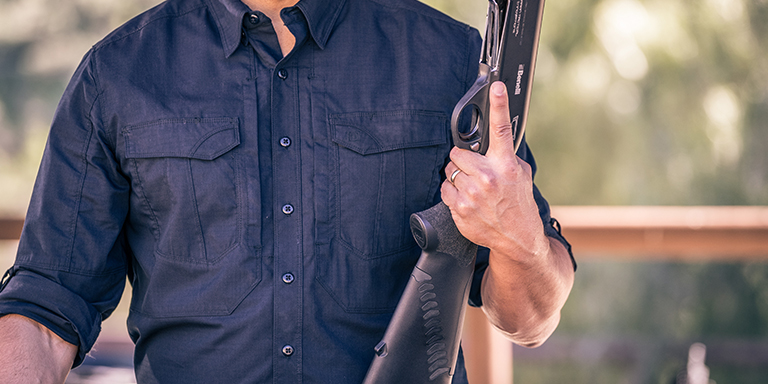
Before we get into the most common uses for shotguns, it may be helpful to review some anatomy and terminology.
Basic Terms
We won't cover every shotgun term here — just the most common and important ones.
-
A shotgun's gauge is the equivalent of caliber in rifles and pistols. It describes the size and power of the shot, with a lower gauge indicating larger, deadlier projectiles. The most common shotgun gauges (from smallest to largest) are .410, 20, 12, and 10.
-
Shells are a shotgun's version of bullets. To learn more about the types and parts of shotgun shells, check out our introductory guide to ammo.
-
The barrel is the part of the gun from which the shells are fired.
-
The chamber (or breech) is the most rearward portion of the barrel the portion into which shells are loaded.
-
Depending on the type of shotgun, shells are either loaded into a tube, a detachable magazine or directly into the chamber by hand.
-
The elevator (in pump-action and certain semi-automatic models) moves shells from the tube into the chamber.
-
The stock, if present, rests against the shooter's shoulder to provide support and stability while firing. Shotguns without stocks have pistol grips instead, which are more compact but harder to use. Some shotguns have both a stock and a pistol grip.
-
The trigger actuates the firing pin when pulled. The firing pin, in turn, strikes the primer of the shell currently loaded into the chamber, causing the gun to fire.
-
Pump-action shotguns are cycled by moving the forend to the rear, then back to its original position.
-
Break-action models have a top lever, which is used to open the breech for loading and unloading.
-
A choke is an optional part that attaches to the end of the barrel and decreases its diameter, thus decreasing the spread of the shot.
Although shotguns (in most cases) are considered mechanically simple weapons (especially compared to certain handguns and rifles), it's still good to know how their various parts work together. While we laid out the basics here, take a look at our guide to shotgun parts and functions for a deeper dive into how a shotgun works.
Action Types
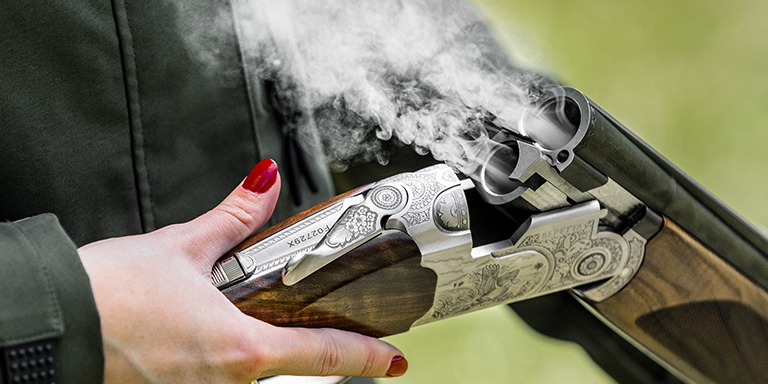
Shotguns that are legal for civilians to own come in three action types: pump, semi-automatic, and break-open. The "action" is the mechanical process by which a firearm operates.
-
Break-open (or break-action) shotguns are the simplest, the most affordable and the most reliable, because shells must be loaded directly into the chamber by hand. On the downside, this makes them slow to reload, and ammo capacity is low.
-
Pump-action shotguns are the most popular variety. Shells are loaded into a tube, after which they are cycled into the chamber, one at a time, each time the user "pumps" the gun. Pump guns have the best balance of simplicity, reliability, affordability and ammo capacity.
-
Semi-automatic shotguns fire one shell with each pull of the trigger without requiring any additional input from the user. They're expensive, mechanically complicated and difficult to clean, but they're capable of truly fearsome firepower, and magazine-fed models can hold many shells.
Ammunition Types
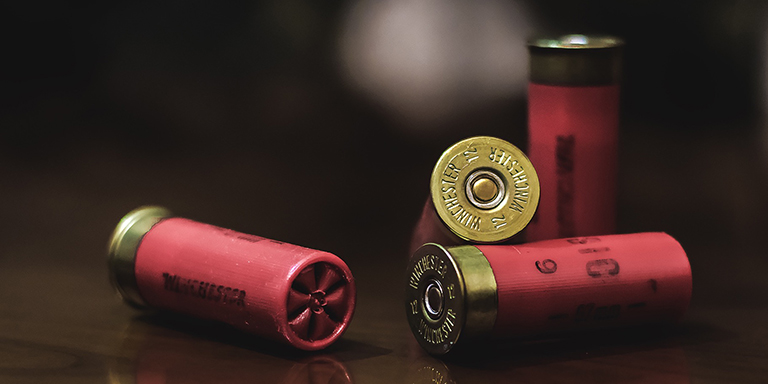
There are nearly a dozen types of ammunition that shotguns can use, but most are highly specialized and uncommon. The two most common types you'll find are shot and slugs. Shotshells contain anywhere from four to a few dozen spherical balls that spread out and impact the target simultaneously, causing devastating damage over a wide area. Slugs, by contrast, are single, massive projectiles that focus all of the shotgun's considerable power into a single point of impact. Slugs are ideal for penetrating thick walls or armor, or for taking down large game.
Why Do You Want a Shotgun?
Many first-time shotgun buyers just want something basic, reliable and affordable. These are fine things to look for in a shotgun, but the best way to buy the right one for you is to carefully consider the specific purpose you want it to serve.
Home Defense
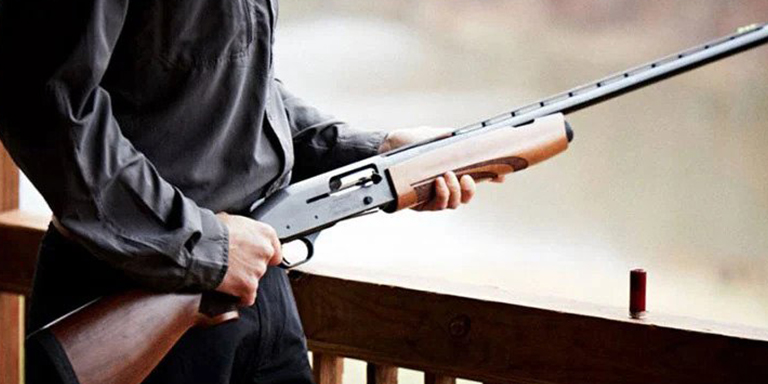
A majority of shotgun owners have one primarily (though not necessarily exclusively) for home defense; many shotguns can fill multiple roles equally well. 12-gauge, pump-action shotguns are especially popular for home defense because they have tremendous stopping power, they're affordable and they're mechanically reliable. Other important considerations for home-defense shotguns are overall length, capacity and gauge.
Shorter shotguns are easier to maneuver in hallways and tight spaces. However, barrels shorter than 18" are illegal unless you first obtain a tax stamp from the ATF for an SBS (short-barreled shotgun) or AOW (any other weapon). Shorter barrels dramatically increase the spread of the shot, but this is rarely a big concern indoors.
Double-barreled and super-short shotguns may hold only 2, 3 or 4 shells, which is fine for home defense (as long as you don't miss). Full-sized pump-action or magazine-fed shotguns can hold 7 shells or more, making capacity less of a concern.
20-gauge and 12-gauge shotguns are best for home defense because they have great stopping power, but not so much that overpenetration becomes a major problem. Buckshot (we recommend #4) is generally best; slugs are far more likely to penetrate multiple walls, potentially injuring or killing innocent bystanders.
Choosing the right home defense weapon is a huge topic in and of itself. To learn more about why a shotgun is your best choice, though, check out why you should use a shotgun for home defense.
Hunting
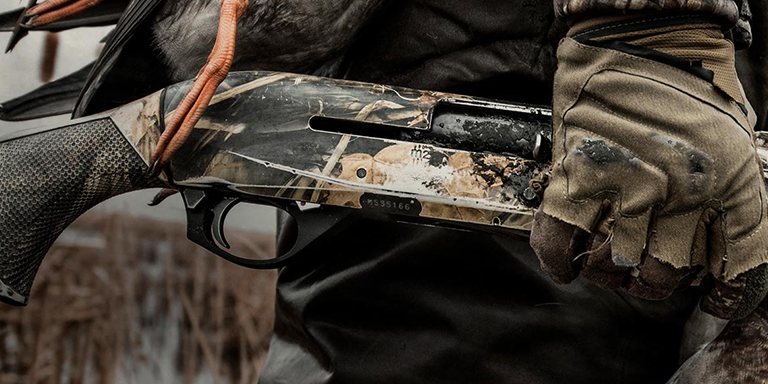
Short-barreled shotguns are typically poor for hunting. Most hunters want longer barrels for greater accuracy. Longer, heavier barrels are also better able to withstand the high-powered slugs that big game hunters often favor.
Semi-automatic shotguns may be illegal for hunting in your state, so be sure to check with your local Fish and Game Department. The gauge and type of ammunition you choose will depend heavily on what you're hunting. Smaller game, of course, calls for smaller gauges and lighter ammunition.
Sport Shooting
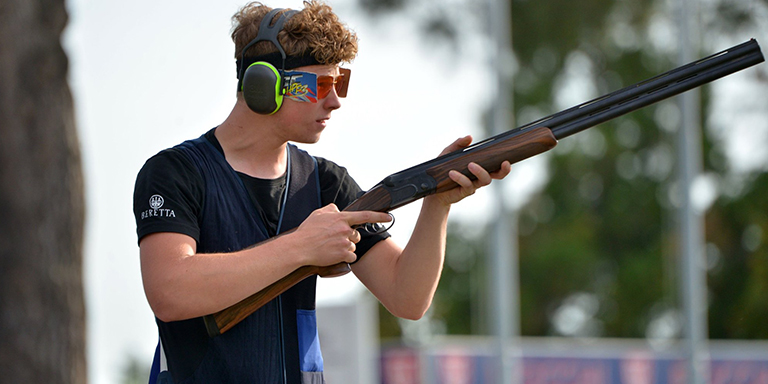
If you're interested in shooting shotguns competitively or recreationally, the type of shotgun you'll need will depend almost entirely on the sport in question. For instance, casual 3-gun shooters often use medium-tier pump guns, whereas the most serious competitors invest in expensive, high-quality semi-automatic models. Trap and skeet shooters, by contrast, are usually required to use break-action or, less commonly, pump-action shotguns. The club or league you join may have additional rules about gauges and ammo types. If you're interested in sport shooting, our introduction to competitive shooting is a great place to learn more about it.
Know the Law
Both federal and state laws govern the sale and transfer of shotguns, although they're not as numerous or complex as the laws regarding handguns. Federally, there is no minimum age for the sale or transfer of shotguns between people who aren't licensed firearm dealers. However, licensed dealers can't legally sell a shotgun to anyone under 18, and most (if not all) states have their own minimum age laws, even for unlicensed people. In the vast majority of cases, when state and federal firearm laws conflict, the stricter law applies.
There are a few other boxes you'll need to be able to check before you can legally buy a shotgun. You must:
-
Not have a criminal record, with certain limited exceptions
-
Not have undergone treatment for drug or alcohol addiction within the last five years
-
Be a U.S. citizen or legal immigrant
-
Not suffer from a mental illness that impairs your judgment
If you're ever unsure about your local gun laws, check with your local police or sheriff's department.
Transporting Shotguns (and Rifles)
In most states, transporting shotguns and rifles in your personal vehicle is legal (and legally simple). Flying domestically with guns is also legal, but the TSA and all commercial airlines have strict procedures that you must obey.
Interstate transportation of firearms that you own is legal, even if you're traveling through states in which the weapons are illegal, thanks to the Firearm Owners' Protection Act (FOPA). However, FOPA has specific rules, and you must obey all of them to be legally protected. For more information on the legal transportation of firearms, be sure to review our guide on how to travel with a firearm.
Other Considerations
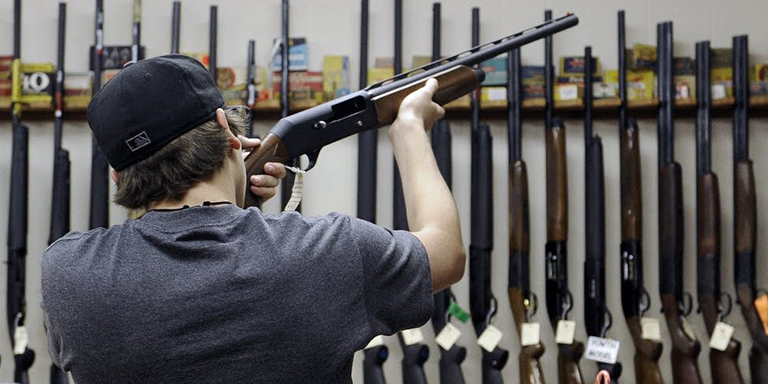
You're almost ready to start shopping for your first shotgun, but there are a few last things to consider first.
Safety
Most shotguns have mechanical safety mechanisms to help prevent the gun from being fired unintentionally. Whichever model you choose, make sure you get fully comfortable with the location and style of the safety. Most commonly, the safety switch or button will be located directly behind or above the trigger assembly.
Reliability
In general, most shotguns are highly reliable, but some are more so than others. Break-action models are the most reliable because they have almost no moving parts — there's almost nothing in them that can break. Pump-action shotguns are only slightly less dependable; they have more moving parts, but they're still very simple designs that are built to take a beating. Semi-automatic shotguns are much more complex and thus more prone to malfunctions.
Capacity
Some shotguns can accept magazines or drums that hold 20 or more shells, but these are expensive and uncommon. Most models hold 7 shells or fewer. Provided you train well and often, 7 shells should be more than sufficient for almost any situation.
If you choose a shotgun that holds fewer than 5 shells, be sure to practice reloading in particular. Hand-loaded and tube-fed shotguns take much longer to reload than most other firearms.
Overall Size and Weight
Full-sized shotguns are usually 22 to 28 inches long and weigh somewhere around 10 pounds. In most situations, their length and weight is an asset, not a liability — longer barrels confer greater accuracy, and heavier frames absorb recoil more effectively, making the gun easier to control.
If you need a home-defense shotgun, it may be worth the extra cost and waiting time to opt for a model with a shorter barrel. Such guns are much easier to use indoors, especially if you live in a small house or apartment. Just be sure to obey all ATF regulations.
Price
Break and pump-action shotguns tend to be relatively easy on your wallet; there are many great entry-level models to choose from at $500 or less. Semi-automatic shotguns are a bigger investment. They generally start around $1,500, and some can cost much more.
Accessories
We recommended picking up a sling and a case for easy, safe transportation of your new shotgun, but other than that, you don't need much beyond a basic cleaning kit. It's best to avoid going crazy with accessories until you've put in enough range time to be sure that you've chosen the right shotgun for your needs.
Cleaning
Regular shotgun maintenance is easy — and very important. Always clean your shotgun within 24 hours of firing it, ideally right afterward. If you're new to gun cleaning, we've got an introductory guide to firearm maintenance to help you out.
As with any major purchase, it's best to try before you buy. Visit a local gun range that rents shotguns and try several different models to help narrow down your shopping list. Once you've made your purchase, be sure to train well and often. All firearm skills are perishable, but shotgun skills are especially so. Still, as long as you're willing to invest sufficient time and money, you'll find that a reliable shotgun is one of the best things you'll ever buy.