

Buying tactical boots used to be simpler. You could go into a store and try on any pair that caught your eye. Today, you can buy great boots online, but it takes a little more caution and planning.
In this mini-guide, we'll run through a short but important list of things to consider before you buy your next pair of tactical boots, namely: how to know what size you are, how to verify that you're buying the right size online and how to test fit your new boots before taking them into the field.
Make Sure You Know Your Size
This might seem like a silly thing to say. After all, everyone knows their own shoe size, right? Well, mostly, but knowing your boot size isn't as straightforward as it may seem.
For one thing, your boot size may not be the same as your shoe size. Also, everyone's feet grow and shrink throughout their lives. Not everyone experiences these changes to a significant extent, but among those who do, it's not unheard of to go up or down as much as a full size (within a static range) over time. We recommend rechecking your boot size and your shoe size yearly.
Tactical boots also demand a more exact fit than your casual, everyday shoes. Most of us only walk for a few minutes at a time when we're out running errands or strolling around the park. Under these conditions, you may not realize that your shoes aren't sized quite right because you're not walking long enough or far enough for problems to arise. When you wear tactical boots, chances are that you're doing a lot of walking, running, and/or climbing. If the fit is off, even a little, you could end up with blisters, pain, or other foot issues.
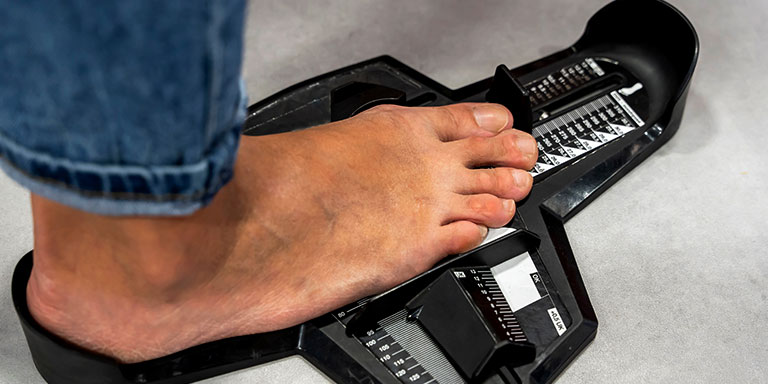
The best way to check your size is with a Brannock measuring device. Measure both feet while you're wearing socks since socks can add up to half a size. Most shoe stores have Brannock devices, or you can buy your own for about $75 (as of 2025). It is the only tool that can accurately and easily measure the length, width, arch length, and arch depth of your feet. Alternatively, if you have a pair of boots (not shoes) that fit well, it's generally safe to assume that that pair is sized correctly for your feet.
If you have narrow (N or A), wide (W or C), or extra-wide (XW, EW, or EE) feet; unusual arches; or if the lengths of your toes are atypical in relation to one another, shopping for tactical boots will be more challenging.
How to Make Sure You're Buying the Right Size'
It would be great if you could simply measure your feet and then buy with confidence at any retailer, but it's not that simple. Even if two people wear the same size, the same pair of boots might fit each of them very differently due to small variations in the feet.
Several other factors can affect the fit as well:
- Minor differences in manufacturing methods and equipment
- Minor differences in the manufacturer's measurement methods or tools
- The material of the boot, especially when it comes to leather vs. non-leather
- Operating conditions (for instance, some parts of the boot may shrink or expand when they get wet)
- Temperature in the field (your feet will swell if it's very cold outside)
- The specific boot you want may not be offered in your size, especially if you have wide or narrow feet
The most important tip for buying tactical boots online is to check the store's return policy before you place an order. Many stores allow returns as long as the boots have been worn only to test the fit, but some don't allow returns at all.
If your feet fall within the average range-standard width, arch, and toe length-buying boots online is usually straightforward. Just make sure you check the product page or manufacturer's website for guidance. Some boots may not match standard sizes exactly, and in some cases, the manufacturer may state that their boots tend to run larger or smaller than average. Buyer comments and reviews can be especially helpful. If many customers are saying that the boot runs small or large, you may want to go up or down one size, respectively.
Women tend to have a harder time shopping online for tactical boots. Although more brands are introducing designs tailored for women's footwear, the majority of tactical boot customers are still men. If you're a woman, you may have options even if the boot you want isn't offered in women's sizes. You can try ordering the men's boot two sizes smaller. It will not work for everyone, but in many cases, the fit can be close.
A few more quick tips:
- If you wear a half size, but the boot is only offered in whole sizes, round up.
- If you're a wide or narrow size but those sizes aren't available, try going ½ size larger or smaller, respectively. This does not always work. If the boots feel too long or too short, they will not fit properly.
- Custom insoles often can solve arch-related fit problems, even in boots not designed for unusual arches. Read more tips on tactical boots insoles.
If you still aren't sure what size to buy, contact the retailer or manufacturer for guidance. Their customer support team may be able to connect you with someone who can give advice based on your foot measurements and specific needs. Be sure to know your exact size and any odd features of your feet before asking for individual help.
How to Test Fit Your New Tactical Boots
Once you've got your new boots in hand, it's important to thoroughly test the fit while you're still within the return window. Here's our quick step-by-step fit test:
- If you live and work in a cold area, test your boots on a cold day and wear them outside for at least an hour.
- Put on the same socks you intend to wear in the field.
- Put the boots on and lace them up as tightly as you can (new boot laces will relax over time).
- Stand with your back against a wall and gently tap the heels of your boots against the wall so that your heel is as far to the rear of the boot as possible. In this position, the ball of your foot should line up with the widest part of the boot, and you should have enough room to wiggle your toes a little bit but not too much.
- Rock slightly to the left, then to the right, putting weight on both the insides and outsides of each boot. Your feet should have enough room to slide left and right inside the boot just a tiny bit; the fit should be snug, widthwise, but not so tight as to allow no lateral movement at all.
- Walk several laps around a small area, paying special attention to your heels and toes inside the boot. If your heel is significantly sliding backward and forward with each step, or if your whole foot is noticeably sliding left and right, the boots are too big. If the boots feel uncomfortably snug or if you start to lose feeling in your feet, the boots are too small. Also walk backward and sidestep in both directions, checking the fit in the same way each time. Note that a small degree of slipping at the heel is normal; over time, the boot insole will mold to your foot, and the minor slipping will stop.
Note that new boots may still feel slightly too rigid, stiff, or confining even if they pass all of these tests. That's okay! Once you've broken your tactical boots in properly, they will feel more natural and comfortable (as long as they fit well).
Tactical boots are not cheap-and the good ones cost even more. Taking the time to get the right fit is worth it. Your feet, your back, and your budget will all be better off in the long run.