

 Key Takeaways
- The Core Objective: Plainclothes assignments require balancing covert presence with immediate operational readiness for law enforcement intervention.
- Plainclothes vs. Undercover: Plainclothes officers carry police identification and duty gear to intervene when necessary; undercover officers avoid all law enforcement identifiers.
- Essential Loadout: A standard plainclothes kit should include a concealed firearm, cutting tool, compact trauma kit (IFAK), communication devices, restraints, and rapid-deployment visible ID.
- Mitigating "Printing": Proper clothing selection (sizing up) and holster placement are critical to preventing the visible outline of concealed duty gear.
- Vehicles as a Resource: Vehicles should serve as mobile supply platforms for heavy gear, go-bags, and extra ammunition.
Plainclothes Law Enforcement vs. Everyday Carry (EDC)
Plainclothes assignments in law enforcement present an incredible opportunity to expand your skill set. Operating without a visible uniform or marked patrol vehicle allows officers to observe everyday life and the hidden layers of criminal activity within a community. However, this distinctive role brings unique challenges in striking the balance between maintaining readiness for intervention and preserving a low-visibility presence.
Plainclothes Carry vs. Civilian EDC: What's the Difference?
- Civilian EDC (Everyday Carry): Focuses on general preparedness during normal routines without the burden of professional enforcement responsibilities. Gear integrates organically with daily clothing.
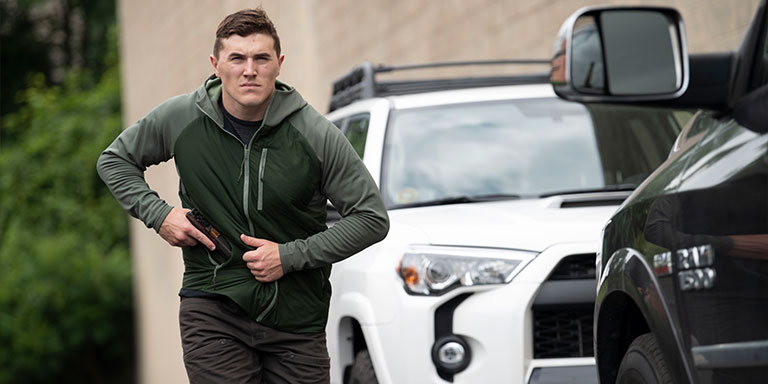
- Plainclothes Carry: Built around the tools required for duty. Officers must retain the capability to rapidly access lifesaving tools—firearms, medical equipment, comms, and restraints—while avoiding unnecessary attention.
While the goal is to appear like an average citizen, plainclothes officers must consistently maintain the capability for a rapid law enforcement response.
Plainclothes vs. Undercover Operations: Key Differences
To address a common misconception: officers can operate in plainclothes capacity without being undercover.
- Plainclothes Officers: Utilize civilian clothing to blend into environments but still carry law enforcement identification, badges, and duty tools. They are prepared to act and identify themselves immediately when circumstances require intervention. Consider officers working at a large event and wanting to blend in or wait at the airport for a subject with an arrest warrant to exit a plane or conducting stakeouts while relaying the intel for real time responses or a warrant.
- Undercover Officers: Intentionally avoid carrying anything that could identify them as law enforcement. They may not carry weapons and will not have equipment that raises suspicion about their profession. Think of this like trying to infiltrate a criminal enterprise for more behind the scenes knowledge and a longer investigation plan.
Plainclothes policing occupies the critical gray space between a uniformed presence and full undercover work.
Common Challenges in Plainclothes Policing
1. Clothing Selection and Environment Adaptation
Combat-style boots, blue jeans, and a tactical t-shirt may be comfortable, but they easily stand out to an observant eye ("shoot me first" aesthetics). Clothing must be adapted to the specific setting—rural, suburban, or dense urban jurisdictions each have distinct dress codes. Always conduct environmental reconnaissance before an assignment to plan your wardrobe. No one wears a boot with a polished toe, nor are people walking around in BDU's, so ensure that your plainclothes wardrobe matches what you see your community in on the day to day.
2. Comfort and Sizing
Most civilian clothing is designed for a fitted appearance. Once holsters, radios, and handcuffs are placed between the clothing and the body, the "perfect fit" fails. Plainclothes officers typically need to size up in shirts, tactical pants, and outer layers to accommodate equipment comfortably. Consider extra pockets and a little bit of space to ensure concealment of needed gear.
3. Mitigating "Printing"
Tight clothing combined with bulky equipment leads to printing—the visible outline of concealed gear. Think about when you were at the store and you noticed a person carrying concealed because the outline was present under the shirt. Are people with a CCW common, potentially, but the more you can take attention off yourself, the better. Mitigating this requires thoughtful gear selection, proper holster choice (such as claw or wedge attachments), and intentional clothing decisions. Maybe a pair of flex cuffs instead of patrol duty cuffs, or a soft holster instead of the waist band; these would decrease the bulkiness of your gear and still give you protection if needed.
4. Blue-on-Blue Identification
During critical incidents, a plainclothes officer without visible identification can easily be mistaken for an armed suspect responding to uniformed units. You never know who is responding. An active shooter may get responses from agencies all around. Some incidents may involve multiple agencies from different police departments that respond. You also never know who may already be in the crowd with you, carrying concealed and ready to respond. Do not assume that someone will recognize you. Officers responding will be sorting out information in real time, so ensure you are helping assist in the chaos, not contributing to the chaos.
- Best Practice: Always carry properly marked high-visibility items marked clearly with "POLICE" or "SHERIFF." Immediate access to visible identification prevents tragic misunderstandings. This could be placards, hats, badges, whatever you can carry without compromising your work.
Individual and Operational Variables
Body Structure Considerations
Body structure dictates concealment capability. Larger-framed individuals often have more flexibility in waistline equipment placement. Smaller-framed officers may face greater challenges and must rely on substantial trial and error to distribute equipment comfortably.
Operational Flexibility
Surveillance from a vehicle presents different obstacles than a foot-mobile protection detail. Because mission sets can change daily, officers need standby configurations that allow for rapid adjustments.
- Pro Tip: Keep alternate outerwear and jackets in your vehicle for rapid environmental adaptation due to weather changes or shifting operational zones.
- Team Awareness: When operating in a unit, ensure every team member knows where you store your critical equipment (especially trauma kits).
Firearm Selection and Concealed Carry Holsters
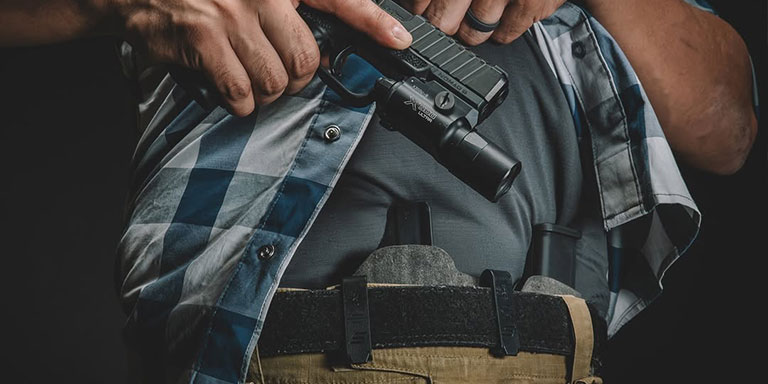
The handgun is your most critical tool. A dependable concealed carry holster ensures security, retention, and concealability.
- Platform Familiarity: Sticking with your agency-issued duty weapon (or a compact variant of the same platform) is advantageous. Training fundamentals and weapon-handling techniques will transfer seamlessly. However, these are often larger firearms. Consider having a secondary weapon and ensure you are qualifying with that weapon with your agency.
-
IWB vs. OWB:
- Inside-the-Waistband (IWB): Offers the highest concealability with a slight sacrifice in comfort. Often paired with sidecar-style magazine pouches.
- Outside-the-Waistband (OWB): Highly viable during colder months under jackets. Improves comfort, especially when operating in or around vehicles.
- Dry-Fire Practice: Officers draw from duty belts thousands of times. Transitioning to concealed carry requires frequent, disciplined dry-fire practice (with a cleared, safe weapon) to build safe, efficient draw mechanics from under garments.
Choosing the right handgun is an important decision, and your holster deserves the same level of consideration. From carry styles to retention options, discover what you need to know to find the right gun holster for your needs.
Tactical Cutting Tools
A reliable tactical knife is essential for utility tasks and emergency self-defense. A low-profile knife with a deep-carry pocket clip is unlikely to attract attention. Fortunately, many people carry knives, so a knife clipped to a pocket will most likely not raise an eyebrow from a passerby. However, a larger knife clipped to a waistline will. Ensure the knife is sharp and works before hitting the assignment. Often your duty knife is used for prying open locks, cutting open containers or boxes, and dozens of other tasks. A good check to ensure it is still in operating condition is key.
Discreet Trauma Essentials (IFAK)
Medical capability is non-negotiable. While a full-sized IFAK (Individual First Aid Kit) may not be feasible for concealed on-body carry, officers must carry the essentials:
- Minimum Loadout: A compact tourniquet and pressure bandage. If you can't carry a tourniquet, carry a band that you can wrap and wind tight.
- Ankle Kits: An excellent method for relocating medical gear off the belt. Neoprene ankle rigs can comfortably hold chest seals, gloves, tourniquets, and compressed gauze.
- Accessibility: Placement must allow for one-handed self-application under high stress with either hand.
- Limitations: Understand that you are going out there alone with backup close by. You may not be able to carry a full kit, but you need the essentials to buy you precious seconds while your backups navigate the scene. Carry the needed items, not the extra wish list items.
Supplemental Plainclothes Equipment
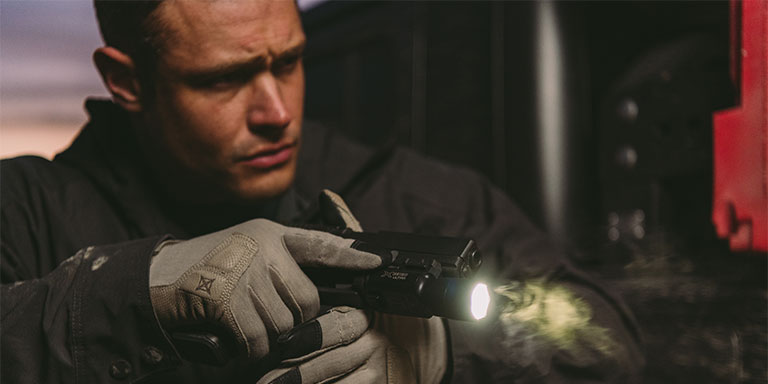
- Illumination: A dependable tactical flashlight is mandatory for unexpected nighttime operations or interior searches. Pair this with a larger vehicle-based searchlight. Learn how to choose a tactical flashlight, including key features to consider, ideal lumen ranges, power source options, and other important factors.
- Restraints: Flex cuffs can be folded tightly for zero-signature concealability. Traditional handcuffs are viable but require specialized pouches to prevent printing and metallic noise.
- Body Armor: Feasible, slick carrier body armor equipped with clear police identifiers should be staged nearby or worn under loose clothing for priority responses. We all love the external vests but for this, you may have to go back to a concealed vest or an executive style vest.
Communication Device Management
Plainclothes officers often juggle personal phones, work phones, radios, and earpieces.
- Cable Management: Route earpiece cables under shirts to prevent snagging and exposure.
- Device Discipline: Utilize discreet earpieces and phone vibration settings. In colder climates, internal jacket pockets shield devices; in warmer climates, off-duty experimentation is required to find the best pocket distribution.
- Bluetooth: Thanks to technological advancements and lack of a socialized society, it is not uncommon for people to have headsets and talk to themselves. Consider a Bluetooth style adaption that allows you to have your comms and still look as if you are just on a phone call or listening to music.
Off-Body Resources and Vehicle Loadouts
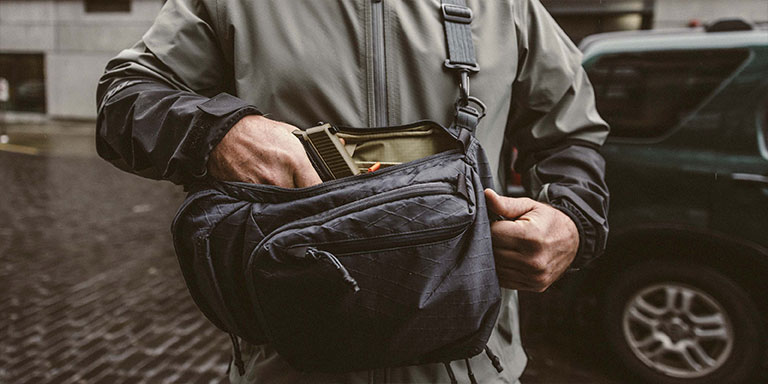
- Fanny Packs / Crossbody Bags: Tactical waist packs have regained civilian popularity and provide a covert way to carry medical supplies, extra magazines, and mission-specific gear without belt clutter. Consider a Vertx Everyday Fanny Pack. It is low profile and instead of standing out as a cop or drug dealer, you are simply just part of the new fad.
- The Vehicle as a Mobile Base: Your vehicle is your supply platform. Stage extra ammunition, breaching tools, heavy armor, and outer garments here.
- The Go-Bag: Maintain a fully stocked tactical go-bag with essential uniformed patrol equipment. Plainclothes assignments can instantly revert to uniformed roles during civil unrest, severe weather, or critical incidents. Explore our guide on how to build a reliable go-bag for emergencies.
Conclusion: Don't Overcomplicate It
Plainclothes carry is best refined through off-duty practice. Officers who already practice off-duty concealed carry can incrementally add mission-related equipment to replicate working conditions.
Successfully blending into an environment while remaining prepared for sudden violence depends on intentional practice. Begin by testing accessible options, practice your draw from concealment, and implement your configuration operationally only once competence is achieved. Continuous reassessment prevents complacency—often, the smallest adjustments produce the most significant improvements when performance truly matters.
Frequently Asked Questions (FAQ)
- What gear should a plainclothes police officer carry? A standard plainclothes loadout should include a concealed firearm, a spare magazine, a compact trauma kit (tourniquet and hemostatic dressing), a cutting tool, a flashlight, discreet communication devices, flex cuffs or handcuffs, and high-visibility law enforcement identification.
- How do plainclothes officers identify themselves during an incident? Plainclothes officers rely on rapid-deployment identifiers to ensure they are properly recognized. These include badge necklaces, high-visibility armbands, sashes, or hats clearly marked with "POLICE" or "SHERIFF" that can be pulled from a pocket and donned in seconds.
- Can plainclothes officers wear tactical gear? Generally, no. Wearing tactical pants, combat boots, and military-style shirts defeats the purpose of blending in. Plainclothes officers should wear civilian clothing appropriate for the specific neighborhood they are operating in, keeping their tactical gear concealed or staged in a nearby vehicle.